Site update log

Site map

Advertise

Testimonials

About this site

About the author

Mailbox

Support this site


EARLIEST EXPERIMENTAL SATELLITES
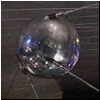
Sputnik-1

After millennia of dreams, centuries of scientific research and decades of engineering experimentation, the Space Age has began in 1957 with the launch of the Earth's first artificial satellite.

Sputnik: The Soviet satellite project (1946-1958)

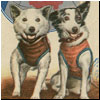
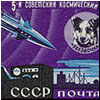
Sputnik-2: Laika's mission (1957)

 
MANNED SPACECRAFT

"Hot" topics:

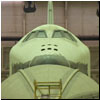
Buran

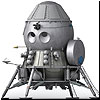
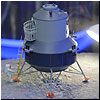
LK

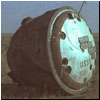
Soyuz

Mir

Kliper

Parom

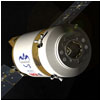
Soyuz ACTS

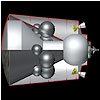
TKS follow-on

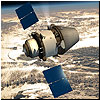
TKS follow-on

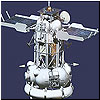
The Soviet Union started human conquest of space sending the first piloted spacecraft into orbit in 1961. Since then, several generations of the transport ships and orbital stations have been developed in the country. Much more ambitious projects of giant orbital settlements, lunar bases and expeditions to Mars have been conceived in the country, but could not be implemented due to tremendous cost. Yet, along with the United States, Russia remained one of two countries in the world sending people in space in the 20th century.

Reusable spacecraft (Abstract page)

HISTORIC PROJECTS:

Myasishev Project 48: Early Soviet attempt to develop reusable spacecraft

Raketoplan/Kosmoplan: Vladimir Chelomei's early attempt to develop reusable and planetary spacecraft

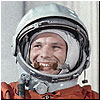
The pioneers: The first manned space flight projects, Vostok and Voskhod missions (1946-1966)

The Moon Race: The early Soyuz missions, L1, N-1/L3 programs (1967-1974)

The Martian expedition: Russian plans for the manned expedition to Mars (1960s-1990s)

The first space stations: Salyut-1-7 (1969-1985)

The Almaz military space station program: OPS-1; OPS-2; OPS-3; OPS-4;

LKS: Vladimir Chelomei's alternative to Buran (1974-1983)

Buran: Energia-Buran reusable spacecraft program (1974-1993)

Mir: The first permanent base in space (1986-2001)


FLYING TODAY:

International Space Station: A multinational effort to build human forepost in the Earth orbit


PLANS FOR THE FUTURE:

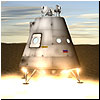
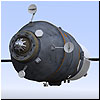
Retrievable Progress cargo ship

ACTS project

Parom orbital tug

Kliper: Potential replacement for the Soyuz spacecraft (abstract page)

Manned lunar transport concept by RKK Energia

Proposals for a follow-on series to the TKS spacecraft by Khrunichev enterprise

Lunar Orbital Station, LOS


Space Exploration Initiative: NASA program for a manned lunar base, which could involve international partners, including Russia


PLANETARY SPACECRAFT
INTO DEEP SPACE

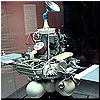
As soon as rockets learned to fly beyond the atmosphere, the spacecraft designers on both sides of the Atlantic drafted the plans for planetary exploration. The Soviet space probes opened race to the Moon, Venus and Mars. The projects of unmanned missions to Mercury and Jupiter were also under consideration in the former USSR.

Unmanned missions to the Moon

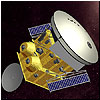
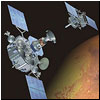
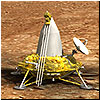
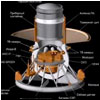
Unmanned missions to Mars

Unmanned missions to Venus

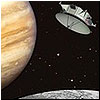
Plans for unmanned missions to Sun, Mercury, Jupiter and Saturn

 
MILITARY SPACECRAFT
IN THE UNIFORM: Military satellites

An invisible army of military satellites was orbiting Earth since the down of the space era. In fact, the absolute majority of satellites the Soviet Union had launched during its existence served military purposes. Ironically, for several decades, the USSR would not even admit the existence of the military space program in the country. As a result, numerous spacecraft have never been seen or heard of until the last decade of the 20th century. As their US counterparts, the Russian satellites served as spies for the government, as space sentries looking for the incoming missiles, provided secret communications and weather forecasting and scanned surface of the oceans in search for potential targets for the Soviet cruise missiles.

In depth:

COMMERCIAL AND APPLICATION SPACECRAFT
BUSINESS IN SPACE: Application and commercial satellites

Although most satellites, the Soviet Union developed during its existence, originated as defense-related systems, many of them were slowly making their way into civilian sectors of the Russian economy. While some spacecraft combined their military and civilian roles, a number of satellites was built specifically for civilian purposes.

In depth:

Communications satellites

 
SCIENCE AND TECHNOLOGY SPACECRAFT
SPACELABS: Science satellites

A very first satellite the Soviet Union launched in 1957 helped to advance the understanding of the upper atmosphere. Since then, the Russian spacecraft made their contribution in the mankind's understanding of the Universe. The Earth-orbiting satellites studied cosmic radiation, distant objects and physical phenomena in deep space.

In depth: