|
|
Read more in:
or in:
...or in:
...or in:
Searching for details: Author of this page will appreciate comments, corrections and imagery related to the subject. Please contact Anatoly Zak. Related page:
|
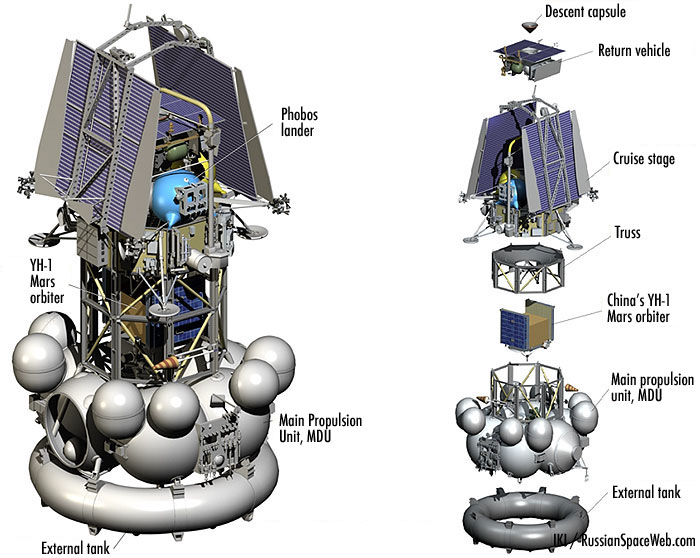
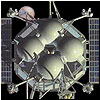
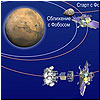
Above: The final architecture of the Phobos-Grunt spacecraft and its major components as of 2011. Credit: IKI |
|||||||
| HISTORY | ||||||||
 |
|
|||||||
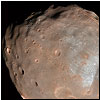 |
Why Phobos? One of two mysterious Martian moons, a potato-shaped Phobos is believed to be a wondering asteroid, which eons ago was snatched into the orbit around the Red Planet by its gravitational pool. Many scientists also believe that its surface is peppered if not blanketed with material from Mars, which was ejected in meteoroid bombardments in the solar system's violent past. |
|||||||
 |
1992-2003: A long road to the launch pad The development of the Phobos-Grunt project started around 1996 with the goal of landing on the surface of the Martian moon Phobos and returning samples of its soil back to Earth. As a bonus, the spacecraft would have many opportunities to study Mars from its orbit. Despite it being within the grasp of current technology and promising a potential windfall of scientific data, no other space agency pursued a similar mission scenario during the 1990s. |
|||||||
 |
2004-2009: Project development After almost a decade of being a "paper project," Phobos-Grunt had finally received its first substantial funding (40 million rubles) in 2007. (327) By the beginning of 2008, the Phobos-Grunt project was in an active development stage, with engineering versions of scientific instruments and the main spacecraft bus being manufactured. |
|||||||
 |
Following the false start of the Phobos-Grunt mission in 2009, the developers of Russia's flagship planetary spacecraft were gearing up for another launch attempt to Mars in 2011. Even with the additional two years afforded by the launch delay, many serious challenges had to be resolved to make Russia's first mission beyond Earth orbit since 1988 a reality. |
|||||||
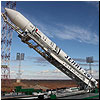 |
2011: Last preparations for launch On Sept. 29, 2011, the MDU propulsion unit for the Phobos-Grunt spacecraft arrived to the Yubileiny airfield in Baikonur. Following Kazakh custom procedures, the stage was to be moved into the processing building No. 40 at Site 31 for pre-flight operations. A State Commission overseeing the launch of the Phobos-Grunt mission held a meeting on November 5, during which space officials gave a green light to the rollout of the launch vehicle with the spacecraft to the launch pad. |
|||||||
| TECHNOLOGY | ||||||||
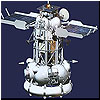 |
The largest planetary probe built in the former USSR, Phobos-Grunt consisted of three major components: The main cruise stage, PM, (a.k.a. Flagman); Return vehicle, VA, carrying landing capsule (SA) with soil samples from the surface of Phobos back to Earth; Main Propulsion Unit, or MDU, |
|||||||
 |
Phobos-Grunt was scheduled to embark at the end of 2011, on a three-year mission aimed to land on the surface of the Martian moon Phobos and return samples of its soil back to Earth. The nation's first launch beyond the Earth orbit since 1996 would face numerous challenges, including a highly accurate rendezvous with a space rock millions of kilometers away from Earth, a careful landing on its rugged surface in near weightlessness and surgical-precision movements of onboard robotic arms to collect and load soil samples into a return vehicle. |
|||||||
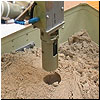 |
Scientific objectives and instruments Even without returning soil samples, simply entering the Martian orbit, let alone a rendezvous and touchdown on Phobos, would be a colossal step forward for Russian astronautics. Equipped with an array of scientific instruments from all over the world, Phobos-Grunt promises a rich scientific harvest from its sensors designed to gather and transmit data from the vicinity of Mars or from the surface of Phobos. Obviously, the return of a piece of the Martian moon would be the ultimate prize for the world of planetary science. |
|||||||
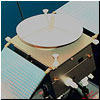 |
Chinese micro-satellite In November 2006, Russian officials confirmed earlier reports, saying that the Chinese sub-satellite would be released from Phobos-Grunt in the Martian orbit. According to the official Chinese media, the sub-probe had a shape of a 750 x 750 x 600-millimeter box with the mass of 110 kilograms and equipped with a pair of three-section solar panels, which would span 7.85 meters, when deployed. |
|||||||
| MISSION | ||||||||
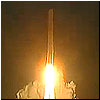 |
The Phobos-Grunt mission began with the launch on a two-stage Zenit rocket (Zenit-2SB41.1) from Site 45 in Baikonur Cosmodrome, Kazakhstan, on Nov. 9, 2011. After a vertical ascent from the launch pad, a Zenit rocket headed eastward along a usual path to enter orbit with an inclination 51.4 degrees toward the Equator. The spacecraft successfully separated from Zenit's second stage, however failed to perform the Earth orbit escape maneuvers. Communications with ground control were also lost. |
|||||||
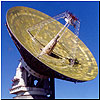 |
Command and control during Phobos-Grunt mission During an uphill battle to establish contact with a troubled Phobos-Grunt spacecraft, huge challenges to Russian ground control became much more apparent. |
|||||||
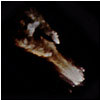 |
Reentry of the Phobos-Grunt spacecraft By Dec. 10, 2011, Roskosmos and Ministry of Defense formed a joint operational group tasked to track the reentry of the Phobos-Grunt spacecraft. The announcement about the creation of this task force essentially confirmed that the agency had exhausted all hopes for establishing control over the mission and the uncontrolled reentry of the spacecraft had now been inevitable. The spacecraft did reenter the Earth atmosphere on Jan. 15, 2012. |
|||||||
|
NEW, Jan. 30: Aftermath of the Phobos-Grunt mission An interagency commission investigating the failure of the Phobos-Grunt mission ended its work by the end of January 2012. Although its conclusions had not been immediately made public, a number of sources leaked some important details to the press. |
|||||||
 |
|
|||||||

|