
|
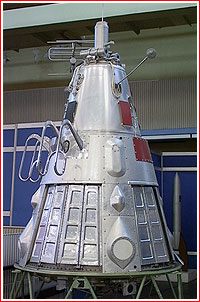
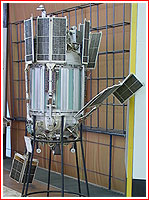
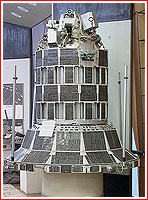
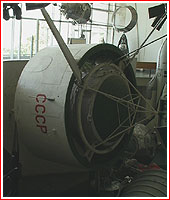
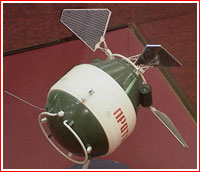
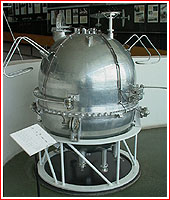
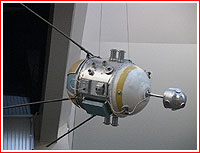
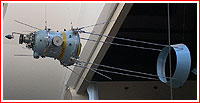
Russia's scientific satellites
The
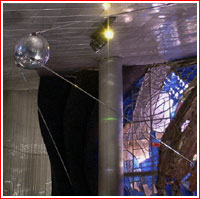
very first satellite launched by the USSR in 1957 helped to advance
the understanding of the upper atmosphere. Since then, Russian spacecraft
have been making significant contributions in the mankind's understanding of the Solar System and the broader Universe.
The Earth-orbiting satellites studied cosmic radiation, distant objects
and physical phenomena in deep space. They also helped to advance material science and space biology.
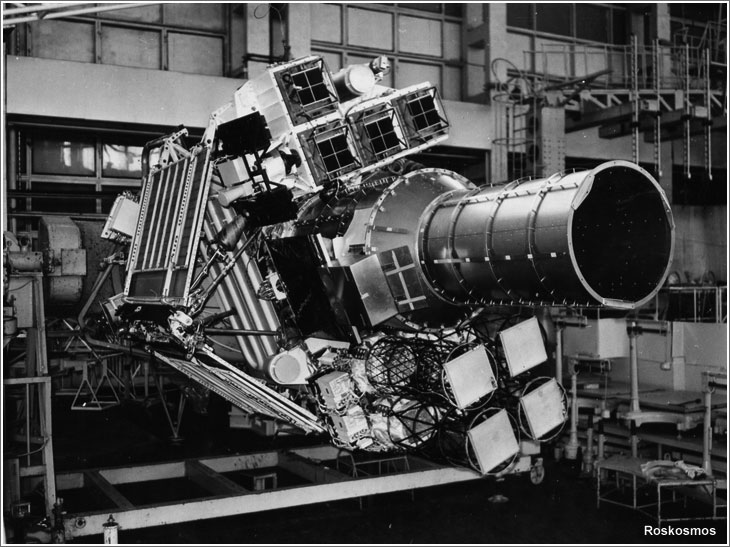
The Granat X-ray observatory launched on Dec. 1, 1989, became one of the last major scientific satellites operating in orbit before the fall of the Soviet Union.
An overview of science and research spacecraft developed
in the former USSR:
| Aist (147KS) |
Soyuz |
SGAU |
Earth science |
2013 |
Experimental, educational satellite |
| Aist-Struve |
- |
- |
Astronomy |
- |
- |
| Astron (1A No. 602) |
|
NPO Lavochkin |
Astronomy |
1983 |
UV-telescope |
| Astron-2 |
? |
IA RAN |
Astronomy |
- |
A study during 2010s |
| Astrogon |
- |
NPO Lavochkin |
- |
- |
A proposal |
| AUOS |
|
KB Yuzhnoe |
- |
1976 |
Launched
within Interkosmos and Coronas programs |
| Bion (12KS) |
Soyuz |
TsSKB Progress |
Life
science |
1973 Oct. 31 |
The
IMBP experiments |
| Bion-M (12KSM) |
|
TsSKB Progress |
Life
science |
2013 April 19 |
Launched, second planned |
| Bolid |
Volna (?) |
Makeev |
Material science |
- |
A proposal |
| Efir (36KS) |
- |
TsSKB |
Physics |
1984 |
Zenit-based,
to study high-energy rays |
| Elektron |
- |
OKB-1 |
Space
physics |
1964 |
Geo
magnetism, solar radiation studies |
| Energia (13KS) |
- |
TsSKB |
Astrophysics |
1972 |
Zenit-based spacecraft |
| Foton/Foton-M (34KS) |
|
TsKB
MOM |
Material
science |
1985 April 16 |
A civilian
version of the reconaissance spacecraft (120) |
| Gamma |
|
NPO
Energia |
Gamma-ray
astronomy |
1990 |
Soyuz-based
autonomous module |
| Gamma-400 |
- |
NPO Lavochkin |
Astronomy |
|
- |
| Geomag |
- |
NPO Lavochkin |
- |
- |
A proposal for a scientific satellite to study the Earth's magnetic field |
| GFS |
|
OKB-52 |
Magnetic field measurement |
- |
Preliminary design in 1963 |
| Granat (1AS) |
|
NPO Lavochkin |
Astrophysics |
1989 |
X-ray
and gamma telescope |
| Intergelio-Zond |
|
NPO Lavochkin |
Solar physics |
|
In development |
| Interkosmos |
|
KB Yuzhnoe |
Geophysics |
1969 |
Developed
in cooperation with East Germany, Bulgaria, Hungary, Czechoslovakia,
Poland |
| InterKosmos-Bulgaria
1300 |
- |
VNIIEM |
Geophysics |
- |
- |
| Ionosphernaya Stantsiya |
- |
KBPM |
- |
1970 Dec. 2 |
First experimental satellite built at Krasmash mechanical plant in Krasnoyarsk-26. (555) |
| Ionosfera-M |
|
VNIIEM |
Geophysics |
2024 Nov. 5 |
Four-satellite constellation |
| Ionozond |
- |
NPO Lavochkin |
- |
- |
In development; an ozone-measuring mission |
| IRDT |
|
NPO Lavochkin |
Inflatable
reentry technology testing |
2000 |
Partially
financed by the European Space Agency |
| Kanopus-Vulkan |
- |
VNIIEM |
- |
- |
- |
| Khromos |
Soyuz-M |
RKK Energia |
Astrophysics |
1980s |
Free-flying Mir-2 module |
| Kolibri |
|
Students
(Australia, Russia) |
Space
physics, geomagnetism |
2002.03.20 |
A 20.5-kilogram
sat launched from the Progress cargo ship, departing the ISS |
| Kompass |
Shtil |
KB Mashinostroenia |
Earthquake forecasting |
2006 |
- |
| Koronas-Foton |
|
VNIIEM |
- |
|
- |
Kosmos-1
(Solar Sail) |
Volna |
NPO
Lavochkin Planetary Society |
Solar
sail tests |
2001 |
Did
not reach orbit due to launch vehicle failures; Partially
financed from the private funds in the US |
| LIDA |
- |
NPO Lavochkin |
- |
- |
A proposal |
| Lomonosov |
- |
NPO Lavochkin |
Astronomy |
- |
A proposal around end of 1970s. |
| Lomonosov (Mikhailo Lomonosov) |
Soyuz-2-1a |
VNIIEM |
Astrophysics, atmospheric research |
|
In flight |
| LORD |
- |
NPO Lavochkin |
- |
- |
A proposal |
| Lunnaya Doroga |
- |
NPO Lavochkin |
- |
- |
A proposal |
| MiR |
- |
ISS Reshetnev/SibGAU |
Experimental |
2012 |
- |
| MKA FKI PN1 Zond-PP |
|
NPO Lavochkin |
- |
2012 July 22 |
Launched successfully. A remote-sensing satellite with an L-band radiometer. Failed in 2013 |
| MKA FKI PN2 (Monika) Relek |
- |
NPO Lavochkin |
- |
2013 |
In development, ionospheric research |
| MKA FKI PN3 Konus-M (372A353) |
- |
NPO Lavochkin |
- |
- |
In development |
| MKA FKI PN4 Strannik |
- |
NPO Lavochkin |
- |
- |
In development |
| MKA FKI PN5 ARKA |
- |
NPO Lavochkin |
- |
2007-2015 (327) |
In development (Program based on the Karat platform) |
| MKA-AVKP |
- |
NPO Lavochkin |
- |
- |
A proposal |
| Nauka (1KS) |
- |
TsSKB Progress |
- |
1968 |
Launched
along with Zenit-2M as a piggyback |
| Nauka (2KS) |
- |
TsSKB Progress |
- |
- |
Launched
along with Zenit-2M as a piggyback |
| Nauka (5KSA) |
- |
TsSKB Progress |
- |
- |
Launched
along with Zenit-2M as a piggyback |
| Nauka (9KS) |
- |
TsSKB Progress |
- |
- |
Launched
along with Zenit-2M as a piggyback; Gamma-telescope |
| Nauka (15KS) |
- |
TsSKB Progress |
- |
- |
Launched
along with Zenit-2M as a piggyback |
| Nauka (16KS) |
- |
TsSKB Progress |
- |
- |
Launched
along with Zenit-2M as a piggyback |
| Nauka (17KS) |
- |
TsSKB Progress |
- |
- |
Launched
along with Zenit-2M as a piggyback |
| Nauka (19KS) |
- |
TsSKB Progress |
- |
- |
Launched
along with Zenit-2M as a piggyback |
| Nauka (20KS) |
- |
TsSKB Progress |
- |
- |
Launched
along with Zenit-2M as a piggyback |
| Nauka (22KS) |
- |
TsSKB Progress |
- |
- |
Launched
along with Zenit-2M as a piggyback |
| Nauka (23KS) |
- |
TsSKB Progress |
- |
- |
Launched
along with Zenit-2M as a piggyback |
| Nauka (25KS) |
- |
TsSKB Progress |
- |
- |
- |
| Nauka (26KS) |
- |
TsSKB Progress |
- |
- |
Launched
along with Zenit-2M as a piggyback |
| Nauka (27KS) |
- |
TsSKB Progress |
- |
- |
Launched
along with Zenit-2M as a piggyback |
| Nauka (30KS) |
- |
TsSKB Progress |
- |
- |
Launched
along with Zenit-2M as a piggyback |
| Nauka (31KS) |
- |
TsSKB Progress |
- |
- |
Launched
along with Zenit-2M as a piggyback |
| Nauka (32KS) |
- |
TsSKB Progress |
- |
- |
Launched
along with Zenit-2M as a piggyback |
| Nauka (33KS) |
- |
TsSKB Progress |
- |
- |
Launched
along with Zenit-2M as a piggyback |
| Nuklon |
- |
PO Polyot |
- |
- |
In development as of 2009. (322) |
| Obzor (8KS) |
- |
TsSKB Progress |
- |
- |
Related to Nauka-series sub-satellites |
| OKA-T-MKS (52KS) |
- |
TsSKB Progress |
- |
- |
A man-tended platform within ISS project |
| OLVE (Orbital laboratory of high energy) |
- |
- |
- |
after 2025 |
A proposal circa 2014 |
| OM (5KS) |
- |
TsSKB Progress |
- |
- |
Related to Nauka-series sub-satellites |
| Oreol |
|
- |
Physics |
1971 |
Soviet-French
Arkad experiments |
| Oreol-2 |
|
- |
Physics |
1973 |
Soviet-French
experiments |
| Pion |
Soyuz/Resurs |
KB SGAU |
Upper atmosphere |
- |
Passive |
| Pion-M |
Soyuz/Resurs |
KB SGAU |
Upper atmosphere |
1989 May 25 |
Passive |
| Plazma |
|
OKB-52 |
Physics |
1964 |
Solar physics |
| Plazma-A |
|
KB Arsenal |
Technology |
1987 |
Kosmos-1818,
1867 plasma engine testing |
| Predvestnik |
- |
Arsenal |
Earthquake forecasting |
- |
- |
| Prognoz |
|
NPO Lavochkin |
Geo-physics |
1972-85 |
Geo
magnetism, solar radiation studies |
| Proton-1 |
|
OKB-52 |
Astrophysics |
1964 |
High-energy astrophysics |
| Proton-2 |
|
OKB-52 |
Astrophysics |
1964 |
High-energy astrophysics |
| Protsion (22K) |
11A57 |
OKB-1 Branch 3 |
Astrophysics |
1964 |
High-energy astrophysics |
| Regatta-Astro |
- |
IKI |
Astrometry |
1994-1997 |
A 203-kilogram spacecraft proposed around 1989 |
| Rentgenovsky Mikrofon |
- |
- |
Astrophysics |
- |
Preliminary studies as of 2012 |
| Rezonans (MKA FKI) |
- |
NPO Lavochkin |
Magnetic field |
|
OKR (in development) |
| Roy |
Soyuz/Fregat |
- |
Plasma studies |
|
NIR (preliminary studies) |
| Selesta |
- |
- |
- |
2020? |
Motions and parallaxes of stars within the accuracy of sub-millisecond of arc. (368) |
| Soyuz-SAT-O |
- |
PO Polyot |
- |
- |
In development as of 2009. (322) |
| Spektr-M |
|
NPO Lavochkin |
Astronomy |
after 2025 |
Under consideration since around 2008 |
| Spektr-Obzor-K (14KS) |
- |
TsSKB Progress |
- |
- |
- |
| Spektr-RG (Roentgen-Gamma) |
|
NPO Lavochkin |
X-ray,
gamma-ray astronomy |
|
X-ray orbital observatory |
| Spektr-R (Radioastron) |
|
NPO Lavochkin |
Radio-astronomy |
|
A space-based radio telescope |
| Spektr-S (Submillimetron) |
- |
NPO Lavochkin |
Astrophysics |
- |
A space-based telescope proposal |
| Spektr-UF |
|
NPO Lavochkin |
UV-astronomy |
|
A space-based UV telescope |
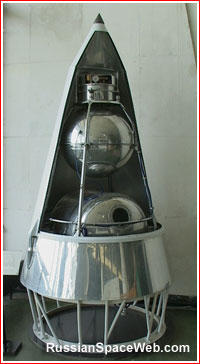
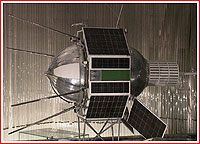
| Sputnik-1 (PS-1) |
|
OKB-1 |
Upper atmosphere research |
|
World's first artificial satellite |
| Sputnik-2 (PS-2) |
|
OKB-1 |
First biological test in space |
|
World's first biologoical satellite; carried dog Laika |
| Sputnik-3 |
|
OKB-1 |
Space rays, etc |
1958 |
A multi-purpose space research satellite |
| Start-M |
- |
IKI |
Radiotelescope |
1968-1970 |
Space-based interferometers |
| SVCh-RK |
- |
NPO Lavochkin |
- |
- |
A proposal |
| Tsvetok |
- |
NPO Lavochkin |
- |
- |
A proposal |
| Vega (3KS) |
- |
TsSKB Progress |
- |
- |
Related to Nauka series sub-satellites |
| Vertikalniy Kosmichesky Zond |
Kosmos-3 |
KB PM |
Ionosphere |
1967 Oct. 12 |
- |
| Volan |
Volna (?) |
Makeev |
Material science |
- |
- |
| Vozvrat-MKA |
- |
TsSKB Progress |
- |
|
- |
| Vulkan |
- |
VNIIEM |
Ionospheric research |
- |
- |
| Vulkan-Astrogon |
- |
VNIIEM |
Hyperspectral sensors |
- |
- |
| Vulkan-E |
- |
VNIIEM |
High-resolution optical remote sensing |
- |
- |
| Zond-PP (MKA-FKI) |
|
NPO Lavochkin |
Earth science |
|
The first mission in the Karat series |
Russian
sub launches inflatable reentry device
A
Russian strategic submarine launched a ballistic missile carrying an inflatable
reentry device designed to return cargo from orbit to Earth.
The
Volna rocket lifted off on July 12, 2002, at 03:58 Moscow Time, from the Ryazan strategic
nuclear submarine stationed in the Barents Sea, a representative of the
Russian Navy said. (The Volna is the "civilian designation"
for the R-29RL submarine-based ballistic missile.)
The launch targeted the Kura testing ground located on the Kamchatka Peninsula,
however several days after the launch, the search team in the area was
unable to locate the reentry device and its experimental payload, designated
Demonstrator-2.
The
inflatable reentry technology, known as IRDT, was originally developed
by the Khimki-based NPO Lavochkin design bureau for a Martian lander,
within the Mars-96 project. Later the technology was adapted for use in
low-Earth orbit and tested in three different configurations during two
launches in 2000 and 2001. Only in one previous case, an experimental
payload, called Demonstrator, was successfully returned to Earth. Attempts
to return a solar-sailing spacecraft in 2001 failed. (See below). In 2000,
the Fregat upper stage was believed to be successfully reentered the atmosphere
using the IRDT, however, the search for the stage in the landing area
yielded no results.
Russia plans space observatories
On August 29, 2006, speaking at the 5th International Aerospace Congress in Moscow, Deputy Chief of the Federal Space Agency, Vitaly Davydov said that a fleet of three astronomy observatories of the Spektr series, along with Koronas-Foton and Intergelio-Zond spacecraft were promised funding.
Russia plans small science satellites
On December 6, 2006, Russian space agency, Roskosmos, revealed plans for five launches in 2008, 2009, 2011, 2013 and 2015 within an umbrella program called "Small spacecraft for fundamental space science." The program was based on a low-cost satellite platform developed by NPO Lavochkin with non-federal funding. At the time, one or two of these missions were expected to go into lunar orbit, according to Roskosmos.
Russia introduces two new satellite families
A Russian rocket lifted off with a cluster of five satellites, among them a pair of new-generation spacecraft inaugurating platforms for future scientific and commercial applications.
A Soyuz-FG/Fregat rocket blasted off from Site 31 in Baikonur on July 22, 2012, at 10:41:39 Moscow Time, carrying Russian Kanopus-V No. 1 remote-sensing satellite along with a similar BKA spacecraft built for the government of Belarus. As secondary payloads, the mission carried a Russian MKA-FKI science satellite, an exactView satellite for a Canadian company and a TET-1 experimental satellite funded by the German space agency, DLR.
According to the Russian space agency, the Fregat upper stage separated from the third stage of the launch vehicle at 10:50 Moscow Time and started its own flight including five firings of its main engine.
All five payloads reached orbit successfully. BKA separated from the Fregat at 11:26 Moscow Time, followed by Kanopus-V at 11:31, TET-1 at 11:33, exactView-1 and MKA-FKI at 13:00:33 Moscow Time, when flying over the Pacific Ocean beyond the communication range of Russian ground stations. The Fregat upper stage then conducted a deorbiting maneuver and reentered the Earth atmosphere at 13:50:53 Moscow Time. A ground control team responsible for MKA-FKI spacecraft confirmed establishing normal contact with the satellite shortly after it had entered the communication range at 13:55:21 Moscow Time. Industry sources also reported that Kanopus and BKA satellites estblished contact and downlinked telemetry during the second orbit of the mission.
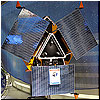
Both Russian spacecraft onboard this Soyuz rocket represented new types of standard carriers, which are scheduled to be customized for future missions. The Kanopus platform is intended primarily for remote-sensing commercial applications, while a smaller Karat bus is well suited for a wide variety of low-cost science experiments. Both platforms already have a backlog of future missions waiting for launch.
|

|