|
|
  
|
DEVELOPMENT STAGE | ||||||||
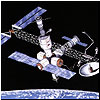 |
1993: Crisis and rebirth As President Clinton moved into the Oval Office in January, NASA was directed to redesign the space station Freedom again to keep annual spending on the project within $2.1 billion. NASA redesign team, established on March 10, came up with three options known as A, B, and C, however none of them would meet the projected budget restrictions. At the time, Russian Space Agency proposed NASA to merge Freedom and Mir-2 projects. The inclusion of the Mir-2 core module into the Freedom design would allow early presence of the crew onboard, while the use of Progress cargo ships would provide much cheaper and reliable refueling and supply capabilities for the station, comparing to the use of the Space Shuttle. On Sept. 2 Russian Prime Minister Victor Chernomyrdin and US Vice President Al Gore signed an agreement to merge Freedom and Mir-2 projects. At the time, the launch of the first component was expected in May 1997. |
 |
|||||||
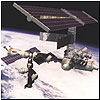 |
1994: Jump start By November 28, NASA and Russian Space Agency established the new assembly sequence reflecting the inclusion of the Mir-2 components. The launch of the first element, Zarya control module, was now officially scheduled for November 1997, the assembly was planned to be completed by June 2002. The construction of the Zarya module started at Khrunichev enterprise in December. |
||||||||
|
|
1995: Mir's legacy By 1995, Russia firmly decided to abandon its plans to use the Zenit rocket for the launch of the Science and Power Platform, NEP. Instead, NASA agreed to launch the element onboard the Space Shuttle. The Russian space agency also considered the transfer of the Mir's newest modules, Spektr and Priroda to the ISS. In December, as US astronauts took residence onboard Mir space station, Russian Space Agency proposed NASA to use the entire Mir space station as a base for the ISS assembly, however NASA rejected the idea. |
||||||||
|
|
1996: Troubles ahead By the end of 1996, around 70 tons of the US hardware appeared in metal despite technical difficulties and around $200 million in cost overruns. However, in Russia, the construction of the service module fell behind schedule due to lack of funds. In the fall Russian Space Agency informed NASA that it will not able to launch the service module in April 1998. In response, in December, NASA initiated the development of the Interim Control Module, ICM, based on the propulsion module of a classified military satellite. |
||||||||
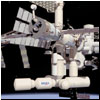 |
1997: Struggling to stay afloat In April, giving the uncertainty surrounding the Russian contribution into the program, NASA requested the Congress to create a new line item called Russian Program Assurance, RPA, in the agency's budget, to finance the construction of Interim Control Module, ICM and other "contingency" options. For 1997 fiscal year, the Congress approved $200 million as the RPA spending. The launch of the first element of the station was pushed from November 1997 to June 1998. At the same time, Russian delays gave NASA additional time for on-ground testing of the US hardware, as a result significantly reducing the risk of costly integration problems during the orbital assembly. |
||||||||
|
ASSEMBLY
STAGE MISSIONS |
|||||||||
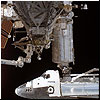 |
A complete chronology of ISS missions The assembly of the International Space Station began in 1998, and after a decade of construction in orbit, NASA, ESA, Japan and Canada have declared their part of the outpost completed. However the Russian Segment of the station went through numerous redesigns and still remains unfinished. |
||||||||
| YEAR BY YEAR OVERVIEW OF THE ISS PROGRAM DURING THE ASSEMBLY STAGE | |||||||||
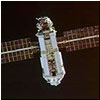 |
1998: Taking off On January 29, partners from 15 countries in the International Space Station project signed a formal inter-government agreement on the construction and operation of the ISS. However, as Russian participants in the project continued to struggle with delayed funding, US elements fell behind schedule due to technical problems. In January, during the Council of Chief Designers in Russia, it was indicated that the launch of the critical Service Module would be delayed for four months beyond previously expected launch date. Yet, the same month, Zarya control module was shipped to Baikonur to be processed at Site 254 in preparation for launch. In October, NASA and the Russian Space Agency agreed to launch the first element (Zarya) on November 20. The launch took place as scheduled and in December, the US Shuttle attached Unity (Node-1) module to Zarya/FGB. At the time, the launch of the service module was scheduled for April 1999, but was expected to be delayed at least until June 1999. |
||||||||
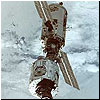 |
1999: Crawling ahead In April, NASA and Russian Space Agency agreed to delay the launch of the service module from June to September. The launch was then delayed until November, as RKK Energia struggled to complete the work on the module. In the meantime, wiring problems on the Shuttle threatened the program, even if the service module would fly in November. Finally, in September, NASA and Rosaviakosmos agreed to delay the service module launch until the end of December 1999 or January 2000. However in October, the Proton rocket carrying a communications satellite failed for the second time in the year, grounding the launch vehicle of the service module and prompting extensive investigation and engine upgrades, which would take several months. |
||||||||
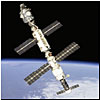 |
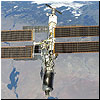
2000: Opening floodgates The Proton rocket returned to service in February, as its manufacturers were still testing modified engines, which would be used on the Proton launching the Zvezda service module. Rosaviakosmos decided to conduct two test flights of the modified Proton rocket, before allowing the launcher to carry the service module into orbit. In the meantime, NASA split a Shuttle logistics mission into two, in order to repair and maintain the embryonic ISS in orbit. On July 12, the Zvezda successfully reached orbit and several days later, the Zarya/Unity stack flawlessly docked to the service module. The first Progress cargo ship also arrived on schedule and in September, the Shuttle delivered Z-truss structure to the station and a docking adapter. In November, the first "resident crew" of the station including US astronaut Bill Shepard and Russian cosmonauts Yuri Gidzenko and Sergei Krikalev boarded the outpost. In December, the Shuttle attached a set of solar arrays and radiators to the station, making it the biggest orbital structure. In depth: Soyuz TM-31, Expedition 1 |
||||||||
 |
2001: Real work starts In February, the Shuttle Atlantis delivered Destiny lab to the station, while back on Earth the financial foes threatened the ISS project. As a result of the multi-billion dollar cost overruns, NASA was forced to cancel the development of the US habitation module and a reusable rescue vehicle for the station. In depth: Soyuz TM-32 taxi flight (Dennis Tito's mission to the ISS) | Soyuz TM-33 taxi flight (Russo-French commercial mission) |
||||||||
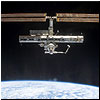 |
2002: Construction site in space During 2002, the station's main truss, designed to hold giant power plants and other systems, started stemming from the original core of the outpost. Total three segments of the truss had been added during Shuttle missions. In the meantime, back on Earth, the partners in the project, tried to develop a solution to the financial problems facing the endeavor, however little progress had been reached. In depth: Soyuz TM-34 taxi flight | Soyuz TMA-1 taxi flight |
||||||||
 |
2003: In the wake of the Columbia disaster A tragic loss of the Shuttle Columbia during her voyage home at the end of the STS-107 mission, on Feb. 1, 2003, essentially grounded the US manned space program for the indefinite period of time and stalled the construction of the station. Despite the possibility of leaving station uninhabited during the hiatus in the US manned space program, the Russia committed to keep the outpost manned. The Russian Soyuz spacecraft, which previously played a role of a "lifeboat," re-emerged as the only link to the station for its crews. At the same time, the Russian Progress cargo ships remained the only supply line from the Earth to the station. In order to save resources onboard the station in the absence of the Shuttle, partners agreed to reduce the long-duration crew from three to two people. In depth: Soyuz TMA-2 (Expedition 7) | Soyuz TMA-3 (Expedition 8) |
||||||||
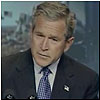 |
2004: The beginning of the end On January 14, 2004, President George W. Bush directed NASA to initiate plans for the return to the Moon, using funds freed by the cancellation of the Space Shuttle program and the US withdrawal from the ISS program. According to the plan, the Shuttle would be retired in 2010, upon completion of the station assembly. In 2016, NASA funding for the ISS would end as well. In depth: Soyuz TMA-4 (Expedition 9) | Soyuz TMA-5 (Expedition 10) |
||||||||
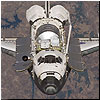 |
2005: Return of the Shuttle The 10th long-duration crew of the ISS met the new year the same way their predecessors did 12 months ago -- troubleshooting aging Elektron oxygen generating unit. As underfunded, understaffed and, sometimes, undersupplied station continued its mission, on the ground NASA prepared the Shuttle to return to orbit in 2005. In depth: Soyuz TMA-6 mission (Expedition 11) | Soyuz TMA-7 mission (Expedition 12) |
||||||||
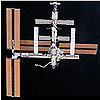 |
2006: Restarting the assembly On March 2, 2006, partners in the International Space Station project, ISS, approved a new assembly sequence, which dedicated 16 remaining Shuttle flights before its retirement in 2010 to the launching of the ISS elements. As expected in 2005, the delivery of the Russian NEP module by the Shuttle was canceled, along with a number of "utilization" flights. NASA promised to compensate the Russian segment for the loss of power, which would've been provided by the NEP, with the energy from the US segment during 2008-2015. Without major delays or accidents in the Shuttle program, the station would reach the capability of supporting a six-person permanent crew by 2009. The European Columbus module was now scheduled for launch during the 7th Shuttle mission after its return to flight, while the elements of the Japanese segment would reach orbit during the eighth, ninth and 12th missions. NASA still evaluated the possibility of sending the Shuttle to service Hubble Space Telescope for the last time as early as beginning of 2008. It would be the only mission of the Shuttle not dedicated to the assembly of the ISS in the upcoming schedule. In depth: Soyuz TMA-8 (Expedition 13) | Soyuz TMA-9 (Expedition 14) |
||||||||
|
2007: Construction continues In order to fill the gap in its manned space program between retirement of the Space Shuttle in 2010 and introduction of the Orion spacecraft around 2014, US turned to Russia. In December 2006, NASA ordered two Progress cargo ships from RKK Energia to re-supply the US segment and made plans to order a pair of Soyuz lifeboats and a pair Progress ships annually during 2009-2011. Combined with flights to the its own segment, Russian transport traffic to the ISS was expected to double during this period. On April 7, 2007, NASA also announced that it had signed a $719 million modification to the ISS contract with Russia for crew and cargo services through 2011. The firm-fixed price extension covered crew rotations for 15 crew members, six in 2009, six in 2010 and three in 2011, delivery and the removal of 5.6 metric tons of cargo. U.S. Commercial Orbital Transportation Services (COTS) were still planned to provide the bulk of cargo transportation needs from 2010 and beyond to the space station. With the modification, NASA also purchased the capability for the Russian Docking Cargo Module (DCM - MIM-1) to carry 1.4 metric tons of NASA cargo to the station in 2010. By adding the module, NASA would be able to fly outfitting hardware for the Russian Multipurpose Laboratory Module on the DCM, eliminating the need to fly a cargo carrier and some ballast on a shuttle flight. NASA was obligated to deliver the Russian outfitting hardware to the station under a 2006 addendum to the ISS Balance of Contributions Agreement between NASA and the Russia. In addition, NASA purchased a flight opportunity to and from the station that would meet an obligation to its international partners. The flight would allow for an astronaut from the partners to spend approximately six months aboard the space station in 2009. A total price tag for deals between Russia and NASA reportedly reached $719 million and included a purchase of 15 seats and 5.6 tons of cargo delivery. In depth: Soyuz TMA-10 (Expedition 15) | Soyuz TMA-11 (Expedition 16) |
||||||||
 |
2008: Finishing the construction In the spring, Vitaly Lopota, the head of Russian key station contractor RKK Energia told Russian media that the federal funding for the ISS had to double in order to complete various modules of the Russian segment by 2015. According to Lopota, 100 billion rubles had been allocated to the development of the Russian segment, however additional 120 billion was needed to implement the current program. In the meantime, the partners in the ISS project were to meet in Paris in July to discuss the financial possibility for extending service life of the station from 2015 to 2020. In April, Aviation Week reported that NASA Administrator Michael Griffin had sent a letter to Capitol Hill specifically excluding Russian Progress cargo ships from a request to continue using Russian Soyuz capsules to deliver crew to the ISS after the shuttle retires in 2010. Instead, NASA opted for "private" vehicles being developed under Commercial Orbital Transportation Services, COTS, program. In the meantime, on Sept. 24, the US House of Representatives did extend a waiver to the Iran, North Korea and Syria Nonproliferation Act, INKSNA, that would allow NASA to purchase seats on Russian Soyuz spacecraft after a previous waiver was to expire at the end of 2011. The move ensured an uninterrupted presence of American and European astronauts on the ISS, during the entire projected five-year gap between the retirement of the Shuttle in 2010 and the introduction of the Orion spacecraft, which by August slipped 12 months from September 2013. However, the vote came not before NASA Administrator went to the media with the warning that the interruption of the US and European manned space flight beginning in 2012 was inevitable. The measure to extend INKSNA previously stalled in Congress as Russian-American relations were unraveling, especially in the wake of the Russian-Georgian conflict in August. In depth: Soyuz TMA-12 (Expedition 17) | Soyuz TMA-13 (Expedition 18) |
||||||||
 |
2009: Full crew With the addition of the fourth and last power-generating section of the American segment in March, the station was finally ready to support its full six-member crew, which was achieved on May 29. In the meantime, on the ground, partners continued studying options for extending life span of the ISS beyond 2015. While the final decision on the matter was not expected until 2010 - beginning 2011, space officials were optimistic that the station would remain in orbit until 2020. At the end of May 2009, NASA announced that it reached a $306 million deal with Russia on the Soyuz missions to the ISS and related services, with each flight reportedly costing the US around $51 million. In depth: Soyuz TMA-14 (Expedition 19) | Soyuz TMA-15 (Expedition 20) | Soyuz TMA-16 (Expedition 21) | Soyuz TMA-17 (Expedition 22) |
||||||||
|
On Feb. 1, 2010, the Obama administration published a proposed budget of the US federal government, curtailing funding for the Constellation program. With the plans of return to the Moon on hold, the International Space Station automatically received a new lease of life. A formal decision for the ISS life span extension was made on March 11 during the partners' meeting in Tokyo. The heads of agencies noted that there were no technical constraints to support ISS beyond 2015 to at least 2020, and that the partnership was working to certify on-orbit elements through 2028. By that time, Zarya FGB control module, the first element of the station, would be in orbit for 30 years. According to NASA, a U.S. fiscal year 2011 budget consistent with the U.S. administration's budget request would allow the agency to support ISS to at least 2020. Partners emphasized their common intent to work with their respective governments to reach consensus later in 2010 on the continuation of the ISS project into the next decade. In depth: Soyuz TMA-18 (Expedition 23) | Soyuz TMA-19 (Expedition 24) | Soyuz TMA-01M (Expedition 25) | Soyuz TMA-20 (Expedition 26) |
||||||||
 |
2011: Good bye Shuttle In mid-March, with the retirement of the Space Shuttle only three months away, NASA announced a purchase of 12 more "seats" on Soyuz for $753 million during 2014 – June 2016. At the same time, ESA member states approved their participation in the ISS project until 2020. In the meantime, up in orbit, ISS faced increased need to avoid orbital junk. After an average one debris-avoiding maneuver annually in previous years, four urgent moves were required between April 2011 and April 2012. In depth: Soyuz TMA-21 (Expedition 27) | Soyuz TMA-02M (Expedition 28) | Soyuz TMA-22 (Expedition 29) | Soyuz TMA-03M (Expedition 30) |
||||||||
 |
2012: On the shoulders of Soyuz... and Dragon During a regular meeting in Quebec, Canada, on Feb. 29, Russia proposed its ISS partners to increase flight duration of permanent crews on the outpost from six to nine months or even to a year by 2014-2015. The obvious goal of the move would be to free Soyuz vehicles for commercial missions. Russians and Europeans also reportedly voiced their support for the Chinese involvement into the ISS project, despite legal hurdles to such cooperation in the US and the closed military nature of the Chinese manned space flight. Russia also initiated the construction of backup hardware in order to have an extra Soyuz and a Progress vehicle in the 30-day readiness for launch starting at the end of 2013. In the meantime, a Dragon spacecraft built by the US-based SpaceX company reached the station for the first time on May 25, opening a new supply line to the ISS. In depth: Soyuz TMA-04M (Expedition 31) | Soyuz TMA-05M (Expedition 32) | Soyuz TMA-06M (Expedition 33) | Soyuz TMA-07M (Expedition 34) |
||||||||
 |
2013: More work for Soyuz as Cygnus joins the fray On Jan. 13, President Obama signed a law extending US payments to Russia for its ISS services to NASA from July 1, 2016 until Dec. 31, 2020. Then, on Feb. 25, Aleksei Krasnov, the head of manned directorate at Roskosmos told the semi-official Interfax news agency that by the end of March Russia had hoped to sign an agreement with NASA for extending flights of astronauts from partner agencies onboard Soyuz from mid-2016 until mid-2017. By the end of 2013, Krasnov said that US and Russia reached an agreement on NASA Soyuz missions until the end of 2017 and, possibly, beginning of 2018, when US would switch to its own manned vehicles. The first launch of the US manned spacecraft to the ISS was scheduled for Nov. 30, 2017. The $424-million deal was signed on April 26 and publicly announced by NASA on May 1. In the meantime, on April 21, the Orbital Sciences Corporation under a NASA contract launched a mass prototype of the Cygnus cargo ship on its Antares rocket powered by a pair of Soviet-era NK-33A engines. In depth: Soyuz TMA-08M (Expedition 35/36) | Soyuz TMA-09M (Expedition 36/37) | Soyuz TMA-10M (Expedition 37/38) | Soyuz TMA-11M (Expedition 38/39) |
||||||||
|
2014: Pushing back the retirement (with Ukraine on the background) On Jan. 8, NASA announced that it had received a blessing from the Obama administration to operate the ISS through at least 2024 for around $3 billion a year. By that time, extending the life span of the outpost until 2028 was considered technically feasible. However in the wake of the Russian annexation of Crimea, NASA has suspended its cooperation with Russia, except for the ISS project, US media reported on April 2. In turn, Russia threatened to end its participation in the ISS project by 2020, which most partners interpreted as bluff. In an unapproved draft of a 10-year Federal Space Program starting in 2016, Roskosmos requested 321 billion rubles for the Russian segment of the ISS, including the OKA-T free-flying platform. During a meeting in Paris of ISS partners on November 4, NASA reaffirmed its commitment to extend the station use from 2020 until at least 2024. In depth: Soyuz TMA-12M (Expedition 39/40) | Soyuz TMA-13M (Expedition 40/41) | Soyuz TMA-14M (Expedition 41/42) | Soyuz TMA-15M (Expedition 42/43) |
||||||||
 |
2015: Year starts with a trouble; the Year-in-Space mission On Jan. 14, Roskosmos announced that around 11:44 Moscow Time, a leak of dangerous chemicals (apparently ammonia coolant) took place onboard the US segment of the station. As a result, the affected part of the outpost had to be isolated and the crew evacuated to the Russian segment. The contamination level on the Russian segment remains within allowable limits, the agency said. According to the chief of the Russian mission control Maksim Matyushin, "The safety of the crew was ensured thanks to cooperative and quick actions of cosmonauts and astronauts and support groups in Moscow and Houston. Further actions on the American segment should be developed by the US," Matyushin said, "Currently, Mission Control in Houston is analyzing the information about the status of the US segment." Several hours later, NASA announced that the evacuation of the crew was most likely caused by a false alarm and there was no direct data confirming the actual ammonia leak. Soyuz TMA-16M (Expedition 43; "Year in Space" mission) | Soyuz TMA-17M (Expedition 44/45) | Soyuz TMA-18M (Expedition 45/46) | Soyuz TMA-19M (Expedition 46/47) |
||||||||
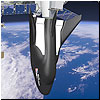 |
2016: NASA's new contractors line up On January 14, NASA has awarded three CRS-2 cargo delivery contracts to ISS, worth $14 billion from 2019 through 2024. The agency selected Orbital ATK, Sierra Nevada Corporation and SpaceX with a minimum of six cargo resupply missions from each provider using Cygnus, Dream Chaser and Dragon spacecraft respectively. On January 27, Roskosmos and NASA signed a 5.7-billion-ruble contract for the delivery of six US astronauts to the ISS on the Soyuz-MS spacecraft in 2018 and 2019. In the meantime, on May 28, the first inflatable habitat was deployed on the ISS. At the same time, Roskosmos made a decision to reduce its crew on the ISS from three to two people and initiated the development of a new cargo ship for the station. In a February 12 letter to Roskosmos, RKK Energia said that the Russian crew would have to go back to three people beginning with Expedition 57 in September 2018 to support the integration of the MLM/Nauka module. Soyuz TMA-20M (Expedition 47/48) | Soyuz MS-01 (Expedition 48/49) | Soyuz MS-02 (Expedition 49/50) | Soyuz MS-03 (Expedition 50/51) |
||||||||
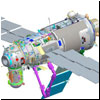 |
On September 22, RKK Energia officially informed Roskosmos that in order to support three Russian cosmonauts aboard the ISS, four Progress-MS cargo ships would have to be dispatched to the outpost in 2019. The three-member crew would be necessary to integrate the MLM Nauka module, which finally saw a light at the end of the tunnel. Soyuz MS-04 (Expedition 51/52) | Soyuz MS-05 (Expedition 52/53) | Soyuz MS-06 (Expedition 53/54) | Soyuz MS-07 (Expedition 54/55) |
||||||||
 |
2018: On the edge On January 11, NASA announced that its contractors SpaceX and Boeing will launch unmanned test versions of their crew vehicles in August, followed by piloted demo missions for Boeing and SpaceX in November and December respectively. In the meantime, a preliminary NASA budget for 2019 projected the end of ISS funding in 2025, while the US Congress instructed NASA to be ready to transfer the ISS to "private sector" by the same deadline. Soyuz MS-08 (Expedition 55/56) | Soyuz MS-09 (Expedition 56/57) | Soyuz MS-10 (Launch failure); Soyuz MS-11 (Expedition 57/58) |
||||||||
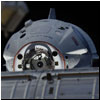 |
2019: New era dawns for ISS (INSIDER CONTENT) The ISS entered a new era with the introduction of a next-generation US spacecraft designed to deliver crews to the outpost. Developed under NASA contracts, the Dragon-v2 from SpaceX and Boeing CST-100 Starliner were to begin carrying astronauts into orbit from the US soil again. It also meant that Roskosmos now had seats available aboard its Soyuz spacecraft to resume launches of commercial passengers. |
||||||||
|
2020: NASA ends Roskosmos' ISS crew transport monopoly (INSIDER CONTENT) It took longer than to put astronauts on the Moon, but NASA finally got its astronauts ready to return to Earth's orbit aboard an indigenously built space vehicle launching from the US soil for the first time since the retirement of the Space Shuttle in 2011. The mission also ended Russia's nearly decade-long monopoly in crew transportation to the International Space Station and closed another major source of cash for Roskosmos. |
||||||||
 |
2021: Nauka expands Russian ISS Segment (INSIDER CONTENT) In February, Roskosmos approved the updated ISS schedule for 2021 highlighted with the addition of two permanent modules to the Russian Segment of the outpost. A short tourist visit to the ISS at the end of the year also got the green light. On December 31, NASA issued an official statement announcing the extension of the US participation in the ISS project until 2030. |
||||||||
 |
2022: ISS comes to the brink (INSIDER CONTENT) Putin's invasion of Ukraine on February 24 hurled all Russian cooperative space projects to a quick exit, but the ISS, had to find a some kind of temporary formula for coexistence. In the meantime, Boeing completed unpiloted tests of its CST-100 Starliner crew vehicle in May, during the OFT-2 mission, while NASA began planning extension of ISS life span as far as 2032. |
||||||||
 |
2023: ISS moves to commercial space (INSIDER CONTENT) At the start of 2023, the ISS flight manifest was thrown into disarray by the coolant leak aboard the Soyuz MS-22 spacecraft previous December. Still, the non-Russian part of the ISS program was gearing up for an increase in commercial space activities with the planned introduction of the crew-rated Starliner and the Dream Chaser cargo ships, but both ultimately slipped into 2024. |
||||||||
 |
2024: Russia faces obstacles in leaving ISS (INSIDER CONTENT) As the partners in the International Space Station project were actively developing their plans for Earth-orbiting and deep-space missions, Russia was left to fend for itself with increasingly shrinking resources. On March 11, 2024, the White House released its 2025 budget which included funding for the ISS deorbiting vehicle and support for the transition to commercial space stations. However these money would come at the expense of scientific activities aboard the ISS. |
||||||||
 |
2025: Russia cuts crew flights to the ISS (INSIDER CONTENT) With the launch of Soyuz MS-27 spacecraft on April 8, Roskosmos switched from six-month to eight-month shifts aboard the ISS in order to reduce Soyuz crew vehicle flight rates from two per year to 1.5 annually. But by the end of the year, the ISS project came probably to its biggest test, when the damage to the Russian launch pad in Kazakhstan left the station. |
||||||||
2026: Extending to 2032 The 2026 operations on the ISS started with a medical emergency hitting a US astronaut Mike Fincke, forcing NASA to cancel a pair of spacewalks on the US Segment and promted an early return of the 11th commerical crew aboard a Dragon vehicle. The first of two cancelled spacewalks was then performed on March 18. In the meantime, the US Senate took up a bill, which would extend the life span of the ISS by two more years until 2032... |
|||||||||

|