| |
|
Russian application satellites
Although vast majority of satellites that the Soviet Union developed during its existence had originated as defense-related systems, many of them were slowly making their way into civilian sectors of the Soviet and, later, Russian economy. During the post-Soviet period, many spacecraft combined their military and civilian roles, while a number of satellites was built specifically for civilian purposes.
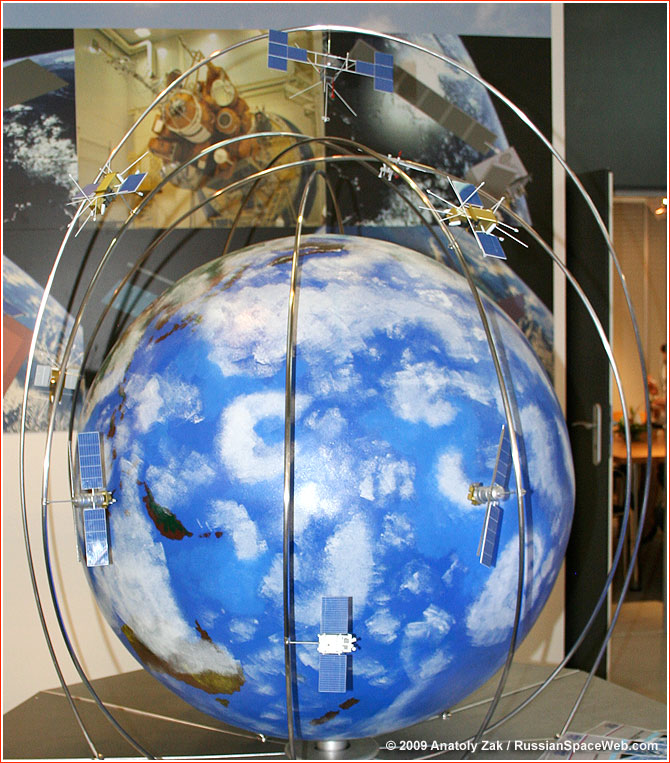
In 2009, the Russian government promised to orbit a whole constellation of Earth-watching satellites. For the period 2008-2015, Russia's Federal Space Program approved three Elektro meteorological spacecraft and two Arkon-2 satellites for radar sensing of the Earth surface. With the launch of Kanopus-V, Zond-PP, BKA and Yubileiny-2 (MiR) satellites during 2012, Russia deployed as many as nine Earth-watching cameras in orbit. In the same year, Russian officials promised to orbit 26 remote-sensing satellites by 2020. In August 2013, RIA Novosti news agency quoted the head of the Russian forest agency, Rosleskhoz, Andrei Zhilin as saying that in a previous year the organization had been acquiring up to 80 percent of satellite imagery from its foreign partners, but by 2013 around 60 percent was coming from abroad and the rest from Russian satellites. In November of the same year, the head of the nation's weather service, Rosgidromet, Aleksandr Frolov told RIA Novosti that seven satellites planned for launch in 2014 and 2015 would service the agency, among them Meteor and Arktika satellites. In 2014, Roskosmos drafted a new Federal Space program, which would extend from 2016 to 2025. According to the document, a number of Russian civilian satellites operating in orbit would increase from 35 in 2015 to 76 in 2025. During the same period, a number of communications satellites would increase from from 15 to 36, remote-sensing satellites from 10 to 27 and scientific satellites from 2 to 10. Up to 14 satellites would be used for meteorological observations. (713) As of beginning of 2015, the Russian remote-sensing satellite capability was estimated at less than 25 percent from the planned capability in 2025. At the time, Russia had four remote-sensing satellites in orbit and had a plan to have 10 such satellites by 2020. During the same period, a number of meteorological satellites was expected to grow from two to 11. (744) Ukraine to build satellite for Egypt Published: 2001 Nov. 1 Ukrainian space officials inked a deal last month to build and launch a satellite for the Egyptian government. According to the contract, signed in Egypt on October 24, the KB Yuzhnoe design bureau, based in the city of Dnepropetrovsk, and a group of industrial sub-contractors in Ukraine will develop and build the satellite within next three years. The deal was reached during a visit to Egypt by a group of Ukrainian space officials led by Stanislav Konyukhov, Designer General of KB Yuzhnoe and Yuri Alekseev, director of KB Yuzhnoe’s production plant. Earlier this year, KB Yuzhnoe came out a winner among several bidders around the world to build the spacecraft for the Egyptian government, KB Yuzhnoe representative said. The Egyptian satellite, which will be used for remote-sensing applications, is expected to have an operational lifetime of five years. The spacecraft will be launched by the Dnepr-1 booster. KB Yuzhnoe used to be a major manufacturer of military and civilian spacecraft in the former Soviet Union. In the post-Cold War period, the financially struggling company developed several versions of the orbital platforms, which could be adapted for needs of the commercial customers. With a weight ranging from 59 to 153 kilograms, such standardized satellites can carry from 10 to 100 kilograms of payload respectively. Zenit-2 lofts a cluster of satellites Published: 2001 Dec. 10 The Zenit-2 rocket delivered the Meteor-3M remote-sensing satellite from Baikonur Cosmodrome's Site 45 on December 10, 2001. Along with the 2,477-kilogram Meteor, the Zenit-2 was carrying a cluster of international payloads with the total weight of 188 kilograms. It included Moroccan MAROCTUBSAT and Pakistani BADR-R satellites. Also onboard were the Compass spacecraft developed at KB Mashinostroenia in the city of Miass and designed to test the techniques of predicting earthquakes, and the Reflector experiment developed by NII KP design bureau and designed to monitor "space junk." All five spacecraft were inserted into a 1020-kilometer orbit with an inclination 99 degrees toward the Equator. This launch was originally expected in December of last year, however it was continuously delayed mainly due to the problem with the US-build SAGE-III instrument installed onboard the Meteor-3M. This was the 35th launch of the Zenit rocket from Baikonur. Kosmos-3M launches navsat Published: 2002 Sept. 27 The Kosmos-3M booster delivered a Nadezhda-M ("Hope") navigation satellite on September 26, 2002, after the launch from Russia's northern cosmodrome in Plesetsk. The blastoff took place at 19:30 Moscow Time, the Russian Space Forces announced. The Nadezhda-M satellite entered a 987.4 by 1,022.1-kilometer orbit with the inclination 83 degrees toward the Equator. The Nadezhda-M carries COSPAS-SARSAT equipment designed to relay distress signals from the ships around the world. According to official statistics it was the 405th launch of the Kosmos-3M-type booster and the 1934th space launch from Plesetsk. Former spysat enters Earth-watching business Published: 2006 June 16 A new Russian satellite based on a military reconnaissance platform joined a crowded field of commercial remote-sensing. The Soyuz-U rocket blasted off from Baikonur Cosmodrome's Pad 5 at Site 1, on June 15, 2006, at 12:00:00.193 Moscow Time, carrying the Resurs-DK-1 No. 1 spacecraft. The payload successfully reached orbit eight minutes later, according to the official Russian sources. Russia introduces two new satellite families Published: 2012 July 20; updated July 22 A Russian rocket lifted off Sunday with a cluster of five satellites, among them a pair of new-generation spacecraft inaugurating platforms for future scientific and commercial applications. A Soyuz-FG/Fregat rocket blasted off from Site 31 in Baikonur on July 22, 2012, at 10:41:39 Moscow Time, carrying Russian Kanopus-V No. 1 remote-sensing satellite along with a similar BKA spacecraft built for the government of Belarus. As secondary payloads, the mission carried a Russian MKA-FKI science satellite, an exactView satellite for a Canadian company and a TET-1 experimental satellite funded by the German space agency, DLR. According to the Russian space agency, the Fregat upper stage separated from the third stage of the launch vehicle at 10:50 Moscow Time and started its own flight including five firings of its main engine. All five payloads reached orbit successfully. BKA separated from the Fregat at 11:26 Moscow Time, followed by Kanopus-V at 11:31, TET-1 at 11:33, exactView-1 and MKA-FKI at 13:00:33 Moscow Time, when flying over the Pacific Ocean beyond the communication range of Russian ground stations. The Fregat upper stage then conducted a deorbiting maneuver and reentered the Earth atmosphere at 13:50:53 Moscow Time. A ground control team responsible for MKA-FKI spacecraft confirmed establishing normal contact with the satellite shortly after it had entered the communication range at 13:55:21 Moscow Time. Industry sources also reported that Kanopus and BKA satellites established contact and downlinked telemetry during the second orbit of the mission. Both Russian spacecraft onboard this Soyuz rocket represented new types of standard carriers, which are scheduled to be customized for future missions. The Kanopus platform is intended primarily for remote-sensing commercial applications, while a smaller Karat bus is well suited for a wide variety of low-cost science experiments. Both platforms already have a backlog of future missions waiting for launch. Russia to develop new remote-sensing satellite constellation Obzor-O Published: 2012 Oct. 25 On October 25, 2012, Russian space agency, Roskosmos, formally announced a soliciation of bids for a tender to develop an Obzor-O four-satellite constellation of remote-sensing satellites at a cost of 5,088 billion rubles. The system would provide imagery of the Earth surface for the nation's civilian agencies such as Emergency Situations Ministry, MChS, Ministry of Agriculture, Russian Academy of Sciences and Russian Cartography Ministry. Obzor-O satellites were expected to provide imaging of the Earth surface in eight different ranges of spectrum including optical and infrared. Optical instruments would have a resolution of five meters and infra-red sensors would be able to detect details as small as 20 meters. Russia to build its first nano-satellite Published: 2012 Dec. 14 A Russian company will build its first nano-satellite dedicated to imaging of the Earth surface. In December 2012, Russian space agency, Roskosmos, awarded a 315-million-ruble contract to a startup company Dauria to develop a pair of 10-kilogram MKA-N satellites and launch them before Nov. 25, 2015. (MKA-N stands for "Small Spacecraft in Nano-class.) Satellites would be equipped with cameras capable of taking photos of the Earth surface with a resolution around 20 meters from an altitude of 450 kilometers. They would have to function in space for at least three years and to be as closely compatible as possible to the standard CubeSat design, which served as a basis for many student-built and experimental satellites in the West. Along with the spacecraft itself, Roskosmos asked the contractor to develop a release mechanism, which would enable to deploy up to 24 such satellites in a single launch of the Soyuz rocket. The agency favored Dauria's bid for the project over a lower cost proposal from a veteran of the Russian space industry -- TsSKB Progress in Samara, which offered Roskosmos to complete the project at a price tag of 297 million rubles. Russia to develop a new-generation radar satellite Published: 2012 Dec. 17 On Dec. 17, 2012, Russian space agency, Roskosmos, solicited bids for a tender to develop a radar-carrying Obzor-R remote-sensing satellite. The new-generation spacecraft aimed to replace the Arkon-2M project, which was canceled in 2012. The agency allocated 3,604,800 thousand rubles ($116.3 million) for three years of development work ending on Nov. 25, 2015. The agency put a deadline for the submission of bids for the tender at Jan. 15, 2013, and scheduled to announce a winner on January 24. Russian satellites to monitor forest fires In December 2012, Russian forest ministry, Rosleskhoz, and the emergency situation agency, MChS, requested the Russian space agency, Roskosmos, to conduct "technical imaging" of the nation's territory during 2013 in an effort to monitor forest fires. Until that time, the government agencies had still used data from infra-red sensors on foreign satellites, the head of Rosleskhoz Viktor Maslyakov, told RIA Novosti news agency. According to Maslyakov, his agency could finally get access to domestic capabilities in the field. Roskosmos could reportedly employ operational Meteor-M1, Elektro-L No. 1 and Kanopus-V No. 1 satellites for the task. In the past few years, a number of serious forest fires have raged in Russia, including a massive fire around Moscow that paralyzed life in the Russian capital for weeks. In August 2013, the head of Rosleskhoz, Andrei Zhilin told RIA Novosti that by 2015, up to 15 Russian satellites would be involved in monitoring of forest fires, dramatically increasing the operational awareness about sources of fires, as well as about illegal logging. Russia prepares new push into satellite remote sensing in 2019 The Roskosmos State Corporation appears to be planning another attempt to match western capabilities in delivering high-resolution imagery of the Earth's surface and remote-sensing information from orbit. Russia plans Starlink equivalent In an effort to upgrade its aging communications and remote-sensing satellite fleet, Roskosmos initiated the Sfera ("sphere") project in 2018, which encompassed multiple constellations to be deployed in vastly different orbits and designed to provide a wide array of functions, including some never before available via Russian satellites. Soyuz launches Resurs-P4 imaging satellite A Soyuz-2-1b rocket lifted off on a mission to revive Russia's prematurely defunct Resurs-P satellite constellation on March 31, 2024. The vehicle carried the fourth spacecraft in the series designed to provide the highest-resolution imagery of the Earth's surface among the country's civilian orbital assets.
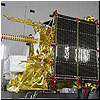
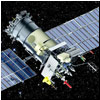
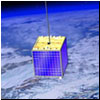
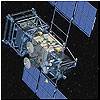
The overview of application satellite projects in the former USSR:
|
|

|