|
|
|
Year |
(compiled by Anatoly Zak; Last update:
September 26, 2026
) |
|
||||||
Guzman Prize is established for the first successful attempt in interplanetary communication. (Mars is excluded as an easy target). Konstantin Tsiolkovsky completes its second home-built wind tunnel for experiments in aerodynamics. He also works on problems of rocket propulsion for space flight since around 1896. Robert Goddard begins pondering the problem of space flight. In Vienna, Austria, Die Zeit magazine publishes a scientifically founded article by Román Baron von Gostkowski on the possibility of space travel. |
|||||||||
|
1901
"The First Men in the Moon" |
A spaceship in the novel "The First Men in the Moon" by H. G. Wells travels to the Moon by means of an anti-gravity material called "cavorite." A novel "Journey to Mars" by Leonid Bogoyavlensky (Afanasiev) is published. Mars corporation is established in Stockholm, Sweden, to manufacture rockets developed by Baron von Unge. Chamberlin and Moulton propose a "dualistic" theory of the planets' formation as a result of our Sun's interaction with another star. (790) |
||||||||
|
1902
"Le Voyage dans la Lune" |
April-July: Konstantin Tsiolkovsky works on "The Exploration of the World's Space with Reactive Instruments." Sept. 1: Georges Melies' "Le Voyage dans la Lune," (A Trip to the Moon), the first full-length science fiction film on space travel, premiers at Robert-Houdin theater in Paris, France. Robert H. Goddard, then a high-school student, submits an article "The Navigation of Space" to Popular Science News which rejects the work. M. M. Pomortsev develops solid propellant rockets with stability surfaces and capable of reaching a range from eight to nine kilometers. |
||||||||
|
1903 |
May 31: In Russia, the Nauchnoe Obozrenie (Scientific Review) magazine (No. 5) publishes the first chapter of "The Exploration of the World's Space with Reactive Instruments" by Tsiolkovsky. He starts the work on the second part around the same time. Rockets with aerodynamic stabilizing surfaces designed by M. Pomortsev are flight tested at the Russian port city of Kronshtadt. German engineer Alfred Maul patents a rocket system acknowledging prior patent by Ludwig Rohrmann in 1891. Dec. 17: The Wright brothers achieve the first powered flight of a heavier-than-air vehicle.
|
||||||||
|
1904
The first photo from a rocket |
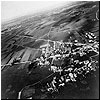
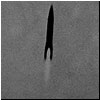
April 19: German engineer Alfred Maul produces a photo of the local landscape from an altitude of 600 meters using a rocket apparatus, which is proposed for military reconnaissance. In Russia, I. V. Mesherskiy publishes a theoretical work on physics of movement of a body with a changing mass. In Russia, Ivan Grave defends a dissertation evaluating burning of the gun powder in the enclosed volume.
|
||||||||
|
1905 |
April: In a report to Russia's artillery committee, M. Pomortsev declares his experiments with rockets successfully completed. May 12: In a letter to Russia's business newspaper Birzhevue Novosti, Tsiolkovsky condemns American designs for military rockets. Albert Einstein publishes his papers on the theory of relativity. Fridrikh Tsander encounters Tsiolkovsky's writings and soon becomes one of the most active developers of space flight ideas in Russia.
|
||||||||
|
1906
Lowell's Mars globe |
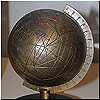
1906 or 1907: In France, a Russian engineer Victor de Karavodine patents pulsating ramjet. In the US, Robert Goddard ponders the idea of solar-powered, electric rocket propulsion in his personal notes. Complete works by Jules Verne in 88 volumes starts publication in Russia. "Mars and Its Canals" by Percival Lowell is published.
|
||||||||
|
1907 |
March: Tsiolkovsky works on a series of articles: "The Universe in Essays and Pictures" with a popular description of the Earth as a space body. In Russia, N. V. Gerasimov applies for a patent for a solid-propellant rocket with gyroscopic stabilization. A British biologist Alfred Russel Wallace publishes "Is Mars Habitable?" which exposes major flaws in popular theories about life on Mars. Robert Goddard fires a gunpowder rocket in the basement of the physics building of the Worcester Polytechnic Institute, Mass. 1906 (71) -1907: Fridrikh Tsander conducts his first studies into the possibility of interplanetary travel. (382)
|
||||||||
|
1908
Tunguska |
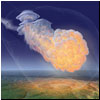
In France, Robert Esnault-Pelterie initiates his research in astronautics. Publication of the novel "Red Star" by Aleksandr Bogdanov, describing a mission to Mars powered by a "minus-substance" along with an atomic decay-powered jet engine. "Mars As the Abode of Life" by Percival Lowell is published. Film "Excursion dans la Lune," (A trip to the Moon) is released. June 30, just after 7 a.m. local time: A space object (probably an iron-rich meteor) enters the Earth's atmosphere and explodes at an altitude of around six or eight kilometers over the Kamennaya Tunguska river in Central Siberia in what becomes known as the Tunguska Event. The explosion flattens about 80 million trees over an area of 2,000 square kilometers. August: Tsiolkovsky sends an article "Jet-propelled Instrument as the Tool of Flight in Vacuum and in the Atmosphere" to the Vozdukhoplavetel magazine. (Not published until 1910) Sept. 18: The date on a manuscript by F. A. Tsander, which considered life support and other issues of the interplanetary travel. |
||||||||
|
1909 |
In the US, Robert Goddard starts systematic research in the field of rocket dynamics. Hermann Oberth drafts his first rocketship. N. A. Sytenko designs an anti-aircraft rocket featuring clusters of five and six solid-propellant motors.
|
||||||||
|
1910 |
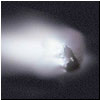
Halley Comet makes spectacular appearance during its close encounter with the Earth, inspiring an interest in space among many, including future German rocket pioneer Johannes Winkler. A Belgian engineer, Georges Marconnet, patents a pulse-jet engine for use on the aircraft. Nikolai Rynin reaches a height of 6.4 kilometers in an air balloon, setting a Russian record.
|
||||||||
|
1911 |
The American Aeronautical Society is formed in the US. Aug. 27: The New York Times carries a headline "Martians Build Two Immense Canals in Two Years" reflecting a wide-spread belief in the existence of an advanced civilization on the Red Planet. December: St. Petersburg-based magazine Vestnik Vozdukhoplavaniya starts publication of a second part of "Exploration of the World Space with Reactive Instruments" by Tsiolkovsky. |
||||||||
|
1912 |
April: I. V. Volovsky, vice-director of Putilov Plant in St. Petersburg, proposes a spinning missile launched from aircraft and automobiles and capable of striking aerial and ground targets. June: Russia's artillery committee considers Volovsky's missile proposals. November: Russia's artillery committee considers and rejects Volovsky's missile proposals. Nov. 15: At the meeting of the French Physical Society, R. Esnault-Pelterie delivers a report entitled "The considerations on the Results of Unlimited Reduction in Engine Weight." Nikolai Tikhomirov proposes a project of a solid-propellant rocket to the Russian navy ministry. Engineer V. V. Ryumin publishes an article "By the Rocket into the World's Space" in the Priroda i Lyudi magazine, which popularizes work by Tsiolkovsky. (71) A Polish-Russian director Ladislav Starevich makes a movie A Journey to the Moon with a Russian producer Aleksandr Khazhonkov. (The movie apparently did not survive.) |
||||||||
|
1913 |
The novel "On the Waves of Ephir" by Boris Krasnogorsky describes a spacecraft propelled by the pressure of light and a water landing. (382) At age 16, Aleksandr Shargey (Yuri Kondratyuk) initiates research on the possibility of space flight. (385) Oct. 1: In the US, Robert Goddard submits a patent application for a "Rocket Apparatus." |
||||||||
|
1914
|
In the US, Robert Goddard registers two patents for a liquid-propellant rocket and a two- and three-stage solid-propellant rocket. (298) Tsiolkovsky publishes the 3rd part of the "The Exploration of the World's Space with Reactive Instruments." The novel "Islands of Ephir Ocean" by B. Krasnogosky and D. Svyatsky describes an expedition to Venus. A Ukrainian author Volodymyr Gerynovych publishes Zhiteli Marsa (Inhabitants of Mars) in Winnipeg, Canada. |
||||||||
|
1915 |
March 3: The US Congress creates Advisory Committee for Aeronautics (NACA), precursor of NASA. May 31: British employ rockets in the defense of London during the first German air raid with Zeppelin air ships. (310) The publication of "Interplanetary Travel" by Yakov Perelman popularizes Tsiolkovsky's ideas.
|
||||||||
|
1916 |
Feb. 11: Professor Zhukovsky gives a positive review of Nikolai Tikhomirov's solid-propelled rocket proposals. (384) July 14: Ivan Grave from Russia's Artillery Academy files a patent request No. 746 for a rocket burning smokeless gun powder. (71) In France, Henri Melot works on rocket engines for aircraft. (276) French forces likely use the world's first anti-aircraft missile targeting a German airship Zeppelin LZ-90 during World War I. St. Petersburg student Georgy Kulbush writes a report "Great Dream of Humanity - the Space Travel" featuring a depiction of a spacecraft. |
||||||||
|
1917 |
Jan. 5: The Smithsonian Institution awards a $5,000 grant to Robert Goddard to conduct rocket research in the upper atmosphere. March 25: Aleksandr Shargey (Yuri Kondratyuk) completes one of his first manuscripts on space flight. (100) June 19: The US Army funds rocket research led by Robert Goddard. August: An envelope containing a proposal of a rocket-propelled flying vehicle by Nikolai Kibalchich is unsealed after 36 years in the archive in the wake of the February revolution in Russia. Nov. 7: The Bolshevik revolution in Russia. In US, Robert Goddard confirms the feasibility of electric rocket propulsion. (2) |
||||||||
|
1918 |
Jan. 14: Robert Goddard writes "The Ultimate Migration" describing the exodus of the human civilization from a dying Solar System onboard a nuclear-powered colony. The work would not be published until 1972. March: A Russian space flight enthusiast Nikolai Rynin receives a proposal of a rocket-propelled flying vehicle by Nikolai Kibalchich. April: The Byloye magazine publishes a description of a manned rocket-powered vehicle originally proposed by Nikolai Kibalchich in 1881. Nov. 6-7: Goddard demonstrates solid-propellant rocket (Bazooka) at Aberdeen, Maryland. A sci-fi novel "Beyond Earth" by Tsiolkovsky is published in Priroda i Lyudi magazine. |
||||||||
|
1919 |
May 3: In a letter to the Soviet government, Nikolai Tikhomirov proposes to organize a laboratory for the development of powder rockets. In the US, Robert Goddard submits a progress report entitled "A Method of Attaining Extreme Altitudes," to the Smithsonian Institution. (Dated May 26) (158) G.W. Wells' "The First Men in the Moon" released as a film. 1916- Fall 1919: Yuri Kondratyuk (Aleksandr Shargey) writes "To those who will read to build," examining various aspects of rocketry and space flight. Not published until 1964. (100) |
||||||||
|
1920
G.W. Wells visits Lenin |
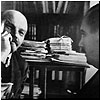
January: The Smithsonian Institution publishes Goddard's "A Method of Attaining Extreme Altitudes," which was misinterpreted by the press as a proposal for a rocket flight to the Moon. Hermann Oberth develops a concept of a multi-stage liquid propellant space launcher. The New York Times publishes an editorial suggesting that Goddard just pretends to be ignorant of elementray physics, when claiming that rocket would work in vacuum. (791) A paper "Riches of the Universe" by Tsiolkovsky is published. British sci-fi writer G.W. Wells visits Russia and meets the Soviet leader Vladimir Lenin. |
||||||||
|
1921 |
Feb. 18: A Russian inventor, A. F. Andreev, requests a patent for a portable personal flight vehicle propelled by a liquid-propellant engine burning oxygen and methane. March 1: Tikhomirov's rocket development lab is established in Moscow. June 21: The USSR establishes Physics Observatory, later the IZMIRAN institute. The Soviet government awards a personal pension to Konstantin Tsiolkovsky, which enables him to continue work late in his life. Dec. 30: Moscow Inventor Conference reviews Fridrikh Tsander's vehicle, which would take off under propeller power and then fire rocket engines consuming onboard metal parts, no longer needed in flight. |
||||||||
|
1922 |
Leningrad's State Scientific-Technical Institute initiates the development of the smokeless gun powder for Tikhomirov's laboratory. University of Heidelberg rejects a dissertation by Hermann Oberth on a space rocket.
|
||||||||
|
1923
Oberth |
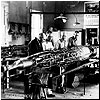
May: USSR establishes State Astrophysics Institute in Moscow. July 26: In Germany, Hermann Oberth publishes work called "The Rocket into Interplanetary Space." October: The Soviet newspaper Izvestiya praises Oberth's research on rocketry, prompting Tsiolkovsky to seek a recognition as well. Nov. 1: In the US, Robert Goddard tests a rocket engine using liquid oxygen and gasoline and supplied by a pump. The Revolutionary Military Council of USSR issues a request to Tikhomirov's laboratory to test the possibility of using jet propulsion for increasing the range of existing munitions. In Italy, Luigi Gussalli (1885-1950) publishes "Can We Attempt a Space Journey to the Moon?" In USSR, Aleksei Tolstoy publishes the novel Aelita, describing a civilization on Mars. A year later, Yakov Protozanov directs a film based on the book. |
||||||||
|
1924
Tsander |
March 22 - April 3: Vladimir Artemiev conducts launches of 21 solid-propellant rockets at the Chief Artillery Range near Leningrad, which demonstrate the capability of ten-fold increase in the range of existing munitions. June 20: The Society for Studies of the Interplanetary Travel, OIMS, is founded in Moscow, chaired by G.M. Kramarov. (386) Oct. 31 - Nov. 2: Professor Vetchinkin delivers a series of lectures on the possibility of interplanetary travel at Moscow Polytechnic Museum. Tsiolkovsky's work "Rocket into cosmic space" describes multi-stage rockets. Tsander publishes "Flight to Other Planets." Tsiolkovsky, Tsander and Kondratyuk propose the use of the atmosphere as a braking medium for the spaceships returning to Earth. |
||||||||
|
1925
Vetchinkin's lectures |
Tikhomirov's lab, later known as Gas Dynamics Laboratory, GDL, moves to Leningrad (St Petersburg). Hermann Oberth learns about Tsiolkovsky's work. April 13: Professor Vetchinkin delivers a series of lectures on the possibility of interplanetary travel at Moscow Polytechnic Museum. May 7: The world's first planetarium with a projection system opens in Munich, Germany. June 19: The first exhibit organized by mathematician Dmitry Grave and dedicated to the interplanetary travel is held in Kyiv's House of Communist Enlightenment. November: Walter Hohmann publishes "Die Erreichbarkeit der Himmelskorper" (The Attainability of Celestial Bodies) describing rocket motion in space. |
||||||||
|
1926
Goddard |
March 16: In Auburn, Massachusetts, Robert Goddard launches the world's first liquid-propellant rocket. April: In the US, Hugo Gernsback, an engineer and businessman, publishes first issue of Amazing Stories, an early sci-fi magazine, which would make big contribution into popularization of space flight. A new and expanded edition of the "Exploration of the Outer Space with Reactive Vehicles" by Konstantin Tsiolkovsky is published. In Germany, Willy Ley publishes "Die Fahrt ins Weltall," (Travel into the Universe) popularizing astronautics. A. Sherbakov, a third-year student at Kharkov Technical Institute leads the formation of the jet propulsion research group in this eastern Ukrainian city. In a speech to the British Association for the Advancement of Science, Professor Bickerton "proves" that reaching the Earth escape velocity is practically impossible. (791) Novel Argonauts of the Universe by A. Yaroslavsky features flight to the Moon in a jet-propelled vehicle. |
||||||||
|
1927
Die Rakete magazine |
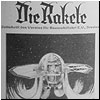
April 24: The world's first exhibition of technology for interplanetary travel opens in Moscow. A visit to the event sparks an interest in space flight of Mikhail Tikhonravov. (453) June 27: In France, Robert Esnault-Pelterie advocates space travel before the Societe Astronomique, the organization founded by Camille Flammarion. It was published as a book a year later. (213) (see entry for 1928) July 5: Johannes Winkler founds Verein fur Raumschiffahrt, VfR, (Society for Space Travel) in Breslau, Germany. Die Rakete magazine is started. Aug. 10: "Space Rockets. Experimental Development" by Tsiolkovsky is published. In USSR, engineers at Tikhomirov's laboratory propose to use solid-propellant motors to assist in the aircraft takeoff. |
||||||||
|
1928 |
March 3: Tikhomirov's lab conducts test launches of rockets, burning smokeless powder, reaching range of 1,300 (71) - 1,500 meters. April (384)-June: Tikhomirov's lab renamed Gas Dynamics Laboratory, GDL, and formally subordinated to Military Research Committee of the Revolutionary Military Council of USSR. June 11: Fritz Stamer's Ente (Duck), the world's first aircraft powered by a solid-propellant rocket engine, completes the first 1.2-kilometer flight in Germany after a takeoff from a catapult. Dec. 26: Robert Goddard's Hoopskirt rocket climbs to an altitude of around 60 meters during a 3.2-second flight. It was Goddard's third launch of a liquid-propellant rocket. Esnault-Pelterie and Andre Hirsch establish the annual Hirsch Prize for best work in astronautics. Esnault-Pelterie publishes "L'exploration par fusees de la tres haute atmosphere et la possibilite des voyages interplanetaires." Nikolai Rynin starts publication of a nine-volume encyclopedia entitled "Interplanetary Communications." It covers fiction literature on space, technology and astronomical topics. |
||||||||
|
1929
Glushko |
January: Yury Kondratyuk publishes "The Conquest of the World's Space." April 18: In USSR, Valentin Glushko submitted the research into the Committee for Inventions entitled "Metal as the Explosive Material" paving the way to his research into the electric jet propulsion. May 15: A department for development of liquid and electrical rocket engines led by Valentin Glushko is formed within the Gas Dynamics Laboratory, GDL. June 11: Nikolai Tikhomirov submits a patent request to the Department of Military Inventions for a method of manufacturing compressed smokeless powder. (384) July: Valentin Glushko starts testing an electrical jet engine at the GDL. Sept. 30: Near Frankfurt, Fritz von Opel tests a RAK.1 solid-propellant rocket glider, which exceeds a speed of 100 miles per hour. Oct. 15: Fritz Lang's "Frau im Mond" (The Girl in the Moon) movie, which inspired many rocket pioneers, is premiered in Germany. October: Tsiolkovsky's work entitled "Space Rocket Trains" is published. He also proposes a jet aircraft to the military, which is deemed unfeasible. Nov. 5: The first Soviet planetarium opens in Moscow. Karl Becker, chief of the Weapons Board of the German army, initiates a study of solid-fueled rockets. H. Noordung publishes "The Problems of Navigating Space," which describes space station. Oberth's "The Road to Space Travel" is published. (791) |
||||||||
|
1930 |
April 4: The American Interplanetary Society is formed in New York by G. Edward Pendray, David Lasser and others. May 17: German rocket pioneer Max Valier dies as a result of a botched engine experiment. (296) May 23: In Berlin, Klaus Riedel and Rudolph Nebel test-fire a rocket engine. (294) Sept. 18: The first test of a liquid-fueled engine developed by Fridrikh Tsander. Sept. 27: Raketenflugplatz, the first rocket test range, is declared operational near Berlin, Germany. Dec. 30: Robert Goddard inaugurates his new test facility in Roswell, New Mexico, with a launch of a liquid-propellant rocket which reaches 610 meters in altitude. Glushko develops the first Soviet liquid-fuel engine, ORM-1. Frank Whittle patents jet engine. In Italy, at the 19th Convention of the Italian Society for the Progress of Sciences, Luigi Gussalli read his paper on 'Astronautics and Jet Propulsion' and suggested awarding an International Prize for Astronautical Altitude to foster enthusiasm 'towards Astronautics, so little known in Italy.' His suggestion was vetoed by the Scientific Committee of the Convention. |
||||||||
|
1931
Piccard's balloon
|
Feb. 21: Johannes Winkler tests the rocket burning liquid oxygen and methane. March 14: Johannes Winkler's HW-1 becomes the first liquid-propellant rocket to fly in Europe. April 15: In Germany, a solid-propellant rocket with folding wings designed by Reinhold Tiling reaches an altitude of around 800 meters. May 31: Physicists Auguste Piccard and Paul Kipfer take off from Augsburg, Germany, in a hydrogen balloon with a pressurized cabin, reaching a record altitude of nearly 16 kilometers on a mission to study upper atmosphere and cosmic rays. August: In Germany, the Repulsor rocket reaches 1,006 meters in altitude and lands with a parachute. Oct. 13: Goddard launches a rocket, which reaches 518 meters in altitude. Nov. 13: Group for Study of Rocket Propulsion, GIRD, is formed in Leningrad (now St. Petersburg). Nov. 18: Group for Study of Rocket Propulsion, Mos-GIRD, led by Fridrikh Tsander is established in Moscow under auspices of the Osoaviakhim. Valentin Glushko begins tests of liquid-propellant engines at GDL. Ettore Cattaneo flies a 280-kilogram rocket-powered glider in Milan. It remains in the air for 34 seconds, covering one kilometer. |
||||||||
|
1932
Winkler's HW-2 |
Feb. 22: Sergei Korolev leads tests of a rocket-propelled glider. March 3: A meeting of the Revolutionary Military Council, Revvoensovet, reviews work of the GIRD team and makes a decision to expand its operation forming a research institute. April 19: Goddard tests a guided rocket. May: Publication of the N. Rynin's nine-part series entitled Interplanetary Travel is completed. June 28: The Heavy Industry Narkomat of USSR orders the creation of Aviation Materials Research Institute. July 14: The Soviet government begins sponsoring Moscow-based Group of Research in Jet Propulsion GIRD. September: F. Tsander publishes his work entitled The Problem of Flight by Means of Jet-propelled Vehicles. Oct. 6: HW-2 rocket designed by Winkler and his associates explodes during tests. Oct. 17: Sergei Korolev, the future de-facto founder of the Soviet space program, attends a conference in Moscow dedicated to the 75th birthday of Konstantin Tsiolkovsky. Nov. 2: Wernher von Braun starts his work on rocketry for the German army at Kummersdorf. November: The American Rocket Society fires its first rocket near Stockton, New Jersey. (792) E. Sanger tests liquid-fueled engines. |
||||||||
|
1933
GIRD team |
March: At Berlin's Raketenflugplatz, the Society for Space Travel, VfR, tests a motor with 250-750-kilograms of thrust. (10) March 18: In USSR, Fridrikh Tsander starts testing the 50–kilogram OR-2 engine burning benzene and liquid oxygen. May: In Germany, E. Sanger publishes his work entitled "The Technology of Rocket Flight." May: The GIRD organization begins testing of the 09 hybrid-propellant engine. Aug. 17: A GIRD-09 rocket with a hybrid engine, designed under leadership of Mikhail Tikhonravov is launched in Nakhabino. Sept. 21: GIRD and GDL officially merge to create Moscow-based Scientific Research Institute for Jet Propulsion (RNII) by the order of the Revolutionary Council, Revvoensovet. Oct. 11: In Germany, the rocket developer Reinhold Tiling and two of his assistants die in the explosion of solid propellant. October: British Interplanetary Society is founded in Liverpool. November: In France, Ari Shternfeld completes a manuscript of Initiation à la Cosmonautique (Introduction to Cosmonautics). Nov. 25: GIRD-X, a Soviet rocket with a liquid-propellant engine is launched near the town of Nakhabino reaching 70-80 meters. Dec. 31: In Leningrad, first and last attempt to launch GDL's RLA-1 rocket with Glushko's ORM-52 engine fails, after severe cold freezes an ignition valve. |
||||||||
|
1934 |
January: In Berlin, the Society for Space Travel, VfR, shuts down. Feb. 17: Head of RNII Ivan Kleimenov visits Tsiolkovsky in his home in Kaluga. (387) May 5: The 06/1 -- the first unguided cruise missile, equipped with a liquid-fuel engine flies for 100 meters. All-Union Conference of Academy of Sciences on Stratospheric Research is held in Leningrad. In his report to the conference, Mikhail Tikhonravov proposed a manned rocket flight to the altitude of 30 kilometers. (453) William Swan reaches an altitude of 200 feet in the aircraft powered by a solid-propellant engine near Atlantic City, New Jersey. Nov. 27: A new jet propulsion study group, KharGIRD, is formed in Kharkov, Ukraine, under leadership of V. I. Rozov. December: Two German A-2 rockets fly from Borkum Island, reaching an altitude of 1.5-2 kilometers. (174) |
||||||||
|
1935
Goddard's A series |
January: Sergei Korolev's work entitled "Rocket Flight in Stratosphere" is published. March 28: Robert Goddard and his team launch their first gyroscopically-stabilized liquid-propellant rocket, A-series No. A-5. During a 20-second flight, the vehicle reached an altitude of 4,800 feet and a range of 13,000 feet, developing a speed of 550 miles per hour. June 27: In Germany, Wernher von Braun outlines the design for a rocket development center in Peenemunde. July 23: Britain's Air Defense Research Committee receives first report on radio direction finding (Radar). Sept. 23: Robert Goddard attempts to launch a liquid-fueled rocket in Roswell, New Mexico, as a demonstration for sponsors. November: Langemak and Glushko of RNII publish their work entitled "Rockets, Their Design and Application." In Germany, Walter starts a company developing rocket engines for airplanes and gas generators for rockets. |
||||||||
|
1936 |
Feb. 23: Fred Kessler, the founder of Rocket Plane Corporation of America, conducts unsuccessful test flight of rocket-powered aircraft dubbed Gloria at Greenwood Lake, New Jersey. March 15: RNII initiates development of the ORM-65 engine with a thrust of 175 kilograms. May 9: Sergei Korolev oversees the first test of a winged missile, designated 216. Oct. 25: In California, a group of Caltech students, led by Frank Malina, conducted the first stand-up rocket engine test in a dirt gulch known to the residents of Pasadena as the Arroyo. The site later became Jet Propulsion Laboratory, JPL, the world's leading center for robotic exploration of the solar system and beyond. Nov. 5: Official test firing of the ORM-65 engine for the RP-318 rocket glider and the 212 cruise missile at RNII. Nov. 19: RNII conducts a test launch of an 217/p anti-aircraft winged missile with a solid-propellant engine. Robert Goddard publishes "Liquid Propellant Rocket Development." The movie "Kosmicheskiy Reis" (The Space Flight) is released in the USSR. |
||||||||
|
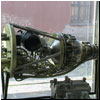
May: The construction of early technical facilities is completed at the rocket development center in Peenemünde, Germany. Key rocket specialists move in from Kummersdorf. Wernher von Braun becomes Technical Director of the Army's development plant, a.k.a. East Plant. June 1: Theodore von Kármán, Director of the Guggenheim Aeronautical Laboratory at the California Institute of Technology at Pasadena, United States, established the Cal Tech Rocket Research Project that began experiments in design fundamentals of high-altitude sounding rockets. Later became the Jet Propulsion Laboratory. June: Rocket-powered Heinkel He-112 aircraft developed at Kummersdorf flies in Neuhardenberg. October: "Introduction to Cosmonautics" by Ari Shternfeld is published in the USSR. Dec. 4-11: Four German A-3 rockets tested at the Greifswalder Oie island in the Baltic Sea. The Astronautics Exhibit in Paris. Kleimenov and Langemak, the leaders of RNII, arrested by Stalin's henchmen. |
|||||||||
|
1938 |
Jan. 11: Georgy Langemak, Director of RNII, murdered by Soviet authorities during Stalin's terror. March: Members of the American Rocket Society demonstrate a liquid propellant rocket at the New York Railroad Club. May 29: Sergei Korolev is injured during testing of the 212 cruise missile. Oct. 29: Orson Welles' radio performance of the "War of the Worlds" reportedly confused for a real news report by some of the listeners. BMW starts the development of rocket engines for airplanes and rockets. Korolev and Glushko arrested and imprisoned during Stalin's terror. Eugen Sanger and Irene Bredt initiate a design of a stratospheric rocket-powered bomber. |
||||||||
|
1939
BIS moonship |
January: Journal of the British Interplanetary Society publishes an article by J.H. Edwards on an "absolute accelerometer" or inertial guidance system. (791) Jan. 29: An experimental cruise missile 212 powered by the ORM-65 No. 2 engine is tested in flight. May 18 or 19: An VR-3 ramjet missile makes a successful test flight at the airfield of the Progress plant. Summer: Soviet I-16 fighter planes fire missiles at Japanese targets during conflict in the Far East. June 20: The He-176 aircraft powered by the Walter-built liquid-fueled rocket engine conducts a test flight in Germany's Peenemünde, powered by Walter's HWK R1-203 engine, becoming the first piloted rocket-propelled aircraft. British Interplanetary Society, BIS, publishes a study of a manned mission to the Moon. |
||||||||
|
1940 |
Feb. 28: The RP-318-1 rocket-powered glider, originally designed by Korolev, is tested in flight, reaching a speed of 200 kilometers per hour after disconnecting from the R-5 tug aircraft at an altitude of about three kilometers. Sept. 19: During a Tsiolkovsky memorial conference in Kharkiv, Ukraine, a local jet propulsion study group launches its second solid-propellant rocket Mirazh-2. A group also works on a "stratospheric" rocket scheduled for construction in 1941. Dec. 18: Germany tests Henschel Hs 293 radio-controlled bomb. |
||||||||
|
1941
Me-163 |
May: RUS-1 and RUS-2 air-defense radar start operations. June 30: The head of the Soviet armament industry orders creation of the design bureau, SKB, at the Kompressor plant for serial production of solid-propellant missiles. July 14: The Red Army fires short-range missiles, BM-13-16, (a.k.a. Katyusha) on the battlefield of World War II for the first time. Aug. 13: German rocket-powered Messerschmitt Me-163 Komet aircraft completes its first test flight. Dec. 18: Reaction Motors Inc., RMI, is founded in Pompton Lakes, N.J., by four members of the American Rocket Society to specialize in liquid-propellant rocket engines. In Italy, Luigi Gussalli publishes "Jet Propulsion for Astronautics", suggesting the use of a 'solar engine' as an auxiliary motor. |
||||||||
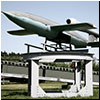
April 20: The Soviet Defense Council signs Decree No. 089s creating Plant No. 706 responsible for gyroscopes and subordinated to ship-building industry. May 15: A BI-1 rocket-propelled piloted interceptor is tested in flight. June 13: The first (unsuccessful) attempt to launch the V-2 (A-4) ballistic missile in Peenemünde, Germany. Aug. 16: The second A-4 missile (production No. 3) reaches an altitude of five miles before failing. Oct. 3: The third A-4 missile reaches an altitude of 85 kilometers during a successful test flight. Dec. 10: German V-1 cruise missile performs its first test flight after being air-dropped from a Fw-200 aircraft. Dec. 24: A V-1 cruise missile makes its first takeoff from a ground-based launcher at Peenemünde-West in Germany. In Italy, Luigi Gussalli starts work on "Interplanetary Travel through Solar Radiations: a Fuel-Free Propulsion System (that needs no fuel) is the Key to Interplanetary Travel." |
|||||||||
|
1943
RD-1 engine |
March 27: The 7th and last test flight of the Bi-1 rocket fighter piloted by G. Ya. Bakhchivandzhi takes place. April 11: The California Rocket Society fires its first rocket propelled by a hybrid engine mixing liquid oxygen and a solid carbon rod developed under leadership of Bernard Smith. April 15: British intelligence informs British Prime Minister Winston Churchill about long-range German rockets. Aug. 17-18: British bombers conduct a surprise raid on the German missile development center in Peenemünde. Aug. 22 - Nov. 18: The RD-1 rocket engine is tested in the USSR aboard the Pe-2R bomber in 40 rocket-powered flights. September: Technical Division within the Chief Artillery Directorate of the US Army forms a rocket department. Nov. 19: The TsAGI aviation research institute forms a department responsible for jet propulsion. |
||||||||
|
1944
V-1 cruise missile |
March 11: In the US, Glendale Rocket Society launches a solid-propellant rocket. March 16: NACA proposes a rocket-propelled experimental plane at a seminar in Langley Memorial Aeronautcal Laboratory in Virginia. The concept will eventually lead to the X-1 program. June 9: The Soviet Army adopts the BM 31-12 battlefield missile system developed by SKB Kompressor. June: Germany begins mass launches of V-1 cruise missiles against England. June 20: The A-4 (V-2) rocket No. V-177 ascends to an altitude of 176 kilometers during a ballistic flight from Peenemunde, Germany. July 5: MX-324, the first US rocket-propelled aircraft flies in secret for the first time at Harper Dry Lake, California. July 27: The Soviet government issues a decree formally releasing a group of key rocket development experts from Stalin's prisons. Sept. 8: The Nazi Germany makes first attempts to fire A-4 ballistic missiles in combat. Soviet troops capture first remnants of the German A-4 rocket in Poland, which are sent to Moscow for evaluation. In the US, Caltech initiates development of a high-altitude rocket and launches its first prototype - Private A. |
||||||||
|
1945
Natter |
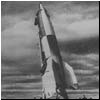
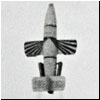
Jan. 24: The A-4b winged rocket flies a test mission in Nazi Germany. March 1: The first and only test launch of the Ba-349 Natter rocket-powered aircraft fails in Southern Germany killing its pilot Lothar Sieber. March 27, 4:45 p.m.: The 1115th and final German A-4 rocket falls on the United Kingdom. (213) A team of top German ballistic missile designers led by Wernher von Braun surrenders to the US army occupying Germany. They eventually create a core of the missile development team at Redstone Arsenal in Hunstville, Ala. May 11: A Soviet Yak-3RD aircraft, equipped with RD-1KhZ liquid-propellant rocket motor, reaches a speed of 782 kilometers per hour at an altitude of 7.8 kilometers. June 27: First rocket launches take place at Wallops Island, Virginia, a future orbital launch site. April-August: Russian engineers and scientists come to Germany in search of rocket technology. Aug. 16: Soviet pilot Vladimir Rastorguev dies in crash of a Yak-3RD rocket-propelled aircraft. September: Helmut Gröttrup, a leading Peenemünde engineer, joins Soviet efforts to restore the production of the German A-4 missiles. Sept. 18: Wernher von Braun arrives in the United States. Oct. 31: The US military solicits proposals from the aviation industry for four types of rockets, including long-range missiles. (792) |
||||||||
|
1946
Earth from A-4 rocket |
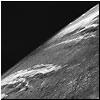
January: Engineers at Vultee Field division of Convair Corp. in Downey, California, draft long-range cruise and ballistic missile per military requirements. Jan. 10: A team Project Diana based in New Jersey, US, sends a radar signal toward the Moon and successfully receives a reflected radio echo 2.6 seconds later for the first time. April: Convair Corp. recieves a $1.4-million contract to study long-range missiles, leading to a classified project MX-774. (792) May 10: The first A-4 missile lifts off successfully from Launch Complex 33 in White Sands, New Mexico, reaching an altitude of 112 kilometers. May 13: The Soviet government launches a wide-scale missile development program based on the German technology. May 20: Convair company outlines requirements for the propulsion system of Project MX-774 to the Reaction Motors Inc. of Rockway, New Jersey. June: The US Air Force issues second contract for Project MX-774. (792) July 9: The seventh A-4 missile flies from White Sands, New Mexico, reaching an altitude of 83.5 miles in a 400.5-second flight. It falls 63 miles north of the launch site. July 30: An A-4 missile flies from White Sands, NM, reaching an altitude of 104 miles. It falls 69 miles north of the launch site. August: Manufacturing of first components for the MX-774 rocket project begins. (792) Aug. 18: A Lavochkin fighter plane equipped with Glushko's RD-1KhZ rocket engine demonstrated in flight during the Tushino's air show. Oct. 22: Soviet authorities deport dozens of German rocket engineers to the USSR. Oct. 24: The A-4 rocket No. 103 climbs to an altitude of 105 kilometers after launch from White Sands, NM, and takes images of Earth's surface. Oct. 28: Western press reports that 500 German ballistic experts arrive at San-Rafael air base in France for future work on missiles. Nov. 1: British government announces that 10 German rocket experts had arrived at United Kingdom during the previous month to work on guided missiles. December: The US Air Force cancels the development of a subsonic cruise missile at Convair Corp. (792) Dec. 17, 10:13 p.m.: An A-4 rocket climbs to 111 miles and releases three artificial meteor showers at 10-second intevals after launch from White Sands, New Mexico. The ascent lasted 66 seconds and the rocket fell 27 miles north of its launch site. |
||||||||
|
1947
X-1 |
March 7: The 20th A-4 (V-2) rocket obtains first photos of the cloud cover from an altitude exceeding 100 kilometers, during its launch from White Sands, New Mexico. July 1: The development of a long-range ballistic missile (MX-774) canceled as "not promising" to save funds, for the exception of three tests in high degree to readiness. Oct. 14: The X-1 plane piloted by Charles Yeager breaks the sound barrier. Oct. 18: The first German A-4 rocket is launched from Kapustin Yar. Nov. 21: First attempt for a static firing of an MX-774 experimental missile ends in a fire on the pad damaging Vehicle No. 1. (792) |
||||||||
|
1948 |
January: The first MX-774 missile undergoes a successful live firing test. (792) May 26: Static tests of the MX-774 missile are successfully completed at Point Loma, California. (792) July 13, 6:05 p.m.: The first test launch of the MX-774 missile ends in failure around a minute after liftoff from White Sands, New Mexico to an altitude of around one mile. (792) July 14: At the summer session of the Academy of Artillery Sciences, AAN, Tikhonravov presents a report entitled "Means of reaching long range of firing with missiles." (247) Sept. 17: The R-1, the Soviet copy of German A-4 is launched for the first time. Fall: Sergei Korolev discusses a possibility of launching dogs on ballistic missiles with an expert in aviation medicine V. I. Yazdovsky. (453) British Interplanetary Society initiates studies of the launch vehicle for artificial satellite. |
||||||||
|
1949
BIS space station |
January: British Interplanetary Society, BIS, publishes a detailed description of the Earth-orbiting space station designed by Harry Ross and Ralph Smith in 1948. Feb. 24: A Bamper-5 rocket reaches an altitude of 393 kilometers (244 miles) after launch from White Sands, New Mexico. A Viking rocket is launched for the first time from White Sands, New Mexico. The US Air Force establishes Department of Space Medicine. The North American Aviation company forms Rocketdyne division focused on rocket propulsion. (792) Sept. 21: The first R-2 ballistic missile is launched. |
||||||||
|
1950
Orbital R-3 |
April 26: Sergei Korolev officially becomes a chief designer of OKB-1, the developer of the Soviet long-range ballistic missiles. Within R-3 ballistic missile program, Korolev team studies a multistage version of a rocket capable of launching a satellite. July: The first rocket (German A-4 with a WAC "Bumper" second stage) blasts off from Cape Canaveral, Florida. Sept. 30: The First International Astronautics Congress convenes in Paris, creating International Federation of Astronautics. Oct. 7: USSR launches a 1RB rocket with dogs Mishka and Chizhik to the altitude of 88.7 kilometers, whose cabin then parachutes safely back to Earth after experiencing an acceleration of 5.5 g during the ascent. |
||||||||
|
1951
|
May 10: The Pacific Rocket Society launches its XDF-21 experimental rocket propelled by cellulose and liquid oxygen from Mojave, California. July 29: The launch of the "geophysical" rocket in the USSR carrying live animals onboard. K. Gatland, A. Dixon and A. Kunesh present a project of a "minimal" spacecraft at the meeting of the International Astronautical Congress in London. First Physics and Medicine of Upper Atmosphere Symposium is held. The International Astronautical Federation is established. |
||||||||
|
1952 |
May 21: Hubert M. Drake and L. Robert Carman from NACA release a proposal to build hypersonic research vehicle which could reach a speed of 6.4 Mach. Space Biology Branch of the Aeromedical Field Laboratory is established at Holloman AFB. June 18: NACA scientist H. Julian "Harvey" Allen completes his research on the blunt body concept for reentry vehicles. The document was classified until 1957. August - September: the USSR conducts final test flights of the R-2 ballistic missile. Sept. 20: Eric Burgess and C.A. Cross present the Martian Probe paper at the meeting of the northwestern branch of the British Interplanetary Society, coining a term "planetary probe." |
||||||||
|
1953 |
Feb. 18: The commission on space science is organized within the Academy of Sciences of USSR. Aug. 20: Redstone missile flies its first test mission. October: The US Air Force Scientific Advisory Board recommends the development of the research vehicle capable of Mach 7. The X-1A research plane reached the altitude of 27 kilometers and speed of 2,655 kilometers per hour. |
||||||||
|
1954 |
May 26: In the USSR, Mikhail Tikhonravov reports on the near-term possibility to launch artificial satellite of the Earth, manned spacecraft, space station and lunar missions. June 25: The Orbiter project is considered by Navy in Washington. A Viking rocket reaches an altitude of 254 kilometers (158 miles) and a speed of 6,920 kilometers per hour (4,300 mph). The US government authorizes the development of the Atlas ICBM. The development of the R-7 ICBM is approved by the Soviet government. The Space Flight Committee of the American Rocket Society issues a report on the application of artificial satellites. (791) |
||||||||
|
1955 |
Feb. 12: The government approves the development of the NIIP-5 test range near Tyuratam (Baikonur Cosmodrome). April: The NII-4 research institute issued a preliminary report No. 571 on the Subject No. 72, entitled "The research on the issue of creation of artificial Earth satellite" commissioned by Korolev. (126) April 15: Soviet press announces formation of the of "Interdepartmental Commission on Interplanetary Communications in the USSR. (791) July 29: The US government announces a plan for launching an artificial satellite during the International Geophysical Year in 1957-1958. (791) August 4: The US Department of Defense recommends the NRL satellite concept for further development which would eventually become the Navy's Vanguard project. It is favored over the Army's Orbiter proposal aimed to deliver the first satellite into orbit. August 8: In the USSR, the Central Committee of the Communist Party approves the artificial satellite project with a decree No. P139/XXXVI. August: An explosion aboard the X-1A rocket plane carried by a B-29 bomber forces the premature drop of the experimental aircraft, but not before its NACA pilot Joe Walker transfers to the carrier aircraft. September: The Vanguard project is officially approved as the program of launching a satellite in the US. Qian Xuesen, a MIT-trained rocket scientist, returns to his native China, after accusations of spying in the US. |
||||||||
|
1956 |
Jan. 30: The Soviet of Ministers of the USSR approves the development of the scientific satellite (Object D). January: "The Mechanics of Photon Rockets" by E. Sanger is published in West Germany. April 25: US Air Force test pilot Pete Everest flies the X-2 experimental plane during its first flight after its launch in mid air from a B-29 bomber. The X-2 experimental plane reaches an altitude of 38 kilometers (126,000 feet) and the speed of 3,540 kilometers per hour (2,200 mph). The Aerobee-Hi AGUL-0113C rocket reaches an altitude of 264 kilometers (164 miles). |
||||||||
|
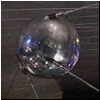
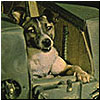
March 10: Scientists at the NACA Lewis Flight Propulsion Laboratory (now NASA's Glenn Research Center) begin ion engine research. May 1: US Navy conducts a test launch of a Vanguard rocket. May 15: The first test launch of the R-7 ICBM (failed after 20 seconds in flight). May 16: The R-2A research rocket equipped with an AFA-39 camera produces first Soviet photos of the Earth surface during a high-altitude ballistic flight. June 11: An Atlas rocket flies its first test mission. It fails 22 seconds after launch. August: R-7 ICBM completes its first successful test flight. Oct. 4: World's first artificial satellite is launched. Oct. 23: US Navy conducts a test launch of a Vanguard rocket. Nov. 3: Sputnik-2, carrying dog Laika, is launched. Nov. 8: The US Army Ballistic Missile Agency and Jet Propulsion Laboratory are instructed to prepare for the launch of the Explorer-1 satellite in response to the Soviet Sputnik. Nov. 13: Skylark SL04 sounding rocket climbs to an altitude of 174 kilometers after launch from Woomera, Australia, becoming the first UK-built vehicle to fly above the Karman line of 100 kilometers. Dec. 1: Based on research by Harvey Allen, NASA engineer Max Faget proposes a blunt conical shape for a US piloted spacecraft. Dec. 6: US Navy attempts to launch the Vanguard (TV-3) satellite. The launcher fails after two seconds in flight. |
|||||||||
|
Jan. 7: President Dwight Eisenhower sends a message to Congress requesting supplemental appropriations for a new Advanced Research Projects Agency, ARPA. Jan. 10: An Atlas rocket flies a suborbital test mission from Cape Canaveral, Florida. Jan. 15: A Redstone missile makes its 2nd test flight from Cape Canaveral, Florida. Jan. 16: The Martin company and the US Navy conduct a ground test firing of the booster engine for the Vanguard rocket at Cape Canaveral, Florida. Jan. 31: Explorer-1, the first US satellite, reaches orbit. Feb. 5: US Navy attempts to launch the Vanguard (TV-3 backup) satellite. The launcher fails after 57 seconds in flight. March 5: Explorer-2 satellite fails to reach orbit. March 17: The 1.47-kilogram Vanguard (TV-4), the first satellite to use solar energy, reaches orbit. March 26: The US Explorer-3 satellite for studies of radiation and micrometeoroids enters orbit. March 27: US Secretary of Defense Neil H. McElroy reports that the Advanced Research Project Agency, ARPA, will initiate the development of scientific satellites and lunar probes. April 23: US Air Force launches the Thor-Able-1 two-stage rocket from Cape Canaveral on a suborbital trajectory. April 28: The third Avangard rocket fails to reach orbit. May 15: The Object D (Sputnik-3) science satellite reaches orbit. May 27: The fourth Vanguard rocket fails to reach orbit. June 26: The fifth Vanguard rocket fails to deliver a satellite into orbit due to a second stage failure. July 26: A US Air Force Thor missile fails around 70 seconds after liftoff from Cape Canaveral. July 26: A US Army Jupiter-C rocket successfully launches the Explorer-4 satellite from Cape Canaveral into a 51-degree orbit to study radiation. It operates for 2.5 months mapping radiation belts. July 29: President Eisenhower signs the National Aeronautics and Space Act establishing NASA. Aug. 17: A three-stage Thor-Able rocket, carrying US Air Force's Pioneer lunar orbiter, explodes 77 seconds after launch upon reaching a 10-mile altitude over the Atlantic. Aug. 24: The US Explorer-5 satellite fails to reach orbit. Aug. 30: American Advanced Research Project Agency, ARPA, issues Order 19-59 directing the creation of a hydrogen-propelled upper stage, later centuar, for the Atlas rocket. Sept. 23: An R-7-based 8K72 launch vehicle fails 93 seconds after liftoff during an attempt to send the E1 No. 1 probe to impact the Moon. Sept. 26: A US Vanguard rocket suffers its sixth failure in reaching orbit. Oct. 1: Newly created NASA begins its operation. Oct. 11: US Air Force launches a Thor-Able rocket toward the Moon. Although all three stages work as planned, a 3.5-degree deviation from the correct trajectory results in a 38-kilogram Pioneer-1 (Able-2) lunar orbiter reaching 113,800-kilometer apogee before falling back to Earth on October 12 after a 1.76-day flight. The spacecraft was designed to image the lunar surface and detect ionizing radiation, cosmic rays, magnetic field and micrometeorites. Oct. 12: An R-7-based 8K72 launch vehicle fails 104 seconds after liftoff during an attempt to send the E1 No. 1 probe to impact the Moon. Oct. 13: NASA launches Explorer-7 to conduct the first measurements of reflected UV and infra-red radiation from Earth, along with monitoring Sun's electromagnetic rays. October: The US Mercury program begins. Nov. 8: US Air Force's Thor-Able rocket launches the Pioneer-2 lunar orbiter, but the third stage fails to fire leaving the spacecraft on a ballistic trajectory with a 1,550-kilometer apogee and a velocity of 16,000 miles per hour. The spacecraft burns up over Africa 45 minutes after its liftoff. Nov. 25: NASA requests Air Force Ballistic Missile Division to support a preliminary research program leading to manned space flight. Dec. 4: An R-7-based 8K72 No. B1-5 launch vehicle fails 245.4 seconds in flight during an attempt to send the E1 No. 1 probe to impact the Moon. Dec. 6: US Army launches a four-stage Juno-2 rocket from Cape Canaveral carrying the six-kilogram Pioneer-3 lunar flyby vehicle toward the Moon. Due to a premature shutdown of the first stage, the payload reached an altitude of 102,320 kilometers from Earth before falling back and burning up over Africa on December 17 without achieving an Earth's escape velocity. Dec. 13: US Navy launches a squirrel monkey on a Jupiter missile, which was lost in South Atlantic. Dec. 17: US Air Force inaugurates it new launch site at Vandenberg, California, firing a Thor ballistic missile on a suborbital trajectory into the Pacific Ocean. Dec. 18, 6:02 p.m. EST: US Air Force launches an Atlas rocket successfully orbiting the first communications payload developed within Project Score. Qian Xuesen, the father of the Chinese rocketry, proposes a satellite project to the Chinese government. |
|||||||||
|
Jan. 2: The USSR launches a 8K72 No. B1-6 launch vehicle carrying the E1 No. 4 probe designed to impact the Moon. Due to navigational errors during the ascent, the spacecraft, announced as Luna-1, misses the Moon and becomes the first human-made object to escape the Earth's graviational field and entering an orbit around the Sun. Jan. 21: The first orbital launch attempt from Vandenberg Air Force Base of a Thor-Hustler rocket carrying a Corona reconnaissance satellite (a.k.a. Discoverer-0) ends in near disaster on the pad due to an accidental activation of the upper stage. Feb. 28: US launches the Discoverer-1 reconnaissance satellite (a.k.a. Corona) into a polar orbit from Vandenberg Air Force base. March 3: US Army's Juno-2 rocket lifts off with the 6.1-kilogram Pioneer-4 lunar flyby spacecraft. Because the second stage fires one second longer than planned, the spacecraft deviates from its prescribed trajectory and flies within 60,000 kilometers from the Moon on March 4, instead of planned 24,000 kilometers, and enters a heliocentric orbit. Mission control maintains communications with the spacecraft for 82 hours until the distance of 655,000 kilometers from Earth and downlinks useful space radiation data. April 13: The Vanguard SLV-5 rocket fails to reach orbit with two payloads. May 22: The Soviet government issues a decree authorizing the development of the first piloted spacecraft. May 28: First primates (Able and Baker) complete a suborbital flight onboard a Jupiter ballistic missile. June 8: The X-15 rocket-propelled aircraft makes its first unpowered flight lasting less than five minutes with Scott Crossfield at the controls. July 1: The US conducts the first nuclear rocket propulsion test, Kiwi-A, within the Rover Project of the nuclear research laboratory in Los Alamos. Aug. 14: The Explorer-6 satellite takes first images of the Earth from orbit. Sept. 10: China promises launch of a space rocket to mark the 10th anniversary of the republic. Sept. 12: The USSR launches the Luna-2 probe, the first man-made object to impact the Moon. Sept. 18: Vanguard-3 delivers 50 pounds of payload to a more than 2,000-mile orbit. (791) Oct. 3: Luna-3 photographs the Far Side of the Moon. Nov. 26: An Atlas-Able rocket lifts off with the 169-kilogram Able-4 lunar orbiter, but the failure of the payload fairing at T+45 seconds dooms the mission. Dec. 10: The Soviet of Ministers issues a secret decree No. 1388-618 directing the development of the planetary probes for missions to Mars and Venus and the first piloted spacecraft. |
|||||||||
|
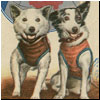
Jan. 11: Konstantin Vershinin, the Commander-in-Chief of the Soviet Air Force, issues a decree on the creation of a military unit for space flight training, the precursor to Star City. Jan. 21: A Little Joe-1B rocket launches on a suborbital trajectory with a rhesus monkey Miss Sam to study effects of acceleration and weightlessness on living organisms. March 11: The US launches Pioneer 5, which would succeed in transmitting radio signals from the distance of 22.5 million miles -- a record for that time. April 1: The US launches Tiros-1 from Cape Canaveral, the first weather-monitoring satellite. April 13: The US successfully launches Transit-1B, the first navigation satellite. May 15: The first prototype of the Vostok spacecraft reaches orbit. June 22: The US Air Force launches Thor Able Star rocket successfully delivering the first signal-intelligence satellite Grab-1, designed to detect Soviet air-defence radar. June 24: Scientists from 10 European countries establish the Groupe d'etudes europeen pour la collaboration dans le domaine des recherches spatiales, GEERS, to promote European cooperation in space. July 28: The second attempt to launch a Vostok spacecraft ends in failure and the loss of two dogs onboard. Aug. 18-19: The Discoverer-14 (Corona) satellite successfully returns a capsule with reconnaissance photos from orbit. It is captured in mid-air by a C-119 aircraft. The mission produced more images than delivered by 24 flights of the U-2 reconnaissance aircraft. Aug. 12: A US Thor-Delta rocket launches the Echo-1A inflatable satellite for experiments in radiowaves reflection. Aug. 19: Two dogs, Belka and Strelka, orbit the Earth and land aboard the prototype of the Vostok spacecraft (Korabl Sputnik-5), becoming first animals returning from orbit. Oct. 24: Around 100 people die during and in the aftermath of the explosion of the R-16 ICBM in Baikonur. Nov. 21: The first attempt to launch the Mercury-Redstone system (MR-1) ends in an on-pad failure, but escape rocket saves the unmanned capsule Mercury No. 2. |
|||||||||
|
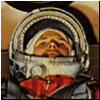
Jan. 31: Chimpanzee Ham flies a suborbital flight inside the Mercury-Redstone 2 capsule. Feb. 12: Venera-1 probe lifts off toward Venus. Feb. 16: The US inaugurates the Wallops launch site successfully orbiting the Explorer-9 satellite to collect data on the composition of thermosphere and exosphere. Feb. 21: A Mercury-Atlas-2 (MA-2) vehicle flies an 18-minute suborbital mission to test the effects of capsule heating during reentry. Feb. 22: A Thor DM-21A Able Star rocket launches the Transit-3B navigation satellite from LC-17 pad at Cape Canaveral. A failure at separation prevents payloads from reaching a correct orbit, but it still proves the Doppler tracking method necessary for navigational use of satellites. March 23: Cosmonaut-trainee Valentin Bondarenko dies during a fire inside a ground-based test chamber. April 12: Yuri Gagarin completes world's first manned space flight aboard Vostok spacecraft. May 5: Alan Shepard completes a suborbital flight aboard a Mercury spacecraft. June 29: The US Transit-4A navigation satellite enters orbit with the first nuclear power supply system onboard. Its Ablestar upper stage explodes into nearly 300 detectable pieces 77 minutes after the orbital insertion. July 21: Gus Grissom completes a suborbital flight onboard Mercury spacecraft. Aug. 6-7: Gherman Titov completes a 25-hour orbital flight onboard Vostok-2. Oct. 24: The 3rd plenary session of the European Preparatory Commission for Space Research, COPERS, approves initial eight-year program for the European Space Research Organization, ESRO. Dec. 12: The first amateur radio satellite, Oscar-1, is launched as a secondary payload with a US Air Force classified reconnaissance mission. |
|||||||||
|
Feb. 20: John Glenn completes the first US manned orbital space flight aboard the Mercury-Atlas-6 spacecraft. March 7: NASA launches the Orbiting Solar Observatory, OSO-1, the first space mission dedicated to study solar electromagnetic radiation. April 26: The United Kingdom's first satellite, Ariel-1, is delivered into orbit by a US Thor Delta launcher to study charged particles. April 26 - Aug. 1: The first successful mission of the Soviet Zenit-2 reconnaissance satellite announced as Kosmos-4. Landed near the village of Avgustovka in the Kuibyshev Region. May 8: The first Atlas-Centaur rocket, AC-1, using liquid hydrogen on the upper stage flies a test mission from LC-36 facility at Cape Canaveral, Florida. May 16: Korolev approves a preliminary design of the N1 rocket, which envisioned a 2,200-ton, three-stage vehicle capable of launching 75 tons of payload. May 24: Scott Carpenter completes a three-orbit mission onboard the Mercury (Aurora-7) spacecraft. June 14: 10 European countries sign a Convention leading to the formation of the European Space Research Organization, ESRO. July 10: The Telstar-1 satellite is launched for AT&T. It is considered the first commercial communications satellite designed for transatlantic transmission of TV, phone, telegraph and fax signals. July 23: The Telstar-1 satellite relays the first publicly available transatlantic TV signal. Aug. 11-15: Two manned spacecraft, Vostok 3 and 4, orbit the Earth simultaneously. Aug. 18: The first sounding rocket, Ferdinand-1, is launched from Andoya, Norway. Sept. 29: The first Canadian satellite, Alouette, is launched on a US rocket to study ionosphere. October: The US and USSR face a standoff in the Cuban missile crisis. Nov. 9: NASA research pilot Jack McKay makes an emergency landing at Mud Lake, Nevada, when the second X-15 experienced an engine failure. The X-15's landing gear collapsed, causing it to flip over. The pilot survived. Dec. 7: President Kennedy visits the Los Alamos Scientific Laboratory, where he is briefed abour the Rover project aiming to develop a nuclear rocket engine. Dec. 14: Mariner-2 completes the first Venus flyby. Dec. 16: Explorer-16 satellite (S-55B) is launched to study meteoroid environment in the Earth orbit. |
|||||||||
|
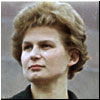
Feb. 14: The US Suncom-1 communications satellite becomes the first spacecraft to reach geostationary orbit, but does not function due to electronics failure during launch. Feb. 19: The US launches P 35-3 experimental meteorological satellite from Vandenberg AFB. March 18: The US launches KH-6-8001 reconnaissance satellite from Vandenberg AFB. March 28: NASA launches Saturn-1 SA-4 rocket on an unmanned suborbital test flight. April 3: NASA launches the Explorer-17 satellite to study the Earth's atmosphere. May 15-16: NASA astronaut Gordon Cooper conducts a 34-hour, 22 orbit mission aboard Mercury-Atlas-9 (Faith-7) spacecraft, the longest and the last in the Mercury program. June 12: NASA Administrator James Webb announces that "There will be no further Mercury shots," effectively ending the Mercury project after four piloted flights in Earth's orbit. June 14-19: Valery Bykovsky completes longest 199-hour, 81-orbit manned space flight to date, during the Vostok-5 mission. June 16-19: Valentina Tereshkova, the world's first woman in space completes orbital flight onboard Vostok-6 spacecraft. July 26: The Syncom-2 communications satellite reaches synchronous orbit. Oct. 10: A treaty prohibiting tests of nuclear weapons in atmosphere, space and under water enters force. November: An Atlas-Centaur rocket flies its first successful mission from Cape Canaveral. December: The US Defense Secretary Robert S. McNamara announces the start of the Manned Orbiting Laboratory, MOL, project. |
|||||||||
|
Jan. 29: The fifth Saturn-1 rocket (SA-5) flies its first mission with a live second stage featuring six liquid hydrogen engines, which deliver it into high orbit. Jan. 30-Feb. 2: The Ranger-6 probe lifts off and hits the lunar surface, but fails to transmit photos. March 20: The European Space Research Organization, ESRO, is formed. April 8: NASA launches an unmanned Gemini-1 spacecraft on a first test mission of the program. April 13: The Soviet government authorizes the production of 3KV and 3KD (Voskhod) spacecraft. June 5: A Blue Streak rocket, representing the first stage of the European Europa-1 F1 launcher, flies a test mission from Woomera, Australia. July 6: The European Space Research Organization, ESRO, launches its first sounding rocket from Salto di Quirra, Sardinia. July 6: The US Air Force launches a Gambit-1 imaging satellite for the National Reconnaissance Office, NRO, from Vandenberg, AFB, California. Aug. 3: The Soviet government approves the development of the UR-500K (8K82K) rocket for the LK circumlunar spacecraft. Aug. 14: The USSR tests the Romashka thermo-electric generator designed for space applications. Aug. 19: The Syncom-3 communications satellite becomes the world's first geostationary satellite. Oct. 12-13: A first three-member crew orbits Earth onboard the Voskhod spacecraft. Nov. 21: NASA launches Explorer-24, a 3.6-meter inflatable sphere to measure data on the relationship between solar radiation and air density in the upper atmosphere, along with Explorer-25 on a single rocket. Nov. 28: Mariner-4 is launched toward Mars. Dec. 15: A US Scout rocket launches the first Italian scientific satellite, San Marco-1, from Wallops Island. Dec. 21: The US Thor Delta rocket launches the Quill, the world's first spacecraft equipped with imaging radar for the National Reconnaissance Office, NRO, from Vandenberg Air Force base. |
|||||||||
|
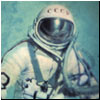
March 2: NASA's Atlas-Centaur-5 rocket fails at launch from Cape Canaveral's LC-36A pad during an attempt to test the "direct ascent" trajectory for the Surveyor lunar lander program. March 18: Alexei Leonov conducts the world's first spacewalk during the 24-hour, 16-orbit Voskhod-2 mission. March 23: NASA astronauts Gus Grissom and John Young fly a three-orbit mission onboard the Gemini-3 spacecraft, the first manned launch in the program. March 24: NASA's Ranger-9 spacecraft makes planned impact of the Moon and delivers images of its surface. April 3: A US Atlas rocket launches the Snapshot satellite equipped with the first nuclear reactor, SNAP-10A, and propelled by an ion engine. June 3: Astronaut Ed White conducts the first American spacewalk during the Gemini-4 mission. June 18: The US Air Force launches its first Titan-3C launch vehicle. June 29: The X-15 No. 3 rocket plane piloted by Joe Engle reaches an altitude of 53 miles. July 15: Mariner-4 completes flyby of Mars sending first close-op images of a planet beyond the Earth-Moon system. July 16: The first Proton rocket blasts off from Site 81 in Tyuratam (Baikonur) carrying the Proton-1 spacecraft. Aug. 21-29: Gemini-5 crew completes a record-breaking 8-day flight. August: The US President Lyndon Johnson approves the Manned Orbiting Laboratory, MOL, project. Sept. 3: The USSR launches Kosmos-80 spacecraft carrying an isotope generator onboard. It was expected to remain in orbit for 10,000 years. Nov. 2: The second Proton rocket delivers the Proton-2 spacecraft. Nov. 6: NASA launches Explorer-29 (Geodetic Earth Orbiting Satellite, GOES-A). Nov. 26: A Diamant rocket orbits the first French satellite, the A-1, making the country the third space power. Dec. 4-18: Gemini-7 spends two weeks in orbit -- enough time to complete a lunar expedition. Dec. 15-16: Gemini-6A completes a rendezvous with Gemini-7. |
|||||||||
|
Jan. 11: The SNAP-10A space reactor deliberately exploded at the National Reactor Testing Station in Nevada, US, as an experiment. Jan. 14: Sergei Korolev, de-facto head of the Soviet space program, dies during a botched surgery in Moscow. Feb. 3: Luna-9 makes the world's first soft landing on the surface of the Moon. March 16: Gemini-8 completes world's first manual docking with an Agena rocket. May 24: The Europa F4 rocket is test-fired at Woomera launch site in Australia. June 3-6: The Gemini-9 mission. June 6: NASA succeeds with the launch of the Orbiting Geophysical Laboratory, OGO-3. (791) June 24: NASA launches a 100-foot Pageos inflatable satellite for geodetic experiments. (791) June 30: The USSR and France sign an agreement on space cooperation. September: The Gemini-11 mission reaches a record-breaking altitude of 1,373-kilometers above the Earth. Sept. 24: The European launch site for sounding rockets, ESRANGE, opens in Kiruna, Sweden. Sept. 28: NASA begins astronaut recruitment without gender restrictions for the first time. Nov. 3: A Titan-3C No. 9 rocket launches a mockup of the US Air Force's Manned Orbital Laboratory, MOL, on a test flight from Launch Complex 40 at Cape Canaveral. Nov. 27: A European Coralle G1 rocket, a prototype of the Europa-1 launcher, lifts off from Hammaguir, Algeria, on a subortial test flight, but suffers an electrical failure at T+62 seconds. Nov. 28: The unmanned 7K-OK (Soyuz) spacecraft flies its first test mission. Dec. 14: The second attempt to launch the Soyuz spacecraft ends with an explosion, three fatalities and destruction of Pad 31 in Tyuratam. Dec. 14: The US launches Biosatellite-1 carrying more than 10 million living organisms. Dec. 24: Luna-13 makes soft-landing on the surface of the Moon. In the US, the Northrop HL-10 wingless "lifting-body" rocket plane makes its first flight. |
|||||||||
|
Jan. 27: Three US astronauts die in the fire inside Apollo spacecraft during on-pad tests. Jan. 27: The Treaty on Principles Governing the Activities of States in the Exploration and Use of Outer Space, including the Moon and Other Celestial Bodies is signed by the US, UK and the USSR. Feb. 7: The Soyuz 7K-OK spacecraft flies its third and final unpiloted test flight. March 8: NASA launches its third Orbiting Solar Observatory, OSO-3, to study the Sun and map the sky in X-ray. March 10: The first UR-500K (Proton) rocket launches the first prototype of the L1 circumlunar spacecraft announced as Kosmos-146. April 6: NASA launches its second Applications Technology Satellites, ATS-2, but the second stage failure of the launch vehicle leaves the spacecraft slowly tumbling in the wrong orbit, though some useful data was returned. April 24: Vladimir Komarov dies on landing during a test flight of the Soyuz-1 spacecraft. May 10: An M2-F2 lifting body experimental aircraft crashes but its pilot Bruce Peterson survives. June 12: Venera-4, the first probe to enter the atmosphere of Venus, blasts off from Baikonur. July 2: Vela satellites make first detection of a gamma-ray burst from deep space. Oct. 10: The Outer Space Treaty is signed to represent the basic legal framework of international space law. Oct. 12: USSR launches the VKZ probe 4,400 kilometers up to study ionosphere. Oct. 30: The 7K-OK No. 6 (Kosmos-186) and the 7K-OK No. 5 (Kosmos-188) spacecraft conduct the world's first automated docking in space. Nov. 9: The first Saturn-5 rocket blasts off, carrying the unmanned Apollo-4 spacecraft. Dec. 13: A Delta rocket launches the Pioneer-8 spacecraft into a solar orbit. It operated for nearly 30 years. |
|||||||||
1968
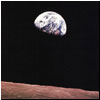
Earthrise over the Moon |
Feb. 20: The USSR launches its first Sfera geodesic satellite. March 2: Proton launches a prototype of the L1 circumlunar spacecraft announced as Zond-4. March 27: Yuri Gagarin dies in a plane crash. April 4: The second Saturn-5 rocket launches an unmanned Apollo-6 spacecraft. April 9: The first sounding rocket (Veronique) is launched from Kourou, French Guiana, on a suborbital trajectory. April 15: A pair of unmanned Soyuz spacecraft completes a successful automated docking. April 23: The Proton rocket fails to deliver a prototype of the L1 circumlunar spacecraft. May 6: Neil Armstrong bails out and survives the crash of the lunar module training vehicle, LLRV, at Ellignton AFB. July 14: The explosion at the launch pad with the L1 (Zond) spacecraft in pre-launch processing kills one person, delaying the program. Aug. 28-Sept. 1: A Soyuz 7K-OK No. 9 spacecraft, announced as Kosmos-238, flies a final test mission before returning to flight with cosmonauts after the death of Komarov. Sept. 18: Zond-5, a prototype of the L1 spacecraft for manned circumlunar flight, swings around the Moon. Sept. 23: The USSR launches the Kosmos-243 satellite carrying the first UFH radiometers for scanning the Earth's surface. (862) Oct. 11: The Apollo-7 spacecraft with a crew of three orbits the Earth. Oct. 25-30: The Soyuz-3 spacecraft conducts rendezvous with the Soyuz-2 spacecraft but fails to dock due to pilot's error. Nov. 5: Three Russian researchers complete a year-long isolation experiment simulating a deep-space planetary mission. Nov. 8: NASA launches the Pioneer-9 interplanetary spacecraft with eight instruments between orbits of Earth and Venus to monitor solar weather and solar wind during the Apollo missions. Nov. 10-17: The Zond-6 flies around the moon and lands in the USSR. Nov. 29: Australia launches WRESAT, becoming the 7th nation to orbit a satellite. Nov. 30: The Europa-1 F7 launch vehicle lifts off from Woomera, Australia, with an Italian satellite mockup, however its third stage exlodes after the second stage ignition. Dec. 24: The Apollo-8 with the crew of three completes world's first translunar flight and orbiting of the Moon. |
||||||||
|
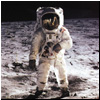
Jan. 14: Soyuz-4 enters orbit on a mission to practice first docking of the two manned spacecraft and to transfer crew between the two ships. Jan. 20: An UR-500K rocket fails to send the 7K-L1 No. 13L spacecraft on circumlunar trajectory due to a 3rd stage failure. Feb. 21: An N1-L3 moon rocket (No. 3L) fails after 68.7 seconds in flight. Feb. 24: NASA launches Mariner-6 on a Mars flyby mission. March 3: Apollo-9 enters Earth's orbit on a mission to practice lunar landing maneuvers. March 4: A Titan-3B rocket launches the Gambit-58 reconnaissance satellite (KH-8 1720) from SLC-4W facility at Vandenberg. March 20: The Nuclear Engine for Rocket Vehicle Application, NERVA, fires for the first time at Nuclear Rocket Development Station in Jackass Flats, Nevada. March 27: NASA launches Mariner-7 on a Mars flyby mission. April 1: German Air and Space Research Center, DFVLR, is founded. May 9: NASA's HL-10 lifting-body epxerimental aircraft conducts its first supersonic flight. May 18: Apollo-10 begins a lunar orbiting mission to practice lunar landing maneuvers. July 3: The N1-L3 moon rocket (No. 5L) fails at launch. July 20: Apollo-11 astronauts land and walk on the surface of the Moon. August 5: Mariner-7 flies by Mars within 2,130 miles from the planet's Southern Hemisphere imaging its surface. August 8: Zond-7 lifts off on a circumlunar mission without crew. Oct. 1: An American Scout rocket successfully launches Europe's ESRO-1B scientific satellite from Vandenberg Air Force base. Oct. 11: Soyuz-6 lifts off starting the first triple mission of piloted spacecraft. Soyuz-7 and 8 follow. Nov. 14: Apollo-12 lifts off, carrying the second human expedition to the Moon. |
|||||||||
|
1970
Black Arrow
Japan's satellite
Chinese satellite
|
Jan. 13: The Soviet government approves the development of the Bion retrievable satellite for life-science experiments in space. Feb. 9: The Soviet government issues Decree No. 105-41 establishing a long-term civilian space station program. Feb. 11: Japan launches its first satellite Ohsumi. March 4: A British Black Arrow rocket makes its first successful flight from Woomera, Australia. March 10: A Diamant-B1 rocket launches from Kourou, French Guiana, carrying French-German Mika and Wika payloads. April 24: China launches an artificial satellite onboard a domestically built Chang Zheng-1 rocket, converted from an CSS-3 ICBM. June 12: The European Europa-1 (F9) launcher lifts off from Woomera, Australia, with an STV-3 satellite mockup. July 17: Test pilot Peter Hoag flies the Northrop HL10 rocket plane during its 37th and final flight. The 4-minute, 12-second flight achieved a speed of 803 kilometres per hour and an altitude of 13,716 meters. July 22: 4th European Space Conference opens in Brussels, to discuss merging of ELDO, ESRO and European Conference on Satellite Communications, CETS, into a new European Space Organisation. Sept. 19: Luna-16 makes first robotic sample return mission to the Moon. Oct. 3: A Soviet satellite (US-A/Kosmos-367) enters orbit with the first Buk nuclear power system onboard, which fails after 110 minutes, requiring to urgently boost the reactor to a burial orbit. Oct. 20-27: Zond-8 flies an unpiloted circumlunar mission. Nov. 17: A Soviet Lunokhod-1 unmanned lunar rover made a successful soft landing on the Moon. Dec. 12: A Diamant-B rocket launches the French-built Péole satellite from Kourou, French Guiana. Dec. 15: Venera-7 lander transmits first data from the surface of Venus. |
||||||||
|
Jan. 31-Feb. 9: The Apollo-14 expedition to the Moon. March 21: The US initiates launches of the Jumpseat signal-intelligence satellite into the highly elliptical orbit for the National Reconnaissance Office, NRO. April 19: Salyut-1, the first orbital station is launched. Its crew of three dies on landing. May 30: NASA successfully launches Mariner-9 Mars orbiter. June 15: A US Air Force's Titan-3D rocket launches the first Hexagon reconnaissance satellite equipped with four film-return capsules. July 26-Aug. 7: The Apollo-15 expedition to the Moon. Sept. 14: Lunokhod-1 discontinues communications with ground control after a nearly year-long mission. Oct. 28: Great Britain launches the Prospero satellite using its own Black Arrow rocket from Area 5B in Woomera, Australia. Nov. 5: Europe's Europa-2 (F11) space launches breaks up 150 seconds after liftoff from ELA-1 facility in Kourou, French Guiana. Dec. 2: The Mars-3 lander reaches the surface of Mars. Only few seconds of data had been received on Earth, before the spacecraft fails. |
|||||||||
|
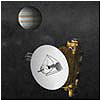
Jan. 5: President Nixon approves the development of the Space Shuttle. March 2: NASA launches Pioneer-10, the first spacecraft to capture close-range images of Jupiter and the first to travel outside our Solar System. March 12: TD-1, first X-ray and gamma-ray satellite of the European space organization, ESRO, reaches orbit. It operated until May 4, 1974. March 27: The USSR launches Venera-8 probe toward Venus. May 24: In Moscow, U.S. President Nixon and Soviet Premier Kosygin sign the "Agreement Concerning Cooperation in the Exploration and Use of Outer Space for Peaceful Purposes," including plans for the Apollo-Soyuz Test Project. July 22: The Soviet Venera-8 probe reaches Venus. July 23: NASA's Landsat-1 remote-sensing satellite reaches orbit. July 29: The DOS-2 (Salyut) space station fails to reach orbit due to its Proton rocket failure. Sept. 2: A Voskhod rocket (11A57) fails during launch. Nov. 23: The fourth N1 rocket (Vehicle No. 7L) fails after 107 seconds in flight. December: Apollo-17, the sixth and last lunar expedition of the 20th century, visits the Moon. |
|||||||||
|
1973
Skylab's first crew lifts off
Pioneer-10
|
April 3: The USSR launches the first Almaz space station (No. 101-01) publicly announced as Salyut-2. May 11: The DOS-3 (Kosmos-557) orbital station fails in orbit soon after its launch on a Proton rocket. May 14: The final launch of the Saturn-5 rocket delivers the Skylab space station into the Earth's orbit. Three crews will visit and work onboard the outpost. May 25: A Saturn-1B rocket launches an Apollo spacecraft with the first crew of three heading to the Skylab space station. June 7: NASA astronauts Pete Conrad and Joe Kerwin conduct a spacewalk to free jammed solar array on the Skylab space station by cutting the metal strap holding it. June 22: The first Skylab crew lands successfully in the Pacific Ocean after 28 days in space. July 28: A Saturn-1B rocket launches the second expedition to the Skylab space station three weeks ahead of the original schedule to accelerate mitigation of thermal control problems caused by a damage during the launch of the station. Aug. 9: Two astronauts aboard the Skylab space station perform a 6.5-hour spacewalk to install a 2-pole thermal-control screen over the lab and exchange film on the Apollo Telecope Mount. Sept. 21: The ESRO Council approves a draft arrangement with European governments for the Ariane launcher project. Sept. 24: ESRO and NASA sign a memorandum of understanding on the Spacelab project, envisioning a modular laboratory to be flow in the Shuttle's cargo bay. Sept. 27-29: Soyuz-12 flies a solo test mission. Oct. 31-Nov. 22: The USSR launches the first Bion spacecraft (Kosmos-605) designed for retrievable life-science experiments in orbit. Nov. 15: Martin Marietta's X-24B lifting-body aircraft performs its first flight after being dropped in mid-air from NASA's B-52 carrier plane. Nov. 16: A Saturn-1B rocket launches an Apollo command and service module carrying the third and final expedition to the Skylab space station. Dec. 4: Pioneer-10 completes flyby of Jupiter. Dec. 18: USSR launches the Soyuz-13 spacecraft with two cosmonauts onboard on a solo astronomy mission. The flight coincides with the third US expedition aboard Skylab, marking the first simultaneous orbital mission by two countries. Dec. 25: Astronauts Jerry Carr and Bill Poque perform a seven-hour spacewalk aboard the Skylab space station, photographing the Kohoutek Comet which passed perihellion on Dec. 24, 1973. |
||||||||
|
Feb. 7: The third and final expedition to the Skylab space station returns to Earth. April 3: The USSR launches a rehearsal of a joint mission with Apollo, Kosmos-638 (INSIDER CONTENT). March 29: Mariner-10 makes first close flyby of Mercury at a distance of 705 kilometers. May 17: NASA launches the first Synchronous Meteorological Satellite, SMS-1, for NOAA. May 27: The USSR tests crew transport for military space station, Kosmos-656 (INSIDER CONTENT). June 4: Construction of NASA's first Space Shuttle orbiter prototype begins. Initially dubbed Constitution, it would eventually be named Enterprise. June: The European Space Agency, ESA, selects an industrial consortium led by MBB-ERNO to develop lab modules for NASA's Space Shuttle. July: The Soyuz-14 crew works for two weeks aboard the military space station (Salyut-3). Aug. 6: The USSR launches the Soyuz 7K-S (Kosmos-670) spacecraft on a secret test mission. (INSIDER CONTENT) Aug. 13: Valentin Glushko outlines a new strategy for space exploration to industry and government officials. Aug. 30: A US Scout rocket lifts off from Vandenberg AFB delivering the Astronomische Nederlandse Satelliet, ANS, the first satellite built in the Netherlands. Oct. 28: The USSR launches the Luna-23 lunar-soil sample return mission, which crashes during lunar landing. Nov. 15: A Delta rocket lifts off from Vandenberg Aor Force base in California delivering Intasat, the first satellite built in Spain. Dec. 16: An all-female crew begins a five-day exercise to test the feasibility of 11 experiments before their planned use on Shuttle/Spacelab missions. Dec. 26: The Salyut-4 space station is launched. Two crews visit the lab. |
|||||||||
|
Feb. 6: The French space agency launches the first Diamant-BP4 rocket from Kourou, French Guiana. March 16: Mariner-10 completes its third and last flyby of Mercury. April 5: The Soyuz-18-1 mission fails to reach orbit due to a launch vehicle failure. April 19: USSR launches the first Indian satellite, Ariabkhata, from the Kapustin Yar test range. May 19: The Space Shuttle Main Engine, SSME, fires for the first time at the A-1 Test Stand at NASA's Stennis Space Center. May 30: A convention is signed forming the European Space Agency, ESA. June 21: A Delta rocket launches NASA's OSO-8 (OSO-I) heliophysics observatory. May-July: The Soyuz-18 crew works aboard Salyut-4, as Soviet Soyuz-19 and the US Apollo spacecraft dock elsewhere in space. July 17: The Soviet Soyuz-19 and US Apollo spacecraft dock in space. Aug. 9: An American Delta-2913 rocket launches the COS-B gamma-ray observatory. Sept. 23: The X-24B rocket-powered aircraft flies its final mission under control of test pilot Bill Dana. Oct. 22: Venera-9 transmits first ever images from the surface of Venus. Nov. 17: The USSR launches the unpiloted Soyuz-20 spacecraft to the Salyut-4 space station to certify the crew vehicle for three-month missions. Nov. 25: The USSR launches Bion No. 3 spacecraft (Kosmos-782) carrying a centrifuge to generate artificial gravity in space. Nov. 26: NASA research pilot Tom McMurtry pilots the final flight of the X-24B, completing the agency's "lifting body" program. China recovers a remote-sensing satellite from orbit. |
|||||||||
|
Feb. 17: The Soviet government approves the Energia-Buran development and further upgrades of the Soviet space stations with Decree No. 132-51. March 16: The Soviet government officially approves the development of the Zenit rocket. April 16: The German/US Helios probe makes the the closest controlled approach to the Sun by a spacecraft to date. June 19: NASA's Viking-1 Mars orbiter and lander spacecraft enters orbit around Mars. July 20: The Viking-1 lander sends first image from the surface of Mars. Aug. 9-22: Luna-24 completes the Soviet lunar exploration effort, becoming the last mission of the Moon Race. Sept. 3: Viking-2 lands on Mars around 6,460 kilometers from Viking-1 and transmits images from the surface. Sept. 15: Soyuz-22 flies its last solo mission, testing the MKF-6 camera. Dec. 4: The Preliminary Design Review, CDR, on the Spacelab project takes place at ERNO in Bremen, Germany.
|
|||||||||
|
1977
Enterprise |
March 28: The European Space Agency initiates its first astronaut selection for the Spacelab program. April 20: Europe's Geos-1 satellite, designed to study Earth's magnetosphere from geostatiary orbit, is launched from Cape Canaveral. June 16: NASA's GOES-2 meteorological satellite is launched into the geostationary orbit. June 23: The US launches the Navigation Technology Satellite 2, NTS-2, as an early step in establishing the GPS NAVSTAR network. It was also the first satellite to carry a Cesium atomic clock into orbit. Aug. 12: High-Energy Astronomy Observatory, HEAO-1, X-ray observatory is launched into orbit. Aug. 13: NASA's NB-52B aircraft drops a prototype of the Space Shuttle's Solid Rocket Booster, SRB-DTV (Drop Test Vehicle). Sept. 13: A US Delta rocket explodes 54 seconds after liftoff from Cape Canaveral with a European Orbital Test Satellite, OTS-1, designed for experimental communications. Sept. 29: The Salyut-6 space station is launched. October: The Shuttle Enterprise conducts first atmospheric flights after separation from the Boeing-747 carrier aircraft. Oct. 22: A US Delta-2914 rocket launches Europe's ISEE-2 spacecraft to study Earth's magnetic field and the solar wind. Nov. 23: An American Delta-2914 rocket launches Europe's first geostationary weather satellite Meteosat-1. |
||||||||
|
1978
Hexagon
Enterprise |
Jan. 15: NASA names 35 new astronauts for the Space Shuttle program. Jan. 20: The Progress-1 the first cargo ship to resupply a space station is launched to Salyut-6. Jan. 26: A Delta-2914 rocket launches the International Ultraviolet Explorer, IUE, built jointly by NASA and ESA. It operates until 1996. March 2: The USSR launches the Soyuz-28 spacecraft to the Salyut-6 space station with the first cosmonaut from Czechoslovakia Vladimir Remek. March 16: A US Titan-3D rocket launches the Hexagon-14 reconnaissance satellite from Vandenberg Air Force Base. The payload is classified at the time. March 18: The Space Shuttle Enterprise full-scale prototype arrives at the Marshall Space Center in Alabama om top of Boeing-747 carrier aircraft for vertical vibration tests. March: The Critical Design Review, CDR, on the Spacelab project takes place at ERNO in Bremen, Germany. April 5: The Pathfinder full-scale mockup of the Space Shuttle orbiter arrives at the Vertical Assembly Building, VAB, of Kennedy Space Center for fit checks of processing facilities and equipment. May 12: The European Orbital Test Satellite-2, OTS-2, successfully launched into the geosynchronous orbit for experimental communications. It operates until the end of 1983. June 16: NASA's GOES-3 meteorological satellite is launched into the geostationary orbit. June 26: NASA launches the SeaSat-1 satellite to scan the ocean floor. July 5: NASA announces a $32-million contract with Martin Marietta Corp. to develop a Teleoperator Retrieval System to be used by the Shuttle to boost the Skylab space station to a higher orbit and later deliver and retrieve satellites. July 14: Europe's Geos-2 satellite, designed to study Earth's magnetosphere, is launched from Cape Canaveral to the geostationary orbit. Oct. 4: The Enterprise, a full-scale prototype of NASA's Space Shuttle is lifted into Dynamic Test Stand at Marshall space center in Huntsville, Ala., for ground vibration tests. Nov. 13: The US launches the Einstein observatory for imaging X-ray sources in the Universe. Dec. 9: Multiple probes from NASA's Pioneer-Venus mission enter atmosphere of Venus, at least one survives all the way to the surface. |
||||||||
|
1979
Saturn from Pioneer-11
Ariane-1 |
January: A Delta 2914 rocket launches Spacecraft Charging AT High Altitude, SCATHA, (P78-2) for the US Air Force's Space Test Program. March 5: Voyager-1 completes flyby of Jupiter, providing first detailed images of the planet and many of its moons. March 16: A US Titan-3D rocket launches the Hexagon-15 reconnaissance satellite from Vandenberg Air Force Base. March 24: NASA's Boeing-747 carrier aircraft delivers the Space Shuttle Columbia, the first functional orbiter, to the Kennedy Space Center, KSC, in Florida, to begin preparations for the first flight. April 10: Georgi Ivanov, the first Bulgarian cosmonaut launches to the Salyut-6 space station aboard the Soyuz-33 spacecraft. The mission develops a propulsion system anomaly and ends before reaching the outpost. April 10: NASA's Boeing-747 carrier aircraft delivers the Space Shuttle Enterprise prototype to the Kennedy Space Center, KSC, in Florida, for fit checks with launch equipment. May 1-July 23: The Enterprise, a full-scale prototype of NASA's Space Shuttle, undergoes tests on launch pad 39A at the Kennedy Space Center. July 9: Voyager-2 makes the closest approach to Jupiter. July 11: The Skylab space station makes uncontrolled reentry into the Earth's atmosphere during its 34,981st orbit and more than six years in space. Some of its debris fall in southwestern Australia. Aug. 5: Voyager-2 completes observations of Jupiter after returning 17,000 images of the planet. Sept. 1: NASA's Pioneer-11 becomes the first human-made object to flyby Saturn. Sept. 5: The USSR launches its first Resurs-F1 satellite dedicated to high-resolution imaging of the Earth's surface. Dec. 16: The first Soyuz-T spacecraft is launched on a test flight without crew. Dec. 24: The first Ariane-1 rocket lifts off successfully from the ELA-1 facility in Kourou, French Guiana. Shaghai-based newspaper Wen Hui Bao publishes a photo of a spacesuited Chinese astronaut in training. More photos would follow. |
||||||||
|
1980 |
March 18: As many as 48 people die in a Vostok-2M rocket explosion on launch pad in Plesetsk. May 23: An Ariane-1 rocket fails during its second launch from Kourou with German Firewheel and Amsat satellites. May 26: The USSR launches the Soyuz-36 spacecraft to the Salyut-6 space station with a crew of two including Bertalan Farkas, the first Hungarian cosmonaut. May 29: NASA presents 19 astronaut candidates for its 9th astronaut group. It included eight pilots, 11 mission specialists and two international mission specialists for planned Shuttle flights. June 5-9: The Soyuz-T spacecraft launches with crew for the first time (Soyuz T-2). June 12: The French Space Agency, CNES, officially selects its first astronauts candidates Jean-Loup Chrétien and Patrick Baudry. July 3: The European Space Agency, ESA, approves the development of the Ariane-3 launch vehicle. July 18: India launches the Rokhini satellite onboard its own SLV-3 rocket from its own launch site. Aug. 25: The RD-170 engine for the future Energia and Zenit rockets is test-fired for the first time. Sept. 18: The USSR launches a Soyuz spacecraft to the Salyut-6 space station with a crew of two, including the first Cuban astronaut Arnaldo Tamayo Méndez. Dec. 29: The Space Shuttle Columbia makes its first trip to the launch pad 39A of the Kennedy Space Center at Cape Canaveral, Florida, in preparation for the STS-1 mission. |
||||||||
|
1981
Columbia |
April 12-14: NASA's Space Shuttle Columbia flies its first test mission (STS-1). The USSR's TKS heavy transport ship conducts its first docking at the unmanned Salyut-6 space station. June 19: Ariane-1 rocket launches the European weather satellite Meteosat-3 and India's first communications satellite APPLE, along with ESA's CAT-3 vehicle evaluation payload. August: Voyager-2 flies by Saturn. Oct. 30: A Proton rocket launches Venera-13 toward Venus. Nov. 4: A Proton rocket launches Venera-14 toward Venus. Nov. 12-14: The Space Shuttle Columbia returns to orbit during the STS-2 test mission, becoming the first reusable spacecraft, however the mission had to be cut from five days to two due to a problem with power-generating fuel cells.
|
||||||||
|
1982
Surface of Venus |
March 1: Venera-13 lands on Venus and transmits first color images from the planet's surface. April 19: The Salyut-7 space station is launched. April 22: The Space Shuttle Columbia begins its third test flight, STS-3. April: ESA's COS-B satellite launched in 1975 with an operational life span of one or two years, ends its mission, after providing first complete galactic survey in high-energy gamma rays. June 24: USSR launches the Soyuz T-6 spacecraft with a crew of three including the first Frenach astronaut Jean-Loup Chrétien to visit the Salyut-7 space station. June 28: The Space Shuttle Columbia flies its fourth and final test mission, STS-4, with a crew of two. July 5: NASA's second Space Shuttle orbiter, Challenger, arrives to Kennedy Space Center in Florida from its production site in California to begin preparations for its first launch. Oct. 12: The USSR begins deployment of its satellite global positioning system GLONASS. Nov. 11: The Shuttle Columbia deploys a pair of communications satellites during its first operational mission, STS-5. |
||||||||
|
1983
TDRS
Challenger
|
Jan. 25: NASA launches the Infrared Astronomical Satellite, IRAS. April 4: NASA launches Challenger, its second reusable orbiter in the Space Shuttle program, which deploys the TDRS-A satellite. May 26: A Delta rocket launches the European EXOSAT X-ray observatory from Vandenberg Air Force Base. The spacecraft would operate until 1986. June: Venera-15 and Venera-16 are launched toward Venus. June 18: Space Shuttle Challenger begins its second mission, STS-7, carrying a crew of five, including the first American woman astronaut Sally Ride. Aug. 30: Space Shuttle Challenger begins its third mission, STS-8. Sept. 26: A fire breaks out on a Soyuz rocket with two cosmonauts onboard explodes. The emergency escape system saves the crew moments before the explosion of the launch vehicle. Nov. 28: The European modular laboratory, Spacelab, begins its first orbital mission aboard the Space Shuttle Columbia during the STS-9 mission. |
||||||||
|
1984 |
Jan. 25: The US President Ronald Reagan announces decision to develop a space station in the Earth's orbit within a decade. Jan. 29: China launches its 14th satellite, which also becomes the country's first spaccraft for experiments with satellite communications. Feb. 7: Shuttle astronauts conduct untethered spacewalk with the help of a manned maneuvering unit, MMU, during the STS-41B mission of the Space Shuttle Challenger. March 1: A Delta rocket launches the Landsat-5 remote-sensing satellite from Vandenberg AFB, with a three-year official life span, but it operates for 29 years until June 2013. April 3: The first Indian astronaut Rakesh Sharma launches to the Soviet Salyut-7 space station. April: The Shuttle Challenger crew retrieves, repairs and redeploys the Solar Maximum Mission, SMM, satellite during the STS-41C mission. May 23: NASA presents its 10th astronaut selection of 17 people from 5,000 applicants. They would go to participate in 51 space flights. June 26: The first attempt to launch the Space Shuttle Discovery on its first mission (STS-41D) ends with an on-pad abort two seconds after ignition. Aug. 30: NASA's third reusable orbiter, Space Shuttle Discovery, begins its first mission. Oct. 5: NASA's Space Shuttle Challenger launches on STS-41G mission (13th mission of the program) with a crew of seven, including two female astronauts and the first Canadian travelling to space. November: The crew of the Space Shuttle Discovery, during the STS-51A misssion, retrieves Palapa-B2 and Westar-6 communications satellites, stranded in low orbit after a failure of their upper stages. The satellites were returned to Earth and later re-launched. Nov. 16: The Enterprise test orbiter arrives at Vandenberg Air Force Base for fit checks of the new Shuttle launch complex on California's Pacific Coast. October: The final Hexagon reconnaissance mission flies. The 3rd expedition to the Soviet Salyut-7 space station logs 237 days in orbit. |
||||||||
|
1985
Giotto
ICE |
April 16: The USSR launches the first retrievable Foton satellite for material science research in space. April 29: NASA's Space Shuttle Challenger lifts off on the STS-51B mission with the Spacelab-3 module. June: Two cosmonauts dock and revive the Salyut-7, after the station had flown powerless and out of control for several months. June 17: The US Space Shuttle launches on STS-51G mission. July 2: Europe's Ariane-1 rocket launches the Giotto probe to study Halley Comet. August: A Shuttle crew captures, repairs and redeploys a failed Navy satellite. Sept. 11: The International Cometary Explorer, ICE, passes through a tail of comet Giacobini-Zinner, the first spacecraft to so. Sept. 13: A modified F-15A Eagle No. 76-0084 aircraft accelerates to a near-Mach speed and fires an Anti-Satellite Missile, ASAT, destroying a satellite in space above the Pacific Missile Test Range off the coast of California. Oct. 3: NASA's fourth Space Shuttle, the Atlantis, lifts off for the first time on mission STS-51J, carrying crew of five and a pair of military communications satellites. Oct. 30 - Nov. 6: Space Shuttle Atlantis flies the STS-61A mission carrying the Spacelab-D1 laboratory and a crew of eight astronauts.
|
||||||||
|
Jan. 12: The Space Shuttle Columbia launches on the STS-61C mission with a crew of seven. Jan. 24: Voyager-2 becomes the first and only spacecraft in the 20th century to fly by and study Uranus. Jan. 28: The Shuttle Challenger explodes 73 seconds after launch of the STS-51L mission, killing seven crew members onboard. Feb. 20: The Core Module of the Mir space station is launched. Feb. 22: The final Ariane-1 rocket (Mission V16) successfully launches the SPOT-1 observation satellite for France and Viking, the first Swedish satellite designed to study plasma. March 6-9: The Soviet Vega-1 spacecraft performs a flyby of Halley comet. March 13: The Soyuz T-15 spacecraft carries the first expedition to the Mir space station. March 13-14: Europe's Giotto spacecraft flies within 600 kilometers of Halley's comet, producing images of its nucleus. China announces its intention to compete on the international space launch market with domestically built rockets.
|
|||||||||
|
March 31: The Kvant-1 module docks to Mir. May 15: The Energia super-heavy booster flies its first mission but its Polyus payload fails to enter orbit due to a flight control error. July 25: The USSR launches an unmanned Almaz-T radar space station. In the wake of the Challenger disaster, NASA works on Shuttle upgrades. The agency also cancels all Shuttle launches with commercial payloads, the Centaur space tug for the Shuttle and all Shuttle missions from Vandenberg AFB in California. |
|||||||||
|
Feb. 19: The USSR launches a Zenit-8 reconnaissance satellite under official name Kosmos-1921 from Baikonur. Feb. 19: Japan launches the Sakura-3A communications satellite from Tanegashima. June 15: The European Space Agency launches the first Ariane-4 rocket during the V22 mission of the Ariane rocket family. July: USSR launches a pair of Phobos probes toward Mars, but one fails in-route. Sept. 19: Israel's Shavit rocket successfully launches Ofeq-1 (Oz-1) -- country's first satellite. Sept. 29: NASA resumes Space Shuttle missions after the Challenger disaster. Oct. 10: NOAA's GOES-4 meteorological satellite is deactivated, becoming the first spacecraft to be sent into a graveyard orbit from its geostationary position. Nov. 15: The Energia booster launches the unpiloted Buran reusable orbiter, which lands automatically after two orbits during its first and only mission. Dec. 22: China launches its 25th satellite. |
|||||||||
|
1989
Magellan
Neptune
|
Jan. 29: The Soviet Phobos-2 spacecraft enters orbit around Mars. March 13: The Space Shuttle Discovery begins mission STS-29 to deploy the Tracking and Data Relay Satellite-4, TDRS-4. May 4: The Space Shuttle Atlantis launches the Magellan Venus Radar Mapper, VRM, spacecraft toward Venus during the STS-30 mission. Aug. 8: Europe's Ariane-4 V33 rocket launches ESA's Hipparcos astrometry mission and Germany's TV-Sat-2 direct-broadcast satellite. Aug. 8-13: Space Shuttle Columbia with a crew of five returns to flight in the STS-28 military mission after a three-year hiatus in the wake of the Challenger disaster. Aug. 25: Voyager-2 passes within 4,800 kilometers from Neptune becoming the first spacecraft to approach the planet. Oct. 18-23: The Shuttle Atlantis launches the Galileo spacecraft toward Jupiter during STS-34 mission. Dec. 1: The USSR launches the Granat X-ray observatory. Dec. 2: The Kvant-2 module docks at Mir. Russia and China normalize relations, reopening opportunities for cooperation in space. |
||||||||
|
1990
Hubble |
Jan. 9-20: The Shuttle Columbia retrieves the LDEF spacecraft and returns it to Earth during the STS-32 mission. Jan. 24: Japan launches the 195-kilogram Muses-A (Hiten) spacecraft into a highly-elliptical orbit, which periodically takes it into the vicinity of the Moon. Feb. 1, Feb. 5: Cosmonauts aboard Mir test manned maneuvering unit in tethered flights. Feb. 28-March 4: The Space Shuttle Atlantis flies a classified STS-36 mission reportedly tasked to deploy AFP-731 electronic intelligence satellite, which apparently desintegrated on March 7 and reentered on March 19, possibly as a result of its propulsion system failure. March 19: Japan's Muses-A (Hiten) spacecraft conducted its first flyby of the Moon, inserting Hagoromo micro-satellite into its orbit. April 24-29: The Shuttle Discovery deploys Hubble Space Telescope during the STS-31 mission. May 20: NASA publishes the first image from the Hubble Space Telescope. June 1: ROSAT X-ray and ultra-violet space observatory is launched. June 11: The Kristall module carrying docking port for the Buran orbiter arrives at Mir. July 11: The USSR launches its first dedicated Gamma-ray observatory. July 16: A Chinese Long March-2E rocket launches first satellite for Pakistan. Aug. 1: A Japanese Cosmonaut Toyohiro Akiyama launches as part of the Soyuz TM-10 crew bound to the Mir space station. Nov. 20: USSR begins flight tests of the anti-satellite Naryad system on the Rockot booster from Baikonur. Nov. 28: A ballistic capsule released from the Progress M-5 cargo ship for the first time automatically delivers cargo from the Mir space station. Dec. 2: NASA launches the Astro-1 X-ray and UV observatory, including Hopkins Ultraviolet Telescope, HUT, in the cargo bay of the Space Shuttle on the nine-day STS-35 mission. China launches and recovers a biological satellite, carrying 60 animals and plants, including rats, and guinea pigs. |
||||||||
|
1991
GRO |
April: The Shuttle Atlantis deploys the Gamma Ray Observatory, Compton GRO, during the STS-37 mission. May 12: The first commercial passenger, British citizen Helen Sharman, lifts off with the crew of Soyuz TM-12 heading to the Mir space station. May 16: The second flight-worthy Energia-Buran system (orbiter Article 1.02 in the 2K1 configuration) rolls out to "Left" pad of the launch facility 11P825l at Site 110 in Tyuratam for tests. June 5: The Space Shuttle Atlantis launches on the STS-40 mission with a Spacelab module configured for the Space Life Science-1, SLS-1, biomedical program. November: The Space Shuttle Atlantis deploys the DSP-F16 (USA-75) early warning satellite along with the Inertial Upper Stage, IUS, during STS-44 mission. The payload is then boosted to the geostationary orbit.
|
||||||||
|
1992
STS-49 |
Feb. 15: Japan's Muses-A (Hiten) probe enters orbit around the Moon. March 22: The emergency engine shutdown takes place on the pad in Xichang, China, during an attempt to launch Chang Zheng-2E (Long March) No. Y2 rocket with the Optus-B1 communications satellite, apparently damaging the vehicle beyond repair. Optus-B1 eventually flew on Vehicle No. Y3. May 7-16: The crew of the Shuttle Endeavour captures, repairs and redeploys the Intelsat-6 communications satellite during the latest orbiter's maiden mission, STS-49, including the first ever three-person spacewalk. June 7: A Delta rocket launches NASA's Extreme Ultraviolet Explorer, EUVE, for a sky survey in ultraviolet light. The spacecraft operated for over eight years. June 25: Space Shuttle Columbia lifts off with USML-01 laboratory on a 13-day STS-50 mission, made possible thanks to the newly installed Extended Duration Orbiter, EDO, kit in the cargo bay. July 10: Europe's Giotto probe passes within 200 kilometers from the Grigg-Skjellerup comet, achieving the closest cometary flyby. Sept. 11: The Mir crew mounts an auxiliary propulsion unit on the station's extendable boom. Chinese government approves Project 921, the precursor to the piloted spacecraft development. |
||||||||
|
1993
Hubble servicing |
March 25: Russia launches Start-1, its first solid-propellant space launcher from Plesetsk. April 10: Japan's Muses-A (Hiten) probe ends its mission with the impact on the lunar surface. April 26: The Space Shuttle Columbia lifts off with the Spacelab D-2 laboratory and seven crew members onboard (Mission STS-55). April 27: Moscow-based KB Salyut and London-based Inmarsat sign the first agreement for the launch of a Western commercial satellite on a Russian Proton rocket. May 25: Chief Designers' Council at NPO Energia makes an official decision to discontinue the Energia-Buran program. June 21: The Space Shuttle Endeavour begins mission STS-57, carrying the first Spacehab module on a mission to retrieve ESA's Eureca free-flying platform, which was deployed during STS-46. June 26: The launch of the GPS II-21 satellite completes the world's first 24-satellite constellation providing navigational data around the world. July 1: A Soyuz TM-17 launches to the Mir space station with French astronaut Jean-Pierre Haignere onboard. July 7: Yuri Semenov, Head of NPO Energia, Russian chief human space flight contractor, and European Space Agency's Fredrik Engstrom, Director of Space Station & Microgravity, sign agreement on missions of European astronauts to the Mir space station in 1994 in 1995. September: Russia joins the International Space Station program. Sept. 26: An Ariane-4 rocket (Flight V59) launches Portugal's first satellite PoSAT-1 and the SPOT-3 imaging satellite. Oct. 18: The Space Shuttle Columbia lifts off on the STS-58 mission with the Spacelab Life Sciences laboratory, SLS-2, lasting more than 14 days. Dec. 2-13: The Space Shuttle crew retrieves, repairs and redeploys the Hubble Space Telescope during the STS-61 mission. |
||||||||
|
Jan. 8: Valery Polyakov boards Mir starting the world's longest (year-and-a-half) space flight. Jan. 25: A Titan-2 rocket launches the Clementine spacecraft intended to orbit the Moon and approach an asteroid. Feb. 3-11: Sergei Krikalev becomes the first Russian cosmonaut to fly aboard the US Shuttle during STS-60 mission. March 13: In the US, the first Taurus light-weight launcher lifts off with the ARPAsat payload. June 27: The Ulysses solar probe passes over the Sun's South Pole. July 8: Space Shuttle Columbia launches on the two-week STS-65 mission carrying the European-built International Microgravity Laboratory-2 Spacelab pressurized module, IML-2, with a crew operating around the clock more than 80 experiments. Aug. 9: A rocket engine using three propellant components is live-tested in Sergiev Posad, Russia. Oct. 3: Ulf Merbold becomes the first ESA astronaut to fly on a Soyuz spacecraft (TM-20), heading to the Mir space station during the EuroMir-94 mission. Oct. 31: Russia launches its first geostationary weather satellite Elektro-1. (INSIDER CONTENT) Nov. 3: NASA's Space Shuttle Atlantis begins the STS-66 mission delivering the ATLAS-03 science payload in Earth orbit. Dec. 26: Russia launches a Rockot booster, which likely orbited the Naryad anti-satellite system, along with a Radio-ROSTO experimental satellite. |
|||||||||
|
1995
Galileo |
March 2-18: The Endeavor orbiter flies for nearly 17 days with the Astro-2 astronomy payload, marking the longest Space Shuttle mission to date. March 22: Valery Polyakov completes the record-breaking 437-day flight aboard the Mir space station. April 21: A European Ariane-4 rocket (Mission V-72) delivers the ERS-2 remote-sensing satellite. May 20: The Spektr module is launched toward the Mir space station. June 27 - July 7: The US Space Shuttle Atlantis flies STS-71 mission docking at the Mir space station for the first time on July 2. July 17: The US Air Force Space Command declares full operational capability of the GPS navigiation system. Sept. 3: Soyuz TM-22 spacecraft lifts off toward the Mir space station carrying a crew of three, including an ESA astronaut Thomas Reiter for Europe's record-breaking 179-day mission. Oct. 20: Thomas Reiter performs the first spacewalk by a European astronaut. Oct. 20 - Nov. 5: After six scrubbed attempts, Space Shuttle Columbia flies the 15-day STS-73 mission with the European-built Spacelab module and a crew of seven working in two shifts. Nov. 17: An Ariane-44P rocket launches Europe's Infrared Space Observatory, ISO. Dec. 2: An Atlas rocket launches SOHO solar observatory for ESA and NASA from Cape Canaveral. Dec. 7: The Galileo spacecraft enters orbit around Jupiter, while its descent module plunges into the planet's atmosphere. |
||||||||
|
1996
Xichang
Ariane-5 |
Feb. 15: China's Chang Zheng-3B rocket, carrying the Intelsat-708 communications satellite, veers off course immediately after launch and crashes into a village near the Xichang launch site, killing as many as 500 people. Feb. 22: Space Shuttle Columbia with a crew of seven begins STS-75 mission to deploy a tethered satellite. March 7: First photos of Pluto's sourface made by the Hubble Space Telescope are released. April 23: Priroda, the Mir's last originally planned module, lifts off toward the station. April 25: Yuri Koptev, head of the Russian Space Agency, signs an agreement on space cooperation with China, during a visit to Beijing. Two Chinese trainees would soon visit Gagarin Cosmonaut Training Center in Star City. May: Space Shuttle launches a Spartan spacecraft with an inflatable antenna experiment. June 4: The first launch of the European Ariane-5 rocket (V88, 501) ends in failure 37 seconds after liftoff, leading to the loss of four Cluster scientific satellites. June 20: Space Shuttle Columbia begins the 16-day STS-78 mission. November: The Mars-96 spacecraft is left stranded in the Earth's orbit after launch. |
||||||||
|
1997
Sojourner |
Feb. 11-21: The Space Shuttle performs second servicing of the Hubble Space Telescope during the STS-82 mission. Feb. 10: A German astronaut Reinhold Ewald launches to the Mir space station for a 20-day Mir-97 mission. Feb. 23: A fire breaks out aboard the Mir space station. Feb. 23: The US Air Force launches the first Titan-4B rocket. March 4: Russia makes first orbital launch from Svobodny Cosmodrome, delivering a Zeya satellite on the Start launcher. June 25: A Progress cargo ship collides with the Mir space station during a docking exercise, causing an air leak aboard the Spektr module which has to be urgently isolated from the rest of the hubitable volume. July 4: Mars Pathfinder lands on Mars and deploys a small Sojourner rover which makes first moves on the surface of the Red Planet. Aug. 7: NASA launches the STS-85 Shuttle mission, carrying the Cryogenic Infrared Spectrometers & Telescopes for Atmosphere/Shuttle Pallet Satellite-2 (CRISTA-SPAS-2) as a prime payload on its 2nd flight, 4th mission in a cooperative venture with the German space agency, DARA. |
||||||||
|
1998
Lunar Prospector |
Jan. 7: NASA launches the Lunar Prospector spacecraft into orbit around the Moon. Jan. 29: ISS partners sign the 2nd intergovernmental agreement. Jan. 29: Russia launches Soyuz TM-27 spacecraft to the Mir space station with a crew of three including French astronaut Léopold Eyharts on a 21-day mission. March 25: The European Space Agency forms a single astronaut corps by merging existing Italian, French and German programs. April 2: A Pegasus-XL rocket launches NASA's Transition Region and Coronal Explorer, TRACE, satellite. June 2: The Space Shuttle Discovery begins the STS-91 mission assigned the final visit to the Mir space station by a US orbiter. June 11: South Korea's KSR-2 sounding rocket reaches an altitude of 137.21 kilometers during a suborbital flight. July 7: A Russian Shtil-1 rocket makes first orbital launch from a submerged submarine, delivering two German Tubesat satellites. July 31: NASA's Lunar Prospector spacecraft crashes into the presumed icebed on the Moon, but returned data fails to show signs of water. Aug. 31: North Korea launches Daepodong-1 (Taepodong-1) rocket, officially announced as carrying the Kwangmyongsong satellite, which apparently fails to reach orbit. Sept. 14-16: The Space Research Institute, IKI, conducts an international conference in Moscow on the human expedition to Mars. Oct. 12: The first launch of the European ARD capsule, during the third test launch of the Ariane-5 rocket. Nov. 20: The Zarya FGB control module, the first element of the International Space Station lifts off from Baikonur (Mission 1R). Dec. 4-15: Space Shuttle launches and docks the Unity module with PMA-1/2 docking adapters to the Zarya FGB module to form the first joint segment of the ISS during the STS-88/1A mission. |
||||||||
1999 |
Feb. 20: French astronaut Jean-Pierre Haignere and the first Slovak astronaut Ivan Bella launch to the Mir space station. March 5: A Pegasus-XL rocket launches NASA's Wide-Field Infrared Explorer, WIRE, to observe starburst galaxies. May 27-June 6: NASA's Space Shuttle (Mission STS-96/2A) resupplies the nascent International Space Station. July 23: The Space Shuttle Columbia launches on the STS-93 mission to deploy Chandra X-ray observatory in the Earth's orbit. August: The Mir space station is left without crew for the first time since 1989. November: Japan's H-2 rocket carrying a weather satellite goes off course and has to be destroyed during launch. Nov. 20: China launches the first prototype of the piloted vehicle, Shenzhou-1, which conducts successful one-day mission without crew. Dec. 3: NASA's Mars Polar Lander disappears during its descent onto the surface of Mars. End of December: The Space Shuttle mission STS-103 performs the second servicing of the Hubble Space Telescope. |
||||||||
|
NEXT: |

|