|
 
|
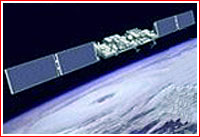
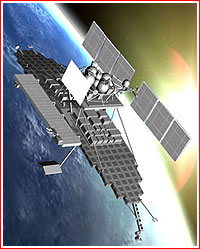
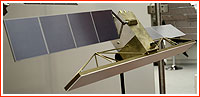
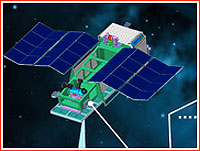
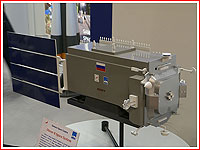
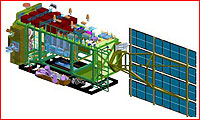
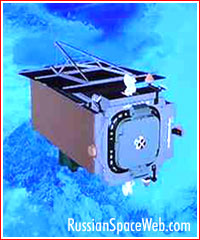
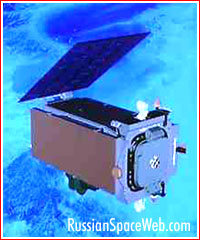
Obzor-R satellite to image Earth with radar To achieve capability to picture Earth's surface in all weather, day and night, the Russian space agency initiated development of the Obzor-R (191KS) satellite equipped with the high-resolution X-band radar dubbed Kasatka-R ("killer whale"). As of 2016, the first satellite in the Obzor-R series, was scheduled for launch in 2019, but the mission ultimately reached the launch pad at the end of 2025.
Known specifications for the Obzor-R (191KS) satellite:
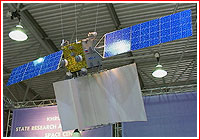
Origin of the project: MakSat-R Around 2011, TsSKB Progress started a preliminary development of a radar-carrying satellite originally known as MakSat-R. In March 2012, TsSKB Progress said that a development schedule for the project had been approved, calling for the completion of the preliminary design by May 30. At the time, engineering documentation for the load-bearing structure and solar panels of the satellite was to be completed by the end of June 2012 and for the body of the satellite -- by July 30. It would enable the launch of the spacecraft in 2015. According to NII TP design bureau, the company has been developing radar payload for the MakSat-R satellite since 2009. The same company previously planned to install a similar device on the radar version of the Resurs-DK spacecraft, with which TsSKB Progress possibly competed in a tender for an early phase of the Arkon-2M project. After Roskosmos gave the contract for Arkon-2M to TsSKB's competition -- VNIIEM -- TsSKB Progress returned with the MakSat-R design customized for the purposes of the Ministry of Defense. According to industry sources, when later, the Russian space agency initiated the Obzor-R project, the MakSat-R design was to be repurposed again for a "civilian" satellite, while MakSat-R itself would be discontinued. TsSKB Progress apparently conducted the initial development of both MakSat and Obzor projects with its internal funds. From Maksat-R to Obzor-R On Dec. 17, 2012, Russian space agency, Roskosmos, solicited bids for a tender to develop the radar-carrying Obzor-R remote-sensing satellite. The new-generation spacecraft aimed to replace the Arkon-2M project, which was canceled in 2012. The agency allocated 3,604,800 thousand rubles ($116.3 million) for three years of development work ending on Nov. 25, 2015. Roskosmos put a deadline for the submission of bids for the tender at Jan. 15, 2013, and planned to choose a winner on January 24. According to the agency's assignment, Obzor-R was to carry an X-band (phased-array) radar for taking images of the Earth surface through cloud cover or fog abstracting the use of optical imaging systems. Roskosmos expected the spacecraft to provide data to civilian agencies for the purposes of cartography, naval navigation, geological applications, exploration of natural resources and for agriculture. The list of tasks clearly emphasized civilian purpose of the spacecraft, however Roskosmos also stressed the possibility for adding other goals as the project developed. Roskosmos required the satellite to use GLONASS and GPS satellite data and to fit into the Soyuz-2 launch vehicle based in Plesetsk. The satellite would have to be able to deliver imaging data to ground stations within 12 hours after taking the picture. It would have to be able to revisit imaging area within latitudes from 35 to 60 degrees North in no less than two days. During each orbit around the Earth, the spacecraft would have to be able take images during at least 10 minutes. Ground stations receiving data from the satellite would be equipped with antennas sporting 3.6-meter dishes. Only one or two ground stations would be required to control Obzor-R. The Obzor-R spacecraft would have to be able to operate in orbit for at least five years and have a total operational life span of no less than eight years. The resolution of the satellite was reported to be as high as one meter. In the previous decade, several companies in Russia were working on or proposed radar-carrying satellites. They included NPO Lavochkin, VNIIEM, GKNPTs Khrunichev, NPO Mashinostroenia, KB Arsenal, and RKK Energia. According to industry sources, TsSKB Progress in Samara and KB Arsenal in St. Petersburg ultimately competed in the tender in January 2013. TsSKB Progress won the contract despite a lower price offered by KB Arsenal. At the time, the launch of the Obzor-R spacecraft on the Soyuz-2-1b rocket into a terminator-matching orbit was expected in 2015. In March 2013, the head of TsSKB Progress, Aleksandr Kirilin said that the company had been challenged to launch the first Obzor-R satellite by the middle of 2015. Another spacecraft of this type was to be launched by 2018, in addition to four optical Obzor-O satellites. In June 2013, TsSKB Progress presented a scale model of the Obzor-R satellite at the Air and Space Show in Le Bourget. Accompanying description reconfirmed that the launch of the satellite had been scheduled for 2015. No technical specifications for the spacecraft was released at the time. Preliminary design to be completed in September On July 30, 2013, TsSKB Progress held a meeting of the Chief Designer Council chaired by the head of the company Aleksandr Kirilin to review the preliminary design of the Obzor-R project. Both, developers and potential users of the satellite took part in the event, TsSKB Progress announced on July 31. According to the company, the participants discussed the status of the preliminary design for the high-resolution radar system, the power supply system and ground-based infrastructure, among other issues. Representatives of the Federal Emergency Service, MChS, and Russian Land-zoning agency, Rosreestr, and "other agencies interested in Obzor-R's data," had confirmed the necessity for the urgent development of the project, TsSKB Progress said. TsSKB Progress scheduled the formal defense of the preliminary design of the Obzor-R system at the Russian space agency, Roskosmos, in September, the company's press-release announced. According to TsSKB Progress, Obzor-R would have following applications:
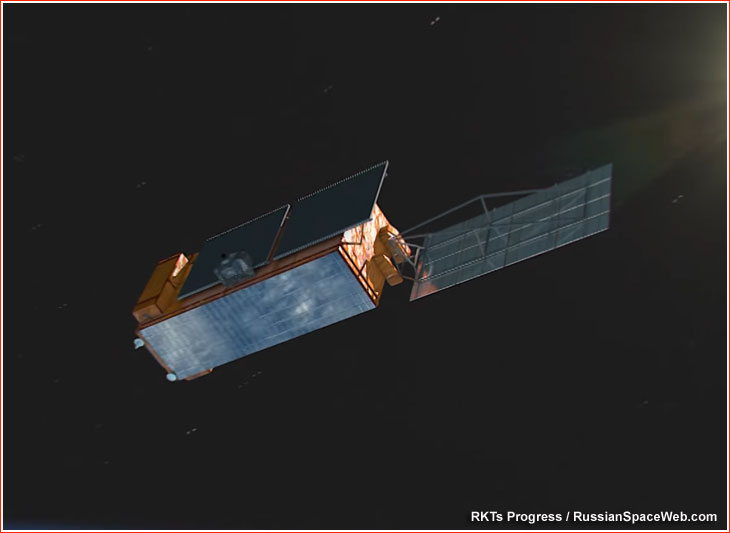
Architecturally, the Obzor-R spacecraft was based on RKTs Progress' standard unpressurized service module, which previously served as a basis for such satellites as Bars-M. Radar payload for Obzor-R approached testing phase in 2015-2016
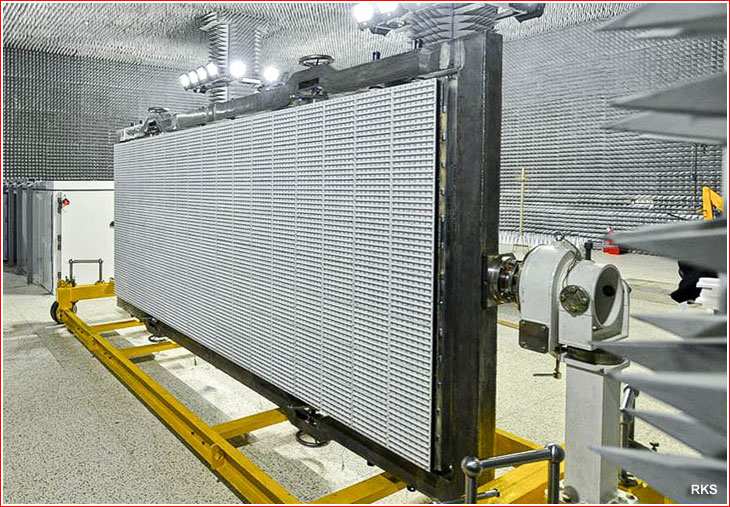
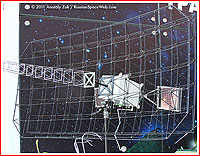
In the summer of 2015, the first Obzor-R satellite was finally in production, however, at the time, its first launch had to be postponed until 2018. In September 2016, the RKS corporation released a photo of the Kasatka-R radar being prepared for ground tests before its launch on the Obzor-R satellite then planned for 2019. According to the company, Kasatka-R will use the so-called Digital Beam Forming, DBF, for a more flexible and efficient imaging of the Earth's surface, allowing to reach a resolution of 0.5 - 0.3 meters. According to the company, the NII TP research institute, a part of the RKS corporation, made significant progress in the development of the Kasatka-R payload in 2016, including building an experim ental prototype of the antenna array and beginning of the work on the radar software. The assembly of the first radar was scheduled to start at the end of the year, RKS announced. Specifically for the Kasatka-R project, NII TP completed the construction of the echoless test chamber. By the end of 2015, Russia's decadal Federal Space Program, FKP-2025, planned to allocate a total of 22,174 million rubles (approximately $302.8 million in 2015) for the next 10 years for the Obzor-R project:
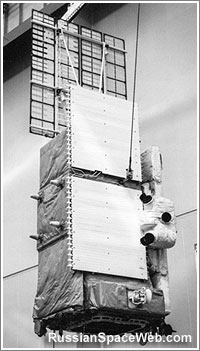
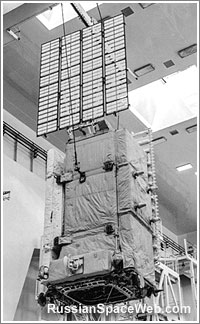
It would pay for three Obzor-R satellites launching in 2019 and 2021 and 2022, respectively. The first two spacecraft would be considered experimental and the final one — operational. Two satellites were expected to operate within the system. Obzor-R appeared in metal in 2017 On February 15 and 16, 2017, RKTs Progress held a meeting of the Chief Designers Council, which reviewed the status of the Resurs-P, Obzor-R and Resurs-PM projects. The Chief Designer of the Obzor-R project N. R. Stratilatov reported that the first flight version of the satellite along with its flight software had been undergoing electric and radio testing, RKTs Progress announced. According to the company's press-release, the members of the Council discussed the production of some components for the first Obzor-R satellite and various options for the deployment of the Obzor-R constellation, along with other remote-sensing networks. Special attention was paid to quality control of all the components in the Obzor-R system, RKT Progress said. To this end, the quality control service at RKTs Progress conducted a review of the management system at all sub-contractors involved into the Obzor-R project. In the meantime, RKTs Progress floated the first images of what appeared to be a flight worthy version of the Obzor-R satellite. Additional Obzor satellites In 2024, the head of RKTs Progress Dmitry Baranov said that the company had began the design work on the second Obzor-R satellite under a contract with Roskosmos awarded in 2023. In October 2024, he reitirated that the technical design of the spacecraft was underway with a deadline for that phase of development set for the first quarter of 2025. The contract also specified the launch of the second Obzor-R in 2029, Baranov said. In 2024, Roskosmos also promised the launch of the follow-on Obzor-X satellite in 2030 and Obzor-LP in 2034. (1069) Soyuz launches first Obzor radar satellite A long-delayed all-weather imaging satellite went into orbit on a Soyuz rocket on Dec. 25, 2025, after a 24-hour delay. The Obzor-R project was initially developed by the Roskosmos State Corporation within its civilian program, but the launch campaign of the first spacecraft in a series from a military site in Plesetsk was mostly shrouded in secrecy under the usual format of a classified mission.
|
|

|