|
|
|
|
LAUNCH
AND TEST SITES |
||||||||
|
|
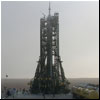
SHORES OF THE UNIVERSE: Russia's space launch and rocket test sites Baikonur, (aka Tyuratam, or NIIP-5 test range) opened Space Age in 1957, when a converted ballistic missile hauled the world's first satellite into orbit from then super-secret site on Syr Darya River in Kazakhstan: Bershet, an ICBM deployment site; used for launches of UR-100 and UR-100K missiles (67); Canso launch site, Nova Scotia, Canada Derzhavinsk, an ICBM deployment site; used for launches of one R-36M on July 19, 1983 and three R-36M UTTKh missiles in 1986 and 1988 (67); Dombarovsky, an operational ICBM base which hosted orbital launches; Drovyanaya, an ICBM deployment site near the city of Chita; used for launches of R-16U and UR-100 missiles (67); Kapustin Yar became the cradle of the Soviet rocketry in 1947, when Soviet engineers and their German colleagues launched the A-4 ballistic missiles from this dusty site on the banks of Volga River; Kartalov, an ICBM deployment site; used for launches of R-36M and R-36M UTTKh ICBMs (67); Kedrovy, an ICBM deployment site near the city of Krasnoyarsk; used for test launches of R-16U, UR-100 and UR-100K ICBMs (67); Kostroma, an ICBM deployment region, used for launches of UR-100, MR UR-100, MR UR-100 UTTKh missiles (67); Kourou, the European spaceport in French Guiana, also became the first site to accomodate Russian rockets outside of the former Soviet Union; Kura, an ICBM warhead impact site on the Kamchatka Peninsula (43rd detached scientific and test station of the Ministry of Defense, ONIS); Mykolaiv launch site (Ukraine) Nenoksa, a navy test range for submarine-launched ballistic missiles could be used for space launches; Nizhniy Tagil, an ICBM deployment site; used for test launches of R-16U ICBMs (67); Novaya Zemlya, a nuclear test site and a missile impact site in the Arctic Ocean (67). Olovyannaya, an ICBM deployment site; used for as many as 86 test launches (67); Omsk, missile deployment region of the 290th detached rocket unit; conducted the launch of R-9A ICBM in July 1965 (67). Pan'kovo, The Novaya Zemlya archipelago; Test launch site for the Burevestnik nuclear cruise missile. Plesetsk, NIIP-1 test range, the former super-secret ICBM site have grown into the world's busiest spaceport in the 1970s and 1980s; Sary-Shagan, antimissile defense and laser weapons test site; Sea Launch, a sea-based launch site; Tatishevo, an ICBM deployment site; used for launches of UR-100N and UR-100N UTTKh missiles (67); Teikovo, an ICBM deployment area near the city of Ivanovo, used for launches of R-16U, UR-100 and UR-100K missiles (67); Tyumen, a missile deployment region of the 93rd rocket brigade; conducted two launches on June 27, 1967 and in 1968 (67); Uzhur, an ICBM deployment site; used for launches of R-36, R-36M, R-36M UTTKh ICBMs (67); Vostochny Cosmodrome -- a new Russian launch site to replace Baikonur;
Yurya, an ICBM deployment site; used for launches of R-16U missiles (67);
|
||||||||
| GROUND CONTROL FACILITIES | |||||||||
|
|
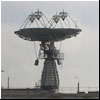
EARS AND EYES OF SPACE: Russia's command and control network (KIK) To support its rocket and space fleet, the Soviet Union deployed an extensive network of ground control stations, ships and planes. Traditionally, the ground control station are operated by the military. The original network was built to support the testing of the Soviet ballistic missiles and soon evolved into space control and monitoring infrastructure managed by NII-4 scientific-research institute of the Ministry of Defense.
|
||||||||
| RESEARCH AND DEVELOPMENT CENTERS | |||||||||
|
|
BUILDING THE FUTURE: Russia's rocket and space industry Unlike most Western countries, Russia does not have aerospace industry. Instead it has rocket and space industry. This rather odd arrangement is a result of the skepticism toward rocket technology shown by the leaders of the Soviet aviation industry at the end of the World War II. When in 1946, the Soviet government launched its secret program of ballistic missile development, the Ministry of Armaments, previously dealing mostly with artillery production, took on the responsibility of managing the new and controversial technology. As a result, all the plants, labs and test sites had to be built from scratch. Yet, in a little more than a decade, the Soviet rocket scientists went from the first copy of the German A-4 missile to a rocket capable of placing satellite into orbit. After a restructuring of the mid-1960s, the Ministry of General Mashine Building managed space industry. In 1990s, Russian Space Agency, RSA, assumed the role. In 1999, during another restructuring, RSA took over the responsibility for 315 organizations from the aviation industry, for the first time bringing aviation and space industry under management of the same federal agency. In depth: The origin of the Soviet rocket and space industry Russian space agency, Roskosmos Russian space industry in the first decade of the 21st century Russian space industry in the 2010s Space industry centers:
|
||||||||

|