|
|

|
Russian communications satellites For centuries, Russian rulers from Tsars to Bolsheviks faced serious challenges in managing their domain -- the world's largest country spread from Baltic to the Pacific. In the 1960s, with the advent of space technology, the Soviet government for the first time had an opportunity to almost instantly reach vast regions of the country with telephone communications and TV signals. In fact, for many Soviet citizens inhabiting rural areas of Russia, the satellite TV was the only evidence of the Space Age.
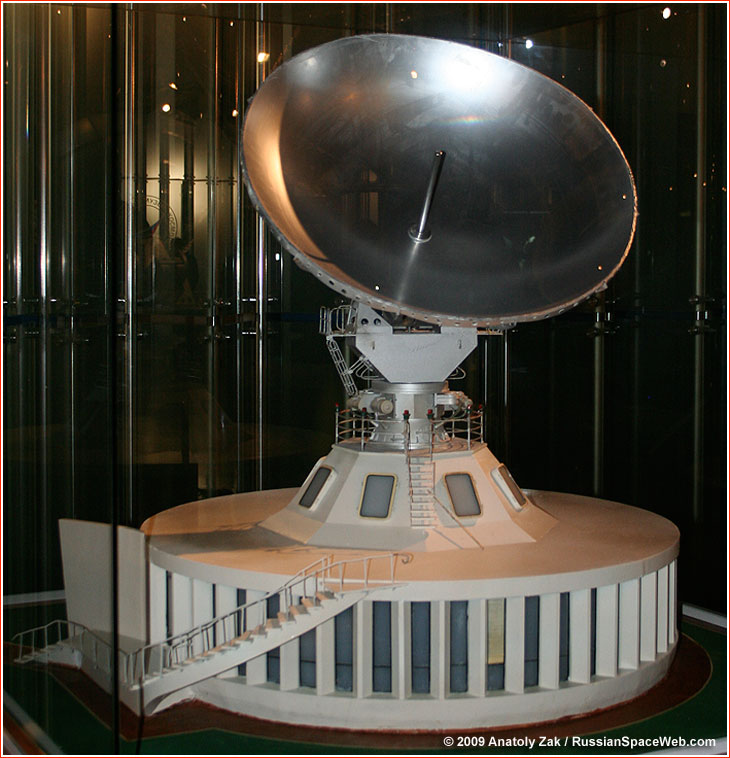
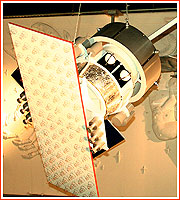
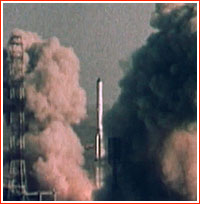
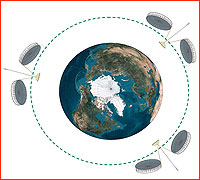
The Soviet design of the Orbita receiving station intended for the distribution of TV signals from Molniya satellites throughout vast rural areas of the USSR and its satellite states. In 1961, OKB-1, the organization that built the world's first piloted spacecraft, also started the development of a communications satellite. Although the Space Age had barely began, the idea of using orbital spacecraft for providing communications was not new. Arthur Clark, more famous for his sci-fi novels, is also credited for a prophetically accurate description of satellite communications in 1945. In his memo to the British Interplanetary Society, Clark wrote that if the spacecraft had reaches an altitude of 35,880 kilometers over the Equator, it would need 24 hours to make a complete circle, and thus it will appear "hanging" to an observer from Earth. As a result, three spacecraft evenly spread in such orbit 120 degrees apart, could "hear" signals from anywhere on the planet. Although western developers overwhelmingly adopted 24-hour (geostationary) orbit for practical missions of communications satellites, Soviet engineers chose a different approach. The limitations of available rocket power prompted OKB-1 to seek a less energy-hungry orbit suitable for communications. Resulting studies came up with a hugely elongated ellipse, whose apogee, or the highest point, would be over the northern hemisphere, providing but continuous "view" of the Russian territory. Such trajectories became known as Molniya (Lighting) orbits, after a long-lasting series of satellites the USSR had introduced in 1965. In 1967, Molniya satellite network became a basis for the Orbita TV network. The first test transmission of TV broadcast from Moscow's Ostankino TV station to the Soviet Far East was made at the beginning of November 1967. The system was declared operational on November 7 of the same year, the 50th anniversary of the Bolshevik Revolution of 1917. Soviet geostationary satellites As the Proton rocket came out of age at the beginning of the 1970s, its four-stage configuration born in the heat of the Moon Race was given a new job of opening a window for the USSR to the geostationary orbit. In March 1974, the Proton delivered the first Soviet satellite, Molniya-M1S, into the 24-hour orbit. In 1975 and 1976, a series of Raduga (Rainbow) and Ekran (Screen) satellites entered service over the Equator, providing communications for the Soviet military and civilian institutions. The first Ekran was launchned on a Proton-K rocket on Oct. 26, 1976, and it provided first communications on November 7 of the same year. In 1979, a more capable Gorizont (Horizon) satellite was inaugurated. In the meantime, NPO Energia, looking for the passengers for its super-heavy Energia rocket, concieved a 18-ton communications platform, the largest communications satellite ever proposed. The project had never gone beyond paper stage. Post-Soviet satellite communications
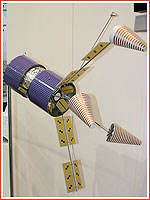
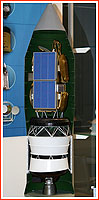
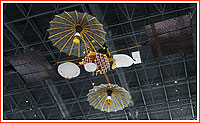
A probable Gals (left) and early Ekspress satellites during preparation for launch at NPO PM circa 1994. (later ISS Reshetnev). From the mid-1960s and until the collapse of the USSR in 1991, the NPO PM development center in Siberian town of Zheleznogorsk, had remained a sole provider of communications spacecraft for the nation. However, the space funding crunch of the post-Soviet period bred competition from other Russian space enterprises who saw potentially lucrative market in the field of satellite communications to complement lagging federal funding. In 1992, the company ended the production of the Soviet era Gorizont satellites, but it struggled to replace an obsolete and underpowered fleet of satellites already in orbit. The company's first post-Soviet communications satellite, Gals No. 11, developed exclusively for civilian use and commissioned by a non-military organization, was launched in 1994. The spacecraft was designed to broadcast TV signals in international frequencies. NPO PM built an automated checkout facility for testing of the Gals series at its assembly plant and at the launch site. For the first time, the control of the satellite was conducted from NPO PM's own ground station in Zheleznogorsk. With a life span of five years, the first Gals functioned for 7.5 years and the second and last Gals No. 12 launched on Nov. 17, 1995, survived for 8.5 years. A base platform of the Gals spacecraft became a precursor for the Ekspress series, first of which was launched on Oct. 13, 1994. In the meantime, many orbital positions the country reserved for its communications birds remained empty and were under threat of expiration under the international law. The situation gradually improved during the 2000s and the 2010s. As of beginning of 2015, the Russian communications satellite capacity was estimated at 22 percent from the planned volume in 2025. At the same time, personal satellite communications were estimated only at 2.7 percent. At the time, Russia had 24 communications satellites in orbit and had a plan to have 42 such satellites by 2020. (744) During 1990s, the Russian firm RKK Energia developed a new series of satellites to provide commercial broadcasting and telephone services. Ironically, the company pioneered satellite communications in the USSR before focusing almost entirely on the human space flight in mid-1960s. In the meantime, NPO PM turned to western subcontractors for the supply of advanced communications payloads, in the effort to extend orbital life, power and communication capacity of the Ekspress family. As of 2004, Russian Satellite Communications Organization planned to complete an orbital constellation of five Ekspress-AM satellites in 2005. At the time the company oversaw a constellation of 15 satellites. Sesat In the 1990s, NPO PM also won a contract from a European conglomerate Eutelsat to build the Siberian-European Satellite, or Sesat, which became the first communications spacecraft built by a Russian prime contractor for a Western customer. NPO Mash planned to build its first comsat In 2001, NPO Mashinostroenia, based in Reutov, demonstrated a full-scale mockup of the Ruslan-MM communications satellite and a full-scale payload section of the Strela space launcher which was expected to boost the Ruslan-MM into initial orbit. On June 22, 2001, NPO Mash won a contract from Russian satellite communications provider Intersputnik, which called for the launch of the two Ruslan-MM comsats. The satellites were expected to become a part of the constellation which could eventually include as many as 100 spacecraft. As of July 2001, Interpsutnik also signed contracts with Khrunichev and NPO PM, who would supply two satellites each. According to the terms of the contract with NPO Mash, the first Ruslan-MM has to be launched 30 months after first funds had been delivered by Intersputnik, presumably in September 2001. The second Ruslan-MM was expected to fly four months later. Both 637-kilogram satellites were to be launched by Strela boosters into the initial orbit and then spend around 150 days climbing to their final geostationary orbit using electro-reactive engines. The weight of the spacecraft at the final orbit was expected to be 560 kilograms. At the time, NPO Mash hoped to test-fly the Strela booster for the first time in the second or third quarter of 2002. The launch was expected to take place from the silo facility in Baikonur, built for the UR-100N ballistic missiles. The Strela itself derived from the UR-100N ICBM, originally developed at NPO Mash. The Strela's operational launches were expected to start in the fourth quarter of 2002 from Svobodny Cosmodrome in the Russian Far East. NPO Mash also developed Kondor-E satellite platform designed to carry radar remote-sensing and optical imaging payloads. Kondor-E was an "export" version of a classified project financed by the federal government. Both satellites were launched on the Strela booster, but the Ruslan-MM communications satellite project had never materialized. In 2009, RKK Energia reached an agreement to build an Angosat communications satellite carrying up to 40 C- and Ku-band transponders for the Ministry of Telecommunications and Informational Technologies of Angola. After preliminary studies, the practical implementation of the project reportedly started in December 2012. On July 10, 2012, during the Farnborough air show, Russia's ISS Reshetnev signed a memorandum of intentions with the Armenian government for the development of the communications satellite for this former Soviet republic. The spacecraft would be based on ISS Reshetnev's standard Ekspress-1000N platform and provide a 15-year lifespan for the mission. The project however faced a commercial hurdle, because of particular orbital positions registered by the Armenian government. In April 2009, the Ukrainian Prime Minister Yulia Timoshenko announced its government's plans to launch a communications satellite by Sept. 1, 2011. After some consideration of a domestically built satellite, the contract for the development of Lybid spacecraft was awarded to ISS Reshetnev in Russia. The company based Lybid on its Ekspress-1000NT platform with a projected life span of 15 years. Lybid would be equipped with 30 Ku-band transponders. As of November 2012, the launch of Lybid was expected in December 2013. The Russian-built payload module was to be delivered from ISS Reshetnev to Canada's MacDonald, Dettwiler and Associates, MDA, for outfitting with a transponder payload by the beginning of 2013. However in November 2013, ISS Reshetnev announced that it was still conducting integration between satellite's platform and its payload module. Upon the completion of the procedure in December 2013, the company planned to start electrical, thermal and vacuum, mechanical and high-frequency tests of the satellite. Then, in the first half of 2014, the Russian annexation of Crimea threatened to derail the project. In its wake, Ukraine had to move its ground control for the satellite from Crimea to Kyiv. By the beginning of August 2014, ISS Reshetnev had to put a fully assembled Lybid into storage. Still, in the same month, the Ukrainian space agency reported that the Zenit-2SB-80 launch vehicle and its Fregat upper stage had been manufactured and the state enterprise GP Ukrkosmos had been building the mission control center for the satellite in the Ukrainian capital. In addition, a command and tracking station for the project would be deployed near Kyiv, the agency said. The announcement said that all assets would be ready for launch of Lybid in the fourth quarter of 2014. Ultimately, the project was frozen, as Russia escalated its war against Ukraine. Brazilian comsat In February 2013, the head of ISS Reshetnev told the Interfax new agency, that the company had submitted a bid for a tender of the Brazilian government to build a communications satellite. On May 24, 2013, Russia's State Commission on Radio Frequencies announced an allocation of a radio bandwidth for the Braslet (Bracelet) mobile communications network. According to Decision No. 13-18-06-9, two positions in the geostationary orbit at 69 and 138 degrees East longitude would be reserved for satellites developed by EA SAT. Russia plans Ellips dual-purpose constellationFollowing the deployment of the Meridian constellation during 2000s, the new draft of the Russian Federal Space Program, covering the time period from 2016 to 2025, called for the development of the new-generation Ellips (Russian for "ellipse") communications network for secure mobile communications. Like Meridian, Ellips satellites would be deployed in highly elliptical orbits (a.k.a. "Molniya orbits"). As of 2014, the Ellipse constellation was expected to include four 2.5-ton satellites. In addition to encrypted mobile communications, the Ellips satellites were to support air-traffic control and traditional fixed communications. Reflecting its dual (civilian and military) application, the Ellips project would be funded jointly by the Russian space agency, Roskosmos, and by the Russian Ministry of Defense at a price tag of 65.6 billion rubles to develop and deploy the constellation. (708) Although Russia managed to avoid a complete degradation of its satellite communications assets at the turn of the 21st century, the nation's chief operator of space communications continued struggling well into the 2010s, representatives of the Russian Satellite Communications Organization, GPKS, told the Izvestiya daily. In order to preserve the domestic manufacturing base in the field of satellite communications, the Russian government had to resort to protectionism in the face of strong foreign competition. In the Fall of 2008, at the conclusion of his meeting with leaders of the industry in Krasnoyarsk, then Prime-Minister Vladimir Putin set a requirement for at least a 15-percent cost reduction by foreign communications satellite operators bidding to replace its Russian equivalents. Although no formal protectionist laws had been on the books, Russian Satellite Communications Organization, GPKS, felt pressured to choose domestic satellite developers over the foreign ones. During the 2000s, GPKS' Russian-built satellites had an average life span of 5.5 years, while they would have to work at least six years to turn profit. By 2012, eight out of 11 satellites which GPKS operated would go out of business within two or three years. Around the same time period, satellites built in Europe and the US were designed to work between 10 and 15 years. In its defense, ISS Reshetnev, which built the practically entire GPKS fleet, said that in 2000, the operator had asked it to assemble three Ekspress-A satellites under an emergency schedule. Even then, satellites designed to work for five years had managed to survive for a decade, ISS Reshetnev said. Still, the company admitted a premature failure of at least two of its satellites. ISS Reshetnev also blamed underfunding during 1999 and 2003 for the need to purchase many satellite components graded as "Industry" rather than "Space," which would certify them for reliable operation in orbit. In the meantime, GPKS blamed low quality of Russian-built spacecraft for its miniscule 3-percent share of the world's satellite communications business during the 2000s. Due to numerous technical problems, the company had been hit with fines and had seen its reputation plummet, GPKS representative told Izvestiya daily. According to the company, the satellite developer had no obligation to replace failed vehicles, pointing instead to the insurers. By May 2012, GPKS essentially rebelled against the government protectionism, publicly announcing its plans to turn to foreign satellites. In the 2000s, GPKS had already ordered the Ekspress AM-4 satellite from Europe's EADS Astrium, however the spacecraft was lost in a botched launch of a Proton rocket in 2011. In the effort to increase its worldwide market share to as high as 8.5 percent, which would make it the world's 5th company in the field, GPKS apparently decided to let Western developers to build at least part of its new nine-bird fleet during 2012-2015. However, the head of ISS Reshetnev warned that the move would push Russian satellite communications manufacturers "into the corner." (561) Aggression in Ukraine threatens Russian communications satellite industry
The Russian annexation of Crimea at the beginning of 2014 created the first major crack in the well-established partnership between Russian communications satellite manufacturers and the Western aerospace industry. Practically all Russian communications satellites built in the 21st century relied either entirely on the Western hardware or employed Russian-built service modules equipped with state-of-the-art communications payloads provided by foreign manufacturers. This mutually beneficial setup first came into question in 2014. A potential ban on the import of Western technologies to Russia gave a new powerful impetus to the Kremlin's effort to preserve and modernize its endangered comsat industry. By the end of April 2014, as many as four Russian orders for new communications satellites slated to go to Western developers were promised to make a U-turn back to domestic manufacturers, industry sources professed. On the surface, this news was met with enthusiasm at ISS Reshetnev, the nation's key developer of communications satellites, because of hopes for reviving a full cycle of production of communications satellites inside Russia. However, from the outset, critics saw that official "silver lining" with a great deal of skepticism. In the short term, the widening embargo on the import of technology into Russia could push back or even derail domestic development projects which had grown dependent on foreign components. In the long term, the absence of competition could also reduce the incentive to innovate among domestic developers, even if promises of new federal investments into the field would have materialized. Fortunately for the Russian industry, the cooperation between European manufacturers and Russia was allowed to continue for eight years after the annexation of Crimea, resulting in the successful development and launch of several Russian communications satellites in the Ekspress and Yamal series carrying foreign communications payloads. But in 2022, the Russian communications satellite projects had hit a real wall, along with the rest of the Russian economy, after Putin's new invasion of Ukraine. The overwhelmingly wide sanctions against the Kremlin left practically no chance for Russia to complete any of its communications satellites in the development pipeline at the time due to their dependency on Western payloads. Conceivably, Russia could turn to China for necessary components or/and Moscow could try again developing necessary competencies inside the country, but given little signs of progress on both of those fronts in the past, it could probably take years if not decades before all the technological gaps could be closed and it would be even more difficult to do under much harsher economic conditions and export controls. It was also a question whether China would be interested in boosting strategically important dual-purpose industries in Russia or whether it would want to challenge the Western sanctions regime by putting at risk its far more important trade relations with the United States. In March 2023, Director General of the Kosmicheskaya Svyaz enterprise, GPKS, Aleksei Volin warned that without replenishment of its constellation, Russia could begin experiencing a deficit of satellite communications capacity as early as 2028 or 2029. In August 2023, a Russian communications strategy document, which outlined the industry's prospects until 2035, claimed that 12 Ekspress satellites and five Yamal satellites provided 80 percent of the satellite communications capacity inside Russia, with 11 of these satellites completing their projected service life by 2030 and six remaining satellites also going beyond their official life span by 2036. According to the paper, all aging Russian communications satellites used 80 percent of imported components and there was no way to replace them due to sanctions. However, in 2025, the head of the Kosmicheskaya Svyaz operator, said that the Data Economy federal project funded seven geostationary satellites to be launched in the following five years, bypassing the Roskosmos' space budget, which previously paid for such projects. The new budget, handled by Ministry of Digital Technology, Mintsifra, did not include the Ekspress-AMU4 (INSIDER CONTENT), which was funded through the old scheme. Around the same time, the Russian strategy envisoned deployment of 622 low-orbital broad-band Internet-access satellites by 2030 and 924 such spacecraft in orbit by 2035. Russia prepares domestic development for communications satellites (INSIDER CONTENT)
In April 2024, ISS Reshetnev said that it had planned to set up a new facility for assembly and testing of communications payloads for satellites, which would be used for checking payloads of Ekspress-AMU4 (INSIDER CONTENT), Ekspress-RV (INSIDER CONTENT), Yamal-501 (INSIDER CONTENT) and Luch-5VM (INSIDER CONTENT) satellites. At the end of 2024, ISS Reshetnev reported an ongoing development of a domestically produced transponder payload for an unnamed medium-class communications satellite, probably referring to the Ekvator project for the government of Iran. According to the company's Director General Evgeny Nesterov, the new payload would provide a technological independence for Russia in the development of high-power communications satellites. Also, in the course of work on a multi-beam flexible digital payload, ISS Reshetnev built a digital processing facility, Nesterov announced. It would be used for various projects including, the development of high-speed Internet access systems for the Sfera project (INSIDER CONTENT). In August 2024, Moscow-based RKS Corporation said that it had just launched serial production of amplifiers for geostationary communications satellites, such as Yamal, Ekspress and Luch, as well as for prospective communications constellations. (INSIDER CONTENT) The four-kilogram instrument was designed for 15 years of work and was built around a wave tube supplied by NPO Almaz from the Rostekh State Corporation. According to RKS, it was the only supplier of such hardware for spacecraft, "fully meeting demands of the industry." Russia's prime communications satellite operator Kosmicheaskya Svyaz also reported steady progress. In October 2025, the company's Director General Aleksandr Volin said that it had fully replaced critical foreign software with domestically written code in its operations, while the satellite communications industry was close to doing the same with software used in production. Ironically, the technical drawing of the prospective Yamal-501 satellite (INSIDER CONTENT) shown around the same time by ISS Reshetnev was apparently produced using French-made CATI software:
As of 2025, the Russian satellite operators had more than 500 communications transponders on its satellites, compared to just 22 transponders available in 1995. They carried 1,100 TV channels, instead of just 15 three decades earlier, Volin said. According to Volin, Russia was providing satellite communications services in more than 60 countries in 2025 with an expected annual revenue of around 15 billion rubles ($183 million). In particular, he claimed that in 2025, the company won several new customers in the Middle East, in Africa and one "in the South Asia," some of which migrated from Western providers. SSKMS: Russia gives up on a mobile satellite communications project (INSIDER CONTENT) A decade-and-a-half effort to develop a highly secured space-based telephone service for military and civilian users is abandoned in favor of a less ambitious dual-use network. ISS Reshetnev works on new-generation Gonets system (INSIDER CONTENT) The primary developer of Russian communications and military satellites, ISS Reshetnev, works on a new version of the Soviet-era Gonets (messenger) system. The company says the constellation will have "multi-function" data-transmission capability probably implying its dual use for military and civilian communications. Russia plans Starlink equivalent (INSIDER CONTENT) In an effort to upgrade its aging communications and remote-sensing satellite fleet, Roskosmos initiated the Sfera ("sphere") project in 2018, which encompassed multiple constellations to be deployed in vastly different orbits and designed to provide a wide array of functions, including some never before available via Russian satellites. Russia promises its first Internet satellite (INSIDER CONTENT) In 2023, engineers at ISS Reshetnev were completing the development of the Skif satellite system for providing Internet to rural areas from a medium-altitude orbit. Its architecture resembled that of the O3b constellation, but the Russian version was customized to operate in high latitude areas of the Earth. ISS Reshetnev plans orbital "Internet of Things" (INSIDER CONTENT) Starting in 2024, Roskosmos planned to begin the deployment of the Marafon-IoT satellite constellation, one of several Russian projects aimed at providing Internet service from low orbit. The Marafon-IoT system focuses on the "Internet of Things" capabilities or IoT, with "dual-use" (civilian and military) roles.A private new comer wants to build Russian Starlink (INSIDER CONTENT) In the past decade, most of the Russian space startups have either failed or made little headways into the market, but a recently established enterprise says it will take on SpaceX with its own satellite Internet. Russian gas giant jumps on the D2D bandwagon (INSIDER CONTENT) In 2024, Moscow-based Gazprom space systems claimed the development of a low-orbital communications satellite system that would pave the way to a "direct-to-device" service connecting smart phones around the world with no need for additional hardware. Yamal-501 to boost Gazprom communications (INSIDER CONTENT) By the 2020s, ISS Reshetnev, Russia's prime developer of communications satellites, embarked on a full-cycle development of the Yamal communications satellite family after the outsourcing of its transponder payload to foreign contractors had became impossible. The new series was distinguished with the 500 designator.
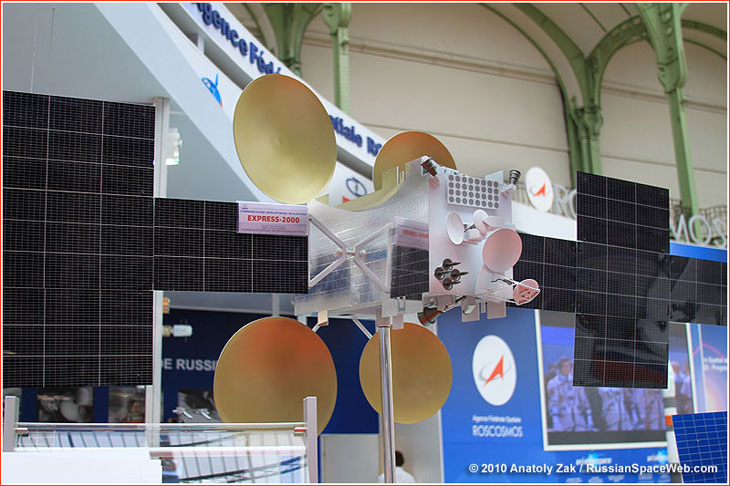
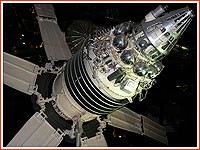
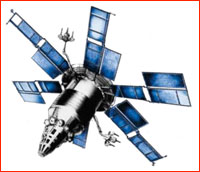
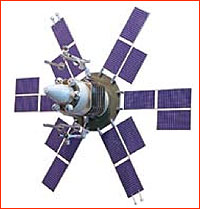
Overview of Russian communications satellites:
|
|

|