|
|
|
Year |
Milestones in space exploration: yesterday, today and tomorrow |
|||||||
|
2000
Zvezda launch |
Feb. 11: NASA's Space Shuttle Endeavour begins the STS-99 flight with six astronauts onboard, carrying out the Shuttle Radar Topography Mission, SRTM. March 25: A Delta rocket launches NASA's IMAGE satellite from Vandenberg designed for imaging Earth's magnetosphere and produce 1st comprehensive global images of plasma populations. April: A privately-financed mission is launched to Mir. May: The Shuttle crew (STS-101/2A.2a) delivers supplies, re-boosts and repairs the International Space Station. July 12: The Zvezda service module of the International Space Station reaches orbit. August: The first Progress cargo ship arrives at ISS. August: The Shuttle crew (Mission STS-106/2A.2b) delivers supplies, re-boosts and repairs the International Space Station. October: The Shuttle (Mission STS-92/3A) delivers a Z-1 truss, a set of gyrodines and the PMA-3 docking port to the ISS. Oct. 31: The first resident crew of the International Space Station lifts off aboard Soyuz TM-31. December: Shuttle mission STS-97/4A delivers a set of solar panels (PV Module P6) to the ISS. A billionaire Jeff Bezos founds the Blue Origin company aiming to build a New Shepard vertical takeoff and landing spacecraft, capable of reaching the upper atmosphere. |
|
|||||||
|
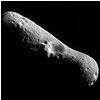
433 Eros
|
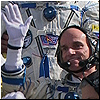
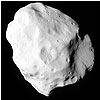
Jan 9-10: China launches the second prototype of the manned spacecraft, Shenzhou-2, conducting a successful eight-day mission without crew. Feb. 7: The Shuttle Atlantis lifts off to the ISS, carrying the Destiny lab module. The module was attached to the station three days later. Feb. 12: At the end of its mission, the NASA's NEAR spacecraft touched down on the surface of the asteroid Eros, which the spacecraft was orbiting since previous year. March 23: The Mir space station is deorbited after 15 years in orbit. April 7: A Delta-2 rocket launches the Mars Odyssey spacecraft. April 28: Dennis Tito, the first space tourist, launches to the ISS onboard the Soyuz TM-32 spacecraft. |
||||||||
|
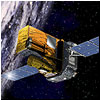
Integral |
Feb. 13: Russia officially cancels the long-delayed Spektr-RG project due to lack of funding. March 1: NASA launches the Space Shuttle Columbia on a mission STS-109 to service the Hubble Space Telescope by adding new instruments and boosting it to a higher orbit. March 14: Elon Musk founds Space Exploration Company, SpaceX, in California. March 25: China launches Shenzhou-3, the third prototype of the manned spacecraft. April: During Space Shuttle's STS-110 mission to the ISS, NASA astronaut Jerry Ross logs record nine spacewalks after several missions with the total EVA time of 58 hours 18 minutes. July 3: Delta-2 rocket launches NASA's CONTOUR spacecraft intended to get as close as 100 kilometers to comets Encke and Schwassman-Wachmann-3. The mission fails in the following month. Oct. 17: A Russian Proton rocket launches the European Integral gamma-ray observatory. Oct. 30: Russia introduces the Soyuz TMA spacecraft, launching a taxi crew to the ISS, which included an ESA researcher from Belgium. Dec. 29-30: China launches Shenzhou-4, the fourth and last prototype of the manned spacecraft, on a successful six-day mission without crew. |
||||||||
|
|
Feb. 1: Shuttle Columbia disintegrates on reentry into the Earth's atmosphere, killing seven crew members. Feb. 15: Europe's Ariane-4 rocket flies its final mission. April: In the wake of the Columbia tragedy, Russia takes over the responsibility of rotating crews onboard the ISS, using the Soyuz TMA spacecraft. May 8: Japan's M-5 rocket launches MUSES-C (Hayabusa) spacecraft to return samples from asteroid 25143 Itokawa. June 2: The Russian Soyuz FG/Fregat rocket launched the Mars Express probe, Europe's first spacecraft to explore the Red Planet. June-July: NASA launches two rovers to Mars. Aug. 23: Brazil's VLS-1 launch vehicle explodes on the launch pad in Alcantara, killing 21 people. Aug. 25: A Delta 7920H rocket launches NASA's Space Infrared Telescope Facility, SIRTF (later Spitzer observatory) into a heliocentric orbit. Sept. 27: ESA launches SMART-1 spacecraft toward the Moon. Oct. 15: China becomes the third nation to conduct manned space flight, launching the Shenzhou-5 spacecraft, with a 38-year-old Lt. Colonel Yang Liwei onboard. November: The 6th launch of the Japan's H-2A booster, carrying two reconnaissance satellites, ended in failure, when one of two booster stages failed to separate around 10 minutes after the blastoff. Cancelled missions: October: The Dnepr rocket to launch Trailblazer spacecraft toward the Moon. (The mission was delayed until Spring 2004, then to Fall 2004 and to 2005, then cancelled). |
||||||||
|
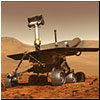
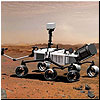
Mars Exploration Rover
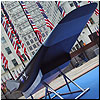
X-43A |
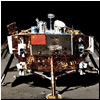
January: Japan's Nozomi spacecraft was to enter orbit around Mars. (The mission was abandoned in 2003, due to technical problems onboard the vehicle). Jan. 2: The Stardust spacecraft flies by comet Wild 2, collecting samples. Jan. 3: The Spirit rover (MER-A) lands on Mars. Jan. 14: President George W. Bush announced a new space initiative, envisioning the return of American astronauts to the Moon. Jan. 16: NASA cancels upgrade and servicing of Hubble Space Telescope (The decision later reversed). Jan. 25: The MER-2 Opportunity rover lands on Mars. February: Russia conducts a massive military exercise dubbed Security 2004. March 2: Ariane-5G launches the Rosetta spacecraft toward Churyumov-Gerasimenko comet. March 2: Members of the Mars Exploration Rovers' international science team announce that the outcrop near the site where Opportunity landed holds evidence that the rocks have spent time drenched in liquid water. March 27: NASA's second X-43A hypersonic research aircraft flew successfully after being dropped in mid-air by NASA'a B-52 and boosted by Pegasus rocket. For the first time, an aircraft powered by an air-breathing scramjet has flown freely. The unmanned vehicle's supersonic combustion ramjet, or scramjet, ignited as planned and operated for the duration of its hydrogen fuel supply, which lasted about 10 seconds. The X-43A reached its test speed of Mach 7. July 1: The Cassini spacecraft enters orbit around Saturn. Aug. 3: A Delta-2 rocket launches NASA Messenger spacecraft toward Mercury. Sept. 20: India launches a GSLV rocket with the 12KRB hydrogen stage. Nov. 15: ESA's SMART-1 spacecraft enters orbit around the Moon. Nov. 16: NASA's X-43A scramjet-powered research vehicle reaches speeds of Mach 9.8, or 7,000 mph, as it flies at the altitude of about 33 kilometers, following a mid-air launch from B-52B aircraft onboard the Pegasus rocket booster. The mission concluded the program, discontinuing the development of scramjet technology at NASA. Dec. 22: Boeing's Delta-4 Heavy rocket leaves its experimental payload on a lower than expected orbit during its first test mission from Cape Canaveral. Two university-built nanosats are lost in a mishap. |
||||||||
2005
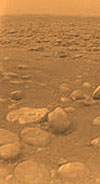
Postcard from Titan |
Jan. 12: A Delta-2 rocket launches the Deep Impact probe toward comet Tempel 1. Jan. 14: The Huygens probe from the Cassini spacecraft successfully lands on the surface of Saturn's moon Titan and transmits imagery during the descent and from the surface. This was the first landing on a body in the outer Solar System. July 4: NASA's Deep Impact 1 probe approaches comet Tempel 1 and releases the probe, which impacts the comet's core some 24 hours later. July 26: The US Space Shuttle resumes flights after the Columbia accident. The return to flight was expected on March 6, 2005, as of January - September 2004; on May 15, as of February 2005; on May 22, as of April 20, 2005; on July 13 (the earliest) as of April 29, 2005. The first launch attempt on July 13 was postponed because of problems related to a liquid hydrogen low-level fuel sensor inside the external fuel tank. July 29: NASA reveals that a planet larger than Pluto has been discovered in the outlying regions of the Solar System. Aug. 12: After a two-day delay, NASA launches the Mars Reconnaissance Orbiter, MRO, spacecraft. Sept. 12: Japan's Hayabusa (MUSES-C) arrives at the target asteroid Itokawa. (previously expected in July) Sept. 22: NASA unveiled launch vehicle and spacecraft architecture designed to establish a base on the Moon and support expeditions to Mars. October: The SpaceShipOne rocket-powered plane conducted two flights to the altitude of 100-kilometers, winning a 10-million X-Prize for its creators. Oct. 12-17: China launches a crew of two on a five-day Shenzhou-6 orbital mission. (Set in December 2004, originally expected in September) Oct. 14: NASA announced it is unofficially targeting a May 3-23, 2006, period, as the next launch date for the Space Shuttle. As of Aug. 18, 2005, the return to flight was expected on March 4, 2006. Nov. 9: A Russian Soyuz rocket launches ESA's Venus Express toward Venus. November: Japan's MUSES-C (Hayabusa) spacecraft takes samples from asteroid Itokawa. Dec. 6: NASA issued a solicitation for proposals to the private industry to deliver cargo to the ISS, after Shuttle retires in 2010. Dec. 28: Soyuz rocket launches the first pair of experimental satellites for the European Galileo navigation network. (Set: March 3, 2004) |
||||||||
|
SMART-1 |
Jan. 15: The Stardust spacecraft returns to Earth. Jan. 19: An Atlas-5 rocket launches NASA's New Horizons spacecraft toward Pluto. March 10: Mars Reconnaissance Orbiter enters orbit around Mars. July 4: Shuttle Discovery returns to flight, re-supplies the ISS, during the STS-121 mission. (As of Oct. 14, 2005, the launch was targeted for May 3-23, 2006; Weather delayed mission from July 1 and 2). Sept. 3: ESA's SMART-1 lunar orbiter ends its mission with a preprogrammed crash into the surface of the Moon. Oct. 24: NASA's Messenger spacecraft to conduct the first flyby of Venus. Nov. 13: The Goddard development vehicle the Blue Origin company climbs to the altitude of around 90 meters and lands softly after a 25 seconds in flight over test site in El Paso, Texas. Dec. 27: Soyuz-2-1b vehicle with the new RD-0124 engine to fly its first test mission from Baikonur, launching the Corot satellite intended to detect planets outside the Solar System. |
||||||||
|
Japan's SELENE orbiter |
Feb. 25: European Rosetta spacecraft flies within 250 kilometers from the surface of Mars. February: New Horizons spacecraft conducts a flyby of Jupiter. June 6: NASA's Messenger spacecraft conducts its second flyby of Venus. June 11: US astronauts Jim Reilly and John Olivas, members of the STS-117 Space Shuttle mission, conduct first of three spacewalks that resume the assembly of the International Space Station, ISS, completing the assembly of the station's starboard truss. June: Japan's MUSES-C (Hayabusa) spacecraft was to land in Woomera, Australia, with soil samples of an asteroid. (In 2005, delayed to June 2010) Sept. 14: Japan's H-IIA launches the SELENE (Kaguya) orbiter toward the Moon. (Delayed from August 2007) Sept. 27: NASA to launch Dawn spacecraft on a mission to visit two asteroids. (Delayed from June 2007) Aug. 4: A Delta-2 rocket launches NASA's Scout (Phoenix) mission to Mars. Oct. 24: China launches lunar orbiting spacecraft Chang'e-1 to orbit the Moon for at least 12 months. (Set: February 2004, confirmed in 2005) November: The European Rosetta spacecraft conducts its second flyby of Earth. Delayed from 2005: Japan to launch Lunar-A orbiter with two penetrators to drill three meters into the lunar regolith. (In 2004, delayed from August 2004)
|
||||||||
|
Chandrayaan-1 |
Jan. 14: NASA's Messenger probe conducts its first flyby of Mercury, nearly 33 years after the last spacecraft encountered the planet. March 9: The European Ariane-5 rocket launches Europe's first ATV cargo ship to the ISS from Kourou. (Delayed from 2004, January and second half of February 2008) March 12: Cassini encounters Saturn's Moon Enceladus for the last time during its nominal flight program. May 25: NASA's Phoenix probe lands in a polar region of Mars. (Delayed from May 18) Sept. 5: 18:58 UT: ESA's Rosetta passes within 800 kilometers from asteroid 2867 Steins. Sept. 27: The Shenzhou-7's crew member -- Zhai Zhigang -- conducts China's first spacewalk. (The Shenzhou-7 mission was delayed from 2007.) Oct. 22: India launches its first lunar probe Chandrayaan-1 to orbit the Moon. Delayed from Sept. 10: NASA to launch the Space Shuttle Atlantis, whose crew is slated to service Hubble Space Telescope for the fourth and last time before the retirement of the instrument expected around 2013 (according to an ESA announcement on June 8, 2007). September: NASA to conduct the first test of the launch escape system for the Orion spacecraft, imitating the failure on the launch pad. October: NASA's Messenger spacecraft to conduct its second flyby of Mercury. |
||||||||
|
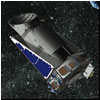
Kepler
Herschel
LRO |
Feb. 2: Iran orbited its first satellite, Omid, with a domestically-built launch vehicle, Safir, becoming the 8th member of the "space club." (In January 2004, Defense Minister promised the launch in 2005.) March 1, 04:13 Beijing Time: China's Chang'e lunar orbiter impacted the Moon's surface at 1.5 degrees South latitude and 52.36 degrees East longitude. A planned braking maneuver was initiated at 03:36 Beijing Time by ground control stations in East Qingdao and northwest Kashi regions of China. March 7: NASA launches the Kepler satellite designed to search Earth-size and smaller planets beyond the Solar System. (The mission was previously planned for Fall 2008 and February 2009.) March 15-28: NASA's Space Shuttle Discovery flies the STS-119 mission, attaching the fourth and last solar array segment to the US segment of the International Space Station. April 5: North Korea fires a long-range rocket officially carrying the nation's second satellite, however it fails to reach orbit. May 11-24: The crew of the Space Shuttle Atlantis conducts fifth and last servicing of the Hubble Space Telescope during the STS-125 mission, replacing two instruments and repairing two others. May 14: The European Space Agency's Ariane-5 ECA rocket successfully launches Herschel and Planck space telescopes to look at darkest, coldest and oldest parts of the Universe. May 15: Coolant runs out aboard Spitzer infrared telescope rendering some of its instruments inoperable. June 17-18: NASA launches the Lunar Reconnaissance Orbiter, LRO, and Lunar Crater Observation and Sensing Satellite, LCROSS, spacecraft into orbit around the Moon for at least a year-long mission. LCROSS, spacecraft to impact lunar surface in the effort to detect presence of water on the Moon. (As of March 2009. As of 2004, the mission was planned for 2008; confirmed as of mid-2007; Delayed from Oct. 28, 2008, May 20 and June 17, 2009) July 29: The Space Shuttle Main Engine, SSME, fires for the last time at NASA's Stennis Space Center. September: NASA's Messenger spacecraft conducts its third flyby of Mercury. Oct. 28: NASA test-flies a launch vehicle (Ares I-X) for the Orion spacecraft on a sub-orbital trajectory. (The mission met the March 2009 schedule. Delayed by one day by weather). As of June 2006, Oct. 2007, Jan. 2008, the mission was planned in April 2009. Delayed from July 11 and late August 2009. By the time of the first launch, the use of the booster was essentially ruled out and its development was officially canceled at the beginning of 2010.) Nov. 13: The European Rosetta spacecraft flies by Earth for the third and last time. |
||||||||
|
Planet-C
IKAROS sail
Lutetia |
Jan. 11: China conducted launch of a target missile and the anti-missile interceptor, achieving an apparently successful intercept. Feb. 1: The White House proposes to eliminate funding for the Constellation program. May 16: Space Shuttle delivered the MIM1 Rassvet module to the ISS. May 21: Japan launches Akatsuki (Planet-C) orbiter and the IKAROS solar-sailing probe toward Venus. June 13: Japan's MUSES-C (Hayabusa) spacecraft landed in Woomera, Australia, possibly with soil samples of an asteroid. (As of April 2007) July 10, 18:10 CEST: European Rosetta spacecraft flew at the distance of 3,126 kilometers from asteroid (21) Lutetia. Images confirmed that the asteroid has an elongated body, with its longest side around 130 kilometers. July 30: NASA's Dawn spacecraft to enter orbit around asteroid Vesta. (Delayed to 2011, then postponed indefinitely in the fall of 2005 due to cost overruns. The project later revived.) September: The Chinese government approves the development of the modular space station. Oct. 1: China launches Chang'e-2 into a 100-kilometer orbit around the Moon to prepare for future lunar landing. (As of May 2009. In March 2009 it was reported to fly in 2011.) November: NASA's Deep Impact probe flies by comet Hartley 2. Dec. 6: Japan's Akatsuki (Planet-C) orbiter and the IKAROS solar-sailing probe arrives into vicinity of Venus, however Akatsuki failes to enter a Venusian orbit. Dec. 8, 10:43 EST: The US Falcon 9 rocket launches from Cape Canaveral with an unmanned prototype of the Dragon spacecraft, both developed under a NASA contract by SpaceX. Three hours, 19 minutes, 52 seconds after a liftoff, Dragon successfully splashes down in the Pacific Ocean, some 800 kilometers west of the Mexican coast. December: NASA to conduct the first J-2X engine test for Ares-1 and Ares-5 rockets at a just completed stand at the Stennis Space Center. (As of May 8, 2007. Later canceled?) Space Shuttle to fly its last mission. (Date set on Jan. 14, 2004, later delayed to 2011). US to test orbital missile interceptors (as of January 2004, later cancelled (?). NASA to land a probe on the surface of the Moon. (In February 20004, the mission was described as a soil return from the polar regions of the Moon in 2009. At the end of 2004, it was delayed to 2010 and October 2005, it was classified as a lander. During 2007, under threat of cancellation.) Russia to launch a modified Soyuz, capable of circumlunar missions. (An April 2007 RKK Energia estimate; the project had not been funded at the time.) The Blue Origin company to start ferrying commercial passengers into the upper atmosphere onboard the New Shepard spacecraft. (Unofficial reports based on FAA filings circa 2006. These plans have not materialized.) |
||||||||
|
Grail probe
|
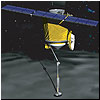
Feb. 14: NASA's Stardust spacecraft to fly by a 2.99-kilometer potato-shaped comet Tempel 1. March 18: NASA's Messenger spacecraft enters orbit around Mercury. April 1: NASA planned to launch JIMO spacecraft to orbit Jupiter and its satellites. (Effectively cancelled in 2005) May: European Rosetta spacecraft to enter a hibernation mode as it chases the comet. May 16: The Space Shuttle Endeavour begins the STS-134 mission to deliver the European AMS instrument to the International Space Station. It was the final flight for the Endeavour and the second to last mission of the Space Shuttle system. July 3: NASA's Dawn spacecraft was to leave orbit of Vesta and enter cruising trajectory toward asteroid Ceres. (later re-scheduled) July 15: NASA's Dawn spacecraft enters orbit around asteroid Vesta. July 8: The Atlantis orbiter launches on the STS-135 mission, the last flight of the Space Shuttle program. July 18: A Zenit-2/Fregat-SB rocket launches the Spektr-R/Radioastron astrophysics observatory from Baikonur. Aug. 5: NASA launches the Juno mission to orbit Jupiter. (Delayed from June 30, 2010 to 2011) Sept. 10: A Delta-2 rocket launches twin the Gravity Recovery and Interior Laboratory, spacecraft (GRAIL A and B) to go into orbit around the Moon to measure its gravity field in unprecedented detail, possibly along with small lunar atmosphere research satellite. Sept. 17: The US government declassifies the Hexagon satellite reconnaissance program. Sept. 29: China launches the Tiangong-1 space station. As of December 2010, China's unmanned Shenzhou-8 spacecraft was to dock with the outpost in August 2011. (443) In March 2009, the mission was expected at the beginning of 2011. As of 2008, China planned to launch Tiangong-1, 2 and 3 space stations from the end of 2010 to 2015, to be visited by five piloted spacecraft. Tiangong-1, 2 and 3 were promised to be 8.5-ton space laboratories. In March 2010, Chinese space officials said that technical problems forced to delay the launch of Tiangong-1 station from 2010 to 2011. In January 2011, Chinese media reported that the launch of Tiangong-1 had to be delayed from the beginning of 2011 to the second half of that year.) October: The Russian Soyuz-2 rocket flies its first mission from Kourou, French Guiana. (In February 2006, the launch was expected in November 2008; During 2007, the first launch was expected in March 2009; in March 2008, it was expected in June 2009, by the end of 2008, it slipped to the end of 2009 - beginning of 2010; during 2009 it was delayed to April-June 2010 and at the beginning of 2010 slipped to the last quarter of 2010. By spring 2011, the launch was expected in the fall of that year.) Nov. 9: A Zenit rocket launches the Phobos-Grunt spacecraft to study Mars and its moon Phobos and return soil samples from Phobos to Earth. The spacecraft fails immediately after entering the Earth's orbit. Nov. 9: A 400-meter asteroid 2005 YU55 passes within 324,600 kilometers from Earth, enabling NASA to produce radar images of its surface. Nov. 26: NASA launches Mars Smart Lander/Mobile Laboratory (Mars Science Laboratory/Curiosity) (At the end of 2008, the launch was postponed from September 2009 to October-December 2011. By May 2010, continuing analysis of the geometry and communications options for the arrival at Mars have led planners to choose an Earth-to-Mars trajectory that schedules launch between Nov. 25 and Dec. 18, 2011). Dec. 31: NASA's GRAIL A spacecraft enters lunar orbit. |
||||||||
|
MSL rover
|
Jan. 1: NASA's GRAIL B spacecraft enters lunar orbit. Jan. 15: The stranded Phobos-Grunt spacecraft reenters the Earth's atmosphere. Jan. 27: An 11-meter asteroid 2012 BX34 passes within 60,000 kilometers from Earth. June 18: China's Shenzhou-9 spacecraft with Jing Haipeng, Liu Yang and Liu Wang onboard docks with the Tiangong-1 space station. (The mission objective first announced in 2010.) Aug. 6, 05:31 GMT: NASA's Curiosity rover lands inside Gale crater on Mars. September: NASA was to conduct a second test launch of a launch vehicle (Ares I) for the Crew Exploration Vehicle, (Orion) spacecraft. (As of June 2006; the program canceled at the beginning of 2010.) Dec. 12: North Korea succeeds in placing its first satellite into orbit. Dec. 13, 16:30:09 Beijing Time: China's Chang'e-2 probe flies as close as 3.2 kilometers from asteroid Toutatis. |
||||||||
|
LADEE
MAVEN
LISA spacecraft
Chang'e-3
|
Feb. 15, 09:20 local time: An estimated 17-meter, 7,000-10,000-ton meteor probably from the Apollo group of asteroids disintegrates spectacuarly over Chelyabinsk Region, Russia, injuring up to 1,000 people. April 19: Russia launches the first Bion-M satellite. April 21: Orbital Sciences Corporation under a NASA contract launches the first Antares rocket with a mass prototype of the Cygnus cargo ship. June 11: China launches the Shenzhou-10 spacecraft with a crew of three including Nie Haisheng, Zhang Xiaoguang and Wang Yaping. They planned to spend just under two weeks at the orbiting Tiangong-1 space station following docking on June 13. The spacecraft landed on June 25. Sept. 7: NASA's Minotaur-5 rocket sent Lunar Atmosphere and Dust Environment Explorer, LADEE, into the lunar orbit. Sept. 12: NASA declares that Voyager-1 had reached interstellar space. Sept. 14: Japan introduced the Epsilon light-weight rocket, replacing the M-5 launch vehicle, and carrying a SPRINT-A planetary telescope. (As of August 2010) Nov. 5: India's PSLV-XL rocket launched a 1.4-ton MOM Mangalyaan unmanned orbiter to Mars. Nov. 18: NASA's Atlas-5 (401) rocket launched Mars Atmosphere and Volatile EvolutioN, MAVEN, probe to gather information about the Red Planet's atmosphere, climate history and potential habitability in greater detail than ever before. Dec. 2: China's Chang Zheng-3B rocket launches the Chang'e-3 lunar lander. A second vehicle, Chang'e-4, was expected to back up the mission as of 2010. (As of March 2009. As of Feb. 25, 2004, the unmanned lander mission was expected in 2010, the rover mission in 2012. In May 2009, Ye Peijian, a chief scientist of the Chang'e project said that Chang'e-3 would carry a rover). Dec. 14, 13:11 GMT: China's Chang'e-3 spacecraft achieves a successful soft landing on the surface of the Moon. Dec. 14: Iran announces the rocket launch of a second monkey on a 15-minute suborbital flight reaching an altitude of 120 kilometers. Previously planned for 2013: Oct. 17-18: NASA's Juno spacecraft to flyby Earth on its way to Jupiter (As of 2007). December: A Delta-4 rocket to launch NASA's Orion (Block I) spacecraft into an Orbital Flight Test (OFT-1) without crew. (As of 2011). German Space Agency, DLR, to launch a $658-million remote-sensing and cartography spacecraft into the lunar orbit. (The end of February 2007 DLR proposal to German government) NASA to retire Hubble Space Telescope, HST. China to launch a Mars orbiter. (A proposed mission as of 2010.) UK to launch MoonLITE mission in cooperation with the US and, possibly, India, entering lunar orbit and firing four penetrators into the lunar surface at the speed of 300 meters per second. (As of February 2008. In December 2007, the mission was planned in 2012) February: Taurus XL 3110 rocket to launch NASA's Orbiting Carbon Observatory-2 (OCO-2) from Vandenberg Air Force Base in California to replace OCO-1 satellite lost in a 2009 launch mishap. |
||||||||
|
Comet 67P |
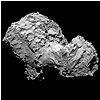
Aug. 6: Europe's Rosetta spacecraft enters orbit around comet 67P Churyumov-Gerasimenko. Fall: NASA's MAVEN spacecraft to enter orbit around Mars. Sept. 21: India's robotic probe enters orbit around Mars. Oct. 17: The X-37B Orbital Test Vehicle lands at Vandenberg Air Force Base after 674 days in orbit. Nov. 12: The Rosetta spacecraft dropped the Philae lander on the surface of comet Churyumov-Gerasimenko. Dec. 3: Japan launches the Hayabusa-2 spacecraft on a mission to return soil samples from an asteroid 1999 JU3. Dec. 5: After a 24-hour delay, NASA launches the first unmanned version of the Orion spacecraft on a Delta-4 rocket. (As of November 2011, the mission was expected in early 2014). |
||||||||
|
Pluto
|
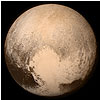
March 6: NASA's Dawn probe enters orbit around asteroid Ceres. April 30: Messenger spacecraft ends its mission crashing into Mercury. July 14: The New Horizons spacecraft flies by Pluto and its moons. July 26: End of primary mission for NASA's Dawn spacecraft. (Postponed indefinitely in the fall of 2005 due to cost overruns; then restarted) Dec. 3: LISA Pathfinder/ST-7 spacecraft launches to validate the drag-free spacecraft operation. Original plans called for the launch of three Laser Interferometer Space Antenna, LISA, spacecraft on a Delta-4 rocket in 2010 to observe gravitational waves from binary stars both inside and beyond our galaxy, including gravitational waves generated in the vicinity of the very massive black holes. The spacecraft were to form an equilateral triangle in orbit. The mission was then delayed to 2012 and, in November 2010, the launch was planned in early 2013. Dec. 7-9: Japan's Akatsuki (Planet-C) spacecraft succeeded entering orbit of Venus following a failed attempt in 2010. (As of 2010) |
||||||||
|
Juno probe
Tiangong-2
Chang Zheng-5
|
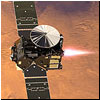
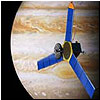
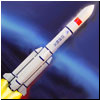
Feb. 7: North Korea launches a rocket, which it claimed carried an observation satellite. March: A Proton-M/Briz-M rocket launches the ExoMars-2016 mission. In the fall 2015, the launch was postponed from January 2016. (As of December 2009, the launch was planned on an Atlas-5 421 rocket. As of July 2009, a US lander was considered for this mission.) July 4: NASA's Juno spacecraft enters orbit around Jupiter. Sept. 8: NASA launches the OSIRIS-Rex asteroid sample return mission with the task of delivering as much as two kilograms of soil from asteroid Bennu. Sept. 15: China launches the Tiangong-2 space station. Sept. 19: North Korean leader Kim Jong-un supervised ground test of a rocket engine at the country's Sohae satellite-launching site, the official KCNA agency reported. Sept. 30: The Rosetta spacecraft ends its mission with a controlled impact at Ma'at Region of the comet 67P Churyumov-Gerasimenko. Oct. 17: China launches the Shenzhou-11 spacecraft to the Tiangong-2 space station. The spacecraft successfully docks at the Tiangong-2 space station on October 18. Oct. 19: ExoMars-2016 arrives at Mars. A small ESA lander to survive on the surface for around eight sols (Martian days) using only battery power and doing limited science. India's GSLV Mk.3 rocket to launch a lander to Mars. (An unapproved proposal as of end of 2013) NASA funding for the ISS program to end. (As of Jan. 14, 2004; In 2010, funding extended to 2020) Unfulfilled in 2016: January: NASA to launch Titan Mare Explorer (TiME), a Discovery-class lander to the surface of the Ligeia Mare lake on the Saturnian moon Titan. (A 2009 unfunded proposal. In August 2012, lost a funding competition to the InSight Mars lander.) March 4: An Atlas-5 rocket to launch NASA's InSight spacecraft to Mars from Vandenberg. (As of November 2011, it was one of three competing proposals; approved in August 2012. Previously, planned for March 8-27 window). (Cancelled on Dec. 22, 2015, after failed efforts to fix a leak in a primary vacuum seismometer.) Sept. 20: The InSight spacecraft to land on Mars (postponed or canceled). Oct. 11: NASA's Solar Probe Plus to conduct a flyby of Venus. 2015-2016: China to launch the Tiangong-3 space station. NASA to launch nuclear-powered, ion-propelled spacecraft toward Neptune system. (A 2005 proposal within NASA Vision Mission) Europe to launch a mission to return soil samples from Martian moon Phobos to Earth. (British and French proposals circa February 2007) |
||||||||
|
Cassini plunges into Saturn
SAFIR telescope
|
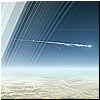
April 20: China's Tianzhou-1 cargo ship lifts off and docks at the Tiangong-2 space station on April 22. June 21: The Tianzhou-1 cargo ship undocked from the Tiangong-2 space station and began autonomous flight. Sept. 12, 23:58 Beijing time: China's Tianzhou-1 cargo ship made 3rd and final docking with the unmanned Tiangong-2 space station. Sept. 15: NASA's Cassini spacecraft ends its mission with a controlled plunge into the atmosphere of Saturn. Unfulfilled in 2017: January: NASA to launch Titan Mare Explorer (TiME), a Discovery-class lander to the surface of the Ligeia Mare lake on the Saturnian moon Titan. (A 2009 unfunded proposal. In August 2012, lost a funding competition to the InSight Mars lander.) April 26: NASA's Solar Probe Plus to conduct a flyby of Venus. June 3: NASA to launch SAFIR, a supercooled far-infrared telescope. (Set: June 2004) Nov. 30: NASA to launch the first manned vehicle with a crew of four to the ISS, increasing the crew size onboard the station to seven people. (As of December 2013). Dec. 7: NASA's Solar Probe Plus to conduct a flyby of Venus. End of year: NASA to conduct the first unmanned test flight of the Space Launch System, SLS, capable of carrying 77 tons into the low Earth orbit with a potential for upgrades to 130 tons of payload. (The mission was announced on Sept. 14, 2011.) 2016-2017: India to send the Chandrayaan-2 lunar lander to the surface of the Moon. (as of August 2014) NASA "flagship mission" to be launched into the outer Solar System, possibly toward the Jupiter-Europa or Saturn-Titan systems. (A 2009 initial budget proposal, ultimately not funded.) NASA to test-fly a heavy-lifting launch vehicle on a deep-space trajectory carrying an unmanned prototype of the Multi-Purpose Crew Vehicle, MPCV. (A mid-2011 estimate by NASA Administrator Charles Bolden). Australia to send a Sundiver spacecraft into the outer layers of the Sun's corona. (A 2007 proposal within the Decadal Plan for Space Science drafted for the national space science committee of the Australian Academy of Science). The Soyuz-2/Fregat rocket to launch Europe's Marco Polo near-Earth asteroid sample return mission from Kourou. (A 2008 unapproved proposal from EADS Astrium; rejected by ESA in 2010.) Europe's retrievable cargo ship to fly its first mission capable of returning cargo from space. (A provisional date based on the projected funding in November 2008, which did not materialize.) |
||||||||
|
Parker Solar Probe
|
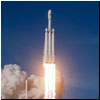
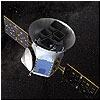
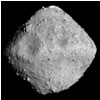
Feb. 6: A US Falcon Heavy rocket makes its first flight, sending a dummy cargo on a heliocentric trajectory. April 2: China's Tiangong-1 space station makes uncontrolled reentry over the Pacific Ocean. April 19: NASA launches the TESS planet-hunting observatory. May 5: An Atlas-5 (401) rocket launches NASA's InSight spacecraft to Mars from Vandenberg. End of June: Japan's Hayabusa-2 arrrives in the vicinity of asteroid Ryugu. July 5: India's space agency ISRO conducts the flight test of the crew escape system for the 12.6-ton vehicle. Aug. 12: Delta-4-Heavy launches NASA's Parker Solar Probe. Middle of 2018: Japan's Hayabusa-2 spacecraft land and collect samples from a carbon-rich 1999 JU3, a C-type asteroid with a diameter of about one kilometer. (As of August 2010 budget proposal) Oct. 3, 4:44 a.m. EDT: NASA's Solar Probe Plus to conduct a flyby of Venus. (Previously planned on June 5, 2020) Oct. 19: Europe's Ariane-5 rocket launches the BepiColombo probe toward Mercury from Kourou. Nov. 5, 10:27 p.m. EST: NASA's Solar Probe Plus to pass its first perihelion of the Sun.
Unfulfilled in 2018: Aug. 1: NASA's Solar Probe Plus to conduct a flyby of Venus. October: NASA's OSIRIS-Rex spacecraft to reach an asteroid Bennu for a 400-day operations and the return of soil samples back to Earth.(Delayed until 2020) September - November: The first SLS rocket to launch NASA's unmanned Orion spacecraft on the Exploration Mission 1 (EM-1) into an orbit around the Moon (As of July 2016). End of year: A Falcon Heavy rocket to launch a Dragon-2 spacecraft with a pair of tourists on a trip around the Moon. (SpaceX announcement on Feb. 27, 2017) Japan to send a lander (with a soil sample return mission?) on the surface of the Moon. (A Sept. 2007 statement by Manabu Kato, chief scientist of the Kaguya project) NASA to launch Mars Field Lab, Mars Telesat Orbiter and Mars Scouts probes (As of 2007) The Soyuz-2-1B rocket with Fregat upper stage to launch a 700-800 unmanned lander to the South Pole of the Moon from Kourou. (The project to be approved in 2012.) (As of March 2009, a prototype of a cargo-carrying lunar mission, which could eventually resupply a lunar base, was expected to fly around the same time frame on the Ariane-5 rocket.) NASA to launch an unmanned lunar lander for the International Lunar Network, ILN. (As of 2009) Russia to test-fly a nuclear-powered space tug, MMB. (As of October 2009) Russia to launch a new-generation manned spacecraft, which could enable missions to the Moon in 2020s. (As of 2008-2009) Japan to send a MELOS mission to Mars, including two orbiters studying the planet's atmosphere and a rover. (As of May 2009. The government approval and funding needed to start in 2013.) End of 2018: NASA to launch a New Frontiers mission. (As of end of 2009, Venus SAGE, Osiris-Rex asteroid sample return and lunar sample return missions competed for funding. A winner was to be announced in mid-2011. On May 25, 2011, Osiris-Rex was declared a winner with the launch in 2016.) Re-scheduled Japan's Epsilon rocket to launch the Smart Lander for Investigating Moon, SLIM, to the lunar surface. (An April 2015 JAXA proposal to a government committee on space policy). Mission was later moved to H-2A rocket and launched in 2023. |
||||||||
|
New Horizons near Ultima Thule
CHEOPS telescope
Starhopper |
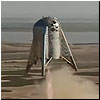
Jan. 1: NASA's New Horizons spacecraft to fly by 2014 MU69 Ultima Thule, an ancient Kuiper Belt object with an estimated diameter of around 45 kilometers on the outskirts of the Solar System. Jan. 3: Chang'e-4 spacecraft lands near the lunar Von Kármán crater, becoming the world's first spacecraft to land on the Far Side of the Moon. Feb. 12: India fires a ground-based anti-satellite missile which fails. Feb. 22: Japan's Hayabusa-2 spacecraft touches down on asteroid Ryugu to collect samples of its soil. Feb. 21: A US Falcon-9 rocket launches Israel's Beresheet lander toward the Moon. Feb. 22: A rocket-powered aircraft built by Virgin Galactic reaches an altitude of 89.9 kilometers after developing a speed of 3.04 Mach. March 2: A US Falcon-9 rocket launches the first Dragon-V2 spacecraft without crew on its first test mission to the International Space Station. March 26: Speaking at the fifth meeting of the National Space Council, Vice President Mike Pence directs NASA to accelerate its lunar exploration program in order to return US astronauts to the Moon within five years. March 27: India fires a ground-based anti-satellite missile, successfully destroying an orbital target. June 12: India launches the Hypersonic Technology Demonstrator Vehicle, HSTDV. July 2: NASA conducts the second Ascent Abort System, AA2, for the Orion spacecraft, launching an experimental module on the first stage of the MX Peacekeeper missile. July 13: A Proton rocket launches Russia's Spektr-RG X-ray observatory. July 19: China's Tiangong-2 space station performs controlled deorbiting over the Pacific Ocean. August: A Starhopper prototype of the SpaceX' Starship vehicle performs a test flight to an altitude of around 150 meters. October 27: The X-37B mini-shuttle of the US Air Force completes the OTV-5 mission with a landing at Kennedy Space Center after 780 days in orbit. December: Japan's Hayabusa-2 spacecraft depart to Earth from a 1999 JU3 asteroid with its soil samples. Unfulfilled: 2017-2019: NASA and ESA to launch a precursor communications orbiter for the upcoming Mars soil sample return mission. (A proposal to be submitted to the EU Ministerial Council in November 2008). End of decade: Japan to launch a spacecraft toward Jupiter, possibly propelled by a solar sail. (As of 2009) Russia to launch a series of unmanned probes into the orbit of Mars in preparation for manned expeditions. (As of January 2010, 376) Russia to launch the Luna-Glob spacecraft toward the Moon. (As of 2011, the mission was promised in 2014. In Nov. 2007, the mission was promised in 2010; In 2006, the mission was not expected before 2012.) |
||||||||
|
Solar Orbiter
China's new crew vehicle
OSIRIS-REx probes asteroid
Starship prototype
Orion above the Moon Unfulfilled:
Europe's first manned spacecraft
|
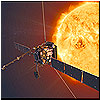
Jan. 19: SpaceX conducts a successful launch abort test during the suborbital flight of the Falcon-9 rocket with an unpiloted Crew Dragon spacecraft. Jan. 30: NASA's Spitzer infrared orbital telescope, SIRTF, is switched off permanently after 16 years of operation. Feb. 9: An Atlas-5 rocket launches ESA's electrically powered Solar Orbiter to fly within 40 solar radii in a 150-day orbit following multiple flybys of Earth and Venus. (Originally planned for launch in 2015-2017) Feb. 25: Northrop Grumman's MEV-1 spacecraft docks with the Intelsat-901 satellite in the geostationary orbit at 27.5 West longitude to extend its life with additional power and propulsion. April 30: Europe's BepiColombo spacecraft to fly 11,264 kilometers from Earth on its way to Mercury. (As of 2018. As of 2012, the Earth's flyby was planned on Aug. 14, 2016, then postponed in 2014.) May 5-8: Following its launch on the Chang Zheng-5B rocket, China's unpiloted prototype of the next-generation crew vehicle successfully performs its first test flight in the low Earth orbit, concluding with a soft landing of the Descent Vehicle in the Alashan Desert of Inner Mongolia on the Chinese territory. May 30: The SpaceX' Dragon spacecraft lifted off with two astronauts onboard resuming US piloted missions after the retirement of the Space Shuttle. The Dragon successfully docked at the ISS on May 31. July 20: Japan's H-2A rocket launches Emirates Mars Mission, EMM. July 19: Japan's H-2A rocket launches the Emirates Mars Mission (Al'amal/Hope). July 23: China launches Chang Zheng-5 rocket carrying the Tianwen-1 orbiter, lander and rover mission to Mars. As of 2011. the launch was expected in 2022 but by 2016, the mission was apparently advanced to 2020-2021 to mark the 100-anniversary of the Chinese communist party. July 30: An Atlas-5 rocket launches NASA's Perseverance rover to Mars. August 4: The SN5 test version of the SpaceX' Starship super-heavy rocket makes its first powered test flight to an altitude of around 150 meters. August 8: China sends the Huoxing-1 mission to Mars. September 3: SpaceX performs the 2nd vertical flight test of the Starship prototype, SN6, reaching an altitude of around 500 feet. October 16: Europe's BepiColombo spacecraft to make its first of two flybys of Venus (at a distance of 10,907 kilometers) on its way to Mercury. (As of 2012, the flyby of Venus was planned on Nov. 25, 2017, but it was postponed in 2014.) October 20: NASA's OSIRIS-REx spacecraft touches down on the surface of asteroid Bennu and takes a sample of its soil. Dec. 1: China's Chang'e-5 spacecraft lands on the surface of the Moon and begins soil sampling. Dec. 6: Japan's Hayabusa-2 spacecraft to return to Earth with samples of a carbon reach asteroid. (As of an August 2010 budget proposal, approved in January 2012.) Dec. 9: The SN8 prototype of SpaceX' Starship vehicle performes a suborbital flight to an altitude of 12.5 kilometers but explodes at touchdown. India to launch the Aditya-L1 spacecraft into the L1 Langrage point in the Earth-Sun system to study Sun. NASA to send a rover to Mars. Japan's new-generation H-3 rocket to fly its first test mission. (As of 2013) South Korea to launch a lunar probe into a polar orbit around the Moon for a year-long mission. (As of 2017) Unfulfilled in 2020: China to launch a second add-on module for its Earth-orbiting space station. (As of end 2014) China to complete orbital assembly of a modular space station. (As of June 2013). January: NASA's Deep Impact probe to encounter a half-mile asteroid 2002 GT, which regularly crosses path with Earth. (As of December 2011). Feb. 20-29: NASA's Atlas-5 rocket to launch the Europa orbiter, JEO, toward Jupiter. (As of February 2009, however cancelled before 2012.) March 11-23: Europe's Ariane-5 ECA rocket to launch a Ganymede orbiter, JGO, toward Jupiter. (As of February 2009. Under consideration by ESA from March 2005 with a projected launch in 2016, In 2007-2008, Russia and Europe discussed a similar mission, known as Sokol-Laplas (Sokol-Laplace)). Japan to launch Destiny+ mission. The latest date for NASA to resume manned exploration of the Moon. (Set on Jan. 14, 2004, canceled on Feb. 1, 2010) NASA to launch a formation-flying infrared interferometer to search for planets around other stars. (Delayed by the 2006 budget cut) NASA's probe heading toward Neptune to flyby Jupiter. (A 2005 proposal within NASA Vision Mission) Russia to launch a new-generation space station to replace ISS, into the polar orbit. (The statement of the Russian space agency head at the MAKS 2007 air and space show). Russia to launch a core module of the Earth-orbiting assembly complex for planetary spacecraft. (376) The European Space Agency to launch the Tandem mission to Saturn, Titan and Enceladus, and possibly delivering a balloon into the atmosphere of Titan. (Later became known as Titan and Saturn System Mission, TSSM). It competes with the Laplace mission, targeting Jupiter and Europa. (A 2007 proposal within Cosmic Vision study; the selection was originally expected in the Fall of 2008, but was delayed to the beginning of 2009. The launch date was delayed from 2018.) Europe to conduct its first manned mission in the Earth orbit. (A provisional date based on the projected funding in November 2008) NASA, ESA to launch a network of landers to be deployed on the surface of Mars within the NET mission. (As of July 2009)
|
||||||||
|
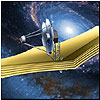
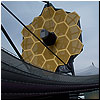
James Webb Space Telescope
|
Feb. 2: SpaceX' SN9 prototype of the Starship vehicle climbs to an altitude of 10 kilometers, makes a flip to a horizontal position but fails to return to a full vertical attitude on descent, resulting in explosion at touchdown. March 3: SpaceX' SN10 prototype of the Starship vehicle performs a suborbital flight to an altitude of around 10 killometers and the first successful soft landing, however explodes shortly after touchdown. March 30: SpaceX' SN11 prototype of the Starship vehicle explodes at the conclusion of the high-altitude test flight, apparently due to problems with Engine No. 2 which exhibited problems on ascent and failed to develop operational chamber pressure on descent. April 19: The Ingenuity helicopter performs first takeoff and landing on the surface of Mars. April 29: China's Chang Zheng-5B rocket launches the Tianhe core of the modular space station. (First promised in 2018. An unofficial Nov. 2007 statement quoted by China Daily newspaper, by Long Lehao, one of the leading designers of the Chang Zheng 3A rocket promised the launch in 2020. The date was officially denied, however in November 2012, another official Chinese statement promised "manned space station" in 2020.) May 5: SpaceX' SN15 prototype of the Starship vehicle performs successful suborbital flight and soft landing. May 14: The descent module of China's Tianwen-1 mission with the Zhurong rover successfully lands on the surface of Mars. May 29: China launches Tianzhou-2 cargo ship to resupply the Tianhe space station. June 17 - Sept. 17: The Shenzhou-12 crew vehicle, carrying astronauts Nie Haisheng, Liu Boming and Tang Hongbo, flies a nearly 90-day mission to the Tianhe core module of the Chinese space station. Sept. 15-18: SpaceX company flies the Crew Dragon spacecraft on a 71-hour autonomous flight in Earth orbit with four tourists onboard. Sept. 18: Tianzhou-2 cargo ship undocked from the aft port of the Tianhe space station core and around four hours later re-docked at the front port of the module. Oct. 1: Europe's BepiColombo spacecraft makes first of six flybys of Mercury. Oct. 15: China launches the Shenzhou-13 crew vehicle with Zhai Zhigang, Wang Yaping and Ye Guangfu onboard for a six-month expedition to the Tiangong Earth-orbiting space station. Oct. 16: NASA launches Lucy mission to explore multiple asteroids. Nov. 23: A Falcon-9 rocket launches NASA's DART asteroid-deflection mission from Pad 4E at Vandenberg AFB, Ca. (As of April 2019, the launch was expected in June 2021, in 2020, it was scheduled for "late summer".) Dec. 25: An Ariane-5 rocket successfully launches James Webb Space Telescope, JWST. Previously planned: Aug. 11: Europe's BepiColombo spacecraft to make its second and final flyby of Venus (at a distance of 1,007 kilometers) on its way to Mercury. (As of 2012, the second flyby of Venus was planned for July 18, 2018, but it was postponed for around a year in 2014.) Aug. 22: NASA's Solar Probe Plus to conduct a flyby of Venus. August: The second SLS rocket to launch NASA's Orion spacecraft on the Exploration Mission 2 (EM-2) carrying its first crew on a lunar fly-by mission. (As of July 2016. As of September 2011, the mission was planned at the end of September 2019). October: NASA's Solar Probe Plus, to reach its closest perihelion (point closest to the Sun). October 2020 - May 2021: The US-European Asteroid Impact and Deflection Assessment, AIDA, mission to launch ESA's Asteroid Impact Mission, AIM, spacecraft and NASA's Double Asteroid Redirection Test, DART, probe to a binary asteroid Didymos. Oct. 31: An Ariane-5 rocket to launch James Webb Space Telescope, JWST, into the L2 lagrangian point between Earth and Sun. (As of January 2012. As of fall of 2010, the launch was projected for September 2015. In April 2007, the launch was expected in 2013. In August 2009, the launch was expected in June 2014. By Sept. 2017, the launch was postponed until Spring 2019 and by October 2017 to "late spring 2019. In March 2018, the launch was postponed to May 2020 and on June 27, 2018, the launch date was moved to March 30, 2021. On July 16, 2020, the launch was postponed until Oct. 31, 2021.) NASA to launch spacecraft to explore Titan. (As of 2007) Russia to start launching a nuclear-electric space tug and other elements of the Martian Interplanetary Complex, MEK. (376) China to launch a spacecraft to Venus. (As of 2011) South Korea to launch its first indigenous space vehice. (As of October 2012) Iran to launch its first manned mission (A February 2009 statement by Reza Tagipur, the head of the Iranian space agency) |
||||||||
|
BepiColombo
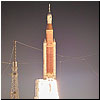
Artemis-1
|
March 27: The Tianzhou-2 cargo ship undocks from the Tiangong space station. It was deorbited on March 31. April 16: The Shenzhou-13 spacecraft returns to Earth after a 183-day expedition to the Tiangong space station. May 2: A helicopter attempts to catch in mid-air the first-stage booster descending under a parachute after the orbital ascent of the Electron launch vehicle from New Zealand. Pilots release the stage a few seconds after the catch due to concerns about the excessive loads. The booster is later recovered by a ship. May 6: China's Deep Blue Aerospace company conducts a successful launch of the Nebula-M reusable rocket prototype to an altitude of around one kilometer, followed by a successful rocket-powered landing. May 10: China launches the Tianzhou-4 cargo ship from Wenchang to the Tiangong space station. May 23-25: A meteoroid hits one of 18 primary mirror segments on James Webb Space Telescope. June 5: China launches the Shenzhou-14 spacecraft with a crew of three: Chen Dong, Liu Yang and Cal Xuzhe, which docks at the nadir port of the Tianhe Core More in the Earth orbit on the same day. June 23: Europe's Colombo spacecraft flies within 200 kilometers from Mercury for the second time before reaching its orbit in 2025. (As of 2012, the second flyby of Mercury was expected on Nov. 2, 2019, but it was postponed for around a year in 2014.) July 13: Europe's Vega-C rocket flies its first mission. July 24: China's Wentian module lifts off on a Chang Zheng-5B rocket and docks to the Tianhe core module of the orbital space station. Aug. 4: China launches an experimental unpiloted space plane on its second Earth-orbiting mission. Aug. 4: A Falcon-9 rocket launches South-Korean lunar orbiter, Danuri (Koren Pathfinder Lunar Orbiter, KPLA). Sept. 22: NASA and SpaceX sign an unfunded Space Act Agreement to study feasibility of SpaceX to boost Hubble Space Telescope to a higher orbit using Dragon spacecraft at no cost to the government. Oct. 31: China's Chang Zheng-5 rocket launches Mengtian, the second add-on module for its Earth-orbiting space station, from Wenchang launch site. (The plan initially announced in 2014) Nov. 12: The X-37B/OTV-6 robotic space plane reportedly returns to Cape Canaveral, FL., after 909 days in orbit. Nov. 16: NASA's SLS rocket launches for the first time on the Artemis-1 mission, sending a piloteless Orion spacecraft on a test flight to the vicinity of the Moon. Orion's Descent Module successfully returns to Earth on Dec. 11, 2022. Nov. 29: China launches the Shenzhou-15 crew vehicle carrying astronauts Fei Junlong, Deng Qingming and Zhang Lu to the Tiangong space station. Dec. 4: The Shenzhou-14 spacecraft with a crew of three lands after an expedition to the Tiangong space station. Dec. 18: North Korea announces it launched a rocket as part of its space and satellite development program. Cancelled or postponed for a significant period: CANCELLED: August: A Proton rocket to launch the ExoMars rover. As of July 2009, NASA's Atlas rocket was to launch European Space Agency's ExoMars and a smaller NASA rover (Mars Astrobiology Explorer-Cacher, MAX-C) in April 2018 to look for signs of life on Mars. In 2005, ExoMars was delayed from 2009 to 2011. Around 2006, the project was increased in scope but delayed from 2011 to 2013 and switched from Soyuz-2-1B to Ariane-5 or Proton. In October 2008, it was delayed from November 2013 to January-February 2016. In July 2009, delayed from 2016 to 2018, switched from Ariane-5 to a US Atlas. In May 2016, the launch was postponed from 2018 to 2020. On March 12, 2020, the launch was postponed from July 2020 to August 2022.) Late 2022: Europe to launch a medium-class planetary mission. (A request for proposals in late July 2010.) Late 2022: South Korean Innospace to conduct a sub-orbital launch of Hanbit TLV rocket from Brazil's Alcantara launch site. (As of May 2022) The International Space Station, ISS, to be deorbited. (A March 2007 estimate by NASA Administrator Michael Griffin) China to launch the Einstein Probe with a "lobster eye" style lense system for registering transient X-ray sources. (As of September 2019) |
||||||||
|
Starship
Athena observatory
Euclid |
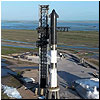
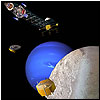
Feb. 9: The first stage of the SpaceX' Starship B7 rocket fires its propulsion system with 33 engines during its first static test in Texas. Feb. 10: Chinese astronauts Fei Junlong and Zhang Lu complete a seven-hour spacewalk from the Wentian science module of the space station. March 19, 2:52 p.m. Brazil Time: A HANBIT-LTV rocket developed by South-Korean Innospace Corp. flies a test mission from the Alcantara center in Brazil. March 30: Crew of the Shenzhou-15 spacecraft conducts its third spacewalk announced by China after the fact. April 2: India conducts a successful air drop test and landing of the Reusable Launch Vehicle Autonomous Landing Mission, RLV LEX, at Chitradurga, Karnataka. April 14: An Ariane-5 rocket launches Europe's Jupiter Icy Moon Explorer, JUICE, designed to fly by Callisto, Europa and enter orbit around Ganymede. (As of April 2012, the project competed with the Athena observatory (below), but was officially announced a winner on May 2, 2012. In June 2019, ESA favored the Ariane launch vehicle family over Russian Proton for the mission. The launch was planned in May 2022.) April 26: Hakuto-R Series-1 lander fails during an attempt at landing on the lunar surface. April 15: The crew members of the Shenzhou-15 spacecraft Fei Junlong and Zhang Lu perform their 4th spacewalk, which is piublicly announced after the fact. April 20: SpaceX launches the first fully integrated Starship super-heavy rocket from Boca Chica, Texas, but the vehicle fails at an altitude of around 39 kilometers, before the first stage separation. The flight is seemingly hampered by escalating multiple engine failures from the start. The mission aimed to splash down the first stage in the Gulf of Mexico, to insert the second stage into a low orbit and then reenter it over the Pacific Ocean without a recovery attempt. May 5: The Tianzhou-5 cargo ship undocks from China's Tiangong space station at 15:26 Beijing Time for a free flight until the departure of the Shenzhou-15 spacecraft and the cargo ship's redocking at the station's forward port. May 8: China's orbital space plane performs a successful landing completing its second flight after 276 days in Earth's orbit. May 11: The Tianzhou-6 cargo ship docks at the aft end of the Tianhe module of China's space station. May 29: China's Shenzhou-16 spacecraft with a crew of three enters orbit bringing the number of people in the Earth's orbit to 17 for the first time, including 11 on the ISS and three on the Chinese space station. The crew vehicle docked to the Tiangong-3 space station around 6.5 hours after launch. May 31: North Korea launches an imaging reconnaissance satellite, however, its rocket fails during the operation of the second stage and the payload never reaches orbit. (As of December 2022, the launch was expected in April 2023.) June 3, 22:35 UTC: China's Shenzhou-15 spacecraft with a crew of three lands successfully after a space station mission. June 7: The Tianzhou-5 cargo ship re-docks at the Chinese space station after 33 days in the autonomous flight. June 19, 19:34 UTC: Europe's BepiColombo spacecraft flies within 240 kilometers from Mercury for the third time before reaching its orbit in 2025 after a total of six gravity assisting flybys of the planet. (As of 2012, the third flyby of Mercury was expected on Jan. 26, 2020, but it was postponed for around a year in 2014.) June 29: Virgin Galactic's VSS Unity rocket-propelled aircraft with a crew of six climbs to an altitude of more than 85 kilometers after separating from the carrier aircraft VMS Eve during the Galactic-01 suborbital commercial research flight. July 1: Europe's Euclid telescope lifted off on a mission to map the distribution of galaxies. In 2017, postponed by a year from December 2020 due to problems with sensor chips supplied by NASA. In 2022, moved from a Soyuz to a Falcon-9 rocket. July 12: China's Zhuque-2 becomes the first rocket propelled by liquid methane to reach orbit. July 13: A horizontal test firing of the second-stage solid motor for Japan's Epsilon-S rocket ends in explosion. July 20: Astronauts Jing Haipeng and Zhu Yangzhu, from the Shenzhou-16 crew, performed a nearly eight-hour spacewalk aboard the Chinese space station. July 20: The B9 first stage for the second flight attempt of the Starship rocket is rolled to the launch pad in Boca Chica, Texas. At the time, launch was expected in late August or early September. Aug. 6: Booster No. 9 of SpaceX' Starship/Superheavy rocket performs a static firing test on the pad in Boca Chica, Texas. The firing aborted after 2.74 seconds due to premature shutdown of four Raptor engines. Aug. 23: Chandrayaan-3 mission successfully lands in the southern polar region of the Moon. Sept. 7: Japan's H-2A rocket launches X-ray Imaging & Spectroscopy Mission, XRISM, toard the Sun-Earth Langrange point, L1, and Smart Lander for Investigating Moon, SLIM, to the surface of the Moon. Sept. 11: The Tianzhou-5 cargo ship undocks from the Tiangong space station in preparation for deorbiting on September 12. Sept. 24: NASA's OSIRIS-Rex asteroid sample mission returns to Earth. (As of May 25, 2011; the exact landing date confirmed in 2021.) Oct. 13: A Falcon Heavy rocket launches NASA's Psyche probe from Pad 39A at Cape Canaveral to explore a giant metal asteroid 16 Psyche. (As of January 2017, the launch was planned in August 2022. Originally planned for launch in October 2023.) The rocket was also expected to carry two secondary payloads: Escape and Plasma Acceleration and Dynamics Explorers, EscaPADE, which was to study the Martian atmosphere, and Janus, which will study binary asteroids. (By the end of May 2022, the launch was postponed from Aug. 1 to no earlier than Sept. 20 due to a technical problem during spacecraft testing. By October 2022, the launch was postponed from Sept. 20, 2022, to Oct. 10, 2023. Delayed to Oct. 13 due to weather.) Oct. 20: The Starship vehicle performs single engine static fire on the pad in Boca Chica, Texas, demonstrating a deorbit burn. Oct. 21, 8:30 a.m. India Standard Time: India performs a suborbital test launch of the Test Vehicle Flight, TV-D1, with a prototype of the Crew Escape System, CES, which successfully demonstrates in-flight activation and the subsequent parachute landing of a crew capsule developed for the Gaganyaan project. Oct. 27: China launches the Shenzhou-17 spacecraft with Tang Hongbo, Tang Shengjie and Jiang Xilin onboard. The crew vehicle reached the Tiangong space station several hours later. Oct. 30-31: The Shenzhou-16 spacecraft with astronauts Jing Haipeng, Zhu Yangzhu and Gui Haichao undocked from the Tiangong space station and successfully landed in China. Nov. 18: SpaceX' Superheavy/Starship vehicle flies its second integrated mission from Boca Chica, Texas, resulting in the successful staging and the immediate explosion of the first stage (Booster 9), followed by the premature engine cutoff on the second stage (Ship 25) preventing the vehicle from achieving its planned trajectory for the reentry over the Pacific. Dec. 20: Starship vehicle for the third test launch of the SpaceX' Superheavy booster performs a full-duration static firing of its six Raptor engines. Dec. 21: Crew of the Zhenzhou-17 spacecraft performs a 7.5-hour spacewalk aboard the Chinese space station to repair a solar panel of the Tianhe module damaged by a meteor. Planned: The first Vulcan-Centaur rocket to launch a Peregrine lunar lander for the US-based company Astrobotic. November: China to launch the Einstein wide-field X-ray observatory for high-energy astrophysics researtch. (As of May 2022 - January 2023) Unfullfilled: Postponed from April 27: Europe's BepiColombo spacecraft to complete its nominal mission in the orbit of Mercury. (As of 2012, postponed in 2014) April-July: The Russian-European ExoMars rover mission to land on Mars. (Postponed from Jan. 19, 2019, and March 19, 2021.) (NASA's MAX-C rover was also planned for landing in 2019 but canceled in 2012). May 6: The one-in-45-years opportunity to launch a spacecraft to fly by Uranus and Saturn. (A 2015 estimate; not funded) June: NASA's TiME mission to land on the surface of the Ligeia Mare lake on the Saturnian moon Titan. (A 2009 unfunded proposal. In August 2012, lost a funding competition to the InSight Mars lander.) End of 2023: India to launch the first unpiloted prototype of a crew vehicle on the G1 test mission. (As of 2022) NASA to launch third SLS rocket on the EM-3 mission carrying an Orion spacecraft and the power and propulsion bus for the International Manned Platform, IMP, in the lunar orbit. (As of October 2016). NASA to launch a spacecraft to orbit Neptune. (A 2004 proposal) China to launch a Sun polar orbiter. (As of 2011) ESA to launch a Plato exoplanet-searching observatory. (As of 2015) Turkey to perform a hard landing on the surface of the Moon. (As of 2021) An Angara-5P rocket to launch a prototype of Russia's new-generation spacecraft, PTK, into low Earth orbit for an automated solo flight test. (As of 2016, the mission was planned at the end of 2021 or early 2022). |
||||||||
|
SLIM |
Jan. 12, 16:00 Beijing Time: Tianzhou-6 cargo ship undocks from the Chinese space station in preparation for Tianzhou-7 launch. Jan. 18: The Tianzhou-7 cargo ship docks at the Chinese space station at 01:46 Beijing Time. March 1-2: Members of the Zhenzhou-17 crew Tang Hongbo and Jiang Xinlin perform an eight-hour spacewalk from the Wentian module of the Chinese Space Station. March 3-4: SpaceX' Starship/Superheavy system goes through a rehearsal ahead of the third launch, including loading of more than 10 million pounds of propellant and a countdown to T-10 seconds. March 20: China's Chang Zheng-8 rocket launches the Queqiao-2 data-relay lunar orbiter to support Chang'e-6, -7 and -8 lunar landing missions. April 30: China's Shenzhou-17 spacecraft lands with astronauts Tang Hongbo, Tang Shengjie and Jiang Xinlin onboard. May 3 - June 25: China's Chang'e-6 mission returns soil samples from the Far Side of the Moon. As of Feb. 25, 2004, the mission was expected no earlier than 2020. Expected as early as 2017, in August 2005 and later confirmed in 2010 and 2011. Delayed from fourth quarter of 2020. As of November 2022, promised in 2025, but by 2023, it advanced to May 2024. May 24: China's military space plane releases a sub-satellite in orbit and conducts proximity maneuvers in the following weeks, with rendezvous suspected on June 14 and June 16. May 28: Crew members of the Shenzhou-18 spacecraft perform their first spacewalk aboard the Chinese Space Station lasting 8.5 hours. June 6: Starship/Superheavy vehicle flies its fourth test mission. The Superheavy first stage makes a successful vertical splashdown in the Gulf of Mexico and the Starship second stage does the same in the Indian Ocean despite many missing thermal-protection tiles and a severly damaged control flap, which shifts its touchdown point by several kilometers. June 30: A static test of China's Tianlong-3 launch vehicle's first stage goes awry when the booster accidentally lifts into the sky and crashes. July 3: Members of the Shenzhou-18 crew Ye Guangfu, Li Cong and Li Guangsu conducted their second spacewalk aboard the Chinese space station lasting 6.5 hours. July 19: A residual pad fire destroys the RS1 rocket developed by a startup company ABL after a pre-flight static firing test. July 9: Ariane-6 flies its first test mission, but experiences an upper stage problem, leading to loss of some payloads. (In 2017, the launch was planned for July 16, 2020.) Aug. 19-20: Europe's JUICE probe perfoms Moon and Earth flyby on its way to Jupiter. Sept. 4: Europe's BepiColombo spacecraft performs its fourth flyby of Mercury, passing as close as 165 kilometers from the planet. Sept. 6: China's robotic military space plane returns to Earth after its third mission, likely landing at the Lop Nor site. Sept. 10-15: A Falcon-9 rocket launches the Crew Dragon Resilience spacecraft into an autonomous mission with a crew of four, including Jared Isaacman, William Poteet, Sarah Gillis and Anna Menon. The spacecraft enters a record-breaking altitude of 1,408.2-kilometers for the Earth-orbiting flight. Sept. 12: Jared Isaacman and Sarah Gillis exit depressurized interior of the Crew Dragon spacecraft during a nearly half-an-hour spacewalk in a 190 by 700-kilometer orbit on a privately funded Polaris Dawn mission. Oct. 7: A Falcon-9 rocket launches European Hera spacecraft on a rendezvous with asteroid 65803 Didymos. Oct. 11, 10:39 Beijing Time: China lands the Shijian-19 vehicle, described as the first reusable and recoverable technology satellite. Oct. 13: SpaceX' Superheavy booster launches a Starship vehicle on its fifth flight test and then completes a success landing on its launch pad in Boca Chica, Texas. In the course of a 1-hour 5-minute 35-second-long flight along a fraction of an orbit with an apogee of 212 kilometers, the Starship performs reentry and a high-precision water landing in the Indian Ocean, but explodes after splashdown. Oct. 14: A Falcon Heavy rocket launches NASA's Europa Clipper orbiter to explore Jovian moon Europa. Oct. 30, 04:27 Beijing Time: China launches the Shenzhou-19 crew vehicle with astronauts Cai Xuzhe, Song Long and Wang Haoze onboard. The spacecraft successfully docked at the front port of the Tianhe module at 11:00 Beijing Time. Nov. 4, 01:24:27 Beijing Time: The Shenzhou-18 spacecraft lands at the Donfeng range in China. Nov. 10, 08:30 UTC: The Tianzhou-7 cargo ship undocks from the Chinese space station to burn up in the Earth's atmosphere. Nov. 19: Starship/Superheavy rocket flies its sixth test mission. The first stage is diverted to a crash landing in the ocean after aborting a planned return to a launch tower. While in space, the Starship re-ignites one of its Raptor engines for the first time. After surviving the reentry, the Starship made a successful vertical splashdown in the Indian Ocean, followed by the destruction of the vehicle. Dec. 17: Members of the Shenzhou-19 crew perform a nine-hour spacewalk aboard the Chinese Space Station, seeting a new duration record for Chinese astronauts. Dec. 27: Blue Origin's New Glenn rocket performs a static fire at LC-36 facility at Cape Canaveral, Florida. Postponed or cancelled: Early 2024: ESA to launch the MTG-11 meteorological satellite. (As of September 2022) December: India to launch a robotic probe to Venus. (As of early 2022) Fourth quarter of 2024: ESA to launch Metop-SGA1 meteorological satellite. (As of September 2022) End of 2024: Quantum Space to launch the QS-1 small lunar orbiter with experimental payloads. (As of 2022) Japan's ISpace company to send Mission-2 lunar lander and a micro-rover to the surface of the Moon. (As of 2023) Lunar Polar Exploraiton Mission, LUPEX, developed jointly by India and Japan, to deliver lander and rover to the Moon's polar region. (As of 2022) NASA to launch the third SLS rocket on the EM-4 mission carrying an Orion spacecraft and a habitation module for the International Manned Platform, IMP, in the lunar orbit. (As of October 2016). Rocket Lab company to launch a pair of Photon spacecraft to Mars to study the planet's magnetosphere within NASA's Escape and Plasma Acceleration and Dynamics Explorer, EscaPADE, mission. (As of 2021) China's to send ZhengHe probe to asteroid Kamo to return its sample and to flyby a main-belt comet. (As of 2021. Postponed by several years.) NASA's Psyche probe to make a gravity assist maneuver near Earth on its way to a giant metal asteroid 16 Psyche. (As of January 2017, the maneuver was not used in later mission scenarios) End of 2024: India to launch its first piloted mission into the Earth orbit, carried by a launch vehicle derived from the GSLV rocket. The spacecraft was originally expected to be based on Soyuz, but later evolved into a indigenous design. (As of end of 2009 the launch was promised in 2016. In 2008, the mission shifted to 2015. In 2022, the mission was promised at the end of 2024.) Dec. 30 - early 2025: Rocket Lab company to launch Photon spacecraft to Venus. (As of 2021, the mission was promised to launch in 2023.) November: A Falcon Heavy rocket to launch a lander of the US-based company Astrobotic with NASA's VIPER lander. 2022-2024: A tentative launch year for a US-European mission to return soil samples from the surface of Mars, as of March 2009. MSL Lander is launched first in 2022. MSL Orbiter is launched second in 2024.(Before 2004, it was expected as early as 2013-2014. In March 2005, ESA and NASA considered such mission within the Aurora program as early as 2016. Another scenario unveiled in July 2008, involved an Atlas-5-launched lander in 2018 and an Ariane-5-launched orbiter in 2019. In 2008, the mission was considered possible as early as 2020.) In August 2012, NPO Lavochkin also proposed a sample return mission to Mars to be launched in 2024. Russia to launch a mission to rendezvous with asteroid Apophis and deploy a tracking radio beacon on its surface 330 days later. (An unfunded 2008 proposal by NPO Lavochkin) April 27: Europe's BepiColombo spacecraft to complete its extended mission in the orbit of Mercury. (Postponed) June 1: NASA to launch Venus Aeronomy mission. (As of 2007) 2nd quarter of 2024: India to launch the second unpiloted prototype of a crew vehicle on the G2 test mission. (As of 2022) |
||||||||
|
BepiColombo
Dream Chaser
|
Jan. 9: BepiColombo makes its sixth flyby of Mercury (at a distance of 345 kilometers) before reaching its orbit in December. Jan. 13: Blue Origin scrubs the first launch of a New Glenn heavy rocket after failing to resolve a problem with icing in a purge line of an auxiliary power unit during a three-hour window. Jan. 15: India performs the first docking of robotic spacecraft in Earth's orbit during the SpaDeX mission (SDX01 and SDX02). Jan. 16: Blue Origin's New Glenn heavy rocket makes its first flight, with the second stage successfully reaching orbit, but the firt stage failing to make a soft landing on a drone ship. Jan. 16: During its 7th integrated test flight, SpaceX' Starship fails soon after separation from the Superheavy booster, which successully lands on its launch tower. Jan. 20: Astronauts Cai Xuzhe and Song Lingdog perform an 8.5-hour spacewalk on the exterior of the Tiangong space station. March 1: Europa Clipper performs gravity assist flyby of Mars on its way to Jupiter. March 6: SpaceX' Starship/Superheavy rocket conducts its 8th integrated test flight resulting in the loss of the Starship vehicle. March 7: The X-37B space plane lands at Vandenberg AFB, concluding the OTV-7 military mission. March 31 - April 1: Northrop Grumman's MEV-1 spacecraft boosts the Intelsat-901 communications satellite from an operational geostationry orbit to a higher "graveyard" orbit where it undocks. March 31 – April 4: Crew including Commander Chun Wang, a Norwegian cinematographer Jannicke Mikkelsen, German engineer Rabea Rogge and Australian Arctic specialist Eric Philips conduct the first flight in a polar orbit aboard SpaceX' Dragon spacecraft. April 20: India's SPADEX SDX01 and SDX02 satellites repeat a docking in orbit, after undocking on March 13. April 24: China launches the Shenzhou-20 crew vehicle with astronauts Chen Dong, Chen Zhongrui and Wang Jie to the Tiangong space station. The crew vehicle docks to the nadir port of the Tianhe module at 15:49 UTC on the day of the launch. April 25: Europe's P160C booster, intended for Ariane-6, Vega-C and Vega-E launch vehicles, test-fires at the ground stand in Kourou, French Guiana. April 26-27: A USA-324 spacecraft, a presumed military inspector, passes within 17 and 12 kilometers from the Chinese TJS-16 and TJS-17 satellites, respectively, recently deployed in the geostationary orbit. April 30: The Shenzhou-19 spacecraft with three astronauts onboard lands in China. May 22: Chinese astronauts Chen Dong and Chen Zhongrui conduct a nearly eight-hour spacewalk to install a debris shield. The sortie was staged for the first time from the node section of the Tianhe core module comprising the Chinese space station. May 27: The Starship/Superheavy fails to perform controlled reentry after launch due to an attitude control failure during the ninth flight test. The Superheavy booster fails to perform controlled landing after a successful liftoff and separation. June 18: Starship-36 explodes catastrophically at SpaceX' Masseys test stand in Texas ahead of a static engine firing attempt heavily damaging the facility. June 26: Chinese astronauts Cheng Dong and Chen Zhongrui conduct a 6.5-hour spacewalk on the exterior of the Chinese Space Station for the installation of additional debris shielding. Aug. 12: Europe's Ariane-6 launches the new-generation MetOp-SGB1 meteorological satellite. (Delayed from first quarter of 2025, as of September 2022.) Aug. 26: SpaceX' Superheavy booster (B16) launches the Starship-37 on its 10th integrated test flight, which concludes with a vertical landing in the Indian Ocean after some structural damage to the Starship. Oct. 13: Starship/Superheavy flies its 11th test mission, concluding with the landing of both vehicles into the ocean after a suborbital flight. Oct. 31: The Shenzhou-21 spacecraft lifts off and docks with the Chinese Space Station around 3.5 hours after launch. However, the landing of the Shenzhou-20 spacecraft, scheduled for November 5, cancelled on November 4, due to a damage to the spacecraft by a possible space debris, later revealed as a crack in the window. Nov. 13: A New Glenn rocket launches NASA's Escape and Plasma Acceleration and Dynamics Explorer mission, ESCAPADE, into the orbit of Mars. (As of May 2023, the launch was expected in October 2024, but, by September 2024, the mission slipped to Spring 2025 and then to November 2025.) Nov. 14, 08:40 UTC: The Shenzhou-21 spacecraft lands in China with the crew that arrived at the Chinese Space Station on Shenzhou-20, which is left in orbit due to window crack until the unpiloted launch of Shenzhou-22, re-assigned to return the original crew of the compromised Shenzhou-20. Nov. 21: The V3 new-generation version of the Starship Super-heavy booster No. 18 suffers a potentially fatal liquid oxygen tank damage during a pre-flight test. Nov. 25: An unpiloted Shenzhou-22 spacecraft lifts off and docks successfully with a Chinese Space Station to provide a replacement for the Shenzhou-20 spacecraft which suffered a cracked window. Dec. 5: Europe's BepiColombo probe to enter orbit around Mercury for a one- or two-year mission. (As of August 2009, the arrival at Mercury was planned for August 2019. Following the delay of the launch to 2014, the arrival was pushed to 2020. In February 2012, the launch was delayed to 2015 and the arrival to Mercury to 2022. As of 2012, the arrival to Mercury was planned for Jan. 27, 2022. In 2014, it was planned for January 2023. In March 2015, the Mercurian orbit was expected to be reached in January 2024.) Fourth quarter of 2025: ESA to launch MTG-12 meteorological satellite. (As of September 2022) Postponed, uncertain or cancelled: October: NASA's Trident probe to launch on a Neptune and Triton flyby mission. (A circa 2020 proposal). Dec. 21: A US Europa orbiter to enter orbit around Jupiter. (As of February 2009; cancelled before 2012.) Israel's Beresheet-2 mission to place a probe into the orbit around the Moon and land two vehicles on its surface. (As of January 2023) Russia to launch a lunar version of the nuclear electric space tug to support manned expeditions to the Moon. (As of January 2010, 376) China to launch a spacecraft to orbit Jupiter. (As of 2011) Chinese probe to fly by Mars on its way to an asteroid. (As of 2019) Chinese ZhengHe spacecraft to arrive at asteroid Kamo to return its sample. (As of 2021) Delayed from end of 2020: An Atlas rocket to launch a Dream Chaser space plane developed by Sierra Nevada corporation on its first mission to the ISS. (As of Feb. 8, 2018) April 1: NASA to launch Venus In-situ Explorer, VISE, within the New Frontiers program. (As of 2007) |
||||||||
|
ESA's ExoMars concept
Europe's lunar lander |
Jan. 15: A crew Dragon spacecraft with a crew of four returns to Earth earlier than orginally planned completing NASA's first medical evacuation from orbit due to an undisclosed illness of one astronaut. Jan. 19: China's Shenzhou-20 spacecraft returns to Earth without crew after a window damage in orbit. March 16: The Shenzhou-21 crew members Zhang Lu and Wu Fei conduct a seven-hour spacewalk (which was not announced in advance) on the exterior of the Chinese space station. April 1-10: The Orion spacecraft with a crew of four lifts off from Pad 39B on the Artemis-2 mission around the Moon for the first time since the Apollo-17 expedition in 1972. (As of December 2022, the launch was expected in May 2024. In 2024, the mission was expected as early as September 2025.) April 22: China announces that Pakistani citizens Muhammad Zeeshan and Khurram Daud were selected as candidates for astronaut training for a visit to the Tiangong space station. May 22: Starship/Superheavy flies its 12th test mission featuring a heavily redesigned v3 version of the Starship. Both stages experience engine failures, but the Starship vehicle (No. 39) makes a planned vertical landing and a destructive splashdown at the designated area of the Indian Ocean. May 24: China launches Shenzhou-23 crew vehicle with astronauts Zhu Yangzhu, Zhang Zhiyan and a payload specialist from Hong Kong Lai Ka-ying. May 28: Blue Origin's New Glenn rocket explodes catastrophically at Site 36 on Cape Canaveral at the start of the static-fire test ahead of the fourth launch. May 29: Shenzhou-22 spacecraft returns to Earth. 2026: Europe's Callisto returnable rocket to make its first test flight. (as of 2024) Mid-2026: SpaceX' Starship to deliver Astrolab's Flexible Logistics and Exloration Rover, FLEX, on the surface of the Moon. (As of early 2023) July 4: China's Tianwen-2 probe to arrive at asteroid Kamo'oalewa. July: Hayabusa-2 spacecraft to fly by asteroid 2001 CC21. (As of 2023) July: NASA to launch Sample Retrieval Lander to Mars carrying European Sample Fetch Rover for the Mars sample return mission. (As of 2020, no longer feasible). September: Europe's JUICE probe to perform Earth flyby on its way to Jupiter. (As of January 2023) October: Mars Ice Mapper to launch. (As of May 2023) October: Japan's Martian Moons eXploration, MMX, spacecraft to lift off on a mission to return soil samples from Phobos and Deimos. (In 2023, the launch was postponed from September-October 2024 to 2026.) November: Mars Sample Return vehicle to launch (As of May 2023, no longer feasible.) Dec. 3: NASA's Europa Clipper spacecraft to perform gravity assist flyby of Earth on its way to Jupiter. December: ESA's Hera to reach asteroid Didymos. Spitzer Resurrector to launch into solar orbit and rendezvous with a NASA infrared space observatory inactive since 2020 for restoration and data relay. (As of 2023) China's Chang'e-7 mission to deploy a rover and a hopper vehicle on the Moon's South Pole to explore permanently shadowed craters for possible presence of water ice. (As of 2023) NASA's Psyche probe to make a gravity assist maneuver near Mars on its way to a giant metal asteroid 16 Psyche (As of 2022. As of January 2017 the maneuver was planned in 2025 and later in May 2023. In 2022, it was re-scheduled for 2026.) China's Chang Zheng-3B rocket to launch an orbiter/impactor spacecraft to the 40-meter 2020 PN1 near-Earth asteroid to demonstrate an asteroid deflection technique. (As of 2022) China's ZhengHe probe to drop samples from asteroid Kamo (2016HO3) to Earth. (As of 2021) A Falcon Heavy rocket to launch the third lunar lander of the US-based company Astrobotic. A Terran-R rocket to launch the Relativity Space's Mars lander. (As of 2023) Japan's ISpace company to send Mission-3 lunar lander and a pair of lunar orbiters to the Moon. (As of 2023) SpaceX' Falcon Heavy rocket to launch the first element of the cis-lunar Gateway. (As of 2023. As of February 2021, the launch was expected as early as May 2024) No longer realistic: Feb. 13: European Ganymede probe to enter orbit around Jupiter. (As of February 2009) Sept. 1: NASA to launch the first interstellar probe. (As of 2007) Ariane-64 rocket to launch the European Earth Return Orbiter, ERO, for the joint US-European Mars sample return mission. Russia to launch the Intergelio-Zond astrophysics satellite. (As of 2009 the launch was promised in 2018. In 2008-2009, the launch was expected in 2014. (299, 388) Original plans targeted the 2011 launch date.) Russia to contribute a module for the international lunar base. (As of January 2010, 376, no longer feasible) Russia to launch Spektr-M orbital observatory. (As of 2012, the launch was promised in 2022) |
||||||||
|
WFIRST
Lucy probe near Trojan asteroid
MMX |
April 24: China's Tianwen-2 probe to depart asteroid Kamo'oalewa with its soil samples. (As of 2025) May 1: Europe's BepiColombo to complete its primary mission in the orbit of Mercury. August: A Falcon-9 rocket to launch NASA's Compton Spectrometer and Imager, COSI. (As of 2024) August: NASA's Lucy probe to begin exploration of Trojan asteroids with a flyby of Eurybates (C-type Trojan) asteroid. (As of 2017) September: NASA's Lucy probe to fly by 1999 WB2 Polymele (P-type Trojan) asteroid. (As of 2017) October 2026 - May 2027: A Falcon Heavy rocket to launch Nancy Grace Roman Telescope (formerly Wide Field InfraRed Telescope, WFIRST), into the L2 Lagrange point in the Earth-Sun system. (As of 2022) Nov. 29: China's Tianwen-2 probe's capsule to land on Earth with samples of asteroid Kamo'oalewa. (As of 2025) After 2020: China to land astronauts on the surface of the Moon. (As of 2007) A DARPA-developed demonstrator with a NASA-built nuclear thermal engine to conduct a test mission in a medium-altitude Earth orbit. (As of 2023) Japan to launch LiteBIRD, which seeks to measure cosmological B-modes thus proving cosmic inflation. (Selected by the Japanese Space Agency, JAXA, in 2019.) Chinese Chang Zheng-7 rocket to launch the enchanced X-ray Timing and Polarimetry, eXTP, observatory. (As of September 2019). Japan's Martian Moons eXploration, MMX, spacecraft to enter orbit around Mars to collect samples from Phobos and Deimos. Russia to send a rover, capable of carrying cosmonauts, to the surface of Mars. (As of January 2010, 376) Russia to start launching a series unmanned lunar orbiters in preparation for manned expeditions. (As of January 2010, 376) |
||||||||
|
Faust |
No later than April: European Ramses mission to launch to trail asteriod Apophis during its pass near Earth in 2029. (As of 2024) March: India to launch Venus Orbiter Mission, Shukrayaan. (as of 2024) April: NASA's Lucy probe to fly by 1997 TS25 Leucus (D-type Trojan) asteroid. (As of 2017) May 1: BepiColombo to complete its extended mission in the orbit of Mercury. May: A European spacecraft to enter orbit around Jovian moon Ganymede. (As of February 2009; cancelled before 2012) October 2027-June 2028: A Falcon-9 rocket to launch NASA's Faust Near-Earth Object Surveyor space telescope (NEO Surveyor). (As of December 2022-early 2023. In 2024-2025, the launch was projected in Autumn 2027.) Mid 2028: United Arab Emirates' deep-space mission to an asteroid belt to reach Venus. July 3: NASA's Europa orbiter to enter orbit around Jovian moon Europa. (As of February 2009; cancelled before 2012.) July 15: NASA to launch the Comet Surface Sample Return, CSSR, mission within the New Frontier program. (As of 2007) August: Japan's Martian Moons eXploration, MMX, spacecraft to leave Martian orbit with samples from Phobos and Deimos. (Based on the 2024 launch, which was postponed to 2026 in 2023.) November: NASA's Lucy probe to fly by 1999 VQ10 Orus (D-type Trojan) asteroid. (As of 2017) December: A NASA cargo lander is launched toward Mars to prepare for the manned expedition to the Red Planet in 2031. (A November 2007 projection by NASA's Robotic and Human Lunar Expeditions Strategic Roadmap Committee). December: India to launch the first module, BAS-1, of the five-module Bharatiya Antariksh Station, BAS/Soorya (As of 2024) NASA to launch the Dragonfly -- a helicopter drone for flying over Titan, the largest moon of Saturn. (In 2021, postponed from 2026 to 2027. In 2023, postponed from June 2027 to 2028). NASA's Sample Retrieval Lander carrying European Sample Fetch Rover to land on Mars. (As of 2020 and no longer feasible). The latest date of operation considered for the ISS as of 2010 and 2011. Russia to launch the Yenisei-5 heavy-lifting launch vehicle from Vostochny Cosmodrome. (As of December 2012) Turkey to perform a soft landing on the surface of the Moon. (As of 2021) China's Chang'e-8 mission to launch on a Chang Zheng-5 rocket to deploy a rover, a hopper and a 3D-printing robot near the Moon's South Pole. (As of 2023) The United Arab Emirates, UAE, to launch a mission to fly by six asteroids and drop a lander on the seventh body in the asteroid belt. (As of 2025) India to launch Chandrayaan-4 mission to return soil samples from the Moon. (As of 2025. As of 2024, it was expected in 2027) China to launch a Mars Sample Return mission Tianwen-3. (As of 2011; confirmed in 2012, as taking place "before 2030." In 2025, promised to launch in 2028. Confirmed again in 2017 and 2022. By 2023, mission delayed from 2028 to 2030. Two Chang Zheng-5 rockets to be used for two-component mission, involving a rover or a helicopter to gather soil samples.) China to launch the Xihe-2 solar probe to the L5 Lagrangian point in the Earth-Sun system. (As of 2025. As of 2022, the launch was planned in 2027) |
||||||||
2029
JUICE
Ariel telescope
Psyche
Neptune probe
|
January: Europe's JUICE probe to perform Earth flyby on its way to Jupiter. (As of January 2023) January: A NASA habitation module is launched toward Mars to prepare for the manned expedition to the Red Planet in 2031. (A November 2007 projection by NASA's Robotic and Human Lunar Expeditions Strategic Roadmap Committee) Feb. 6: ESA's Ganymede orbiter to end its primary mission with an impact onto the surface of the Jovian moon. (As of February 2009) March: NASA's Europa orbiter to end its mission with an impact onto Europa's surface. (As of February 2009; cancelled before 2012.) April 13: European Ramses mission to accompany Asteroid 2004 MN4 (99942 Apophis) during its pass within 31,000 kilometers from Earth, the closest distance for a near-Earth orbit. A Russian mission was also mulled but never implemented. (As of 2004-2024) June: NASA to launch Deep Atmosphere Venus Investigation of Noble gases, Chemistry, and Imaging, DAVINCI+, which will carry an atmospheric probe to Venus. (Tentative as of June 2022) July: Japan's Martian Moons eXploration, MMX, spacecraft to return to Earth with samples from Phobos and Deimos. (As of 2020, it was based on the 2024 launch, which was postponed to 2026 in 2023). August: NASA's Psyche probe to reach a giant metal asteroid 16 Psyche. (As of January 2017, the arrival was expected in 2030. In 2022, the arrival to Psyche moved from January 2026 to August 2029) October: China to launch Tianwen-4 mission toward Jupiter. (as of 2023-2025) Nov. 28: A possibility of a Saturn flyby in case of launch in 2023. (A 2015 estimate, not funded) 2029: NASA's OSIRIS-APEX mission (former OSIRIS-REx) to arrive at asteroid Apophis. (As of April 2022) 2029: ESA to launch the Ariel mission to search for exo-planets and the three-spacecraft Comet Interceptor which will go to the L2 Lagrange point in the Earth-Sun system, where the Comet Interceptor will wait until a suitable comet in the Outer Solar System is found for the intercept mission. (Selected in June 2019 with the launch date in 2028, by 2022 slipped to 2029. Study phase of the Comet Interceptor mission was completed in mid-2022). Late 2020s: The European Large Logistics Lander, EL3, to begin missions to the surface of the Moon (As of 2020, first funding request no earlier than late 2022.) 2028-2029: NASA's New Horizons spacecraft to exit the Kuiper Belt and complete its extended mission (as of 2023) China to launch a mission to the Jupiter system and, possibly a Uranus fly-by mission. (As of 2021) China to launch a Solar Polar Orbit Observatory, SPO, to study the Sun. (As of 2025) 2029: NASA and Roskosmos to begin lowering orbit of the International Space Station, ISS, in preparation for its deorbiting in 2031. (INSIDER CONTENT) (As of 2024) NASA spacecraft to release two probes into the atmosphere of Neptune. (A 2005 proposal within NASA Vision Mission) Russia's Laplas spacecraft to reach Jupiter's system on its way to its moon Ganymede. (As of 2013) Russia to introduce an air-launched reusable orbiter and a cargo delivery system. (As of April 2013) |
||||||||
2030
Europa Clipper
TSSM over Titan
|
April 11: NASA's Europa Clipper spacecraft to enter orbit around Jupiter. April: China's Tianwen-4 probe to fly by Venus on its way to Jupiter. (as of 2024) The TSSM mission to deliver a hot-air balloon to Titan, as well as an orbiting spacecraft and a surface probe to the largest Saturnian moon. (An unfunded proposal) Japan to start sending solar energy collected by an orbital power station to Earth via laser beams or microwaves. (A consortium for the project was formed in 2009.) 2029-2030: Russia to launch a pair of 40-ton science and power modules for the Earth-orbiting assembly complex, OPSEK. (376) Russia to conduct first lunar expeditions. (As of January 2010, 376) A new-generation Ariane-6 rocket with the capability up to 18 tons to low Earth orbit to fly its first mission. (A 2010 estimate by an Arianespace official.) China to return soil samples from the Moon in a three-phase program, featuring unmanned remote-sensing, soft-landing and exploration missions. (As of 2012) Chinese probe to enter orbit around comet 133P. (As of 2019) China to land its astronaut on the surface of the Moon. (As of 2023) No earlier than 2030: A NASA's SLS Block-1B rocket to launch the Europa Clipper lander mission toward Jupiter. (As of 2019. As of March 2018, the launch was expected in October 2025.) 2024-2030: China to land astronauts on the Moon. (A June 19, 2006, quote from "top space official" in the Wen Wei Po newspaper. In May 2009, Ye Peijian, a chief scientist of the Chang'e project said that Chinese manned lunar landing would take place between 2025 and 2030.) |
||||||||
2031
Davinci+ Venus lander
|
February: China's Tianwen-4 probe to fly by Earth on its way to Jupiter. (as of 2024) June: NASA's Deep Atmosphere Venus Investigation of Noble gases, Chemistry, and Imaging, DAVINCI+, mission to reach Venus. (Tentative as of June 2022) July: Japan's Hayabusa-2 spacecraft to land on asteroid 1998KY26. (As of September 2020) July: Europe's Jupiter Icy Moon Explorer, JUICE, to reach Jupiter and enter its orbit. (As of January 2023. As of 2013, it was expected to reach Jupiter in January 2030.) December: NASA's Europa Clipper mission to land on Jupiter's moon Europa. (As of March 2018) NASA and Roskosmos to deorbit (INSIDER CONTENT) the International Space Station, ISS. (As of 2024) India to launch Mars Lander Mission, MLM, carrying a rotocraft and a lander. (As of 2025) NASA/ESA's Earth Return Orbiter, ERO, carrying samples from Mars to land back on Earth. (As of 2020 and no longer feasible). NASA's SLS Block 2/Centaur rocket to launch the Pluto System Orbiter and Kuiper Belt Explorer spacecraft. (A 2020 unfunded proposal) No earlier than 2031: NASA to launch Venus Emissivity, Radio Science, InSAR, Topography, and Spectroscopy, VERITAS, orbiter toward venus. (As of April 2022 planned for launch in November 2027, but by November of that year, the mission was postponed until no earlier than 2031.) No longer realistic: Russia to start assembling a permanent base on the lunar surface. (As of January 2010, 376) Russia to launch the Venera-D spacecraft toward Venus. (As of 2012. In 2007, the mission was scheduled for December 2016. In 2006 was targeted for 2016. In 2004 was targeted for 2013 with landing in 2014. As of 2009, a delay to 2018 was likely, switch from Soyuz in Kourou to Proton was under consideration. By August 2012, the mission was delayed until 2026 and by 2019, the Russian Academy of Science asked for funding to provide the launch in 2029.) Unrealized: February: NASA's manned expedition to Mars assembled in four Ares-5 rocket launches departs for the Red Planet. (A November 2007 projection by NASA's Robotic and Human Lunar Expeditions Strategic Roadmap Committee) Russia to launch Laplas mission to a Jovian moon Ganymede. (As of 2013. By 2015, postponed until at least 2025.) |
||||||||
2032
Veritas orbiter
|
2031-2032: An opportunity to launch NASA's orbiter and probe mission to Uranus. (A proposed NASA flagship mission as of 2022, with a cruise period of between 13 and 15 years depending on a gravity assist either at Jupiter or Venus respectively.) China to launch the Xihe-3 solar observatory into a high-inclination orbit around the Sun. (As of 2022) Chinese ZhengHe spacecraft to arrive at main-belt comet 311P/Panstarrs. (As of 2021) China's first-generation Earth-orbiting space station to complete its operation. (As of 2014) Russia to conduct its first manned lunar expedition. (The statement of the Russian space agency head at the MAKS 2007 air and space show promised lunar landing in 2024. By 2015, the Russian lunar landing was postponed until the end of 2020s or beginning of 2030s) South Korea to land a vehicle on the Moon in preparation for mining of its resources. (A presidential announcement in November 2022). No longer realistic: 2027-2032: Russia to build a permanent lunar base on the surface of the Moon. (The statement of the Russian space agency head at the MAKS 2007 air and space show). |
||||||||
2033
Lucy probe near Trojan asteroid
Triton hopper |
March: NASA's Lucy probe to fly by Patroclus and Menoetis binary (P-type Trojan) asteroids. (As of 2017) May: China's Tianwen-4 probe to fly by Earth on its way to Jupiter. (as of 2023) United Arab Emirates' deep-space mission to land on an asteroid. China to launch a probe to return samples of the atmosphere from Venus. (As of 2025) NASA to conduct a manned Mars flyby mission. (NASA estimate at the end of 2016) NASA spacecraft to send a lander on the surface of Neptune's moon Triton. (A 2005 proposal within the NASA Vision Mission; not funded. A new proposal for orbiter and lander made in 2020 with launch date in 2033.) Russia to complete the construction of the first phase of the lunar base on the surface of the Moon. (As of January 2010 (376))
|
||||||||
2034
Dragonfly
eLisa |
NASA's Dragonfly mission to deploy a helicopter drone in the equatorial Shangri-La dunes of Titan, the largest Moon of Saturn. (The project was approved for development in June 2019). ESA to launch the three-spacecraft laser-powered gravitational wave observatory, Laser Interferometer Space Antenna, LISA, 50 million kilometers from Earth to form a 2.5-million-kilometer interferometer. (A November 2013 decision of the Science Policy Committee, SPC, of ESA.). As of 2022, the launch was promised in the mid-2030s. China to launch a Callisto orbiter. (As of 2022) Sept. 12: A possibility of a Uranus flyby in case of a launch in 2023. (A 2015 estimate, not funded.) November: The European JUICE orbiter to complete its nominal mission in the Jupiter system after 35 flybys of icy moons. December: Europe's JUICE probe to enter orbit around Jupiter's moon Ganymede. (As of January 2023)
|
||||||||
2035
Europa Lander |
Jan. 24: China's Tianwen-2 probe to arrive at comet 311P. (As of 2025) September: Europe's JUICE probe to complete its primary mission around Jupiter's moon Ganymede. (As of January 2023) December: China's Tianwen-4 probe to arrive at Jupiter (after separating from the Uranus part of the spacecraft. (as of 2024) 2035 or later: NASA to launch a probe to Uranus. (A 2023 mission concept) By 2035: Chinese-led International Lunar Research Station, ILRS, to establish capability for conducting scientific research as far as 100 kilometers from its main surface facility near the South Pole of the Moon. (A forecast from Wu Yanhua at DSEL at Tiandu deep-space conference in Anhui, China, in September 2024.) No longer realistic: After 2035: Russia to prepare for the piloted expedition to Mars. (The statement of the Russian space agency head at the MAKS 2007 air and space show, reconfirmed in 2010 and 2011). Russia to start the construction of a manned base on Mars. (As of January 2010, 376) |
||||||||
| 2036 |
April 13: A 300-meter asteroid 2004 MN4 Apophis to pass as close as 31,000 kilometers from Earth. (As of 2013) NASA's Dragonfly spacecraft to complete its 2.7-year baseline mission on the surface of Titan, flying a drone for more than 175 kilometers over the terrain of the Saturnian moon. China's probe to arrive at Jupiter system. (As of 2021). |
||||||||
2037
Athena+ observatory |
2035-2037: Hubble Space Telescope, HST, to reenter unless an additional reboost was performed in prior years. (A 2022 estimate by the HST Project Manager Pat Crouse) NASA to land first humans onto the surface of Mars. (A March 2007 estimate by NASA Administrator Michael Griffin) Russia to deliver mining equipment onto the surface of the Moon. (As of January 2010, 376) ESA's Ariane-6.4 rocket to launch New Athena X-ray obsevatory, after the project was postponed in November 2023. Previously, ESA's Ariane-5 rocket was to launch the Athena X-observatory in 2031 into the L2 Largrange point in the Earth-Sun system for a decade-long mission, to become the largest X-ray telescope ever built. In Spring 2012, the project lost in competition to the JUICE project and, by 2019, the launch date slipped from 2022 to 2031. According to the November 2013 decision by the Science Policy Committee, SPC, at ESA, the four-ton Athena+ X-ray observatory with a focal length of 12 meters replaced a canceled proposal for the Athena observatory originally scheduled to fly in 2022. |
||||||||
| 2038 | China's Tianwen-4 spacecraft to enter orbit around Jovian moon Callisto and drop an impact probe on its surface. (As of 2024) China to establish a robotic research station on the surface of Mars. (As of 2025) NASA's Trident probe to perform a 13-day flyby of Neptune and Triton. (A circa 2020 proposal). No longer realistic: Russia to launch a manned base into orbit of Mars. (As of January 2010, 376) |
||||||||
2039
ERO |
2035-2039: NASA to launch a Mars Sample Return mission. (As of 2025) The 2030s: NASA to launch Large UV-Optical-Infrared Surveyor, LUVOIR, to replace James Webb Space Telescope. (As of 2023) China to launch a probe to Neptune and Triton. (As of 2025) A man-tended radioastronomy laboratory to be built on the surface of Moon. (An April 2013 estimate by the head of the Space Research Institute, IKI, in Moscow).
|
||||||||
|
2040
Soil from Mars
Titan submarine |
India to achieve human lunar landing (an estimate as of 2024). Circa 2040: NASA to drop a submarine into a sea on Titan. (A circa 2014 estimate for an unfunded mission concept) Russia to launch a manned base into orbit of the Moon. (As of January 2010, 376) 2040-2045: A realistic timeframe for manned mission to Mars as envisioned by the TsNIIMash research institute in 2011. |
||||||||
2041
|
Initial human missions to Mars can take place in the late 2030s or the 2040s. (According to NASA Administrator Bill Nelson in March 2022, May 2023) | ||||||||
| 2042 | Early 2040s: A pair of Europe's Ariane-6 rockets to launch a mission to Saturn's moon Enceladus. (The project was declared to be a priority in 2025 for the next "large class planetary mission".) | ||||||||
| 2043 | |||||||||
| 2044 | |||||||||
| 2045 | March: China's Tianwen-4 probe to fly by Uranus. (as of 2024) South Korea to land a vehicle on Mars. (A presidential announcement in November 2022). |
||||||||
| 2046 | Feb. 14: A 50-meter asteroid 2023DW, discovered on Feb. 26, 2023, to pass near Earth. | ||||||||
| 2047 | |||||||||
| 2048 | Late 2040s: A NASA probe to use aerocapture technique to enter orbit around Uranus. (A 2023 mission concept) | ||||||||
| 2049 | Neptune Odyssey orbiter and lander to arrive at the Neptune system. (A 2020 US proposal) China's probe to arrive at the Uranus system. (As of 2021) China to launch an interstellar probe. (As of 2022) |
||||||||
| 2050 | By 2050: China to establish an extensive piloted lunar infrastructure, including a lunar orbital station, the lunar surface station near Moon's South Pole, with additional scientific facilities near the Equator and on the Far Side of the Moon. (A forecast from Wu Yanhua at DSEL at Tiandu deep-space conference in Anhui, China, in September 2024.) | ||||||||
| 2051 | |||||||||
| 2052 | |||||||||
| 2053 | The Neptune Odyssey orbiter to complete its primary mission at the Neptune system. (A 2020 US proposal) | ||||||||
| 2054 | |||||||||
| 2055 | |||||||||
| 2056 | |||||||||
| 2057 | |||||||||
| 2058 | The US Pluto System Orbiter and Kuiper Belt Explorer to begin a tour of the Pluto system. (A 2020 unfunded proposal) | ||||||||

|