|
|
|
 
|
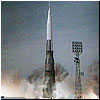
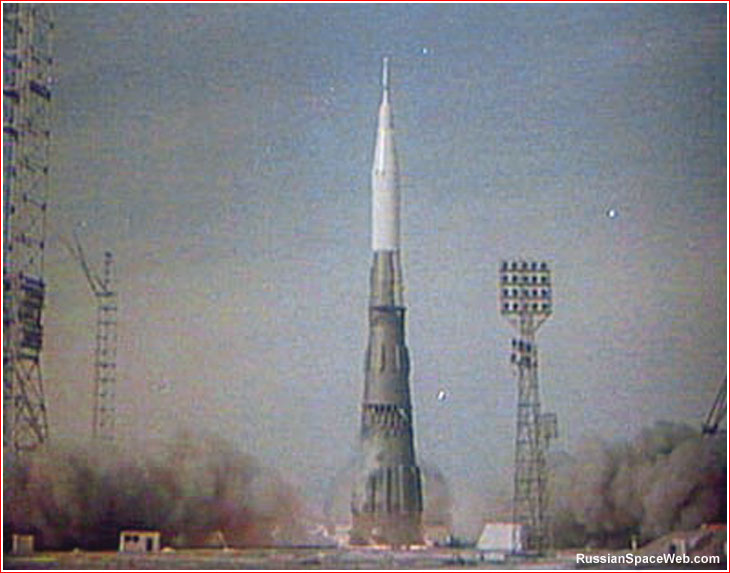
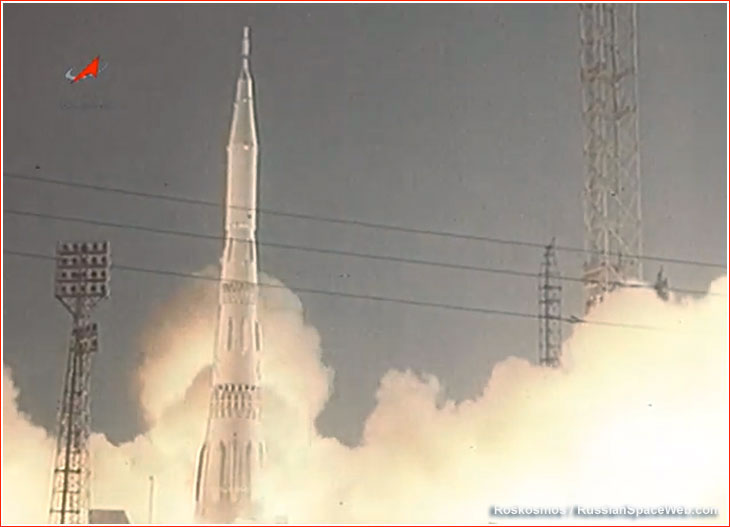
The N1 Moon rocket At the end of the 1950s, the OKB-1 design bureau led by Sergei Korolev began development of a super-heavy rocket booster, later designated N1. Originally, it was proposed as a multipurpose vehicle for a variety of military and scientific tasks, including launches of space stations, expeditions to the Moon and even a potential human missions to Mars. In its early incarnation, the giant rocket was expected to deliver 75 tons of payload to the low Earth orbit.
CLICK COMPONENTS FOR MORE INFO N1/L3 system overview (111):
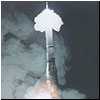
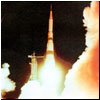
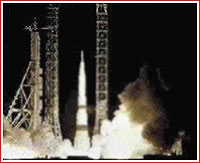
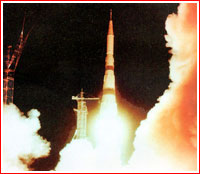
Due to oversized role of the Soviet military in the early Soviet space program, Korolev tried unsuccessfully to lure the Defense Ministry into funding his proposals for the military uses of the N1 rocket, including carrying nuclear weapons — a rather unlikely task for such a huge booster. (74) After many delays, that would prove fateful, the N1 project was ultimately approved by the Kremlin in 1964 for a single mission — to beat America to the Moon. To accomplish this task, the rocket's design was upgraded to carry a payload of between 92 and 95 tons, instead of around 70 tons. For that purpose, the first stage of the rocket (Block A) received a six-engine cluster in addition to 24 engines proposed in the original design circa 1962. The second stage of the rocket, known as Block B, was equipped with eight engines and the third stage (Block V) with four simular engines. This architecture was believed to be suffice to launch the L3 expeditionary complex with a crew of two and only one cosmonaut landing on the Moon. Subsequently, the rocket was expected to be upgraded with hydrogen upper stages (INSIDER CONTENT), so it could support a two-launch expedition scenario (INSIDER CONTENT) developed for the L3M complex delivering three cosmonauts to the Moon. Many other upgrades of the N1 rocket were considered over the years for such projects as the 5M Mars sample return and the Zevs mission to Jupiter. (INSIDER CONTENT) To practice work with the N1 Moon rocket, its full-scale prototype (INSIDER CONTENT) with many operational systems was assembled at the launch site in Tyuratam in 1967. Throughout the Soviet lunar program, the 1M1 mock-up vehicle was continuously upgraded to reflect planned changes on the flight-worthy rockets. (774) However, the N1's catastrophic failures during four test launches on Feb. 21 and July 3, 1969, June 27, 1971, and Nov. 23, 1972, doomed the Soviet effort to land a man on the Moon and left the ill-fated rocket under a veil of secrecy for almost two decades. The nearly completed fifth flight vehicle (N1 No. 8L) (INSIDER CONTENT) was expected to fly at the end of 1974, but the entire Soviet lunar program was cancelled in May of that year. Test launches of the N1 rocket Feb. 21, 1969: The first test launch of the N1 rocket (Vehicle No. 3L) carrying a 7K-L1A (7K-L1S) spacecraft failed 68.7 seconds after liftoff from Site 110 in Tyuratam.
July 3, 1969: The second test launch of the N1 rocket (Vehicle No. 5L) carrying a 7K-L1A (7K-L1S) spacecraft failed at liftoff from Site 110 in Tyuratam. 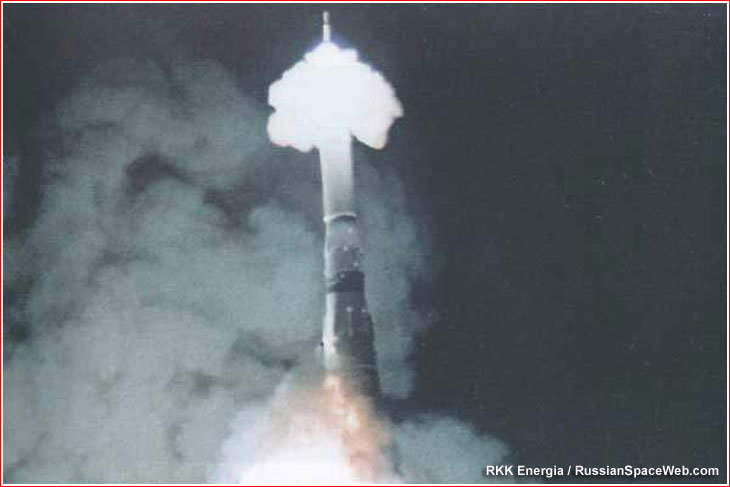
June 27, 1971: The third launch of the N1 rocket (Vehicle No. 6L) carrying dummy LOK and LK spacecraft failed at 50.1 seconds after liftoff from the left pad at Site 110 in Tyuratam. 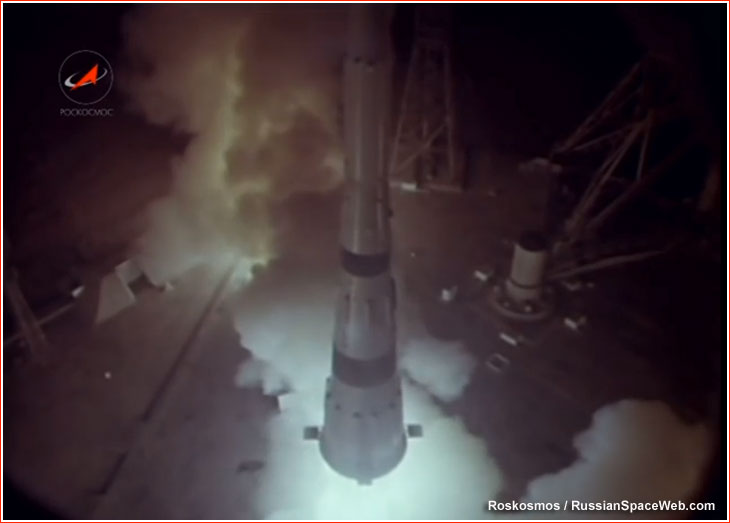
Nov. 23, 1972: The fourth launch of the N1 rocket (Vehicle No. 7L) carrying an operational LOK spacecraft and a mockup of the LK lunar module failed about 107 seconds after liftoff from Site 110 in Tyuratam.
The 5th N1 Moon rocket misses its chance to fly (INSIDER CONTENT) In 1974, Soviet engineers prepared for their fifth attempt to test-fly the giant N1 rocket with the L3 lunar expeditionary complex. After a year and a half of corrective actions, the team had more confidence than ever that the troubled vehicle was finally on the verge of success. 
Overview of proposed upgrades to the N1 family:
Major contractors in the N1 project:
|
|

|