Site update log

Site map


Advertise

Testimonials


About this site

About the author


Mailbox

Support this site


Related pages:

R-7 ICBM

Sputnik launcher


Soyuz rocket

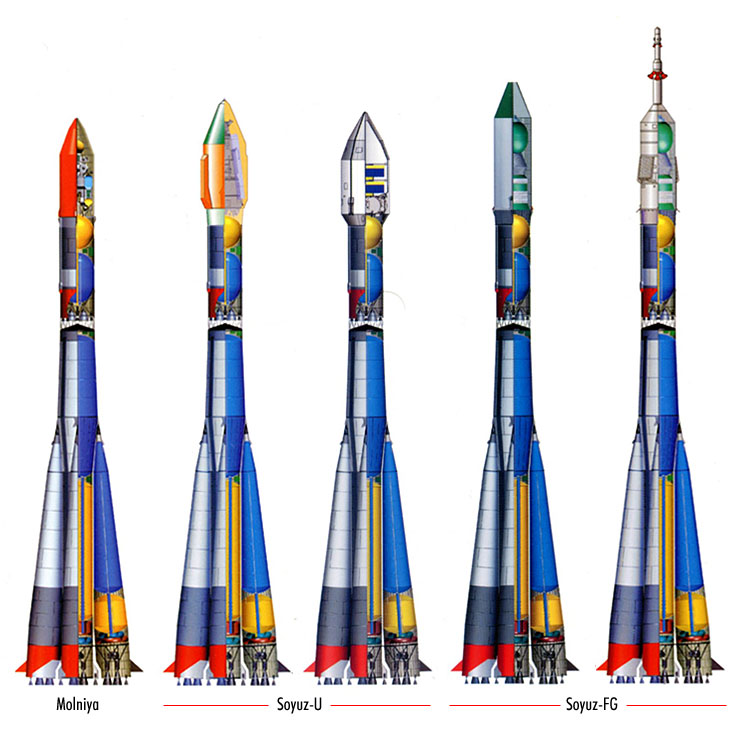
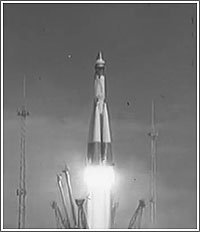
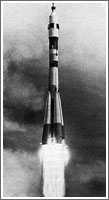
The Soyuz, the most recognizable Russian rocket, is only one of several space boosters, which derived from the R-7 ballistic missile developed in the mid-1950s.


Different versions of space launch vehicles derived from the R-7 ICBM:

Type
Manufacturer index
US designation
Sheldon designation
Developer
First launch
Payloads
Sputnik
8K71PS
SL-1
-
OKB-1
1957 Oct. 4 Sputnik-1
Luna/Vostok
8K72
SL-3
A-1
OKB-1
Luna probes, Vostok
Vostok
8K72K
SL-3
A-1
OKB-1
Vostok
Vostok-2
8K72V
SL-3
A-1
OKB-1
-
Vostok-2M
8K72V1
SL-3
A-1
OKB-1
Elektron, Meteor
Vostok-2M
8K72V3
SL-3
A-1
OKB-1
Elektron, Meteor
Vostok-2M
8K72D
SL-3
A-1
OKB-1
Elektron, Meteor
Vostok-2M
8K72-2D
SL-3
A-1
OKB-1
Elektron, Meteor
Luna
8K73/73E
SL-3
A-1
OKB-1
E-3 project
Sputnik
8A91
SL-3
A-1
OKB-1
Object D (Sputnik-3)
Vostok
8A92
SL-3
A-1
OKB-1
Zenit-2
Vostok-M
8A92M
SL-3
A-1
OKB-1
1964 Aug. 28 Tselina D, Meteor, IRS-1A, Intercosmos-Bulgaria
Vostok
8A92ME
SL-3
A-1
OKB-1
Meteor, Tselina-D
Vostok
8A92V3
SL-3
A-1
OKB-1
Zenit-2
Vostok
8A93
SL-3
A-1
OKB-1
OD-2
Vostok
11A92
SL-3
A-1
OKB-1
Zenit-2
Molniya
8K78
SL-6
A-2-e
OKB-1
Molniya, Mars/Venera, Prognoz, Zond
Molniya
8K78-MV
SL-6
A-2-e
OKB-1
Mars/Venera, Prognoz, Zond
Molniya
8K78-2MV
SL-6
A-2-e
OKB-1
Mars/Venera, Prognoz, Zond
Molniya
8K78-E6
SL-6
A-2-e
OKB-1
Luna (E-6)
Molniya
8K78M
SL-6
A-2-e
TsSKB
Mars/Venera, Prognoz, Zond 1-3
Polyot
11K59 (11A59?)
SL-5
-
OKB-1
IS (Polyot-1,2)
Voskhod
11A57
SL-4
A-2
OKB-1
1963 Nov. 16 Voskhod, Zenit
Voskhod
11A59
SL-4
A-2
OKB-1
Zenit-2
Voskhod
11A510
SL-4
A-2
OKB-1
Zenit-4/ US-prototypes
Soyuz
11A511
SL-4
A-2
TsSKB
Soyuz

Soyuz (S

11A511M
SL-4
A-2
TsSKB
1966 Nov. 28 Yantar
Soyuz-U
11A511U
SL-4
A-2
TsSKB
1973 May 18 Soyuz TM, Soyuz TMA
Soyuz-U2
11A511U2
SL-4
A-2
TsSKB
1982 Dec. 23 Progress-M
Soyuz-U2
11A511K
SL-4
A-2
TsSKB
Resurs/ Soyuz-TM
Soyuz-Irene
-
SL-4
A-2
Arianespace
Globalstar (project)
Soyuz-Ikar
11A511U
SL-4
A-2
Starsem
1999 Feb. 9 Globalstar
Soyuz-Fregat
-
SL-4
A-2
Starsem
2000 Cluster, IRDT
Vostok-2/Fregat
-
SL-4
A-2
NPO Lavochkin proposal
- -
Soyuz-FG
11A511FG
-
-
TsSKB Progress
2001 May 21 Progress M1, AMOS-2
Soyuz-2-1A (Rus)
14A14
-
-
TsSKB Progress
2004 Nov. 8 Meridian, Metop
Soyuz-2-1B (Rus)
14A14
-
-
TsSKB Progress
2006 Dec. 27 Corot
Soyuz-ST
-
-
-
Starsem
-
Yamal
-
-
-
RKK Energia
ISS modules, Progress-M2
Avrora
-
-
-
RKK Energia
Commercial satellites from Christmas Island
Onega
-
-
-
RKK Energia
Kliper
Soyuz-2-3
-
-
-
RKK Energia/TsSKB Progress
Kliper ("light" version) cargo containers for Parom
Soyuz-3
-
-
-
RKK Energia
Kliper
Soyuz-1
-
-
-
TsSKB Progress
2011 Military/commercial satellites

Overview of upper stages in the Soyuz family of rockets:

Designation Fregat Taimyr 385 GK Yastreb
Mass
6.6 tons
9.84 tons
12.7-18.7 tons
Height
1.5 meters
4 meters
-
Diamater
3.35 meters
3.41 meters
-
Launch vehicle
Yamal, Avrora
Angara, Onega

Recent missions of the R-7-based launchers:

2001 Jan. 24: The Progress M1-5 spacecraft carrying 2,677 kilograms of propellant for Mir's deorbiting maneuvers blasted off from Site 1 in Baikonur Cosmodrome at 07:28:42 Moscow Time (11:28 p.m. EST on January 23).


2001 Feb. 26, 11:09:35 Moscow Time (3:09 a.m. EST): Progress M-44 (Tail number 244) was launched toward the ISS.


2001 April 28, 13:37 Baikonur Time (3:37 a.m. EST): The Soyuz TM-32 spacecraft blasted off toward the ISS with commander Talgat Musabaev, flight engineer Yuri Baturin and the US tourist passenger Dennis Tito.


2001 May 21, 04:32 Baikonur Time: The Soyuz FG rocket with modified injection system ("forsunochnaya golovka") on the engines of the first and second stage, delivered the Progress M1-6 cargo ship on its way to the International Space Station.


2001 May 29, 21:55 Moscow Time (1:55 p.m. EDT): The Soyuz U rocket launched a military satellite, apparently the Yantar or Kobalt imaging spacecraft, from Plesetsk's Pad 4 at Site 43.


2001 July 20: The Molniya-M rocket successfully delivered a Molniya-3K satellite, for military communications after the launch at 00:17 UTC from Pad 4 at Site 43 in in Plesetsk. The launch was earlier expected in June.


2001 Aug. 21: The Soyuz rocket launched Progress-M45 launched toward the ISS; (earlier expected in June and July); Docked to the station on August 23.


2001 Sept. 15, 03:35 Moscow Time: The Soyuz rocket successfully launched Docking Compartment toward the ISS;


2001 Oct. 21, 12:59 Moscow Time: The Soyuz TM-33 spacecraft, with two Russian cosmonauts and a French researcher onboard, blasted off from Baikonur Cosmodrome, heading toward the International Space Station, ISS. The commander Viktor Afanasiev, flight engineer Konstantin Kazeev and French astronaut Claudie Haigneré onboard Soyuz TM-33 (Number 207) are scheduled to arrive to the ISS on October 23.


2001 Oct. 25: Russian Space Forces launched a military communications satellite today from its Northern Cosmodrome in Plesetsk. A four-stage Molniya-M rocket blasted off from the Launch Pad 3 at Site 43 of the Cosmodrome at 15:34 Moscow Time (7:34 a.m. EDT) and ten minutes later successfully delivered Molniya (Lightning) spacecraft into the initial orbit.

The fourth stage of the launcher then expected to fire again to push the spacecraft into its final highly elliptical orbit with the inclination 62.8 degrees toward the Equator. The launch was previously scheduled for October 11.


2001 Nov. 26, 21:24 Moscow Time: A Soyuz FG rocket launched a Progress M1-7 cargo ship toward the ISS. (Delayed from Nov. 14)


2002 Feb. 25, 20:26 Moscow Time: The Soyuz-U rocket blasted off from Plesetsk, after a 2-hour-7-minute delay caused by technical problems. It was 1666th mission of the veteran rocket based on the R-7 ICBM. Some nine minutes after the blastoff, the spacecraft, officially announced as Cosmos-2387, reached the orbit. The Cosmos-2387 apparently belongs to the Yantar family of imaging reconnaissance satellites, routinely launched from Plesetsk.


2002 March 21, 23:13 Moscow Time: The Soyuz FG rocket launched the Progress M1-8 cargo ship from Site 1 at Baikonur Cosmdorome on Thursday, March 21, heading toward the International Space Station, ISS.


2002 Feb. 25: Russia launched its first space mission in 2002, delivering a secret satellite into low Earth orbit from Plesetsk. The Soyuz-U rocket blasted off from Russia’s northern launch facility at 20:26 Moscow Time, after a 2-hour-7-minute delay caused by technical problems. It was 1666th mission of the veteran rocket based on the R-7 ICBM.


2002 March 21: The Progress M1-8 cargo ship blasted off from Site 1 at Baikonur Cosmodrome on Thursday, March 21, 23:13 Moscow Time, heading toward the International Space Station, ISS. To make room for the new arrival, a previous spacecraft, Progress M1-7, undocked from the station on March 19, 20:43 Moscow Time.


2002 April 2: Russian Space Forces launched a military satellite on Tuesday from their Northern Cosmodrome in Plesetsk. A four-stage Molniya-M rocket blasted off at 02:07 Moscow Time on April 2 and ten minutes later successfully delivered a classified military payload, most likely Oko-type early-warning satellite, to the initial Earth orbit.

The upper stage of the launch vehicle then expected to maneuver the satellite into highly elliptical orbit. This was 220th launch for the Molniya-M booster, which was apparently delayed several times in the past few weeks.

Lubov Kudelina, Deputy Minister of Defense and Anatoly Perminov, Chief Commander of Russian Space Forces, KVR, personally attended the launch in Plesetsk.


2002 April 25: The Soyuz TM-34 spacecraft, carrying a Russian commander Yuri Gidzenko, an Italian researcher Roberto Vittori and a South-African tourist cosmonaut Mark Shuttleworth blasted off from Site 1 in Baikonur Cosmodrome on April 25 at 10:26 Moscow Time (12:26 Local Time).


2002 June 26: The Progress M-46 cargo ship blasted off from Site 1 at Baikonur Cosmodrome on Wednesday, June 26, 09:36 Moscow Time, heading toward the International Space Station, ISS.


2002 Sept. 25: The Progress M1-9 cargo ship blasted off from Site 1 at Baikonur Cosmodrome on Thursday, Sept. 25, 20:58 Moscow Time, heading toward the International Space Station, ISS.


2002 Oct. 15: One killed in Plesetsk launch failure

Posted: 2002 Oct. 15; updated Oct. 16, 17, 18

Russia's first attempt in more than a year to launch a science satellite ended in a disastrous explosion over Plesetsk cosmodrome, killing at least one soldier and injuring eight, six of whom were hospitalized. A dead soldier was identified as a 20-year-old private Ivan Marchenko. According to the Russian press, the fatality and all injuries were caused by falling window frames and other debris of a processing building.

The Soyuz-U rocket carrying Foton-M No. 1 spacecraft started disintegrating some 20 seconds after blastoff and nine seconds later exploded, showering the launch complex and surrounding area with flaming debris. The launch pad was reportedly damaged by a Block D strap-on booster, which separated from the rest of the rocket seconds after blastoff. A forest fire, which started at the site of the rocket's impact on the ground about one kilometer from the pad, was extinguished.

Russian space forces, which operate the Plesetsk facility, conducted the launch on October 15 at 22:20 Moscow Time. The mission was previously scheduled for October 9. The 6,425-kilogram Foton-M No. 1 was to be the first Russian orbital science mission, since the Koronas-F solar-research satellite entered orbit on July 31, 2001. Since then, an attempt to launch an experimental solar-sailing spacecraft on a sub-orbital trajectory has also failed.

Foton-type satellites, built by TsSKB-Progress in the city of Samara, are based on the Vostok spacecraft and equipped with a capsule, which allows returning life-science and material-processing experiments back to Earth after two weeks in weightlessness. The lost Foton had been the 13th in a series launched since 1985. It carried an array of European, US, Canadian, Japanese and Indonesian experiments with the total mass of 600 kilograms.

The same type of rocket that failed to deliver Foton is also used to launch Russian manned Soyuz spacecraft.

On Wednesday, Oct. 16, Russian officials said the launch of the Soyuz TMA-1 spacecraft, which is to use the Soyuz FG rocket could be delayed, pending the investigation of the Plesetsk crash.


2002 Oct. 30: Russia launched the fourth taxi crew to the International Space Station, ISS, to deliver a fresh rescue vehicle for the long-term residents of the outpost.

The Soyuz-FG rocket, carrying Soyuz TMA-1 spacecraft blasted off from Site 1 at Baikonur Cosmodrome at 6:11:11 Moscow Time on October 30, 2002. At 6:17 Moscow Time, a ground control station in Barnaul established communications with the spacecraft and nine minutes after the launch, the Soyuz TMA-1 reached the orbit.

The crew of the Soyuz TMA-1 spacecraft includes the commander Sergei Zalyotin, flight engineer Yuri Lonchakov and ESA astronaut Frank De Winne.


2002 Dec. 25: Russian Space Forces launched a military satellite on Tuesday from their Northern Cosmodrome in Plesetsk. A four-stage Molniya-M rocket blasted off at 15:20 Moscow Time on December 24 and ten minutes later successfully delivered a classified military payload, officially identified as Cosmos-2393, to the initial Earth orbit. The spacecraft is most likely the Oko-type early-warning satellite.

The upper stage of the launch vehicle then maneuvered the satellite into highly elliptical orbit. According to official reports, the spacecraft separated from the upper stage of the launch vehicle at 16:23 Moscow Time on December 24, 2002. The satellite established contact with the ground control center at 17:05 Moscow Time.

A major fire at Russia's military ground control center near Moscow in 2001 is believed to be responsible for the loss of control over one or several satellites, providing early warning about missile attack for the Russian Ministry of Defense.


2003 Feb. 2: As NASA mourned the fallen crew of the Space Shuttle Columbia, tragically lost on Feb. 1, 2003, Russia launched a cargo ship to resupply the crew of the International Space Station, ISS. The Progress M-47 cargo ship blasted off from Baikonur Cosmodrome's Site 1 on February 2 at 15:59:40 Moscow Time.

2003 April 2: Russia launched a communications satellite to be used by the country’s armed forces. According to Russian Space Forces, the four-stage Molniya-M rocket blasted off from Russia’s northern cosmodrome in Plesetsk on April 2, 2003, at 05:53 Moscow Time, carrying a Molniya-1T spacecraft. The satellite separated from the fourth stage of the launch vehicle at 06:50 Moscow Time, after entering a highly-elliptical orbit around the Earth.

At 07:38 Moscow Time, the ground control station of the Russian Space Forces established contact with the spacecraft.


2003 April 26: The Soyuz FG rocket successfully launched the Soyuz TMA-2 (No. 212) spacecraft at 7:53:52 Moscow Time from Baikonur Cosmodrome's Site 1.


2003 June 2: The Soyuz/Fregat booster blasted off from Site 31 at Baikonur Cosmodrome in Kazakhstan at 23:45 local time (1745 GMT; 1:45 p.m. EDT), carrying the Mars Express spacecraft built by the European Space Agency.


2003 June 8: The Soyuz rocket launched the Progress M1-10, No. 259 cargo ship from Baikonur Cosmodrome's Site 1 on June 8, 2003, at 16:34 local time (1034 GMT).


2003 June 20: A four-stage Molniya-M rocket with Block ML upper stage blasted off at midnight Moscow Time on June 20, 2003, carrying a 1,600-kilogram Molniya-type spacecraft, apparently its newest Molniya-3 version based on a Molniya-2M (11F637) platform.

This has been the second launch of the spacecraft in the Molniya family since April 2, 2003. The launch was earlier anticipated on June 19.


2003 Aug. 12: The Soyuz rocket delivered a classified military payload, possibly a Neman-type imaging surveillance satellite, after a successful launch from Kazakhstan. The Soyuz U launch vehicle, blasted off from Pad 6 at Site 31 in Baikonur Cosmodrome at 18:20 Moscow Time on August 12, 2003. According to the Starsem venture, marketing the Soyuz family of launchers in the West, the latest mission was a success. The payload received an official designation Cosmos-2399.


2003 Aug. 29: The Soyuz rocket launched a cargo ship to resupply the crew of the International Space Station, ISS. The Progress M-48, No. 248 cargo ship blasted off from Baikonur Cosmodrome's Site 1 on August 29, 2003 at 5:47:59 Moscow Summer Time.


2003 Oct. 18: The Soyuz FG rocket launched Soyuz TMA-3 spacecraft with the crew of three from Baikonur Cosmodrome's Site 1, at 9:38:03 Moscow Summer Time on October 18, 2003, heading to the ISS.


2003 Dec. 29: The Soyuz FG/Fregat launcher blasted off from Pad 6 at Site 31 in Baikonur Cosmodrome, at 02:30 local time on December 28, 2003 (2130 GMT on Dec. 27). The vehicle carried a 1,374-kilogram AMOS 2 spacecraft for Israel-based Spacecom Ltd.

The spacecraft separated from the Fregat upper stage some 6 hours 47 minutes after the launch. The Fregat conducted three engine firings during the mission. The first maneuver inserted the spacecraft into the initial low Earth orbit, the second raised the apogee and the third circularized the orbit at the geostationary altitude of 36,000 above the Equator.

The AMOS 2, which is scheduled to operate in space for 12 years, joined the AMOS 1 satellite, which was launched by the Ariane rocket in 1996. The new spacecraft will extend the reach of the network to Europe and the East Coast of the United States. The spacecraft is to be positioned at 4 degree Western longitude over the Equator above the Gulf of Guinea.

The AMOS-2 launch marked the 12th commercial mission of the Soyuz rocket, but only the first attempt of the booster to reach geostationary orbit. The AMOS 2 was originally scheduled for launch onboard the European Ariane-5 rocket, however it was switched to the Soyuz due to unexplained reasons, most likely a mass incompatibility issue with other payloads. Arianespace, which operates the Ariane-5, and Starsem, which markets Soyuz, have an agreement to share launches. Both companies are based in France and supported by the French government.

The launch of the AMOS 2 onboard Soyuz was originally planned for December 18, 2003.


2004 Jan. 29: Soyuz-U rocket successfully launched a cargo ship to resupply the crew of the International Space Station, ISS. The Progress M1-11, No. 260, cargo ship (Mission 13P) blasted off from Baikonur Cosmodrome's Site 1 on January 29, 2004 at 14:58:08 Moscow Time.

In preparation for the new arrival, a previous transport craft, the Progress M-48, left the the ISS on January 28, 2004, and was deorbited the same day.

The launch of Progress M1-11 was previously expected on Nov. 11, Nov. 18 and in December 2003.


2004 Feb. 18, 10:05:55 Moscow Time (07:05 GMT): A Molniya-M booster successfully launched a military communications satellite from Plesetsk. Upon reaching its final highly elliptical orbit at 11:02 Moscow Time, the payload, (apparently a Molniya-1T No. 100) was initially identified in the Russian sources as Cosmos-2405, however it was later renamed Molniya-1T.


2004 April 19: The Soyuz FG rocket launched the Soyuz TMA-4 (No. 214) spacecraft, carrying a crew of three from Baikonur Cosmodrome's Site 1, at 07:19 Moscow Time.


2004 May 25: The Soyuz rocket launched Progress M-49 (No. 249), cargo ship (Mission 14P) from Baikonur Cosmodrome's Site 1 on May 25, 2004 at 16:34:23 Moscow Time.


2004 Aug. 11: Russia successfully launched a cargo ship to resupply the crew of the International Space Station, ISS. The Progress M-50, No. 350, cargo ship (Mission 15P) blasted off from Baikonur Cosmodrome's Site 1 on Aug. 11, 2004 at 09:03:07 Moscow Time.

The launch of Progress M-50 was previously planned for June 20 and July 28, 2004.


2004 Sept. 24: Russian military launched a new generation of military spacecraft.

A Soyuz-U rocket blasted off from the nation's Northern Cosmodrome in Plesetsk on September 24, 2004, at 20:50 Moscow Time, and successfully delivered a military payload designated as Cosmos-2410 nine minutes later. A State Commission led by Lt. General Vladimir Popovkin, Commander of the Russian Space Forces, KVR, oversaw the launch. According to KVR, ground control established contact with the spacecraft at 21:01 Moscow Time.

Russian media reported that the payload initiated flight testing of the new generation of spacecraft developed by TsSKB Progress in Samara and OAO MZ Arsenal in St. Petersburg. Such reports support the theory that Russia has finally introduced a long-awaited family of spacecraft, known as Liana, capable of providing electronic intelligence over both land and sea. Previously, Russia had used two specialized systems -- Tselina-2, and US-PM -- to intercept electronic signals from land and sea, respectively.

In communication with the publisher of this web site, Ted Molczan, a prominent satellite observer, reported that Cosmos-2410 was circling the Earth in a 170 by 360-kilometer orbit, which would be too low for most electronic intelligence purposes and too elliptical for practical radar observations. If Cosmos-2410 will not maneuver into higher circular orbit in the following days, its flight profile would resemble that of a photo-reconnaissance satellite, such as Kobalt.


2004 Oct. 14: The Soyuz TMA-5 (No. 215) spacecraft, carrying a crew of three blasted off from Baikonur Cosmodrome's Site 1, at 07:06 Moscow Time on Oct. 14, 2004.

Onboard were Commander Leroy Chiao, a NASA astronaut, Russian Flight Engineer Salizhan Sharipov and Test Cosmonaut Yuri Shargin, representing Russian Space Forces. Expedition 10 was scheduled to live and work on the ISS for six months. Shargin would return to Earth with Expedition 9 onboard Soyuz TMA-4.

The Soyuz TMA-5 separated from the upper stage of the launch vehicle at 07:15 Moscow Time on October 14, 2004.


2004 Dec. 24: The Soyuz-U rocket with the Progress M-51 No. 351 (ISS mission 16P) blasted off from Site-1 in Baikonur Cosmodrome at 01:19:31 Moscow Time on December 24, 2004. The vehicle successfully reached the initial orbit nine minutes later. The Progress M-51 was scheduled to dock to the aft docking port of the Zvezda service module of the ISS at 03:31 Moscow Time on December 26, 2004.


2005 Feb. 28: The Soyuz-U rocket with the Progress M-52 No. 352 (ISS mission 17P) blasted off from Site-1 in Baikonur Cosmodrome at 22:09 Moscow Time on February 28, 2005. The vehicle successfully reached the initial orbit nine minutes later.


2005 April 15: The Soyuz rocket with Soyuz TMA-6 spacecraft blasted off at 04:46 Moscow Time on April 15, 2005, carrying Russian cosmonaut Sergei Krikalev, NASA astronaut John Phillips of Expedition 11 and Italian astronaut Roberto Vittori, representing European Space Agency, ESA.


2005 May 31: The Soyuz-U rocket, carrying the Foton-M2 science satellite, blasted off from Site 1 at Baikonur Cosmodrome at 12:00 UT (18:00 local time) on May 31, 2005. After a nine-minute powered flight, the Foton-M2 spacecraft has entered low-earth orbit where it is to remain for 16 days before its scheduled landing close to the Russian/Kazakh border.


2005 June 17: The Soyuz-U No. 94 rocket with the Progress M-53 No. 353 (ISS mission 18P) blasted off from Site-1 in Baikonur Cosmodrome at 03:09 Moscow Time on June 17, 2005. The vehicle successfully reached its initial orbit and separated from the third stage of the launch vehicle at 03:18 Moscow Time.


2005 June 21: The 315-ton Molniya-M rocket, carrying Molniya-3K military communications satellite, blasted off from Russia's northern cosmodrome in Plesetsk on June 21, 2005 at 04:49 Moscow Time.

The spacecraft was expected to reach its final orbit at 05:43 Moscow Time, however it had never established communications with ground control. Preliminary data showed that the launch vehicle failure took place around six minutes in flight, during the burn of the third stage, Russian officials said. Another report said that the failure took place five minutes in flight during separation between the second and the third stage. The latest information revealed that the flight was nominal for 340 seconds, when the telemetry from the vehicle was lost. Apparently, the second and the third stage did not separate and the engine on the third stage, which normally ignites before the separation, shot down.

The payload apparently carried a self-liquidation system typical for military missions.

The remnants of the launch vehicle and its payload were expected to impact in a remote region of Tyumen Oblast. Later information narrowed the impact area to the Tobolsk range, a routine site for the third stage impact during a nominal flight.

A special team of the Ministry for Emergencies, MChS, was expected to use Mi-2 helicopter to search for the impact site. Later reports said that initial observations of the area from the airplane did not yielded the results, as bad weather hampered the effort. The search was resumed on June 22, 2005 at 06:00 Moscow Time, when Mi-2 helicopter and Yak-52 aircraft departed for the impact area. The search was fruitless again and was resumed at 08:30 on June 23, 2005. This time a Mi-8 helicopter and the An-2 airplane was used. Finally, within 48 hours after the launch attempt, the debris from the crash were found in Uvat Region of the Tyumen Oblast, Russian Space Forces said on June 23. According to the official statements most of the fragments burned up during the reentry.

Immediately following the launch failure Chief Military Prosecution Office opened a criminal investigation under Article 351 of the Criminal Codex of the Russian Federation entitled: "Violation of flight rules and their preparations." Two days after the accident, Russian press reported that the preliminary investigation cleared military launch personnel from the responsibility for the failure. A full investigation was expected to last for two weeks.

The launch vehicle and the payload were reportedly insured for 900 million rubles.


2005 August 14: Russian Soyuz rocket orbited a communications satellite after a successful launch from Baikonur Cosmodrome.

A Soyuz FG (No. 011) rocket with the Fregat (No. 007) upper stage blasted off from Pad 6 at Site 31 in Baikonur Cosmodrome at 03:28:28 Moscow Time on August 14, 2005, (23:28 UTC on August 13) carrying the Galaxy 14 spacecraft.

One hour and 37 minutes after the the liftoff, and two orbital burns the Fregat upper stage accurately injected Galaxy 14 into the targeted geostationary transfer orbit (GTO).

With a liftoff mass of 2,087 kilograms, Galaxy 14 is the second in a series of new-generation satellites ordered by PanAmSat from Orbital Sciences Corporation to provide additional power, greater flexibility and service availability to its customers. It is based on the Star 2 Bus model. This all C-band spacecraft is designed to deliver digital video programming, high-definition television (HDTV), VOD and IPTV service throughout the continental U.S. Galaxy 14 is equipped with 24 C-band transponders, and will join the Galaxy 12 spacecraft at 125 degrees West - one of PanAmSat's key orbital positions for the North American continent.

Galaxy 14 is the 19th satellite orbited by the Arianespace family of launchers for PanAmSat. PanAmSat began operations in the late 1980s with its first spacecraft, PAS-1, which was orbited in June 1998 on the maiden flight of Arianespace's Ariane 4 launcher.

It was the 1,699th launch in the Soyuz family of rockets. The mission was delayed from February, March 16, June 17 and July 28, 2005. PanAmSat previously planned to launch the Galaxy 14 onboard the Ariane-5 rocket.


2005 Sept. 2: Russia launched a classified military payload, believed to be a photographic reconnaissance satellite to replenish the country's dwindling military assets in orbit. The Soyuz-U rocket blasted off from Site 31 in Baikonur on Sept. 2, 2005 at 13:50 Moscow Time (09:50 UTC). Official Russian space agency sources said that the launch went smoothly and the control over the spacecraft was transferred to space forces.

According to independent Russian media, the payload was the 11F660 Yantar-1KFT/Kometa imaging reconnaissance satellite built by TsSKB Progress in Samara. Previous launch of the spacecraft of this type took place on Sept. 29, 2000.


2005 Sept. 8: The Soyuz-U No. 95 rocket with the Progress M-54 No. 354 (ISS mission 19P) blasted off from Site-1 in Baikonur Cosmodrome at 17:07 Moscow Time on Sept. 8, 2005. The vehicle successfully reached its initial orbit and separated from the third stage of the launch vehicle 529 seconds after the launch.

The launch was previously scheduled for August 24, 2005.

After a two-day flight, the Progress M-54 was expected to dock to the ISS on Sept. 10, 2005, at 18:49 Moscow Time.


2005 Oct. 1: The Soyuz TMA-7 spacecraft blasted off from Site 1 in Baikonur Cosmodrome at 07:54:53 Moscow Time, and successfully reached orbit nine minutes later. Russian flight controllers reported the spacecraft's solar arrays had deployed as scheduled, and that all appeared normal.


2005 Dec. 21: The Soyuz-U rocket with the Progress M-55 No. 355 (ISS mission 20P) blasted off from Site-1 in Baikonur Cosmodrome at 21:39 Moscow Time. The vehicle successfully reached its initial orbit and separated from the third stage of the launch vehicle at 21:47 Moscow Time on the same day.


2005 Dec 28: The Soyuz-FG rocket with the Fregat upper stage, carrying the GSTB-V/2A satellite for the Galileo global positioning system, blasted off from Site 31 in Baikonur Cosmodrome at 08:19 Moscow Time on Dec. 28, 2005.

The mission, first announced in March 2004, was originally scheduled for Dec. 26, 2005, however it was postponed on the request of the customer.


2006 March 30: The Soyuz-FG rocket, carrying the Soyuz TMA-8 spacecraft with the 13th long-duration crew of the International Space Station, blasted off from Site 1 in Baikonur Cosmodrome at 06:30 Moscow Summer Time and successfully reached orbit nine minutes later.


2006 April 24: The Soyuz-U rocket with the Progress M-56 (ISS mission 21P) blasted off from Site-1 in Baikonur Cosmodrome at 20:03:25 Moscow Time (16:03:25 GMT) on April 24, 2006.

After a two-day flight, the Progress M-56 successfully docked to the aft port of the Zvezda service module of the ISS on April 26, 2006, at 21:41:31 Moscow Time.

Along with regular supply of consumables, Progress M-56 delivered golf gear, which Pavel Vinogradov from the Expedition 13 would use during an upcoming spacewalk for a commercial advertising campaign.

The Progress M-56 launch was previously scheduled for April 16, 2006.


2006 May 3: A new imaging satellite renewed Russia's dwindling reconnaissance network. The Soyuz-U rocket blasted off from Pad 2 at Site-16 of the nation's northern cosmodrome in Plesetsk at 21:38 Moscow Time on May 3, 2006. It successfully reached the orbit at 21:47 Moscow Time, releasing a classified payload, officially identified as Cosmos-2420.

A well-informed Kommersant newspaper described the satellite as a modified version of the Yantar-4K2 (11F695) satellite designated Kobalt-M. According to the paper, the launch of the satellite was previously scheduled for the middle of May 2006, however its pre-launch processing was accelerated in light of the decommissioning of the last US-PU electronic intelligence spacecraft -- reportedly the last Russian reconnaissance asset in the Earth orbit. A 6,6-ton Kobalt-M is developed by TsSKB Progress of Samara and mass produced by OAO Arsenal of St Petersburg, the newspaper said. The satellite is designed for 120 days of orbital operations. Kommersant predicted that upon the completion of its mission, Kobalt-M would be replaced by the Don spysat, also known as Orlets-1.

The NORAD radar found Cosmos-2420 in the 360 by 180-kilometer orbit with the inclination 67.15 degrees toward the Equator, which is consistent with the orbital parameters of the Kobalt and Yantar-4KS-type satellites. It received international designation 2006-017A.


2006 June 15: The Soyuz-U rocket blasted off from Baikonur Cosmodrome's Pad 5 at Site 1, on June 15, 2006, at 12:00:00.193 Moscow Time, carrying the Resurs-DK-1 No. 1 spacecraft. The payload successfully reached orbit eight minutes later, according to the official Russian sources.


2006 June 24: The Soyuz-U rocket, carrying the Progress M-57 spacecraft, blasted off from Baikonur Cosmodrome's Site 1 at 19:08:18 Moscow Time. The vehicle reached the orbit at 19:17 Moscow Time.


2006 July 21: A four-stage Molniya rocket lifted off from Plesetsk, carrying a military satellite, officially identified as Kosmos-2422. According to the official Russian sources, the payload successfully separated from the fourth stage of the launch vehicle at 09:16 Moscow Time.

The mission most likely carried the Oko early-warning satellite, normally injected into highly elliptical orbit, where it works in conjunction with geostationary early warning satellites launched by the Proton rockets from Baikonur Cosmodrome.


2006 Sept. 18: The Soyuz-FG rocket, carrying the Soyuz TMA-9 spacecraft lifted off from Site 1 in Baikonur Cosmodrome at 08:08:40 Moscow Time.


2006 Oct. 23: The Progress M-58 (No. 358) spacecraft blasted off from Baikonur Cosmodrome's Site 1, at 17:40:36 Moscow Time (13:40:36 GMT). The Soyuz-U (No. 102) rocket followed a standard trajectory to reach the orbit with the inclination 56.1 degrees toward the Equator.


2007 Jan. 18: Russia launched its first space mission of 2007, sending a 7,290-kilogram cargo ship toward the International Space Station, ISS. The Soyuz U rocket, carrying the Progress M-59 spacecraft, lifted off from Site-1 in Baikonur Cosmodrome on January 18, 2007, at 05:12:13 Moscow Time (02:12 GMT; 09:12 p.m. EST on Jan 17).

The mission also honored the 100th anniversary of the birth of Sergei Korolev, carrying his portrait on the payload fairing.


2007 April 7: The Soyuz TMA-10 spacecraft bound for the ISS blasted off as scheduled from Site 1 in Baikonur Cosmodrome, on Saturday April 7, 2007, at 21:31:14 Moscow Time (1:31 p.m. EDT). The Soyuz FG rocket followed a standard trajectory to reach orbit with the inclination 51.6 degrees to the Equator.


2007 May 12: The Soyuz U rocket, carrying the 7,290-kilogram Progress M-60 cargo ship, lifted off from Cosmodrome Baikonur's Site 1 on May 12, 2007, at 07:25:38 Moscow Time (03:25 GMT). The launch vehicle followed a standard trajectory to reach a 193 by 245-kilometer orbit, with the inclination 51.6 degrees toward the Equator.

Russian space agency, Roskosmos, said the spacecraft successfully separated from the upper stage of its launch vehicle, which was scheduled to take place at 07:34:25 Moscow Time.


2007 May 30: A Russian rocket launched four spare communications satellites to complement a 40-bird low-orbit constellation for a US-based commercial customer.

The Soyuz FG rocket with the Fregat upper stage, carrying four 450-kilogram Globalstar satellites built by Space Systems/Loral, lifted off from Cosmodrome Baikonur's Site 31 on May 30, 2007, at 00:31 Moscow Time.

The launch vehicle followed eastbound trajectory to reach the 931 by 923-kilometer orbit with the inclination 51.9 degrees toward the Equator. Fregat fired twice before releasing the satellites into their final orbits and the third firing was conducted to send the stage on the reentry trajectory.

According to the Russian space agency, Roskosmos, all payloads successfully reached their operational orbits at 02:15 Moscow Time on May 30, 2007.

The mission was originally expected as early as March 26, 2007, and it was later delayed from March 30, May 14 and May 20, 2007.

According to Globalstar, four new satellites and four ground spares with the total cost of $120 million will serve as a "bridge" to a second-generation satellite constellation. In December 2006, Globalstar signed a EURO 661 million (approximately $865 million) contract with Thales Alenia Space for the design, manufacture and delivery of 48 new satellites for the second-generation Globalstar satellite constellation, with deliveries scheduled to begin in the summer of 2009. The satellites are being designed to provide service until at least 2025.


2007 June 7: The Russian military launched its first military payload Thursday, from nation's northern cosmodrome. The Soyuz-U rocket lifted off from Plesetsk on June 7, 2007, at 22:00 Moscow Time, (18:00 GMT) carrying a classified military payload, identified as Kosmos-2427 in the official Russian sources.

Based on information from the US radar, the satellite was circling the Earth in the 180 by 360-kilometer orbit with the inclination 67.15 degrees toward the Equator. Orbit parameters match those of optical reconnaissance satellites, identified in the open Russian press as Kobalt-M. According to various sources, the satellite is designed for 60-120-day operational life span and uses reentry capsules to deliver film with the images of the Earth surface.

Following previous launch of the Kobalt-M satellite, which took place on May 3, 2006, the commander of space forces, KVR, Col-Gen Vladimir Popovkin, promised to launch one satellite of this type annually.

In the aftermath of the latest launch, emergency crews on Russia's Yamal Peninsula were searching for the stage of the Soyuz U rocket, the Russian official news agency ITAR-TASS reported. The stage reportedly impacted 60-80 kilometers from the settlement of Yar-Sale, as planned. On the eve of the launch, 65 people were evacuated from this sparsely populated area.


2007 Aug. 2: The Soyuz-U rocket blasted off from Baikonur Cosmodrome's Site 1 on Aug. 2, 2007 at 21:33:48 Moscow Time, carrying the Progress M-61 cargo ship toward the ISS.

The launch followed a standard trajectory, delivering a 7,270-kilogram spacecraft into a 268 by 191-kilometer orbit with the inclination 51.64 degrees toward the Equator, according to mission control in Korolev, Russia.

After a three-day flight, Progress M-61 was expected to dock to the station on Aug. 5, 2007, at 22:40 Moscow Time.

To make a room for the new arrival, the Progress M-59 cargo ship undocked from the ISS on Aug. 1, 2007 at 18:07:05 Moscow Time. Upon a command from the Russian mission control, the vehicle fired its braking engine at 22:42 Moscow Time. It then reentered Earth atmosphere and its debris impacted a remote region of the Pacific Ocean some 5,000 kilometers east of Wellington, New Zealand, on the same day around 23:27 Moscow Time.

The launch of Progress M-61 was delayed from May 12, 2007, and then advanced from Sept. 3 to Aug. 16, 2006. In the wake of computer problems onboard the ISS in mid-June 2007, officials considered advancing the launch date as far as July 23, 2007.


2007 Sept. 14: The Soyuz U rocket (No. 098) lifted off from Site 1 in Baikonur Cosmodrome, on Sept. 14, 2007, at 15:00 Moscow Time (11:00 GMT). Nearly nine minutes later, the Russian Foton-M No. 3 spacecraft separated from the rocket's upper stage and was inserted into a 300 km orbit that will carry it around the Earth once every 90 minutes, the European Space Agency said.


2007 Oct. 10: The Soyuz FG rocket carrying the Soyuz TMA-11 spacecraft, lifted off from the launch pad at Site 1 in Baikonur Cosmodrome in Kazakhstan on Oct. 10, 2007, at 17:22:14 Moscow Summer Time.

Onboard is a crew of three, including Russian cosmonaut Yuri Malenchenko, NASA astronaut Peggy A. Whitson, and a citizen of Malaysia Sheikh Muszaphar Shukor, flying under an agreement with the Russian space agency, Roskosmos.

After a nine-minute powered flight, Soyuz TMA-11 had reached the orbit and all its elements were successfully deployed, mission control in Korolev said.


2007 Oct. 21: The Soyuz-FG/Fregat rocket carrying four Globalstar satellites, lifted off from Baikonur Cosmodrome's Site 31 on October 21, 2007, at 00:12:25 Moscow Time (02:12 local time).

The launch vehicle was scheduled to deliver itsd payload to the initial parking orbit, after which the satellites would used their own propulsion systems to enter 1,414-kilometer final orbits.

The mission was previously scheduled to take off on Sept. 24 and Oct. 20, 2007.


2007 Dec. 14: Russia launched a Canadian satellite designed to provide all-weather imagery of the Earth surface. The Soyuz FG rocket with the Fregat upper stage lifted off from Baikonur Cosmodrome on December 14, 2007, at 16:17 Moscow Time, carrying the RADARSAT-2 spacecraft for the Canadian Space Agency. Following the liftoff, the rocket headed north to reach a 798-kilometer sun-synchronous circular orbit with the inclination 98.6 degrees toward the Equator. The Fregat was expected to fire twice to deliver the satellite and the third engine burn would be used to deorbit the upper stage after the separation from its payload at the end of the deployment mission. According to reports from Russia, the launch of the satellite went flawlessly.

The 2,200-kilogram RADARSAT-2 satellite is equipped with a powerful radar, designed to provide images of the Earth surface with the resolution up to three meters. To achieve such resolution, the spacecraft features a deployable radar antenna measuring 15 by 1.5 meters. It emits signals at the frequency of 5.405 GHz within C-band of radio spectrum. RADARSAT-2 is expected to work in orbit for at least seven years, providing imagery primarily for Canadian federal agencies.

The RADARSAT-2 launch was previously scheduled for August, October and November 2007.


2007 Dec. 23: The Soyuz-U rocket, carrying the Progress M-62 cargo ship, blasted off from Baikonur Cosmodrome's Site 1 on Dec. 23, 2007, at 10:12:41 Moscow Time.

The launch followed a standard trajectory, delivering the 7,270-kilogram spacecraft into a 252 by 194-kilometer orbit with the inclination 51.64 degrees toward the Equator, according to mission control in Korolev, Russia. The vehicle carried around two and half tons of propellants, air, scientific equipment and other supplies for the crew of the station.


2008 Feb. 5: A Russian cargo ship blasted off toward the International Space Station, ISS, ahead of a critical Shuttle mission to deliver a European laboratory module to the orbital outpost.

The Soyuz-U rocket, carrying the Progress M-63 cargo ship, lifted off from Baikonur Cosmodrome's Site 1 on Feb. 5, 2008, at 16:02:57 Moscow Time.

The mission was delayed from Aug. 1, 2007 and Jan. 29, 2008 and then advanced from Feb. 12, 2008. On Jan. 10, 2008, in coordination with NASA, the launch was further advanced from Feb. 7 to Feb. 5, 2008, to enable the launch of the Space Shuttle Atlantis on Feb. 7, 2008.


2008 April 8: The Soyuz FG rocket carrying the Soyuz TMA-12 spacecraft, blasted off from the launch pad at Site 1 in Baikonur Cosmodrome in Kazakhstan on Tuesday, April 8, 2008, at 6:16 Houston Time (15:16:39 Moscow Time) as scheduled.


2008 April 27: The Soyuz-FG rocket with the Fregat upper stage blasted off from Baikonur Cosmodrome's Pad No. 6, on April 27, 2008, at 02:16 Moscow Time, (22:16 UTC on April 26) carrying a GIOVE-B satellite for Europe's future global positioning system.

Preliminary information showed that the vehicle successfully reached its initial orbit and the Fregat upper stage initiated its maneuvers to insert the satellite into the final orbit. Total three firings of the Fregat upper stage were planned before the separation of the satellite at 29,600-kilometer orbit with the inclination 56 degrees toward the Equator three hours 45 minutes after liftoff.

The mission was previously expected to take place on April 14, Nov. 27, Nov. 30, 2006, and the end of February 2007. At the end of 2006, the mission was delayed from April 2007, by the failure of the onboard computer. It was further delayed from Dec. 29, 2007, February, March and April 14, 2008.


2008 May 15: A Russian cargo ship blasted off toward the International Space Station, ISS, carrying supplies for the Expedition 17 crew.

The Soyuz-U rocket, carrying the Progress M-64 cargo ship, (No. 364) lifted off from Baikonur Cosmodrome's Site 1 on May 15, 2008, at 00:22:56 Moscow Time, Roskosmos said.

The launch followed a standard trajectory, delivering the 7,270-kilogram spacecraft into a 244 by 194-kilometer orbit with the inclination 51.65 degrees toward the Equator, according to mission control in Korolev, Russia. The vehicle carried around two and half tons of propellants, air, scientific equipment and other supplies for the crew of the station, including the Sokol KV-2 entry suit for one of the crew members. The original suit was damaged during the launch in April 2008. Progress M-64 was scheduled to dock to the station on May 17, 2008, at 01:37:30 Moscow Time (21:37:30 GMT on May 16).


2008 Oct. 12: The Soyuz FG rocket blasted off from Site 1 at Baikonur Cosmodrome on Oct. 12, 2008 at 11:01:33 Moscow Time (07:01:33 GMT), carrying the Soyuz TMA-13 spacecraft. Onboard were members of Expedition 18 Russian cosmonaut Yuri Lonchakov, NASA astronaut Michael Fincke, along with an American space tourist Richard Garriott.


2008 Nov. 14: Russian military launched a secret payload from the nation's northern launch site, the official media said. The Soyuz-U rocket lifted off from Plesetsk on Nov. 14, 2008, at 18:50 Moscow Time and successfully delivered its payload into orbit nine minutes later, the representative of the Russian space forces said. The spacecraft was officially identified as Kosmos-2445.


2008 Nov. 26: The Progress M-01M cargo ship, carrying 2,676 kilograms of supplies to the station launched on time onboard the Soyuz- U rocket from Baikonur's Site 1 at 15:38 Moscow Time on Nov. 26, 2008, and successfully reached orbit some nine minutes later.


2008 Dec. 2: Russian military launched a military payload from the nation's northern launch site, the official media reported. The Molniya-M rocket lifted off from Plesetsk Cosmodrome on Dec. 2, 2008, at 08:00 Moscow Time. The classified payload received an official name Kosmos-2446. A Western radar detected the satellite in the 518 by 39,048-kilometer orbit with the inclination 62.835 degrees toward the Equator.


2009 Feb. 10: The Soyuz-U rocket carrying the Progress M-66 cargo ship lifted off from Site 31 in Baikonur Cosmodrome on Feb. 10, 2009, at 08:49:46 Moscow Time (05:49:46 GMT). Progress M-66 carried more than 2,400 kilograms of cargo including fuel, water, food, a new space suit and other hardware.

After a nine-minute powered flight, the launch vehicle released the cargo ship into a 192.54 by 249.55-kilometer orbit with the inclination 51.63 degrees toward the Equator at 08:58:33 Moscow Time.


2009 April 29: The Soyuz-U rocket lifted off from launch Pad 2 at Site 16 in Plesetsk on April 29, 2009, at 20:58 Moscow Time, carrying a classified satellite designated Kosmos-2450. The spacecraft successfully established contact with ground control at 21:08 Moscow Time, a representative of the Russia's space forces said. Based on the fact the the satellite circled the Earth in the 179 by 360-kilometer orbit with the inclination 62.1 degrees, it was believed to be the fourth satellite in the Kobalt-M series.


2009 May 7: The Soyuz-U launch vehicle carrying the Progress M-02M spacecraft (production No. 402) lifted off from Baikonur's Site 1 on May 7, 2009, at 22:37 Moscow Time. The 7,119-kilogram vehicle carried 2,259 tons of cargo, including propellant and oxygen. According to the Russian space agency, Roskosmos, Progress M-02M reached its intended orbit.


2009 May 27: The Soyuz FG rocket lifted off from Site 1 at Baikonur Cosmodrome Wednesday, at 14:34:49 Moscow Time, carrying the Soyuz TMA-15 spacecraft. Ten minutes after the launch, the Russian mission control center in Korolev confirmed that Soyuz TMA-15 had reached its orbit successfully.


2009 July 24: The Soyuz rocket carrying the Progress M-67 cargo ship lifted off from Baikonur Cosmodrome at 14:56:56 Moscow Time.


2009 Sept. 30: The Soyuz rocket launched the Soyuz TMA-16 spacecraft on Sept. 30, 2009, at 11:14:42 Moscow Summer Time from Baikonur Cosmodrome's Site 1. Onboard were Russian Commander Maksim Suraev, NASA flight engineer Jeffrey Williams and a space tourist from Canada Guy Laliberté.


2009 Oct. 15: The Soyuz-U rocket carrying the Progress-M03M cargo ship lifted off from Baikonur's Site 1 on Oct. 15, 2009 at 05:14:37 Moscow Time.


2009 Nov. 10: The Soyuz-U rocket carrying Progress M-MIM-2 Poisk ("Quest") Mini-Research Module-2, lifted off from Baikonur Cosmodrome in Kazakhstan as scheduled on Nov. 10, 2009, at 17:22 Moscow Time.


2009 Dec. 21: The Soyuz TMA-17 spacecraft lifted off on Dec. 21, 2009, at 00:52:00 Moscow Time onboard the Soyuz-FG rocket from Site 1 in Baikonur Cosmodrome. In the ISS schedule, the mission is known as 21S.


2010 Feb. 3: The Soyuz-U rocket carrying the Progress-M04M cargo ship (tail number 404, ISS mission 36P) lifted off from Baikonur's Site 1 on Feb. 3, 2010, at 06:45:29 Moscow Time (03:45:29 GMT).


This page is maintained by Anatoly Zak. All rights reserved. Last update: February 3, 2010

MOVIE GALLERY

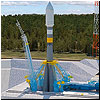
The rollout of the Soyuz rocket. Copyright: © 2001 Anatoly Zak

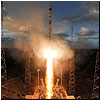
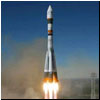
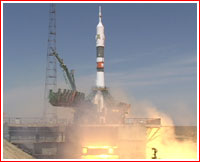
The Soyuz rocket blasts off from Launch Complex 5. Copyright: © 2001 Anatoly Zak

PICTURE GALLERY

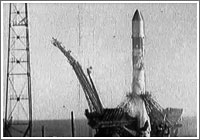
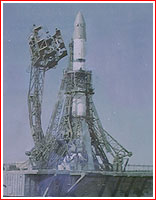
The launch vehicle with the Voskhod spacecraft on the launch pad in Area 1 in 1964. Credit: RKK Energia

Click to enlarge. Credit: 152

The 11A511 version of the Soyuz rocket with the original escape system. Credit: 152

sas

A Soyuz rocket with the second-generation emergency escape system and the Soyuz T spacecraft.

On a foggy morning in October 2000, the Soyuz booster was being prepared for the launch of the first resident crew of the International Space Station, more than 43 years after the original version of the rocket flew. Click to enlarge Copyright © 2001 Anatoly Zak

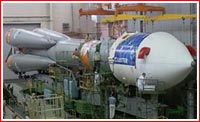
The Soyuz-Fregat version of the Soyuz launch vehicle is being prepared in Baikonur. Copyright © 2000 Anatoly Zak

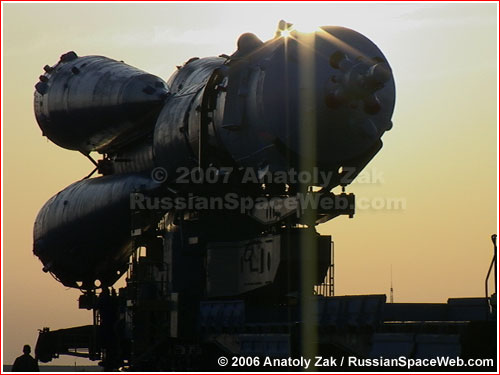
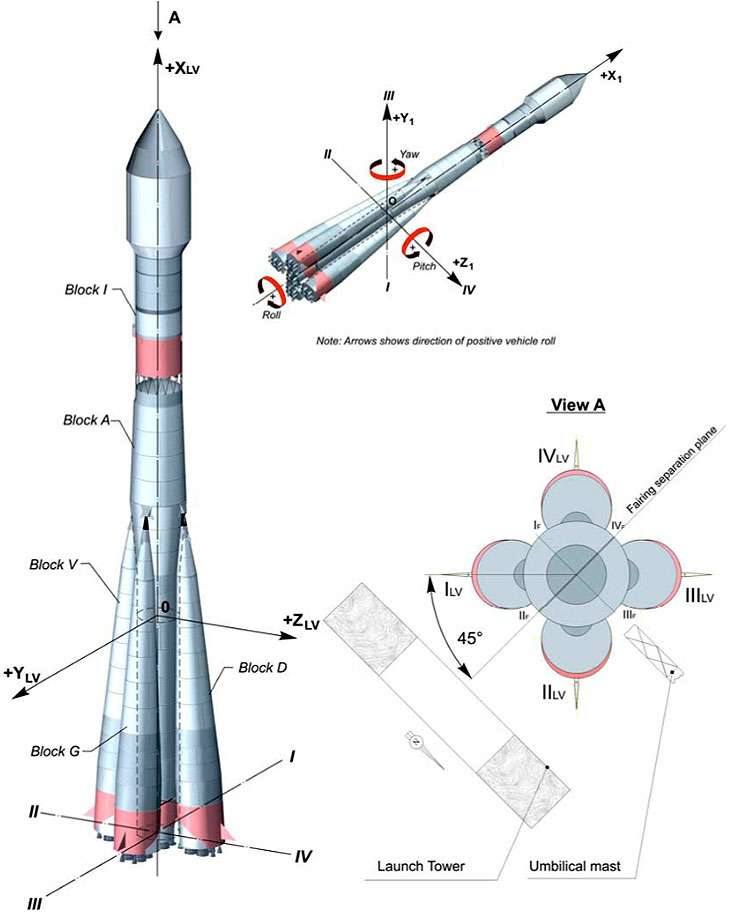
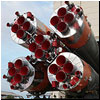
Four strap-on boosters and a central core stage of the R-7 rocket. Copyright © 2001 Anatoly Zak

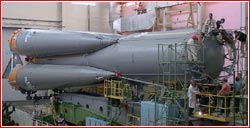
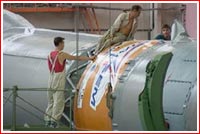
The assembly of the second and third stages of the Soyuz launcher. Copyright © 2001 Anatoly Zak

Fregat upper stages at NPO Lavochkin's testing and checkout station, KIS. Copyright © 2001 Anatoly Zak

soyuz

A third stage of the Soyuz rocket. Copyright © 2001 Anatoly Zak

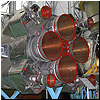
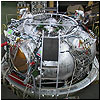
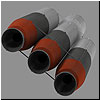
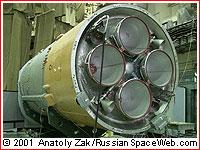
A close up view of the core-stage engine on the Soyuz rocket. Copyright © 2001 by Anatoly Zak

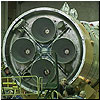
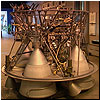
The RD-0109 engine, which powered the 3rd stage of the Vostok rocket. Copyright © 2002 Anatoly Zak

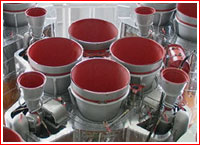
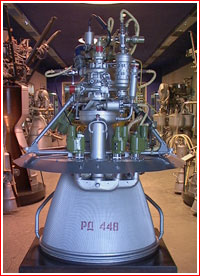
The RD-0110 engine, which powered the 3rd stage of the Soyuz rocket. Copyright © 2002 Anatoly Zak

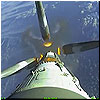
The separation of the 1st stage of the rocket (bright dots) during the launch of the Soyuz TMA-6 spacecraft was captured by tracking cameras at the launch site. Credit: NASA TV


Soyuz-Progress

The Progress M-60 blasts off from Site 1 in Baikonur on May 12, 2007. Credit: Roskosmos

globalstar

Soyuz FG launches Globalstar satellites on May 30, 2007. Credit: Roskosmos


Foton M3

Soyuz FG rocket launches the Foton M3 spacecraft on Sept. 14, 2007. Credit: ESA


Soyuz with Globalstar

The Soyuz-FG rocket is being installed on the launch pad at Site 31 in Baikonur on Oct. 18, 2007. Credit: Roskosmos