|
|
Space exploration in 2013
For missions in 2012 click here
Continuing its steady growth during the 2010s, the Russian space budget got further increase in the new year to 128.3 billion rubles ($4.2 billion), including 13 billion ($430.4 million) allocated for the construction of the Soyuz launch site in Vostochny, AmurInfo news agency reported.
According to the official federal budget approved by President Putin on Dec. 3, 2012, Roskosmos would receive 167,630 billion rubles ($5.5 - 5.174 billion) during the year, increasing its share in the federal spending by 0.11 percent from 1.14 percent in 2012, Igor Lisov, a leading expert in space budget reported. The Russian space budget would grow by 16.4 percent comparing to the previous year, for the first time bringing the Russian space program to the same funding level ($5.2 billion; €4,02 billion) as that of the European Space Agency, ESA. Russia would still spend only 29-33 percent from the amount of money that NASA would have available during the year ($17.8 billion), Lisov estimated.
Following a collegium meeting on March 1, Roskosmos announced that the Russian civilian orbital assets had been comprised of 75 spacecraft, including 29 navigation satellites, 26 communications satellites, two observation satellites, two weather-forecasting satellites, two scientific and five experimental spacecraft, as well as five ISS modules, two manned transport vehicles and two cargo ships. According to Roskosmos, the Russian spacecraft made up 10 percent out of a total 1,140 space vehicles functioning in orbit as of Jan. 1, 2013.
Russia's military finally jumped-started its state-of-the-art reconnaissance from space with the encore launch of its flagship Persona satellite on June 7. Three weeks later, speaking at a press-conference dedicated to the activities of TsSKB Progress, which built Persona, the head of the company Aleksandr Kirilin promised yet another military launch before the end of the year.
In the meantime, the Russian Ministry of Defense promised to conduct a total of 16 launches of various ICBMs during 2013. This number included eight orbital launches from Baikonur and Dombarovsky.
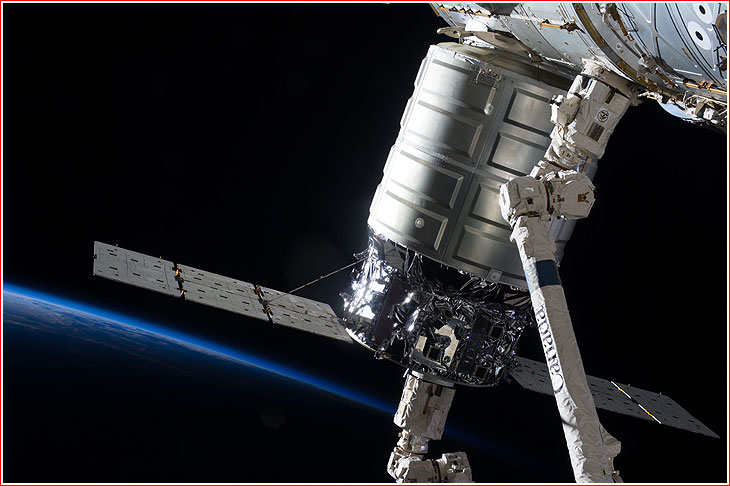
Astronauts onboard the International Space Station use a robotic arm to attach the first Cygnus cargo ship to the US segment of the station. Credit: NASA
A US-based company Orbital launched first Cygnus cargo ship to the International Space Station, ISS, giving the outpost another supply vehicle.
World's orbital launch attempts in 2013 (as of
May 6, 2024
):
| |
Country |
Launch date |
Time of launch |
Payload |
Payload type |
Launch vehicle |
Launch site |
Launch complex |
Launch pad |
Status |
| 1 |
|
Jan. 15 |
20:24:59 Moscow Time |
|
|
|
|
|
3
|
Success* |
| 2 |
Japan |
Jan. 27 |
04:40 GMT |
IGS- 4 (radar), IGS-5 (optical demo)
|
Military / reconnaissance |
H-2A F-22 |
Tanegashima |
Yoshinobu
|
1
|
Success |
| 3 |
South Korea |
Jan. 30 |
4 p.m. Korean Time |
|
Application |
|
Naro |
-
|
-
|
Success |
| 4 |
USA |
Jan. 30 |
8:48 p.m. EST |
TDRS-K |
Application / data relay |
Atlas-5 401 |
Cape Canaveral |
SLC-41
|
-
|
Success |
| 5 |
|
Jan. 31 |
22:56 Pacific Time |
Intelsat-27 |
Application / communications |
|
|
Odyssey
|
-
|
Failure |
| 6 |
|
Feb. 6 |
20:04:24 Moscow Time |
Globalstar-2 (FM19, FM20, FM21, FM22, FM23, FM24) |
Application / communications |
|
|
|
6
|
Success |
| 7 |
Europe |
Feb. 7 |
21:36 GMT |
Amazonas-3, Azerspace-1/Africasat-1a |
Application / communications |
Ariane-5 ECA |
|
|
-
|
Success |
| 8 |
|
Feb. 11 |
18:41:47 Moscow Time |
Progress M-18M |
Manned / cargo supply |
|
|
|
5
|
Success |
| 9 |
USA |
Feb. 11 |
18:02:00 GMT |
LDCM (Landsat-8) |
Application / remote sensing |
Atlas-5 401 |
Vandenberg |
SLC-3E
|
E
|
Success |
| 10 |
India |
Feb. 25 |
12:31 GMT |
SARAL, Sapphire , NEOSSat, BRITE, UniBRITE, AAUSAT3, STRaND-1 |
Application / experimental |
PSLV |
Sriharikota |
-
|
-
|
Success |
| 11 |
USA |
March 1 |
10:10 a.m. EST |
Dragon (No. 3) |
Manned / cargo supply |
Falcon-9 |
Cape Canaveral |
40
|
-
|
Success |
| 12 |
USA |
March 19 |
5:21 p.m. EDT |
SBIRS-GEO-2 |
Military / early warning |
Atlas-5 401 |
Cape Canaveral |
SLC-41
|
-
|
Success |
| 13 |
|
March 26 |
23:06:48 Moscow Time |
SatMex-8 |
Application / communications |
|
|
|
39
|
Success |
| 14 |
|
March 29 |
00:43:20 Moscow Time |
Soyuz TMA-08M |
Manned |
|
|
|
5
|
Success |
| 15 |
|
April 15 |
22:36 Moscow Time |
|
Application / communications |
|
|
|
39
|
Success |
| 16 |
|
April 19 |
14:00 Moscow Time |
|
|
|
|
|
6
|
Success |
| 17 |
USA |
April 21 |
5 p.m. EDT |
Cygnus mass simulator, DOVE-1, PhoneSat v1a, PhoneSat v1b, PhoneSat v1c |
Manned / cargo supply |
Antares-110 |
Wallops Island |
0A
|
A
|
Success |
| 18 |
|
April 24 |
14:16:12 Moscow Time |
|
Manned / cargo supply |
|
|
|
5
|
Success |
| 19 |
China |
April 26 |
04:13 GMT |
GF-1 Gaofen-1, NEE-01 Pegasus, Turksat-3USAT, CubeBug-1 'Capitán Beto' |
- |
Chang Zheng-2D |
Jiuquan |
-
|
-
|
Success |
| 20 |
|
April 26 |
09:23:41 Moscow Summer Time |
|
Application / navigation |
|
|
|
4
|
Success |
| 21 |
China |
May 1 |
16:06:04 GMT |
Zhongxing-11 (Chinasat-11), Supremesat-II |
Application / communications |
Chang Zheng-3B/E |
Xichang |
2
|
-
|
Success |
| 22 |
Europe |
May 6 |
11:06:31 p.m. local time |
Proba-V, VNREDSat-1A, ESTCube-1 |
Application / experimental |
|
|
|
-
|
Success |
| 23 |
|
May 14 |
20:01:59 Moscow Time |
Eutelsat-3D (W3D) |
Application / communications |
|
|
|
39
|
Success |
| 24 |
USA |
May 15 |
5:38 p.m. EDT |
GPS 2F-4 |
Application / navigation |
Atlas-5 401 |
Cape Canaveral |
41
|
-
|
Success |
| 25 |
USA |
May 24 |
8:27 p.m. EDT |
WGS-5 |
Application |
Delta-4-M+ |
Cape Canaveral |
37
|
B
|
Success |
| 26 |
|
May 29 |
00:31:24 Moscow Summer Time |
Soyuz TMA-09M |
Manned |
|
|
|
5
|
Success |
| 27 |
|
June 3 |
13:18:30 Moscow Summer Time |
SES-6 |
Application / communications |
|
|
|
39
|
Success |
| 28 |
Europe |
June 5 |
6:52:18 p.m. local time |
ATV-4 |
Manned / cargo supply |
Ariane-5ES |
|
|
-
|
Success |
| 29 |
|
June 7 |
22:37 Moscow Time |
Persona No. 2 (Kosmos-2486) |
|
|
|
|
-
|
Success |
| 30 |
China |
June 11 |
09:38:02 GMT |
Shenzhou-10 |
Manned |
Chang Zheng-2F |
Jiuquan |
921 |
43
|
Success |
| 31 |
|
June 25 |
21:28:48 Moscow Summer Time |
|
|
|
|
|
6
|
Success |
| 32 |
|
June 25 |
19:27:03 GMT |
|
|
|
|
|
-
|
Success |
| 33 |
|
June 27 |
20:53:00 Moscow Summer Time |
|
|
|
|
|
- |
Success |
| 34 |
USA |
June 27 |
7:27 p.m. PDT |
IRIS |
Science / astronomy |
Pegasus-XL |
Vandenberg AFB |
L-1011 |
- |
Success |
| 35 |
India |
July 1 |
18:11 GMT |
IRNSS-R1A |
Application |
PSLV |
Sriharikota |
-
|
-
|
Success |
| 36 |
|
|
06:38:22 Moscow Time |
GLONASS-M (No. 48), GLONASS-M (No. 49), GLONASS-M (No. 50) |
Application / Navigation |
|
|
|
24
|
Failure |
| 37 |
China |
July 15 |
09:27 GMT |
Shijian 11-05 |
Application |
Chang Zheng-2C |
Jiuquan |
43 |
-
|
Success |
| 38 |
China |
July 19 |
23:37 GMT |
Chuangxin-3, Shiyan Weixing-7, Shijian-15 |
Application |
Chang Zheng-4C |
Taiyuan |
9 |
-
|
Success |
| 39 |
USA |
July 19 |
13:00 GMT |
MUOS-2 |
Application |
Atlas-5 (551) |
Cape Canaveral |
41
|
1
|
Success |
| 40 |
Europe |
July 25 |
4:54 p.m. local |
Alphasat, INSAT-3D |
Application / communications / meteorology |
Ariane-5 ECA |
|
|
-
|
Success |
| 41 |
|
July 28 |
00:45:10 Moscow Time |
Progress M-20M |
Manned / cargo supply |
|
|
|
6
|
Success |
| 42 |
Japan |
Aug. 4 |
04:48 local time |
|
Manned / cargo supply |
H-2B |
Tanegashima |
Yoshinobu
|
1
|
Success |
| 43 |
USA |
Aug. 7 |
8:29 p.m. EDT |
|
Military / communications |
Delta-4 Medium+ (5,4) |
Cape Canaveral |
37B |
B
|
Success |
| 44 |
|
Aug. 22 |
18:38 Moscow Summer Time |
|
Application / remote sensing |
|
|
13 |
-
|
Success |
| 45 |
USA |
Aug. 28 |
11:03 PDT |
NROL-65 |
Military |
Delta-4 |
Vandenberg |
SLC-6
|
6
|
Success |
| 46 |
Europe |
Aug. 29 |
5:30 p.m. local time |
EUTELSAT 25B/Es’hail 1, GSAT-7 |
Application / communications |
Ariane-5 ECA |
|
|
-
|
Success |
| 47 |
|
Sept. 1 |
00:05 Moscow Time |
|
Application / communications |
|
|
|
1
|
Success |
| 48 |
China |
Sept. 1 |
03:16 Beijing Time |
Yaogan Weixing-17A, 17B, 17C |
Military |
Chang Zheng-4C |
Jiuquan |
- |
- |
Success |
| 49 |
USA |
Sept. 7 |
11:27 EDT |
LADEE |
Planetary / Lunar |
Minotaur-5 |
Wallops |
- |
- |
Success |
| 50 |
|
Sept. 12 |
03:23 Moscow Summer Time |
|
|
|
|
|
3 |
Success |
| 51 |
Japan |
Sept. 14 |
14:00 Japan Standard Time, JST |
SPRINT-A (Hisaki) |
Application / remote sensing |
Epsilon-1 |
Uchinoura |
- |
- |
Success |
| 52 |
USA |
Sept. 18 |
4:10 a.m. EDT |
AEHF-3 |
Military / communications |
Atlas-5 (531) |
Cape Canaveral |
41 |
- |
Success |
| 53 |
USA |
Sept. 18 |
10:58:02 a.m. EDT |
Cygnus Orb-D1 (COTS Demo) |
Manned / cargo supply |
Antares-110 |
Wallops Island |
LP-0A |
- |
Success |
| 54 |
China |
Sept. 23 |
11:07 a.m. Beijing time |
Fengyun-3C |
Application / remote sensing |
Chang Zheng-4C |
Taiyuan |
- |
- |
Success |
| 55 |
China |
Sept. 25 |
12:37 Beijing Time |
Kuaizhou-1 |
Application / remote-sensing |
Kuaizhou (KZ) |
Jiuquan |
- |
- |
Success |
| 56 |
|
Sept. 26 |
00:58:50 Moscow Time |
|
Manned |
|
|
1 |
|
Success |
| 57 |
USA |
Sept. 29 |
09:00 local time |
CASSIOPE, POPACS (3), CUSat-1 and 2, DANDE |
Science / Experimental |
Falcon-9 v1.1 |
Vandenberg AFB |
SLC-4E |
E |
Success |
| 58 |
|
Sept. 30 |
01:38:10 Moscow Time |
|
Application / communications |
|
|
|
39 |
Success |
| 59 |
China |
Oct. 25 |
03:50 GMT |
Shijian-16 (SJ-16) |
Experimental |
Chang Zheng-4B |
Jiuquan |
43 |
603 |
Success |
| 60 |
|
Oct. 25 |
22:08:54 Moscow Time |
|
Application / communications |
|
|
|
39 |
Success |
| 61 |
China |
Oct. 29 |
02:50 GMT |
Yaogan Weixing-18 |
Military |
Chang Zheng-2C |
Taiyuan |
9 |
- |
Success |
| 62 |
India |
Nov. 5 |
09:08 GMT |
MOM (Mangalyaan) |
Planetary / Mars |
PSLV |
Sriharikota |
- |
- |
Success |
| 63 |
|
Nov. 7 |
08:14:15 Moscow Time |
|
|
|
|
1 |
|
Success |
| 64 |
|
Nov. 12 |
03:46:00 Moscow Time |
|
|
|
|
|
24
|
Success |
| 65 |
USA |
Nov. 18 |
18:28:00 GMT |
MAVEN |
|
Atlas-5 (401) |
Cape Canaveral |
SLC-41 |
- |
Success |
| 66 |
USA |
Nov. 20 |
01:15:00 GMT |
STPSat 3, ORSES, ORS Tech 1, ORS Tech 2, Prometheus 1, Prometheus 2, Prometheus 3, Prometheus 4, SENSE 1, SENSE 2, Firefly, STARE B (Horus), NPS-SCAT, CSIP, Rampart, CAPE 2, KYSat 2, Lunar Orbiter&Lander CubeSat, SwampSat, Black Night 1, SPA-1 Trailblazer, TetherSat, DragonSat 1, COPPER, PhoneSat 2.0 |
- |
Minotaur-1 |
Wallops Island |
LP-OB |
- |
Success |
| 67 |
China |
Nov. 20 |
03:31:04 GMT |
Yaogan Weixing-19 |
Military |
Chang Zheng-4C |
Taiyuan |
9 |
- |
Success |
| 68 |
|
Nov. 21 |
11:10:11 Moscow Time |
DubaiSat-2, STSat-3, WNISAT-1, SkySat-1, UniSat-5, AprizeSat-7, AprizeSat-8, BRITE-PL (Lem), BPA-3, UWE-3, Delfi-n3Xt, Triton 1, Cinema-2, Cinema-3, Dove-4, FUNcube-1, I-Cube, GOMX-1, eSt@r 2, PUCP-SAT 1, Humsat-D, BeakerSat, Wren, Pocket-PUCP, QBScout 1, First-Move, CubeBug 2, NEE-02 Krysaor, HiNCube, ZACUBE-1, VELOX-P 2, $50SAT, OPTOS |
- |
|
|
370 |
13 |
Success |
| 69 |
|
Nov. 22 |
16:02:29 Moscow Time |
|
Science / geophysics |
|
|
|
33 |
Success |
| 70 |
China |
Nov. 25 |
02:12:04 GMT |
Shiyan Weixing-5 |
- |
Chang Zheng-2D |
Jiuquan |
43 |
603 |
Success |
| 71 |
|
Nov. 26 |
00:53:06 Moscow Time |
|
Manned / cargo supply |
Soyuz-U |
Baikonur |
|
6 |
Success |
| 72 |
China |
Dec. 2 |
01:30 Beijing Time |
Chang'e-3 |
Planetary / lunar |
Chang Zheng-3B |
Xichang |
- |
- |
Success |
| 73 |
USA |
Dec. 3 |
5:41 p.m. EST |
SES-8 |
Application / communications |
Falcon-9 |
Cape Canaveral |
SLC-40 |
- |
Success |
| 74 |
USA |
Dec. 5 |
11:14:30 p.m. PST |
NROL-39, Aerocube-5a, Aerocube-5b, ALICE, CUNYSAT-1, Firebird A, Firebird B, IPEX (CP8 ), M-Cubed 2 (COVE 2), SMDC-ONE 2.3, SMDC-ONE 2.4, SNAP, TacSat-6 |
Military / reconnaissance |
Atlas-5 (501) |
Vandenberg |
SLC-3 |
E |
Success |
| 75 |
|
Dec. 8 |
16:11:59 Moscow Time |
|
Application / communications |
|
|
|
39 |
Success |
| 76 |
China |
Dec. 9 |
03:26 GMT |
CBERS-3 |
Application / remote-sensing |
Chang Zheng-4B |
Taiyuan |
9 |
- |
Failure |
| 77 |
|
Dec. 19 |
06:12:19 local time |
|
|
|
|
|
- |
Success |
| 78 |
China |
Dec. 20 |
16:42 GMT |
Tupac Katari |
Applications / communications |
Chang Zheng-3B |
Xichang |
- |
- |
Success |
| 79 |
|
Dec. 25 |
04:31 Moscow Time |
Kosmos-2488, Kosmos-2489, Kosmos-2490 ( Rodnik), Kosmos-2491 |
|
|
|
|
3 |
Success |
| 80 |
|
Dec. 26 |
14:49:56 Moscow Time |
|
|
|
|
|
24
|
Success |
| 81 |
|
|
16:30 Moscow Time |
|
Application / experimental |
|
|
|
4 |
Success |
*A technical problem during the operation of the Briz-KM upper stage. Payload delivered successfully.
The 2013 space launch score card (as of
May 6, 2024
):
| - |
Country*** |
Launch vehicle |
Launch vehicle |
Launch vehicle |
Launch vehicle |
Launch vehicle |
Launch vehicle |
Launch vehicle |
Launch vehicle |
Total |
Failed |
| 1 |
|
|
|
|
|
|
|
|
|
35 |
2 |
| 2 |
USA |
Atlas-5: 8 |
Falcon-9: 2 |
Antares: 2 |
Delta-4: 3 |
Pegasus-XL: 1 |
Minotaur-5: 1 |
Falcon-9 v1.1: 1 |
Minotaur-1: 1 |
19 |
0 |
| 3 |
China |
Chang Zheng-2D: 2 |
Chang Zheng-3B/E: 3 |
Chang Zheng-2F: 1 |
Chang Zheng-2C: 2 |
Chang Zheng-4C: 4 |
Kuaizhou (KZ): 1 |
Chang Zheng-4B: 2 |
|
15 |
1 |
| 4 |
Europe |
Ariane-5 ECA/ES: 4 |
|
- |
- |
- |
- |
- |
- |
5 |
0 |
| 5 |
Japan |
H-2A: 1 |
H-2B: 1 |
Epsilon-1: 1 |
- |
- |
- |
- |
- |
3 |
0 |
| 6 |
India |
PSLV: 3 |
- |
- |
- |
- |
- |
- |
- |
3 |
0 |
| 7 |
South Korea |
KSLV: 1 |
- |
- |
- |
- |
- |
- |
- |
1 |
0 |
| - |
World***: |
- |
- |
- |
- |
- |
- |
- |
- |
81*** |
3 |
*A technical problem during the operation of the Briz-KM upper stage. Payload delivered successfully. **Failed after ~30 seconds in flight.
***Does not include a purported failed Iranian launch attempt
For missions in 2014 click here
This page is compiled by Anatoly Zak, with edits and contributions from George H. Chambers, Janez Mihovec and S. Günes
Last update:
May 6, 2024
All rights reserved |
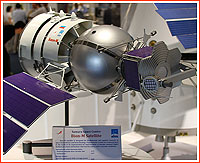
A scale model of the Bion-M research satellite launched on April 19. Copyright © 2010 Anatoly Zak
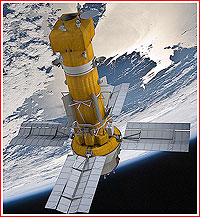
Second Persona satellite was launched on June 7. Copyright © 2012 Anatoly Zak
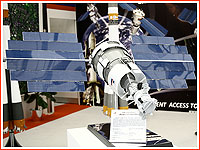
On June 25, Russia's flagship remote-sensing satellite was upgraded to a new version, known as Resurs-P (47KS). Copyright © 2008 Anatoly Zak
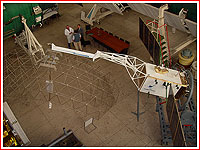
After two decades in development, Kondor satellite finally reached orbit on June 27. Copyright © 2002 Anatoly Zak
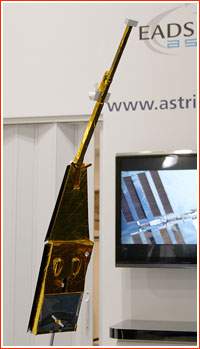
A trio of European SWARM satellites was scheduled for launch on a Rockot booster. Copyright © 2010 Anatoly Zak
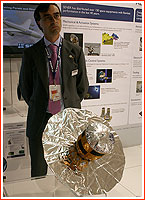
A Russian vehicle was to send the Gaia astronomy satellite 1.5 million kilometers away from Earth. Copyright © 2009 Anatoly Zak
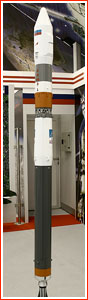
After many delays, Soyuz-2-1v rocket was finally introduced on Dec. 28, 2013. Click to enlarge. Copyright © 2008 Anatoly
Zak

The Aist satellite (shown in real size) was carried during the first mission of the Soyuz-2-1v rocket. Copyright © 2009 Anatoly Zak
|