Site news

Site map

Testimonials

About this site

About the author

Mailbox


ADVERTISE


SPONSOR


Do you participate in the spacecraft development project? Do you know a status of a particular mission? Please help us to keep this page up to date! Contact: Anatoly Zak


For missions in 2011 click here


Bookmark and Share

The world's orbital launch attempts in 2012 (as of January 31, 2012 ):

 
Country
Launch date
Time of launch
Payload
Type
Launch vehicle
Launch site
Launch complex
Launch pad
Status
1 China
Jan. 9
11:17 Beijing Time

Ziyuan-3, VesselSat-2

Remote-sensing
Long March-4B
Taiyuan
9
-
Success
2 China
Jan. 13
00:56 GMT

Fengyun-2F

Weather-forecasting
Long March-3A
Xichang
3
-
Success
3 USA
Jan. 19
7:38 p.m. EST

Wideband Global SATCOM 4

Military/communications
Delta-4
Cape Canaveral
37B
B
Success
4 Russia
Jan. 26
03:06:40 Moscow Time
Manned/cargo supply
5
Success


The 2012 space launch score card (as of January 31, 2012 ):

-
Country
Launch vehicle
Launch vehicle
Total
Failed
1
China:
Long March-4B: 1
Long March-3A: 1
2
0
2
US:
Delta-4: 1
-
1
0
3
Russia:
-
1
0
-
World:
-
-
4
0


PLANNED RUSSIAN SPACE MISSIONS IN 2012:

Delayed from Jan. 28: The Proton-M rocket with Briz M upper stage to launch the NSS-14 (SES-4) communications satellite for SES NEW SKIES, of Luxembourg from Baikonur's Pad 39 at Site 200. The satellite was designed to service the Atlantic Ocean region at the orbital position 338 degrees East over the Equator. As of March 2010. The launch date was announced on March 18, 2009, and the satellite originally called NSS-14 was expected to take off in late 2010. In January 2010, it was expected in the first and second quarter of 2011. The mission was then delayed to mid- or late November of 2011 and to Dec. 27-28, 2011. A day before the orignal launch attempt on Dec. 27, 2011, International Launch Services, ILS, announced that the mission had been postponed for approximately 25 days for technical reasons associated with the avionics system of the launch vehicle’s Briz M upper stage. The additional time was needed due to the required destacking and replacement of the affected avionics unit. The delay was called after Khrunichev engineers at the launch site received an anomalous telemetry reading on the Briz M upper stage during preflight testing. The vehicle and satellite remained in a safe configuration at the launch site, ILS said.

The second attempt to launch SES-4 was rescheduled for January 28, 2012. The rocket with the spacecraft was rolled out to the launch pad on Jan. 25, 2012, however two days later Roskosmos announced that the technical problems required to postpone the launch to a later date. The return of the rocket from the launch pad to the processing facility was scheduled to take place on January 27, Roskosmos said. According to unofficial sources, the mission was delayed until the middle of February.

According to multiple industry sources, a malfunction was discovered on a transit cable in the first stage of the Proton rocket. This cable is reportedly supply power to an autonomous pump unit on the second stage of the vehicle and is absolutely necessary for integrated tests of the vehicle on the launch pad. The nature of the problem, reportedly required to partially disassembly the vehicle and check several power lines in order to pinpoint the culprit.

Problems with the SES-4 mission also reportedly stalled preparations for the next Proton mission, carrying Sirius FM-6 satellite. As of january 27, that payload's processing team had to pack up and go home.

Third week of February: A Proton/Briz-M to launch a Sirius FM-6 radio-broadcasting satellite for Sirius Satellite Radio of the US. The contract was announced on Feb. 7, 2006. In February 2008, Sirius announced that a total of two satellites would be launched on Proton, one with an unspecified date. The Sirius FM-6 mission was originally expected in the fourth quarter of 2010, then was delayed to late December 2011 and to Jan. 24 and Jan. 29, 2012. By the end of 2011, the mission slipped to the third week of February 2012.

Second week of March: The Proton-M rocket to launch the 6,400-kilogram Intelsat 22 communications satellite based on Boeing 702MP platform. On May 5, 2010, ILS announced that Intelsat 22 would replace the Intelsat 21 spacecraft in this launch, as it was allowed by a multi-launch agreement with the customer. Intelsat 21, weighing 6,300 kg, as based on the Boeing 702B platform and was to be launched aboard a Proton utilizing a 65,000 km super-synchronous transfer orbit. It was to replace the Intelsat 9 satellite located at 302 degrees East and will provide C- and Ku-band capacity for broadband, video and voice applications with coverage over the Americas and Europe. The contract for the launch was announced on March 15, 2010, with a projected launch date in early 2012. By the end of 2011, the mission was expected during a second week of March 2012.

Fourth week of March: The Proton-K rocket with Block-DM upper stage to launch the last in the current series of Oko early-warning satellites, paving the way to the introduction of the new-generation EKS constellation. According to the August 2007 statement of the Commander Russia's Space Forces, KVR, Vladimir Popovkin, Russia was to start flight testing follow-on satellites for the nation's early-warning system in 2009. As of Oct. 10, 2011, the launch was expected in December 2011 or January 2012, but by November 2011, the mission slipped to Feb. 10, 2012. By the end of 2011, the launch was expected during the fourth week of March 2012, however it could be pushed behind another Proton mission to deliver YahSat 1B satellite.

Second week of April: The Proton-M/Briz-M rocket to launch one of two YahSat 1B communications satellites from Baikonur for Al Yah Satellite Communications Co. (Yahsat) of the United Arab Emirates. The agreement for the launch between International Launch Services (ILS), Thales Alenia Space of France and Yahsat was announced on Jan. 30, 2008. Previously, Arianespace had announced a contract to launch one of Yahsat satellites on the Ariane-5 rocket from Kourou. In August 2007, Thales Alenia Space and Astrium won a $1.7-billion contract to build two large Yahsat multipurpose satellites based on the Astrium Eurostar 3000 bus. Yahsat, which is owned by Mubadala Development Company, will provide commercial and government services across the Middle East, Africa, Europe and Southwest Asia. YahSat satellites will provide innovative solutions for internet connectivity via satellite, wide area networks and television transmission services, in particular for high-definition television (HDTV). The launch was originally expected in 2010-2011, however, by the end of 2011, the mission was set to go ahead during the second week of April 2012. At the same time, the mission could move up in the Proton launch manifest, if the launch of Oko early-warning satellite would continue to be postponed.

First quarter of 2012: The Proton rocket to launch Ekspress-AM5 communications satellite for Russian Satellite Communications Company, RSCC. The satellite built by Reshetnev ISS (former NPO PM) was scheduled to be placed at 140 degrees East longitude over the Equator and have a life span of 15 years. The agreement for the mission was reached on Oct. 27, 2009.

April: The Soyuz-1 rocket to fly its first mission from Plesetsk with Mikhailo Lomonosov and Aist satellites. (In August 2009, the mission was expected in the first quarter of 2011 and during 2010, it was promised by the end of 2011. By February 2011, the launch was no longer expected during that year, however in April, Russian military officials reitirated that the Soyuz-1 would still fly in 2011. By mid-May 2011, the launch was promised at the beginning of 2012, and during Paris Air and Space Show in Le Bourget in June 2011, the mission was promised in April 2012.)

April: A Zenit-3SLB/DM-SLB to launch Ukrainian Lybid satellite from Baikonur. (As of April 2010. When first announced in 2006, the mission was promised to take place in 2010 and was later expected in September 2011.)

April: The Soyuz-2-1b rocket to launch Resurs-P1 remote-sensing satellite for the Russian government, designed to replace Resurs DK spacecraft. (As of mid-2011. During 2010, the mission was pplanned for 2011. As of June 2008, the mission was expected in December 2010)

May 15: The Soyuz-FG rocket to launch Soyuz TMA-04M (No. 704) from Baikonur to the International Space Station, ISS.

Second quarter: Ariane 5 or a Soyuz-ST to launch VINASAT-2, for Vietnam Posts and Telecommunications Group (VNPT) from Kourou. A launch contract with the satellite developer -- Lockheed Martin Commercial Space Systems (LMCSS) -- was announced on June 14, 2010.

Second quarter: The Soyuz rocket to launch the Metop-B meteorological satellite for EUMETSAT. (As of September 2010.)

Second quarter: The Tsyklon-2 rocket to launch the last US-P satellite from Baikonur's Site 90. (As of January 2012)

Spring: The Volna rocket to launch German Space Agency's European eXPErimental Reentry Testbed, EXPERT, capsule on a suborbital trajectory from a submarine in the Pacific Ocean to the Kura impact range in the Kamchatka Peninsula. (As of mid-2011. During 2010, the mission was planned in the summer of 2011. In 2008, the mission was expected in October of 2010.)

June: An AzerSat communications satellite to be launched on Proton, Zenit or Ariane-5 rocket for the government of Azerbaijan. The spacecraft is to be built by Orbital Sciences Corp. (As of February 2010. The launch was originally planned for December 2011.)

Mid 2012: Arianespace to launch the OHO-1 communications satellite for a new satellite services operator OverHorizon onboard either Ariane-5 or Soyuz rocket from Kourou. OHO-1 was to be produced jointly by Orbital Sciences Corporation and Thales Alenia Space. Orbital was expected to supply the Star 2.3 satellite bus, which would have a liftoff mass of approximately 3,200 kilograms with its payload provided by Thales Alenia Space. The launch contract for the mission was signed on March 18, 2010.

Mid 2012: A Proton rocket to launch the Nimiq 6 communications satellite for Telesat of Canada. Nimiq 6 is an all Ku-band satellite with 32 high power transponders that will be located at 91 degrees West Longitude. The 5 metric ton spacecraft is now under construction at Space Systems/Loral and will utilize their flight proven 1300 platform over its planned mission life of 15 years. Nimiq 6 is fully leased to Bell TV for the satellite’s lifetime to serve the fast growing number of Bell TV subscribers across Canada. The contract for the mission was announced on March 17, 2010.

By mid-2012: An Ariane-5 or Soyuz-ST rocket to launch the 2,900-kilogram Arsat-1 communications satellite for Empresa Argentina de Soluciones Satelitales Sociedad Anonima from Kourou. Arianespace announced the launch contract on June 28, 2010. Arsat-1 will be equipped with twelve 36 MHz, eight 54 MHz and four 72 MHz transponders, all in Ku band. It will offer a wide range of telecommunications, data transmission, telephone and television services mainly across all of Argentina, Chile, Uruguay and Paraguay. The satellite is being built by the Argentine company INVAP, with Astrium and Thales Alenia Space as leading equipment suppliers.

August: A Soyuz-2-1b rocket to launch the Bion-M No. 1 spacecraft for a biological and medical mission lasting up to six months in a 400-500-kilometer orbit. (In 2008, the launch was promised in 2010, then in 2011.)

Second half of 2012: A Proton rocket to launch the Anik G1 communications satellite. The spacecraft was expected to carry 16 transponders operating in the extended Ku-band that will be used by Shaw Direct, a leading provider of direct-to-home satellite TV services in Canada. Anik G1 was also designed to provide expansion and follow-on capacity at 107.3 degrees West covering South America.  In addition, the satellite was to have capacity operating in the X-band frequencies over the Americas and the Pacific Ocean—the first satellite to cover the Pacific Ocean with substantial X-band coverage. To be built by Space Systems/Loral utilizing the flight-proven 1300 platform, Anik G1 was anticipated to have a service lifetime of 15 years. The agreement for the launch of the satellite on Proton was announced on June 1, 2010.

Third quarter: A Proton rocket to launch Satmex 8 communications satellite into a geostationary orbit for Satellites Mexicanos S.A. de C.V., Mexico. Built by Space Systems/Loral (SS/L), Satmex 8 is a 5600-kilogram satellite with 24 C and 40 Ku-band transponders to replace Satmex 5. Placed at the orbital location of 116.8 degrees West, Satmex 8 will provide Fixed Satellite Services to serve the continental United States to Argentina as well as the Caribbean, all of Latin America and the major cities of Brazil. Satmex 8's design is based on SS/L 1300 platform designed for a lifespan of 15 years. The agreement with the launch provider was announced on Dec. 29, 2010.

Third quarter: A Proton rocket to launch Ekspress-AM6 communications satellite for Russian Satellite Communications Company, RSCC. The satellite built by Reshetnev ISS (former NPO PM) was scheduled to be placed at 53 degrees East longitude over the Equator and have a life span of 15 years. The agreement for the mission was reached on Oct. 27, 2009.

September: Soyuz-2-1b rocket with the Fregat upper stage to launch the Meteor-M No. 2 remote-sensing satellite. (As of May 2011. As of March 2008, the launch was promised in the third quarter of 2011. At the end of 2009, the launch was still expected in 2011, however by February 2011, the mission slipped to 2012.)s

December 2012: The Soyuz ST rocket to launch the 2,300-kilogram Sentinel-1A Earth-watching satellite from the Soyuz launch complex in Kourou, French Guiana, into a 690-kilometer Sun-synchronous orbit for the European program of Global Monitoring for Environment and Security, GMES. Developed by Thales Alenia
Space Italy, the spacecraft was to be equipped with a C-band synthetic aperture radar, SAR. The contract for the launch of Sentinel-1A was announced on Dec. 16, 2010.

December 2012: The Soyuz ST rocket to conduct the first of five missions delivering pairs of Full Operational Capability, FOC, satellites for Europe's Galileo navigation constellation from Kourou. Arianespace announced signing of a contract for five missions on Jan. 26, 2010.

2012: A Rockot booster to launch a cluster of SWARM remote-sensing satellites. The contract for the mission with the European Space Agency was signed in April 2010.

2012: The Proton rocket to launch Ekspress-AT1 and Ekspress-AT2 communications satellites for Russian Satellite Communications Company, RSCC. As of 2010, one Russian and one Western operator was expected to use satellites' communication capacities.

2012: The Proton rocket to launch the Yamal-402 communications satellite for Gazprom from Baikonur into a geostationary orbit at 55 degrees East longitude over the Equator. The satellite was to be built by Thales Alenia Space with ISS Reshetnev (NPO PM) as a component supplier. The original agreement for the development of the satellite was reached in February 2009 and the launch was expected on the Ariane-5 rocket. However on January 21, 2010, a shareholders meeting of Gazprom Space Systems approved an increased involvement of the Russian industry into the project and switched the launch provider to ILS (Proton). On May 28, 2010, it was announced that the larger of the Yamal-400 series -- the 5,250-kilogram Yamal-402 would still be built by Thales Alenia Space and launched into a geostationary transfer orbit to provide fixed communications and transmission services over Russia, CIS, Europe, the Middle East and Africa (at the orbital location of 55 degrees East longitude). Both satellites were to have an anticipated service life of 15 years.

2012: An AzerSat-2 communications satellite to be launched from Baikonur for the government of Azerbaijan. The spacecraft is to be built by Orbital Sciences Corp.

2012: Soyuz-2-1b rocket with the Fregat upper stage to launch the Meteor-M No. 3 remote-sensing satellite. (As of the end of 2009.)

2012: A pair of Soyuz rockets to launch first of eight satellites for O3b Networks Limited for Medium Earth Orbit (MEO) telecommunications satellite constellation from Kourou. Built by Thales Alenia Space, the O3b Networks satellites would be deployed to an equatorial injection orbit of 7,825 kilometers above the Earth. The satellites, each weighing approximately 700 kg (1,540 lb.), are designed to provide high-speed, ultra-low-latency Internet Protocol (IP) connectivity between emerging and developed markets worldwide. O3b Networks' new global communications backbone promised fundamentally change the way IP, 3G Cellular and WiMAX networks interconnect. It was expected to reduce the costs of backhaul for Mobile Operators and Internet Service Providers, enabling them to provide more cost-effective services in underserved and emerging markets.The launch of all eight satellites was originally planned in 2010 onboard Sea Launch's Zenit-3SL rocket, for which Sea Launch was developing a new multi-spacecraft dispenser accommodating O3b Networks’ specific orbital insertion requirements. Upon successful sequential deployment, the satellites were expected to have an on-orbit maneuvering lifetime of ten years. Sea Launch announced the agreement on Sept. 23, 2008. In March 2010, O3n Networks announced that it cancelled the agreement with Sea Launch and switched to Soyuz.

Late 2012: Europe's Ariane-5 or Soyuz-2 rocket to launch Mexsat 3 communictions satellite from Kourou for Mexican government’s communications and transport administration, Secretara de Comunicaciones y Transportes. Mexsat 3 will be built by U.S. satellite manufacturer Orbital Sciences Corporation. With a mass at liftoff of nearly 3,050 kg, it will carry extended C-band and Ku-band transponders. The satellite will provide next generation communications services throughout the country from its 114.9 degree West longitude orbital slot. Mexsat 3 will have an in-orbit lifetime of over 15 years. Arianespace announced that it won a contract to launch Mexsat 3 on Sept. 29, 2011.

End of 2012: The Ariane-5 rocket to launch the ATV-4 cargo ship to the International Space Station from ELA-3 facility in Kourou, French Guiana. (As of August 2009)

2012 at the earliest: A Soyuz-2-1b to launch the Lotos 14F145 satellite for the Liana electronic intelligence network from Plesetsk. (As of end of 2009)

End of 2012: A Soyuz rocket to launch the Pleiades-2 Earth-observation satellite into heliosynchronous orbit from Kourou. (As of end of 2011. As of Jan. 4, 2005, the launch was expected in 2010 and by 2010, slipped to mid-2011.)

During 2012: The Soyuz rocket to launch the second Persona reconaissance satellite.


Delayed from previous years:

2012 (?): The Strela booster to launch the Kondor remote-sensing satellite for the Russian government. (As of May 2007, the launch was promised in the beginning of 2008. In September 2011, the launch was promised around January 2012.).

2009-2011: Up to five launches of the Proton rocket for ICO Global Communications (Holdings) Limited (ICO) within Dual Launch Study Agreement with ILS International Launch Services (ILS). The contract also called for ILS to design and propose a dual launch capability for ICO's Medium Earth Orbit (MEO) satellites. The agreement announced on May 24, 2007.

2009: Russia to launch Express-MD2 comsat from Baikonur.

Delayed from second half of 2009: A Proton M/Block DM-3 to launch a pair of Yamal-300 satellites from Baikonur.

December 2010: The Soyuz rocket to fly its first mission from from a brand-new launch complex in Kourou with the HYLAS telecommunications satellite for Avanti Communications Group plc. The payload has been built by the industrial consortium grouping EADS Astrium and ISRO (Indian Space Research Organization) using an ISRO I-2K platform. Positioned at 33.5 degrees West, this powerful Ka band satellite will be Europe's first superfast broadband satellite, serving customers all over Europe. The satellite will weigh about 2,750 kg at launch, and has a design life exceeding 15 years. The mission was announced on July 22, 2009, and was originally expected to fly in the first semester of 2010 either on Soyuz or Ariane-5 rocket. Before the end of 2009, the mission was moved to the top of the Soyuz launch schedule from Kourou and it was originally expected in July 2010, however had to be postponed due to delays in the completion of the Soyuz launch complex in Kourou to September as the earliest and then to the last quarter of 2010. By the end of spring 2010, the launch was expected in December 2010, the earliest.

2010: A Proton/Briz-M to launch a S2M dedicated mobile television satellite for the Middle East and Africa region from Baikonur. The contract for the mission was announced on Feb. 26, 2008.

2010: A Zenit-3SLB with Block DM-SLB to launch AMC-5R satellite from Baikonur. (The mission was originally scheduled to carry the AMC-1R satellite, before it was switched to the Ariane-5 rocket. Delayed from the second half 2009)

2011: Russia to launch Arkon-2 No. 1 radar remote-sensing satellite. (As of 2008, 299)

End of 2011: A Proton-M rocket to launch Intelsat 23 satellite. The spacecraft, weighing 2,730 kg, will be built on the flight proven Orbital Star 2.4E platform with an ILS Proton providing a direct injection into geostationary orbit. Intelsat 23 will provide communications services for the Americas, Europe and Africa with C- and Ku-band coverage at 307 degrees East. (As of February 2010.)

Delayed from early 2011: A Proton M with Briz M upper stage to launch the EuropaSat communications satellite for Inmarsat. Thales Alenia Space of France is developing satellite, using its Spacebus 4000C3 platform. The spacecraft working in S-band mode will provide mobile broadcast and two-way telecommunications services throughout Europe. The spacecraft will have a mass of about 5,700 kilograms. (The contract for the mission was announced on August 22, 2008.)

Delayed from December 2010: A Proton to launch SkyTerra 2 comsat from Baikonur. The spacecraft was built by Boeing for SkyTerra LLC.

Delayed from fourth quarter 2011 (as of March 2010): A Proton rocket to launch Astra 4B satellite. The launch date was announced on March 18, 2009. (The satellite was called Sirius 5 until April 2010.)

December: Soyuz-2-1b rocket with the Fregat upper stage to launch the Luch-5B data relay satellite. (As of March 2009)

Mid-2011: A Proton to launch the Telkom 3 and Yamal 300K communications satellites from Baikonur.

Bookmark and Share

Delayed from 2011

Delayed from first quarter 2011: Ariane-5 or Soyuz to launch the Intelsat New Dawn satellite from Kourou into a geostationary orbit for New Dawn Satellite Company Ltd. ("New Dawn"), a joint venture between Intelsat and a South African investor group led by Convergence Partners. The contract for the mission was announced on April 14, 2009 with the launch planned for the end of 2010. By June 2010, the mission slipped to the first quarter of 2011. It was an addition to the agreement signed by Intelsat and Arianespace in December 2008. New Dawn will provide critical communications infrastructure to Africa supporting wireless backhaul, broadband, direct-to-home and video applications. The satellite will weigh about 3,000 kg at launch, and has a design life exceeding 15 years. Built by Orbital Sciences Corporation, Intelsat New Dawn will be fitted with 28 C-band and 24 Ku-band 36 MHz transponder units. It will be positioned at 33 degrees East and will deliver new capacity to Africa for voice, wireless backhaul, Internet and media applications.

On Jan. 4, 2005, the Pleiades launch was announced to be targeted for 2008. Arianespace announced the agreement with Astrium for the launch of ELISA on Sept. 11, 2007. Around that time, the mission was expected to take place at the end of 2009 and in April 2010. It was also expected to be the first launch of the Soyuz rocket from Kourou. During 2010, the delays in construction of the Soyuz launch pad in Kourou delayed the mission from October of that year.

As of October 13, 2011, the delivery of the Block I upper stage for the mission was scheduled for Dec. 6. The stage was recalled for additional checks in the wake of the Progress M-12M launch failure.

December: A Rockot booster to deliver a pair of Gonets-M satellites for the Gonets-D1M network and a pair of classified payloads from Plesetsk. (As of January 2011, the launch was expected at the end of March 2011).


Delayed from 2009

Delayed from fourth quarter of 2009: Rockot to launch KANOPUS-V remote-sensing satellite with England-based SSTL as a supplier of avionics platform along with the Belka-2 satellite, both built by VNIIEM, (As of July 2007. As of March 28, 2007, the launch was expected in 2008)

Delayed from April: Russia to launch a remote-sensing spacecraft for Belarus. (As of September 2009. Originally, the mission was expected in the fourth quarter of 2009).

2009: Russia to launch the TNS-2 nano-satellite developed by RNII KP equipped with magnetic attitude-control system and research payloads.

2009: A Ukrainian Tsyklon-4 rocket to fly its first mission from the equatorial site in Alcantara, Brazil, according to a Sept. 19, 2007, statement by the head of the Ukrainian space agency Yu. Alekseev. In November 2006, the Tsyklon-4 rocket was promised to fly its first mission from Alcantara in 2008.


For missions in 2013 click here


This page is compiled by Anatoly Zak and S. Günes

Last update: January 31, 2012

All rights reserved

MEDIA ARCHIVE

Galileo

On Jan. 26, 2010, Arianespace announced a contract for five Soyuz missions to deliver operational satellites for Europe's Galileo navigation network beginning in 2012. Click to enlarge. Copyright © 2005 Anatoly Zak


Meteor-M No. 3

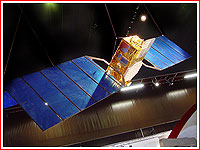
The Meteor-M No. 3 spacecraft was expected to feature a drastically different design from its predecessors in a series. Click to enlarge. Credit: VNIIEM


Soyuz-1

In 2009, the Soyuz-1 rocket was promised to make its maiden voyage at the beginning of 2011. Click to enlarge. Copyright © 2008 Anatoly Zak


Aist

The Aist satellite (shown in real size) was expected to be Soyuz-1's payload during the first test launch. Copyright © 2009 Anatoly Zak


Kondor

A long-delayed Kondor remote-sensing satellite. Click to enlarge. Copyright © 2002 Anatoly Zak


EXPERT

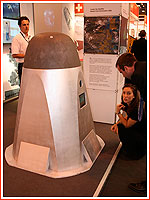
A Russian submarine-launched rocket was previously expected to lift an EXPERT reentry demonstrator for the European Space Agency in October 2010. However during 2010, the mission was delayed to the summer of 2011 and by mid-2011 slipped to spring 2012. Click to enlarge. Copyright © 2009 Anatoly Zak


Resurs-P

Russia's flagship remote-sensing satellite was expected to be upgraded to a new version, known as Resurs-P with the first launch in the second half of 2011 (as of mid-2010). Click to enlarge. Copyright © 2008 Anatoly Zak


Kanopus

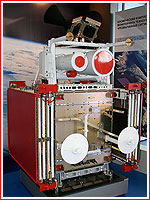
Kanopus-V was designed for remote-sensing of the Earth. Click to enlarge. Copyright © 2009 Anatoly Zak


Yubileiny

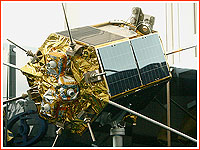
The Yubileiny-2 experimental satellite was designed for remote-sensing of the Earth among its goals. Click to enlarge. Copyright © 2009 Anatoly Zak