|
 
|
Space developments in 2015
The Russian space industry entered 2015 in a midst of a deepening economic recession, forcing the Kremlin to make a 10-percent cut in the nation's space budget. The government also fired the third head of Roskosmos in four years and launched another restructuring of the agency.
At the end of January, the newly appointed chief of the newly created Roskosmos State Corporation Igor Komarov said that despite worsening economic situation, an effort would be made to preserve all key projects and limit the effect from funding cuts only to schedules. According to Russian military officials, Russia operated more than 120 spacecraft in orbit as of 2015. The nation's key spacecraft manufacturer, ISS Reshetnev, reported at the end of the year, that eight of its satellite had been launched during the year, completing three orbital constellations. The company also said that 12 of its satellites had been awaiting the launch and 30 satellites had been in various stages of construction. The company also struck deals for the development of 16 new spacecraft.
Previous year: 2014
EY ACHIEVEMENTS OF 2015 (listed chronologically):
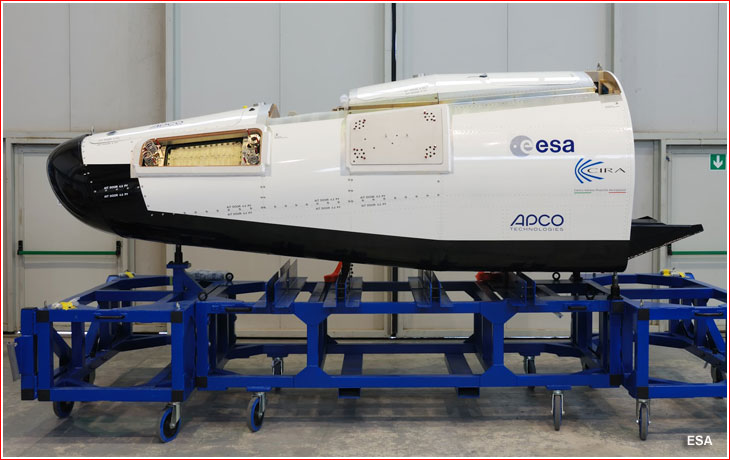
On February 11, the European Space Agency, ESA, successfully launched on a suborbital trajectory and recovered an experimental wingless glider, IXV. It became the first true "lifting body" vehicle, which reached a near-orbital speed and then returned back to Earth without any help from wings.
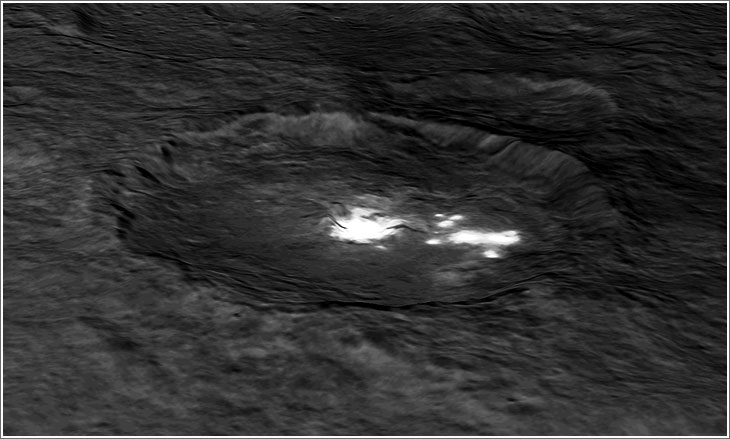
On March 6, NASA's Dawn probe entered orbit around Ceres. The spacecraft beamed back first detailed views of the dwarf planet, including close-up photos of mysterious bright features. Scientists were split on the nature of the white material, suggesting that it could be a salty substance or ammonia-rich clays.
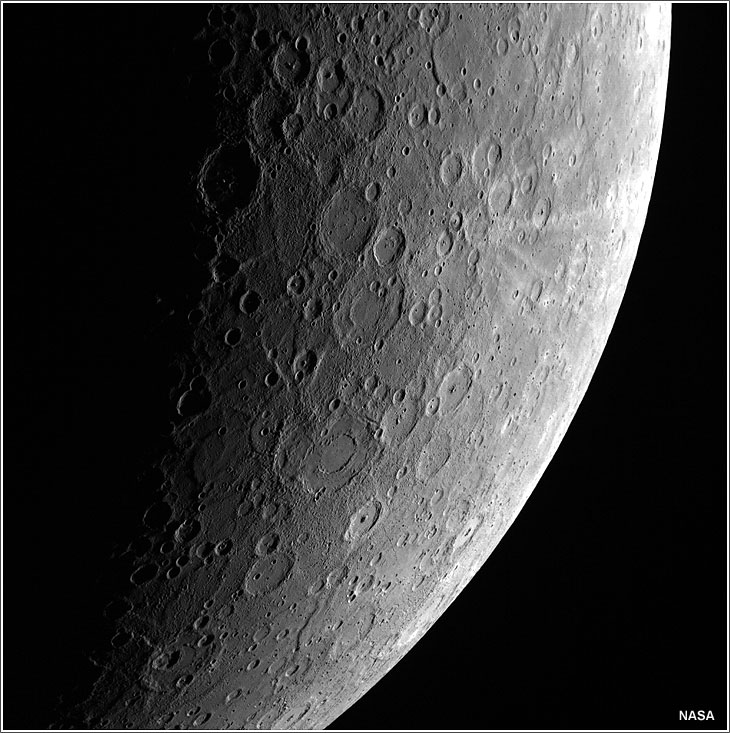
On April 30, NASA's Messenger spacecraft ended its 11-year spectacular mission with a controlled crash into a mountain side on Mercury near 54.4 degrees latitude, 210.1 degrees longitude, becoming the first artificial object to touch the planet.
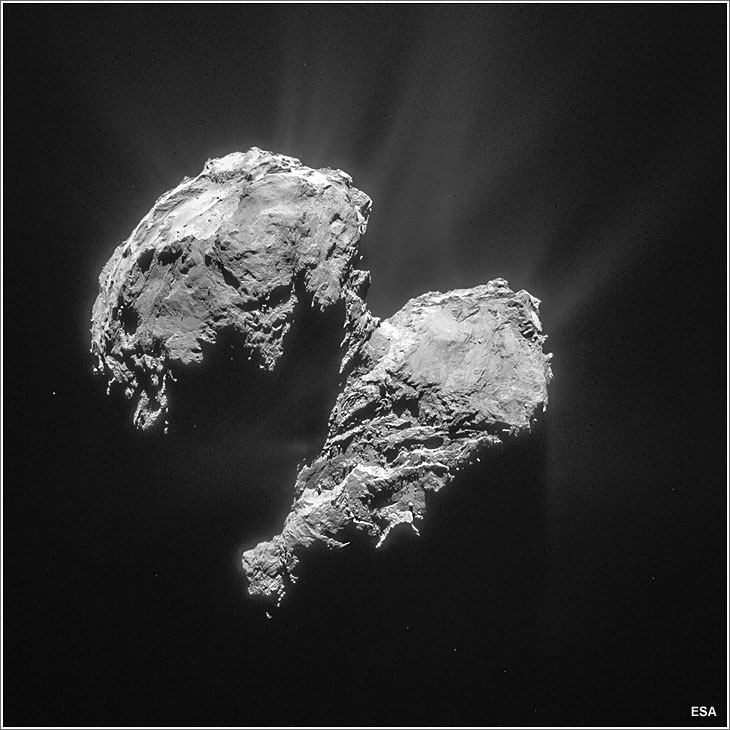
On June 13, 22:28 CEST, ESA's European Space Operations Centre in Darmstadt, Germany, received signals from the Philae lander after months of silence on the surface of comet of 67P/Churyumov-Gerasimenko. Philae was dispatched to the comet's surface from the Rosetta "mother probe," which had entered orbit around 67P in 2014. According to original plans, the Rosetta was to end its mission in December as the comet
had flown beyond the orbit of Jupiter.
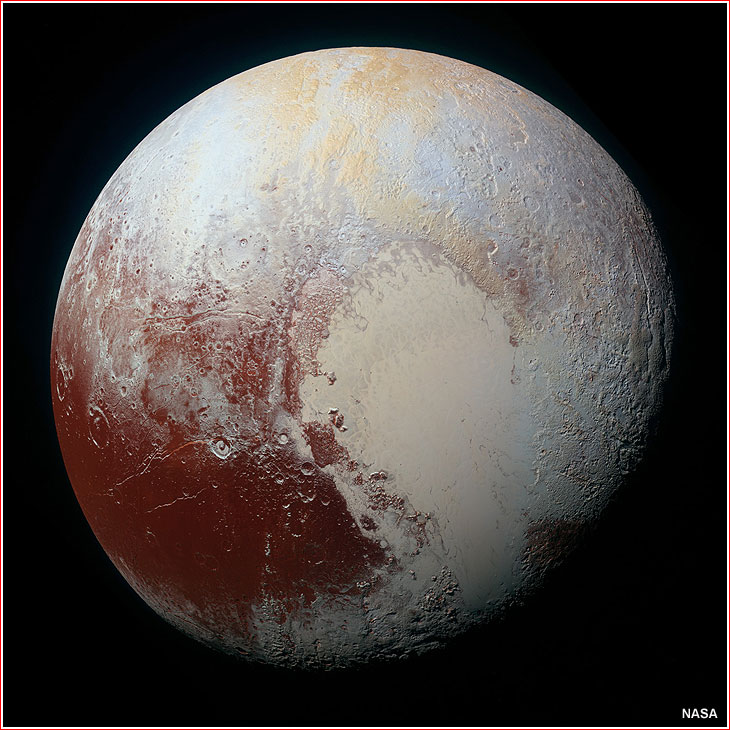
On July 14, NASA's New Horizons spacecraft flew by Pluto and its moons, providing first clear images of the remove world and delivering a treasure trove of scientific data to the delight of scientists and general public. In the fall, the New Horizons make maneuvers aiming to reach 2014 MU69, a small Kuiper Belt object, on Jan. 1, 2019.
On December 9, Japan's Akatsuki (Planet-C) spacecraft succeeded entering orbit of Venus following a failed attempt in 2010.
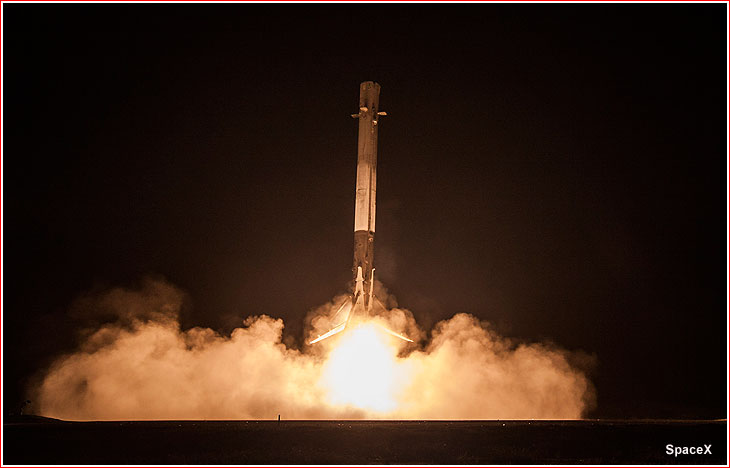
On December 21, SpaceX company finally succeeded with a rocket-powered landing of a first stage booster, which lifted the Falcon-9 rocket from Cape Canaveral. It was the first use of this landing mode in the course of an actual orbital launch attempt, however the jury is still out on the economics of reusable launch systems.
The world's orbital launch attempts in 2015 (as of
May 6, 2024
):
| |
Country |
Launch date |
Time of launch |
Payload |
Payload type |
Launch vehicle |
Launch site |
Launch complex |
Launch pad |
Status |
| 1 |
USA |
Jan. 10 |
09:47 GMT |
|
Manned / cargo supply |
Falcon-9 v1.1 |
Cape Canaveral |
SLC-40
|
40
|
Success |
| 2 |
USA |
Jan. 21 |
01:04:00 GMT |
MUOS-3 |
Military / communications |
Atlas-5 ( 551) |
Cape Canaveral |
SLC-41 |
41 |
Success |
| 3 |
USA |
Jan. 31 |
12:22:00 p.m. local time |
SMAP, GRIFEX-3U, ELaNa-X, ExoCube, FIREBIRD-2A, FIREBIRD-2B |
Application / remote-sensing |
Delta-2 (7320-10C) |
Vandenberg |
SLC-2W |
West |
Success |
| 4 |
Japan |
Feb. 1 |
01:21 GMT |
IGS Radar-Spare |
Military / observation |
H-2A No. 202 |
Tanegashima |
- |
- |
Success |
| 5 |
|
Feb. 1 |
15:31:00 |
|
Application / communications |
|
|
|
39 |
Success |
| 6 |
Iran |
Feb. 2 |
11:52 GMT |
Fajr-4 |
Military / observation |
Safir-1B |
Semnan |
- |
- |
Success |
| 7 |
Europe |
Feb. 11 |
10:40 local time |
IXV |
Experimental / space plane |
|
|
|
- |
Success |
| 8 |
USA |
Feb. 11 |
23:03:32 GMT |
DSCOVR (Triana/"Goresat") |
|
Falcon-9 v1.1 |
Cape Canaveral |
SLC-40 |
- |
Success |
| 9 |
|
Feb. 17 |
14:00:17 Moscow Time |
|
|
|
|
|
5 |
Success |
| 10 |
|
Feb. 27 |
14:01:35 |
|
|
|
|
|
4 |
Success |
| 11 |
USA |
March 1 |
10:50 EST |
ABS-3A, Eutelsat-115 West B |
Application / communications |
Falcon-9 v1.1 |
Cape Canaveral |
SLC-40 |
- |
Success |
| 12 |
USA |
March 12 |
10:44 p.m. EDT |
MMS-1, MMS-2, MMS-3, MMS-4 |
Science / magnetosphere |
Atlas-5 421 |
Cape Canaveral |
SLC-41 |
41 |
Success |
| 13 |
|
March 19 |
01:05:00 Moscow Time |
|
|
|
|
|
39 |
Success |
| 14 |
USA |
March 25 |
2:36 p.m. EDT |
GPS 2F-9 |
Application / navigation |
Delta-4-M (4,2) |
Cape Canaveral |
SLC-37B |
B |
Success |
| 15 |
|
March 26 |
01:08:46 Moscow Time |
|
Application / remote-sensing |
|
|
370/13 |
- |
Success |
| 16 |
Japan |
March 26 |
01:21 UTC |
IGS Optical-5 |
Military / reconnaissance |
H-2A (202) F28 |
Tanegashima |
- |
- |
Success |
| 17 |
|
March 27 |
22:42:57 Moscow Time |
|
|
|
|
|
5 |
Success |
| 18 |
|
March 27 |
6:46:18 p.m. Guiana Time |
|
Application / navigation |
|
|
|
- |
Success |
| 19 |
India |
March 28 |
17:19 IST |
IRNSS-1D |
Application / navigation |
PSLV-C27 XL |
Srikharikota |
SLP |
2 |
Success |
| 20 |
China |
March 30 |
21:52 Beijing Time |
Beidou-3-I1 |
Application / navigation |
Chang Zheng-3C No. Y11/YZ-1 |
Xichang |
LC2 |
2 |
Success |
| 21 |
|
March 31 |
16:47:56 Moscow Time |
|
|
|
|
|
3 |
Success |
| 22 |
US |
April 14 |
4:10:41 p.m. EDT |
Dragon SpX-6 (CRS-6) |
Manned / cargo supply |
Falcon-9 |
Cape Canaveral |
40 |
- |
Success |
| 23 |
Europe |
April 26 |
22:00 Guiana time |
Ariane-5 ECA |
Application / communications |
Ariane-5 |
|
|
3 |
Success |
| 24 |
US |
April 27 |
7:03 p.m. EDT |
TürkmenÄlem-52E (MonacoSat) |
Application / communications |
Falcon-9 v1.1 |
Cape Canaveral |
40 |
- |
Success |
| 25 |
|
April 28 |
10:09:50 Moscow Time |
|
|
|
|
|
6 |
Failure |
| 26 |
Russia |
May 16 |
08:47:39 Moscow Time |
MexSat-1 |
Application / communications |
Proton-M/Briz-M |
|
|
39 |
Failure |
| 27 |
US |
May 20 |
15:05:05 GMT |
X-37B OTV-4, ULTRASat: LightSail-A , GEARRSAT-2, OptiCube 1, OptiCube-2, OptiCube-3, USS Langley, AeroCube-8A, AeroCube-8B, BRICSat-P, PSat A |
Military / experimental |
Atlas-5 501 (AV-054) |
Cape Canaveral |
SLC-41 |
41 |
Success |
| 28 |
Europe |
May 27 |
06:16 p.m. Guiana time |
DirecTV-15, SKYM-1 |
Application / communications |
Ariane-5 |
|
|
3 |
Success |
| 29 |
|
June 5 |
18:23:54 Moscow Time |
|
|
|
|
|
4 |
Success |
| 30 |
Europe |
June 22 |
10:51:58 p.m. local time |
Sentinel-2A |
Application / remote-sensing |
|
|
|
1 |
Success |
| 31 |
|
June 23 |
19:44:00 Moscow Time |
|
|
|
|
|
4 |
Success |
| 32 |
China |
June 26 |
06:22:04 GMT |
Gaofen-8 |
Military / reconnaissance |
Chang Zheng-4B
|
Taiyuan |
- |
- |
Success |
| 33 |
US |
June 28 |
10:21 EDT |
Dragon SpX-7 |
Manned / cargo supply |
Falcon-9 |
Cape Canaveral |
40 |
- |
Failure |
| 34 |
|
July 3 |
07:55:48 Moscow Time |
|
Manned / cargo supply |
|
|
|
5 |
Success |
| 35 |
India |
July 10 |
16:28 UTC |
DMC-3 (1), DMC-3 (2), DMC-3 (3), DeorbitSail-1, CBNT-1 |
Application / remote sensing / experimental |
PSLV (XL) C28 |
Srikharikota |
FLP |
2 |
Success |
| 36 |
US |
July 15 |
15:36 GMT |
GPS IIF-10 (SV-11) |
Application / navigation |
Atlas-5 401 (AV-055) |
Cape Canaveral |
SLC-41 |
- |
Success |
| 37 |
Europe |
July 15 |
21:42 GMT |
Star One C4, MSG-4/Meteosat-11 |
Application / communications / remote sensing |
Ariane-5 ECA |
|
|
3 |
Success |
| 38 |
|
July 23 |
00:02:44 Moscow Time |
|
|
|
|
|
5 |
Success |
| 39 |
US |
July 23 |
8:07 p.m. EDT |
WGS-7 |
Military / communications |
Delta-4 Medium+(5,4) |
Cape Canaveral |
SLC-37B |
B |
Success |
| 40 |
China |
July 25 |
8:29 p.m. Beijing Time |
BeiDou-3 M1-S (18), BeiDou-3 M2-S (19) |
Application / navigation |
Long March-3B/Yuanzheng-1 |
Xichang |
- |
- |
Success |
| 41 |
Japan |
Aug. 19 |
20:50 Japan Standard Time |
HTV-5 (Kounotori-5) |
Manned / cargo supply |
H-2B (F5) |
Tanegashima |
- |
- |
Success |
| 42 |
Europe |
Aug. 20 |
5:34 pm French Guiana time |
Eutelsat-8 West B, Intelsat-34 |
Application / communications |
Ariane-5 ECA |
|
|
3 |
Success |
| 43 |
China |
Aug. 27 |
02:31 UTC |
Yaogan Weixing-27 |
Military / reconnaissance |
Chang Zheng-4C |
Taiyuan |
9 |
- |
Success |
| 44 |
India |
Aug. 27 |
16:52 India Standard Time |
GSAT-6 (Insat-4E) |
Military / communications |
GSLV-D6 Mk-2 |
Srikharikota |
- |
- |
Success |
| 45 |
|
Aug. 28 |
14:44:00 Moscow Time |
|
Application / communications |
|
|
|
39 |
Success |
| 46 |
|
Sept. 2 |
07:37:43 Moscow Time |
|
|
|
|
|
5 |
Success |
| 47 |
US |
Sept. 2 |
6:18 a.m. EDT |
MUOS-4 |
Military / communications |
Atlas-5 551 (AV-056) |
Cape Canaveral |
SLC-41 |
- |
Success |
| 48 |
|
Sept. 10 |
11:08:10 p.m. French Guiana time |
|
|
|
|
|
- |
Success |
| 49 |
China |
Sept. 12 |
23:42 Beijing Time |
Tongxin Jishu Shiyan Weixing-1 |
Application / communications |
Chang Zheng-3B |
Xichang |
- |
- |
Success |
| 50 |
China |
Sept. 14 |
12:42 Beijing Time |
Gaofen-9 |
Application / remote sensing |
Chang Zheng-2D |
Jiuquan |
- |
- |
Success |
| 51 |
|
Sept. 14 |
22:00:00 Moscow Time |
|
|
|
|
|
24 |
Success |
| 52 |
China |
Sept. 20 |
7:01 Beijing Time |
ZDPS-2A, ZDPS-2B, Kongjian-1A, Kongjina-1B, Kongjian-1C, Tiantuo-3, NUDT-A, NUDT-B, NUDT-C, NUDT-D, Xiwang-2A, Xiwang-2B, Xiwang-2C, Xiwang-2D, Xiwang-2E, Xiwang-2F, DCBB, LilacSat-2, NUDT-PhoneSat, Xinjishu Yanzheng-2 |
Experimental |
Chang Zheng-6 |
Taiyuan |
16 |
- |
Success |
| 53 |
|
Sept. 24 |
00:59:39 Moscow Time |
Kosmos-2507, Kosmos-2508, Kosmos-2509 ( Rodnik) |
Military / communications |
|
|
|
3 |
Success |
| 54 |
China |
Sept. 25 |
09:41 Beijing Time |
Pujian-1, Tianwang-1, NJUST-2, NJFA-1 |
Application / communications |
Chang Zheng-11 |
Jiuquan |
- |
- |
Success |
| 55 |
India |
Sept. 28 |
10:00 India Standard Time |
Astrosat, Lapan-A2, Lemur-A, Lemur-B, Lemur-C, Lemur-D, NLS-14 (ev9) |
Science / astronomy |
PSLV-C30 |
Srikharikota |
- |
- |
Success |
| 56 |
China |
Sept. 30 |
07:30 Beijing Time |
Beidou-3 I2S |
Application / navigation |
Chang Zheng-3B |
Xichang |
LC3 |
- |
Success |
| 57 |
Europe |
Sept. 30 |
5:30 p.m. Kourou Time |
Sky Muster, Arsat-2 |
Application / communications |
Ariane-5 |
|
|
- |
Success |
| 58 |
|
Oct. 1 |
19:49:41 Moscow Time |
|
|
|
|
|
5 |
Success |
| 59 |
US |
Oct. 2 |
6:28 a.m. EDT |
Morelos-3 (MexSat-2) |
Application / communications |
Atlas-5 421 (AV-059) |
Cape Canaveral |
SLC-41 |
41 |
Success |
| 60 |
China |
Oct. 7 |
12:13 Beijing Time |
Jilin-1,
Lingqiao-A, Lingqiao-B, LQSat |
Application / remote sensing |
Chang Zheng-2D |
Jiuquan |
403 |
603 |
Success |
| 61 |
US |
Oct. 8 |
|
NROL-55 (NOSS 3-7 A, NOSS-3-7 B), 13 Cubesats |
Military / naval reconnaissance |
Atlas-5 (AV-058) |
Vandenberg AFB |
SLC-3E |
E |
Success |
| 62 |
Russia |
Oct. 16 |
23:40:11 Moscow Time |
Turksat-4B |
Application / communications |
Proton-M/Briz-M |
Baikonur |
|
39 |
Success |
| 63 |
China |
Oct. 17 |
00:16 Local Time |
Apstar-9 |
Application / communications |
Long March-3B/G2 |
Xichang |
- |
- |
Success |
| 64 |
China |
Oct. 26 |
15:10 Beijing Time |
Tianhui 1-03 |
Application / remote-sensing |
Chang Zheng-2G |
Jiuquan |
- |
- |
Success |
| 65 |
US |
Oct. 31 |
12:13 p.m. EDT |
GPS 2F-11 |
Application / navigation |
Atlas-5 401 (AV-060) |
Cape Canaveral |
SLC-41 |
- |
Success |
| 66 |
China |
Nov. 4 |
00:25 Beijing Time |
Zhongxing-2C (Chinasat-2C) |
Application / communications |
Chang Zheng-3B |
Xichang |
- |
- |
Success |
| 67 |
US |
Nov. 4 |
03:45 UTC |
HawaiiSat-1 (HiakaSat), Supernova-Beta, Argus (SLU-02), EDSN-1, EDSN-2, EDSN-3, EDSN-4, EDSN-5, EDSN-6, EDSN-7, EDSN-8, STACEM, PrintSat |
Science / experimental |
SPARK (Super Strypi) |
PMRF Hawaii |
PMRF-41 |
- |
Failure |
| 68 |
China |
Nov. 8 |
15:06 Beijing Time |
Yaogan Weixing-28 |
Military / reconnaissance |
Chang Zheng-4B |
Taiyuan |
- |
- |
Success |
| 69 |
Europe |
Nov. 10 |
6:43 p.m. Guiana Time |
Arabsat-6B (BADR-7), GSAT-15 |
Application / communications |
Ariane-5-ECA |
|
|
- |
Success |
| 70 |
|
Nov. 17 |
09:33:41 Moscow Time |
|
Military / early warning |
|
|
|
4 |
Success |
| 71 |
China |
Nov. 21 |
00:07 Beijing Time |
LaoSat-1 |
Application / communications |
Chang Zheng-3B |
Xichang |
- |
- |
Success |
| 72 |
Japan |
Nov. 24 |
3:50:00 p.m. Japan Standard Time |
Telstar-12 Vantage |
Application / communications |
H-2A No. 29 |
Tanegashima |
- |
- |
Success |
| 73 |
China |
Nov. 26 |
05:24 Beijing Time |
Yaogan-29 |
Application / remote-sensing |
Chang Zheng-4B |
Taiyuan |
9 |
- |
Success |
| 74 |
Europe |
Dec. 3 |
01:04:00 a.m. French Guiana |
LISA Pathfinder |
Science / astrophysics |
|
|
|
- |
In progress |
| 75 |
|
Dec. 5 |
17:08:33 Moscow Time |
|
|
|
|
|
4 |
Failure |
| 76 |
US |
Dec. 6 |
4:44:57 p.m. EST |
Cygnus OA-4 (CRS4) |
Manned / cargo supply |
Atlas-5 (401/AV-061) |
Cape Canaveral |
41 |
- |
Success |
| 77 |
China |
Dec 10 |
00:46 Beijing Time |
ZX-1C Zhongxing-1C |
Application / communications |
Chang Zheng-3B |
Xichang |
LC3 |
- |
Success |
| 78 |
|
Dec. 11 |
16:45:32.036 Moscow Time |
|
|
|
|
|
- |
Success |
| 79 |
|
Dec. 13 |
03:19 Moscow Time |
|
|
|
|
|
24 |
Success |
| 80 |
|
Dec. 15 |
14:03:09.328 Moscow Time |
|
|
|
|
|
5 |
Success |
| 81 |
India |
Dec. 16 |
12:30 GMT |
TeLEOS-1, VELOX-C1, VELOX-2, Athenoxat-1, Galassia, Kent Ridge-1 (KR1) |
Application / remote sensing |
PSLV-C29 (CA) |
Srikharikota |
- |
- |
Success |
| 82 |
|
Dec. 17 |
8:51:56 a.m. French Guiana time |
|
|
|
|
|
- |
Success |
| 83 |
China |
Dec. 17 |
08:12:04.713 Beijing Time |
Wukong (DArk Matter Particle Explore, DAMPE) |
Science / astrophysics |
Chang Zheng-2D |
Jiuquan |
43/603 |
- |
Success |
| 84 |
|
Dec. 21 |
11:44:39.465 Moscow Time |
|
|
|
|
|
6 |
Success |
| 85 |
USA |
Dec. 21 |
8:29:00 p.m. EST |
Orbcomm G2 (x11) |
Application / communications |
Falcon-9 FT |
Cape Canaveral |
SLC-40 |
- |
Success |
| 86 |
|
Dec. 25 |
00:31:19 Moscow Time |
|
|
|
|
|
39 |
Success |
| 87 |
China |
Dec. 28 |
00:04 Beijing Time |
Gaofen-4 |
Application / remote sensing |
Chang Zheng-3B: |
Xichang |
2 |
- |
Success |
The 2015 space launch score card (as of
May 6, 2024
):
| 1 |
|
|
|
|
|
|
|
|
- |
29 |
3 |
| 2 |
USA |
Falcon-9: 7 (1*) |
Atlas-5: 9 |
Delta-2: 1 |
Delta-4: 2 |
SPARK: 1 (1*) |
- |
- |
- |
20 |
2 |
| 3 |
China |
Chang Zheng-3C: 1 |
Chang Zheng-4B: 3 |
Chang Zheng-3B: 8 |
Chang Zheng-4C: 1 |
Chang Zheng-2D: 3 |
Chang Zheng-6: 1 |
Chang Zheng-11: 1 |
Chang Zheng-2G: 1 |
19 |
0 |
| 4 |
Europe |
|
Ariane-5: 6 |
- |
- |
- |
- |
- |
- |
9 |
0 |
| 5 |
India |
PSLV: 4 |
GSLV: 1 |
- |
- |
- |
- |
- |
- |
5 |
0 |
| 6 |
Japan |
H-2A: 3 |
H-2B: 1 |
- |
- |
- |
- |
- |
- |
4 |
0 |
| 7 |
Iran |
Safir-1B: 1 |
- |
- |
- |
- |
- |
- |
- |
1 |
0 |
GOALS UNFULLFILLED:
Postponed from 2014 and 2015:
China to inaugurate its fourth and southernmost launch facility in Wenchang, Hainan Island. (As of 2010. Original plans called for the completion of the center in 2013.)
China to test fly the Chang Zheng 5 (CZ-5) rocket, capable of delivering 25 tons to the low Earth orbit. It might be used to carry a space station around 2020. (As of January 2009, the launch was promised in 2014. As of November 20, 2007, People's Daily report, the first launch would be in 2013).
NASA to add an inflatable module to the ISS. (A contract awarded to the industry in January 2013)
China to launch the Tiangong-2 space station. (As of 2013)
Postponed from March: First manned launch of NASA's Orion Crew Exploration Vehicle (into the low Earth orbit) (Date as of March 2007. From January 2004 to Aug. 30, 2006, the mission was expected as early as September 2014. The project officially canceled on Feb. 1, 2010).
Postponed from May: NASA to launch a Solar Probe Plus, which would fly closer to the Sun than any other spacecraft. (Funded as of 2008, by 2011, the launch date slipped to 2017.)
Postponed from July 19: NASA's Solar Probe Plus to conduct a flyby of Venus.
Cancelled:
The earliest
date for NASA to resume manned exploration of the Moon. (Date set on Jan.
14, 2004)
NASA to launch the JIMO spacecraft to orbit three planet-sized moons
of Jupiter -- Callisto, Ganymede and Europa. (In January 2005, the mission
was cut from NASA's 2006 budget and ultimately canceled.)
A "tugboat" spacecraft conceived by B612 Foundation
to demonstrate the possibility of flying to a near-Earth asteroid, docking
with it and gently altering its speed enough to change its orbit and avoid
catastrophic collision with Earth. (As of 2005, the mission was promised around 2015.)
ATK and Astrium's Liberty launch vehicle to carry the first crew during the third test launch. (As of Sept. 13, 2011)
NASA to launch ICESat-2 remote-sensing satellite into the Earth orbit to study rate of ice loss on Earth. (A 2009 budget proposal)
China to launch a Venus orbiter. (As of 2010.)
China to launch a hard X-ray modulation telescope to study black holes, HXMT (As of 2011. According to a science development plan released in March 2007, the mission would fly in 2010.)
For missions in 2016 click here
This page is compiled by Anatoly Zak; Last update:
May 6, 2024
All rights reserved |
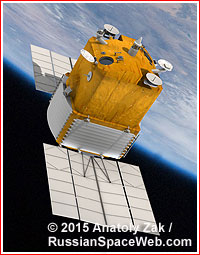
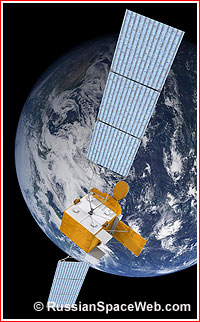
After years of delays, the first EKS (Tundra) satellite was finally launched on November 17. Copyright © 2015 Anatoly Zak
|