|
|

|
Vostok launch vehicle The rocket that carried the first man into space.
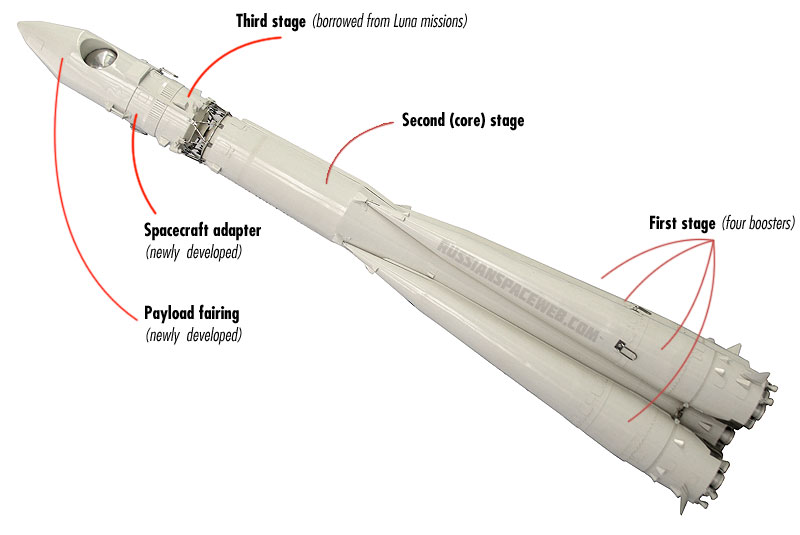
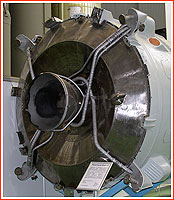
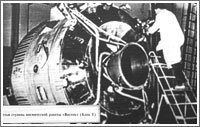
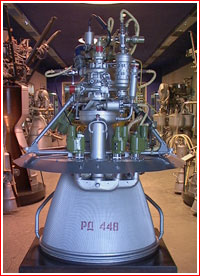
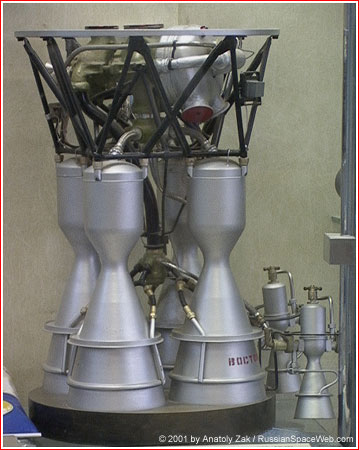
Major features of the Vostok rocket. Copyright © 2011 Anatoly Zak The 8K72K rocket, (later known as Vostok) derived from a three-stage launch vehicle which carried the first Soviet unmanned probes to the Moon. Structural changes were limited primarily to the top (third) stage originally developed for sending its payloads to the Moon. The key difference was the replacement of the RD-0105 engine on the third stage of the rocket with the RD-109 engine. Both, were developed at Semen Kosberg's design bureau in Voronezh under a direct leadership of Vasily Koshelnikov. The upgraded engine featured better reliability and specifications thanks to more effecient and lighter combustion chamber. It was developed under leadership of Vitaly Rubinsky within an internal initiative of the design bureau. RD-109 was initially manufactured at the bureau before being transfered to the adjacent Voronezh Mechanical Plant. For Vostok missions, a larger cylindrical adapter was fitted onto the stage to accommodate a manned spacecraft and its protective payload shroud. The new fairing had a big circular opening to enable Vostok pilots to eject from the cabin in case of an emergency on the launch pad or in the early phase of the launch. The total launch mass of the 8K72 rocket with the Vostok spacecraft reached 287 tons. (52). The launch and first two stages of the orbital insertion would be similar to most vehicles based on the R-7 missile. The payload fairing of the Vostok spacecraft would be split into two petals and dropped soon after the separation of the first stage. Upon reaching the velocity necessary to insert the spacecraft into orbit, the flight control system would cut off the engine of the third stage and separate the stage from the spacecraft.
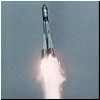
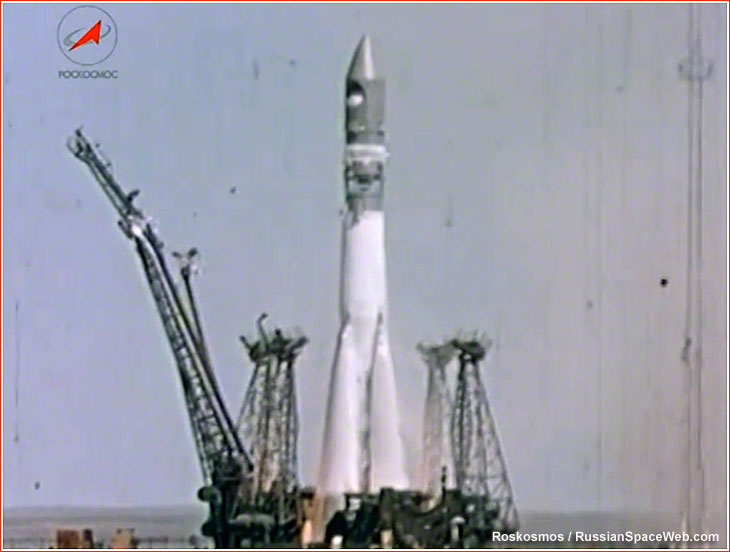
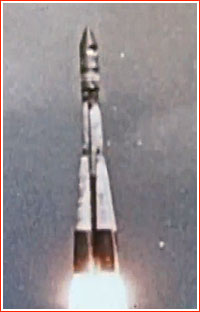
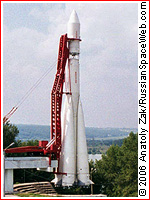
A Vostok rocket at liftoff. The first launch of the human-rated rocket was made on Dec. 22, 1960, with the RD-109 No. 13 engine on the third stage. On April 12, 1961, the same vehicle with RD-109 No. 17 engine on the third stage launched the world's first manned spacecraft - Vostok. A total of 140 RD-109 enignes had been manufactured for Vostok rockets. With the conclusion of manned Vostok missions in 1963, the unmanned version of the rocket, later known as Vostok-M, was introduced on Aug. 28, 1964, with the launch of the Meteor satellite. The vehicle continued flying for several decades with unmanned satellites, including Elektron and Meteor. (2) The general architecture of the Vostok rocket was revealed to the general public only in 1967, when a full-scale mockup of the rocket was displayed at the Paris Air and Space Show in Le Bourget, France.
Vostok rocket designations:
Known specifications of the Vostok rocket:
*For a circular 200-kilometer orbit with an inclination 51.8 degrees toward the Equator.
Vostok rocket variants and their presumed designations:
Vostok rocket production team (466):
Story and images by Anatoly Zak; Last update: April 12, 2021 Page editor: Alain Chabot; Last edit: April 12, 2011 All rights reserved
|
|

|