|
|
|
    
|
||||||||||
Soyuz-5 flies its first test mission Russia's new-generation launch vehicle, intended to replace the Ukrainian-built Zenit, completed its inaugural flight.
First Soyuz-5 launch at a glance:
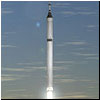
The final preparations for launch were taking place throughout the day on April 30, 2026, with the launch window intentionally extended by several hours. After the successful fueling of the rocket, the holding arm of the transporter-erector system TUA (from the Russian Transportno-Ustanovochny Agregat) began retracting from the vehicle around 17 minutes before liftoff and its move was completed around five minutes before launch. Some three minutes before planned launch, the battery-powered locomotive pulled the TUA away from the pad. The first Soyuz-5 rocket lifted off from Site 45 at Baikonur Cosmodrome on April 30, 2026, at 21:00 Moscow Time (2 p.m. EDT). The launch vehicle was expected to head north before turning east. If everything went as planned, the first stage would burn for around 180 seconds, before separating and crashing in the Sverdlovsk Region of Russia. Five seconds later, the payload fairing, designed to protect the payload, was to split into two sections and separate as well. If everything went as planned, the second stage of the rocket would turn east in the so-called "dog leg" maneuver to ensure its eventual splashdown in the Pacific Ocean. The second stage was to cut off around 570 seconds into the flight, just short of orbital velocity, and to begin a long descent and reentry into the Earth's atmosphere. As a result, the flight was expected to be suborbital with its mass simulator, known as GMM (from the Russian Gabaritno-Massovy Maket), remaining attached to the second stage. Roskosmos confirmed that the flight went as scheduled, with the first and second stages working as planned and the mass and size mockup delivered on a planned suborbital trajectory concluding with an impact in the restricted area of the Pacific Ocean. 
The launch came after months of delays under a severe informational blackout:
|
|
|||||||||

|