|
|
|
    
|
||||||||||||||||||||||||||||||||||||||||||||||||||||||||||||||||||||||||||||||||||||||||||||||||||||||||||||||||||||||||||||||||||||||||||||||||||||||||||||||||||||||||||||||||||||||||||||||||||||||||||||||||||||||||||||||||||||||||||||||||||||||||||||||||||||||||||||||||||||||||||||
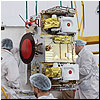
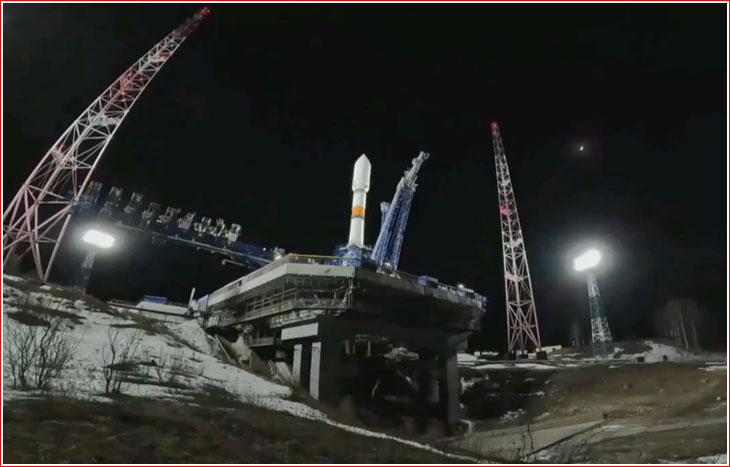
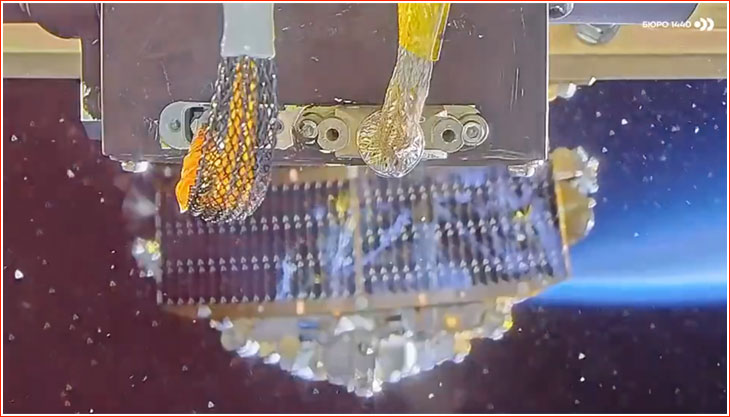
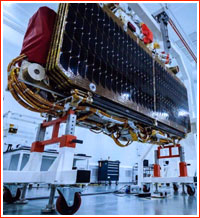
An unannounced launch from Plesetsk delivers "Russian Starlink" On the evening of March 23, 2026, multiple witnesses in and around the town of Ukhta, northeast of the Plesetsk launch site, observed and documented a typical rocket vehicle ascending through the upper atmosphere, however neither Roskosmos nor the Ministry of Defense issued a routine announcement through the official state media in the aftermath of the event, as it would normally be done with a few exceptions since the beginning of the Space Era. Several hours later, Moscow-based Buro 1440 (INSIDER CONTENT) published a video showing the release of the first batch of Rassvet satellites (INSIDER CONTENT) from the upper stage of the launch vehicle.
Orbital launch on March 23, 2026, at a glance:
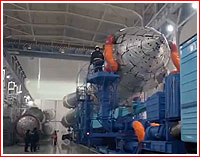
One of the first confirmations that the observed mission had reached orbit came from the r4uab.ru web site, which announced that the OBZP1 micro-satellite, (known by the Russian abbreviation MKA for Maliy Kosmicheskiy Apparat), had established contact with the network of the Efir amateur radio stations, following its launch from Plesetsk on March 23, 2026. The message also referenced a 290 by 324-kilometer orbit with an inclination of 82.3 degrees toward the Equator, which matched the observations on the ground for a flight path previously used by Soyuz and Rockot vehicles launching from Plesetsk. It was also consistent with flight and sea-faring restriction notices issued by the Russian government in recent days and believed to be associated with the planned launch of the first batch of Rassvet satellites (INSIDER CONTENT) for the low-orbital Internet network developed at Moscow-based Buro 1440. (INSIDER CONTENT) Despite a great deal of publicity around the "Russian Starlink" and its developer — Buro 1440 — the company's first launch campaign in Plesetsk was surrounded by military-level secrecy. No launch date had been officially announced for the mission and no visuals of the payload processing had been published ahead of the launch. As it transpired later, at the time of the launch, there was a purported attack on Plesetsk by Ukrainian drones and it was reportedly not the first attempt, which explained the heightened security around the mission and extended launch warning notices designed to complicate the determination of the exact launch time. On March 16, 2026, Russian authorities issued warnings for sea and air traffic in the Barents Sea for a rocket launch planned during a period from March 19 to March 28, 2026, during a 10-hour window from 11:00 to 21:00 UTC. The projected impact site was located along a ground track leading to an orbit with an inclination around 83 degrees toward the Equator, roughly matching a flight corridor previously flown by Soyuz and Rockot vehicles. As of May 2025, this mission was expected in December 2025 and it was known to be in preparation in Plesetsk since at least late 2025, when a Soyuz-2 rocket, assigned to launch the first Rassvet satellites, was rumored to be rolled to the launch pad for a dress rehearsal. By the end of January 2026, the launch was expected between Feb. 20 and Feb. 28, 2026, but it was then postponed until the end of March. The first 16 Rassvet-3 satellites, with a mass of around 370-kilograms each, followed trios of Rassvet-1 and -2 experimental spacecraft, launched in 2023 and 2024, respectively, as hitchhiker payloads. The first operational launch came just weeks after Starlink deactivated numerous unauthorized terminals used by the Russian occupation forces in Ukraine, further exacerbating the years-long quagmire for the Kremlin. However, at the time of the Rassvet-3 launch, it was unknown how long it would take for Buro-1440 to manufacture and deploy enough satellites and ground infrastructure to make a meaningful impact on the market at home or abroad.
Launch scenario 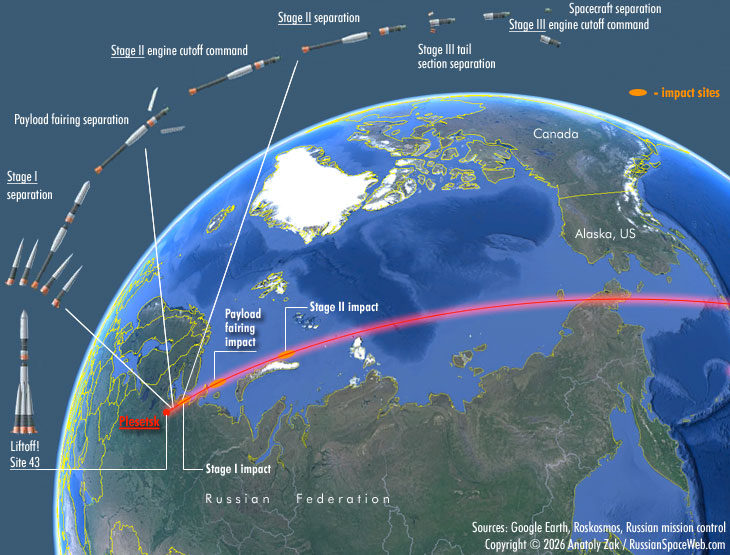
To deliver Rassvet satellites, a Soyuz-2 rocket turned northeast seconds after a vertical liftoff and then headed roughly along the ascent corridor previously used to deliver Kobalt-M satellites. Around two minutes into the flight, the vehicle dropped the four boosters of the first stage, which were projected to crash near the town of Koida in the Menzensk District of the Arkhanegelsk Region, on the shore of the Barents Sea. Seconds later, it was followed by the separation of the payload fairing, whose two sections impacted the Barents Sea, off the coast of Kanin Peninsula. Around five minutes into the flight, the second stage was to complete its work and separate on a ballistic trajectory impacting the Arctic Ocean, north of the Novaya Zemlya archipelago. The third stage completed the orbital insertion of the 16-satellite cluster around 8.5 minutes after the liftoff, likely releasing the satellites into a near-polar circular orbit with an inclination around 83 degrees toward the Equator. The satellites were expected to separate from the upper stage in short intervals and would likely use their own propulsion systems to evenly spread along the orbital plane intended for the constellation.
On the morning of March 24, 2026, Buro 1440 issued a press-release and a video confirming that 16 of its satellites had been launched from Plesetsk on March 23, 2026, at 20:24 Moscow Time. The company said that after reaching an initial orbit, the satellites had successfully separated from the launch vehicle and were under the control of Buro 1440. The testing of the satellites and their transfer to a target orbit was planned next, according to Buro 1440. On March 24, 2026, Switzerland-based s2a Systems published images of all 16 Rassvet satellites and two additional objects associated with the mission, probably representing the third stage of the Soyuz launch vehicle and a hitchhiker payload. On March 31, 2026, the US Space Force catalogued 15 "RASSVET-3" objects associated with the March 23 Soyuz launch in a 324 by 288-kilometer orbit with an inclination 82.30 degrees toward the Equator:
By April 2, 2026, two additional objects were catalogued, apparently now accounting for all 16 Rassvet satellites, while Object S was then identified as the Fregat upper stage, which would indicate (at best) a failure to deorbit the stage or (at worst) to reach a planned orbit for the release of the satellites, if the Fregat was actually involved in the mission, which appeared unlikely:
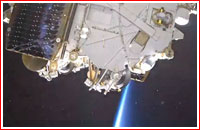
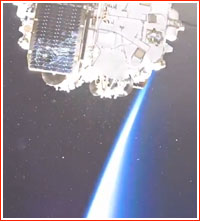
First "Russian Starlink" falls back to Earth For the first two weeks after the launch on March 23, 2026, there were no signs that Rassvet satellites had fired their electric engines in the process of raising their orbits to a more stable altitude, but by April 6, 2026, orbital data for Object 16 (NORAD ID: 68375) revealed its first upward maneuvers. By April 7, 2026, the second satellite within the group also appeared to climb slightly, while Object 16 resumed its orbit-raising maneuvers. As of April 9, 2026, multiple satellites appeared to have maneuvered. By that time, the two satellites increased their average altitude from under 310 kilometers to around 320 kilometers. In the second half of April 2026, all but Object 4 (NORAD ID: 68363, 2026-061D), which was steadily losing altitude without any sign of maneuvers, started gradually raising their orbits, ranging from simply compensating for natural decay to a trio of vehicles gaining as much as 40-50 kilometers. As of early June 2026, a total of six satellites in the Rassvet group were slowly climbing at slightly different rates, while eight others were maintaining their altitude just enough to counteract natural decay of their orbits. There was no clear explanation for this type of tactic, but it is possible, that the company's ground assets struggled with handling so many vehicles, so controllers focused on boosting a small group, while the remaining satellites were programmed to perform only minimum actions. As expected, the first satellite to reenter was the non-maneuvering Object 4 (2026-061D), which likely burned up in the atmosphere around June 6, 2026. At the time, there was no official word on its status. Another Rassvet satellite — Object 10 (2026-061K/68369) — made minimal orbit corrections and was on the brink of reentering until June 23, 2026. Object 14 (2026-061P/68373) also appeared to be struggling with maintaining its altitude in early June 2026, but then began climbing. Russian Starlinks conduct unexplained maneuvers In the second half of June 2026, the uppermost satellites within the first Rassvet group appeared to stop climbing at an altitude of between 500 and 550 kilometers and even appeared to be maneuvering downward, still far beyond the assumed target altitude. (According to filings with the International Telecommunications Union, ITU, Buro 1440 (INSIDER CONTENT) planned to deploy its constellation in a 800-kilometer orbit with an inclination 82.3 degrees toward the Equator in evenly spread 12 orbital planes with 21 satellites in each plane. Another option called for a 600-kilometer orbit with an inclination 60 degrees, which would require 45 satellites in each of 30 orbital planes. In the meantime, the first Rassvet launch targeted the 82-degree orbit, but as of June 2026, none of the satellites had climbed above 550 kilometers.) Again, there was no explanation for such a strange behavior, but it appeared to be a deliberate action to arrange the group in a some sort of formation. In the meantime, around June 24, 2026, Object 10 (2026-061K/68369) seemingly came back to life, boosting its perigee by a couple of kilometers and its apogee by around one kilometer, resulting in a 271.2 by 279.2-kilometer orbit and it continued a steady climb in the following days. These maneuvers coincided with some drop in natural solar activity, which eased the pressure of the upper atmosphere on low-orbiting satellites. By the end of June 2026, Object 10 climbed to around 295 kilometers in altitude, avoiding the fate of its decayed predecessor in the foreseeable future. Also, by the end of June 2026, five satellites in the Rassvet group (Objects 12, 5, 7, 6, and 3) formed a "chain" in orbit, with mutual angular separation of between 12 and 16 degrees or 3-4 minutes in their orbital epoch. Possibly, this type of formation was designed to simulate an operational arrangement of satellites with multiple birds overflying a particular point on Earth in a short sequence. Of course, with just five satellites within a "train" in the low orbit, only a few minutes of communications each day could be provided. In any case, the developer clearly maneuvered the satellites at a lower-than-planned orbit for a series of tests. In the first half of July 2026, two more satellites joined the chain and four others appeared to be close to bringing their orbital parameters to the same target orbit. Perhaps, as an indirect confirmation that Buro-1440 continued testing the initial group was the fact that no subsequent launches of Rassvet satellites, which at the time of the first launch in March had been rumored to be planned as early as April 2026, had taken place as of June of the same year.
|
|
|||||||||||||||||||||||||||||||||||||||||||||||||||||||||||||||||||||||||||||||||||||||||||||||||||||||||||||||||||||||||||||||||||||||||||||||||||||||||||||||||||||||||||||||||||||||||||||||||||||||||||||||||||||||||||||||||||||||||||||||||||||||||||||||||||||||||||||||||||||||||||

|