|
|
|
  
|
||||||||
|
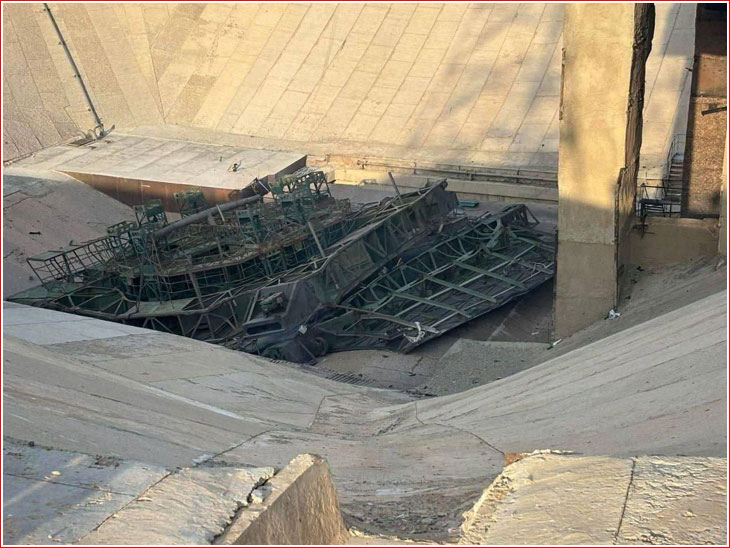
Russia's only pad for crew launches suffers major damage in 2025 On Nov. 27, 2025, the launch of the Soyuz MS-28 crew vehicle caused the mobile service platform at Site 31 to collapse into the flame duct below the pad around 10 seconds after liftoff. It essentially rendered the only facility for Russian orbital crew launches unusable. At the time, Roskosmos planned the launch of the Progress MS-33 cargo ship to the ISS on Dec. 21, 2025, which was immediately cancelled.
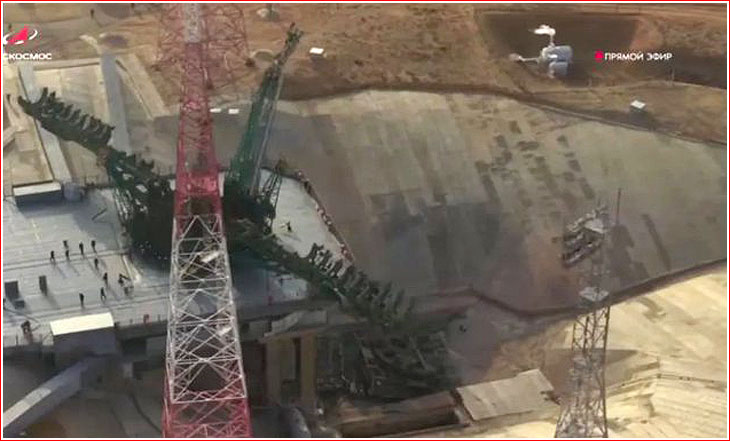
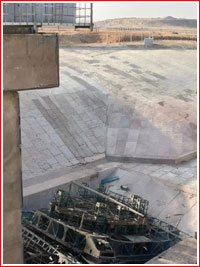
The debris from the fallen service platform are visible at the bottom of the flame trench at Site 31 shortly after the launch of Soyuz MS-28 on Nov. 27, 2025.
According to preliminary estimates, repairs of the service platform, known as 8U0216, could take up to two years and it was not immediately clear whether some kind of makeshift arrangement would be possible to support multiple cargo and crew launches to the ISS in the interim. There was a possibility that some necessary hardware could be borrowed from the mothballed Site 1 in Baikonur or from similar facilities at other launch sites. There were four Soyuz pads in Plesetsk, including an unused existing structure at Site 16, also one pad operated in Vostochny and one mothballed pad was in Kourou, French Guiana. (The launch complex in French Guiana was specifically configured for the Soyuz-2 rocket family also operating from Site 31 in Baikonur.) Soyuz pad damage caused by known issue
The failure to install a special stopper into position to secure the mobile service platform inside its shelter during the launch could be the culprit in the Nov. 27, 2025, accident at Site 31. A veteran of the Baikonur Cosmodrome with good contacts at the center reported on the Novosti Kosmonavtiki web forum that the mobile platform had not been properly secured in its underground shelter before launch, which let the blast wave from the rocket exhaust pull it off its guide rails and into the flame trench. However, the collapse clearly took place some moments after the liftoff, because photos of the launch capturing the flame duct showed no signs of the failure. According to one rumor from Baikonur, the mobile platform was retracted and moved back to the rocket as many times as five times, as the specialists tried unsuccessfully to secure it in its parking position inside its shelter, after the routine call to retract the platform had been issued during the final countdown less than an hour before launch. When the personnel was finally ordered to evacuate the pad some 30 minutes ahead of the liftoff, the decision was made to leave the platform in its parking position inside its shelter without securing it properly rather then to postpone the launch. It was not immediately clear who made a decision to proceed with the launch despite this clear violation of launch criteria. The veterans of the center speculated that the mission management had been under pressure to go ahead with the launch so not to disappoint high-ranking officials and as many as 3,000 paid tourists who came to the remote center to witness the event.
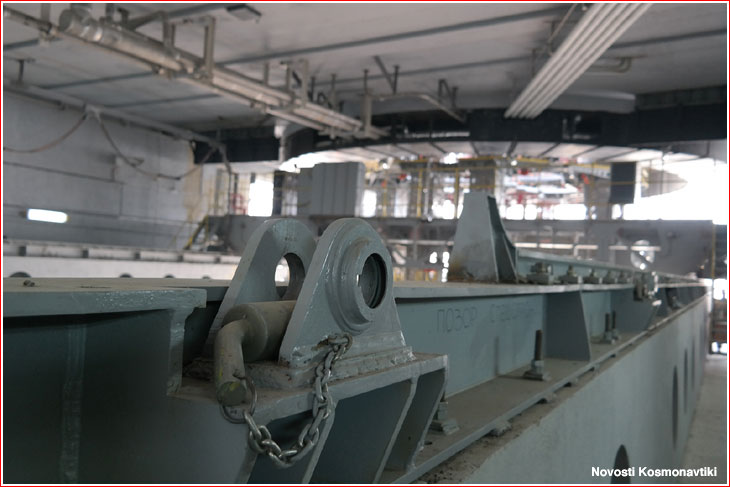
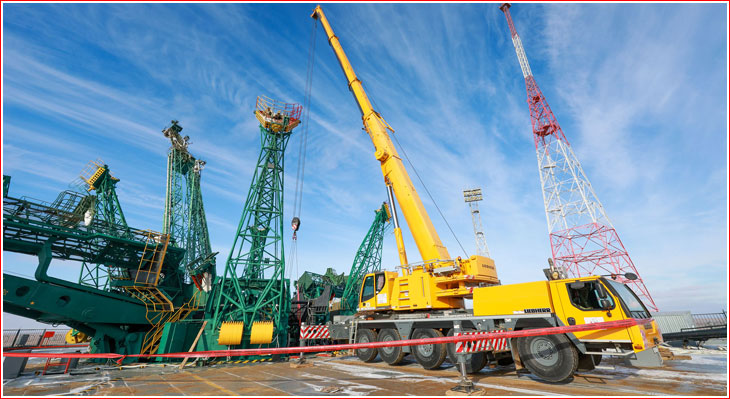
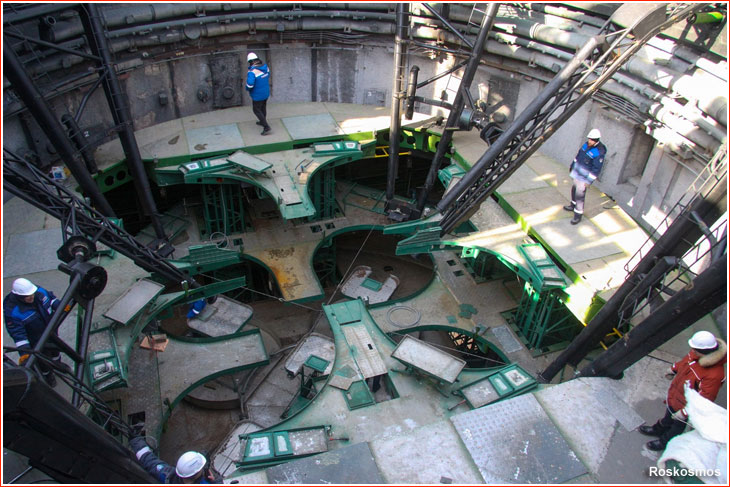
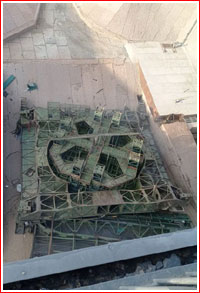
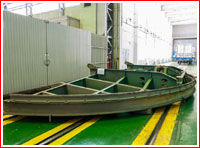
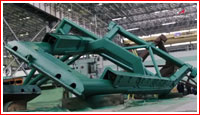
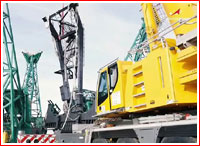
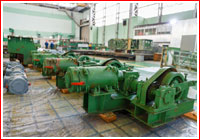
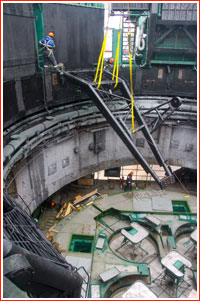
Several hours after the accident, Roskosmos issued a statement admitting damage "to a number of elements in the launch table" and the "the ongoing assessment of the launch complex condition." The press release also said that all the back-up elements necessary for the repair of the pad were available and that the damage would be fixed in "the nearest time." At the same time, available photos of the site showed that the entire mobile platform had collapsed and was clearly damaged beyond repair. According to posters on the Novosti Kosmonavtiki forum, components of a spare mobile service platform, ordered by the Soviet government back in 1971, were delivered from the NKMZ factory in Ukraine to Baikonur in 2013. However, it likely represented the older 8U216 version of the structure and, in any case, its installation would require major construction work at the pad, including the dismantling of existing equipment. There was also a spare mobile platform stored at the arsenal of Space Forces in the town of Znamenka in the Tambov Region. According to unofficial reports, Roskosmos planned to restore the launch pad at Site 31 by the Cosmonautics Day on April 12, 2026. The first deliveries of spare parts to Site 31 were rumored at the end of the first week of December 2025. The repair plan apparently included the delivery of new mobile platform sections to the top deck of the launch structure (known as "Zero marker") along the usual rollout path for the Soyuz rockets and then lowering them with a crane via the circular opening of the pad for final assembly at the operational position of the mobile platform below the pad. On Dec. 16, 2025, Roskosmos promised to have Site 31 ready for launches by the end of Winter 2026. According to the State Corporation, 18 heavy trucks had arrived to Baikonur with components for the restoration of the mobile platform, which were temporarily stored at a facility with a total area of more than 13 thousand square meters. A team of more than 130 Roskosmos employees, operating in two shifts from 8 a.m until midnight, were involved in the repair work under a newly approved and strictly controlled schedule. The work started with priming and painting the components, after which they would be delivered to the pad for installation, Roskosmos said. Roskosmos manager casts doubts on timely repairs of Soyuz pad
On Jan. 27, 2026, in his interview with the RTVI channel, Igor Barmin, the head of the TsENKI ground infrastructure division at Roskosmos, blamed a human error made by launch pad personnel for the accident which took the Soyuz pad at Site 31 out of service. According to Barmin, multiple members of the team were under a criminal investigation for a possible violation of operational procedures. The financial impact of the crash was yet to be calculated but it was expected to be in the tens of millions of rubles, the official said. Barmin warned that it was too early to tell when the repairs at the pad would be completed, but he expressed hope that the March 2026 deadline was still achievable. Barmin explained that the new service platform had to be assembled from components manufactured at different times and sometimes mismatching each other, requiring on-site modifications. For example, the core of the spare platform was manufactured in 1977 in accordance with a different set of blueprints for a planned-but-never-implemented refurbishment of another Soyuz pad, Barmin said. When it was shipped from an arsenal in the city of Tambov to Baikonur, the set of hardware was incomplete, requiring it to be complemented with parts from other sources and with newly manufactured elements. Barmin assured that all these problems were resolvable, but he also added that winter conditions at Baikonur had not facilitated the work, hinting at another factor, which could contribute to the delay with the restoration of the pad. Roskosmos completes Site 31 repairs
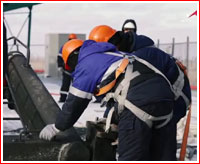
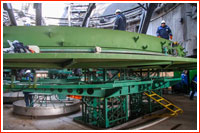
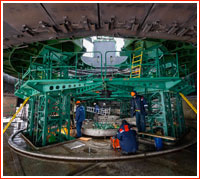
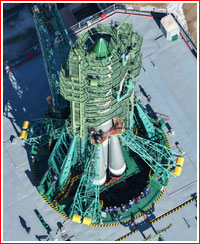
According to rumors from Baikonur, the new service platform was installed at Site 31 by Feb. 10, 2026, and Roskosmos officially confirmed that fact on March 3, 2026. According to the State Corporation, a total of 150 workers from four contractor organizations prepared and painted 2,350 square meters of structures, replaced all the attachment devices, replaced and tuned up electric equipment and inspected or serviced all the systems and mechanisms of the service platform. The team also made 250 welding lines. The most complex task was the installation of the platform elements, some of which had a length of 19 meters and mass of 17 tons, which required a development of special methodic, Roskosmos said. The State Corporation confirmed that the first mission departing from the repaired launch pad at Site 31 was scheduled for March 22, 2026, carrying the Progress MS-33 cargo ship to the ISS. The Soyuz-2-1a launch vehicle with Progress MS-33 was rolled out to the launch pad for a series of tests on the morning of March 17, 2026. 
|
|

|