|
|
  
|
||||||||||||||||||||||||||||||||||||||||||||||||||||||||||||||||||||||||||||||||||
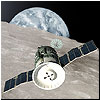
The USSR repeats secret lunar space tug test attempt One year after the failed launch of the first L1E test flight, Soviet engineers made another try to test their Block D lunar space tug on Dec. 2, 1970. This time, the secret mission went much better but more than half a century later there are still many questions about its flight plan and the spacecraft design.
The L1E No. 2 mission at a glance:
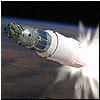
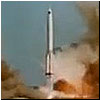
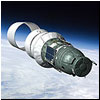
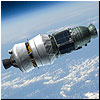
Mission objectives As its predecessor, the L1E No. 2 vehicle was designed to certify the Block D from the L3 lunar expditionary complex for a multi-day operation in space. According to the post-flight report, the L1E mission had a total of four tasks, starting with the functional tests of the propulsion system on Block D, for the exception of a spin maneuver to support the engine inginition units, SOZ, which would be used by the L3 complex for settling the unboard propellant toward engine intakes, shortly before the ignition of the main engine. Secondly, the mission was expected to get experimental data related to hydro-dynamic processes in the tanks of the Block D stage during the ignition preparation phase and during the most critical maneuvers, such as astro-orientation (when using start trackers for attitude control), spin maneuvers and other dynamic operations. The third task was to study thermal processes inside tanks during the time period required to similate the operation in space of the Block D stage within the N1-L3 expeditionary complex. The fourth objective was related to the operation of the Rosa (dew) experiment. The mission did not call for the separation Block D stage from the L1E spacecraft or the return of its descent capsule back to Earth. (1130) Spacecraft configuration In addition to the Tele-Measurement System, Block D carried a number of experimental systems not expected to fly on the operational variant. This included the STN system for recording behavior of liquid propellant components inside propellant tanks of Block D, complete with cameras, special tank windows and lighting devices. Also onboard was the system for measuring oxidizer temperatures inside the tank IPT (from the Russian Izmerenie Poley Temperatur). The third experimental package was the system for studying vapor generation in liquid oxygen under conditions of low acceleration and weightlessness, ITZ. The fourth experiment onboard was the Drenazh (drainage) equipment, which was designed to study processes of formation and separation of helium addons in the liquid oxygen under low acceleration. The fifth and final experiment was the system for using helium to force remnants of fuel back from the fuel supply line after each firing of the main engine. Additionally, there was a separate STN system inside the 7K-L1E spacecraft intended for observing processes in the Rosa experiment, which was testing techonology for fuel cells, which was intended for the LOK crew vehicle from the L3 complex. Launch campaign The critical importance of the Block D stage for the Soviet lunar program and other projects prompted the effort to launch the second L1E spacecraft which had been in the production pipeline from the beginning of the Block D test flight program around 1967. At the time of the first spacecraft failure due to a launch vehicle problem, the second L1E was in advanced stages of assembly. The specially modified Block D stage No. 26, allocated to the L1E No. 2 mission, was also available. (1075) The bodies of two ships were ready by January 1969 and mockups were also under construction. However on both vehicles, engineers were struggling to ensure tight seal on the unique "see-through" tank sections of the Block D stage, which were designed to enable outside cameras to document fluid dynamics in the tank interior. As of May 7, 1969, the second L1E mission was scheduled for launch in December of that year, or just a month after the flight of its predecessor. Obviously, the failure of the L1E No. 1 in November 1969 derailed these plans. On July 6, 1970, Head of TsKBEM, Vasily Mishin jotted down a note indicating that only 1.5 months were required for preparing the (second) L1E launch, but in reality, the vehicle would not reach the launch pad until December of that year. (774) L1E-2 mission lifts off The UR-500K rocket carrying the 7K-L1E No. 2 spacecraft lifted off on Dec. 2, 1970, at 20:00:00.055 Moscow Time, from the "Left" pad at Site 81 in Tyuratam. (400) This time, the ascent to orbit apparently proceeded exactly as planned. As later became known from a declassified document, the payload fairing was dropped 3 minutes 14 seconds into the flight (at 20:03:14 Moscow Time) and, simultaneously, the RR-1 command was issued that triggered pyrotechnics of the KPP1 and KPP2 valves in the propulsion system of the Block D stage, preparing its engine for action. As the third stage of the rocket completed its work, at 20:08:20 Moscow Time, the 15A signal from the launch vehicle's flight control system denerated the RK-6 command, which activated EPK1, EPK2 electric-pneumatic valves, KAK1, KAK2, KATR1 and KATR2 electric-hydraulic valves. This action resulted in propellant components flowing from the Block D's tanks all the way to engine control valves, YEGK. As expected, the telemetry showed simultaneous drop in the pressurization system from 270 to 214 atmospheres, as well as it recorded some temperature changes on the interior walls of pressurization tanks:
Also as planned, the DO parameter for oxidizer tank pressure and the DG parameter for fuel tank pressure showed increases from 0 to 15.7 atmospheres and 10 15.9 atmospheres, respectively. The nitrogen pressure behind the controller (known as the DNR parameter) showed 17.5 atmospheres. (1130) inserting the spacecraft and the Block D upper stage into a 190 by 300-kilometer initial orbit, even though it was likely too short-lived for its parameters to be cataloged by Western radars. During the mission, officially announced as Kosmos-382, a total of three major maneuvers were detected. According to one hypothesis, the first two burns simulated the insertion into orbit around the Moon and the maneuver to enter pre-descent orbit planned for the L3 expeditionary complex. The other theory was that the mission simulated the planned maneuvers of the lunar orbiting vehicle, expected to serve as a payload in the upcoming test launch of the N1 Moon rocket, which ultimately took place in June 1971. As of 2025, no contemporaneous sources were available to the general public detailing the flight program of the Kosmos-382 mission or even confirming the overall design of the L1E spacecraft. Western tracking data showed that as soon as the spacecraft reached its apogee over the Southern Hemisphere during the first revolution around the Earth, the first maneuver stretched the orbit into a long ellipse boosting the apogee to an altitude of 5,038 kilometers, while raising a perigee to 303 kilometers. The maneuver required estimated 982 meters per second in velocity change. Soviet sources also gave very similar orbital parameters (320 by 5,040 kilometers) for the Kosmos-382 mission. (A Soviet post-flight report listed the 323 by 5,042-kilometer orbit achieved after two firings of the Block D engine). (1130) The USSR recorded the inclination of that orbit as 51.5 degrees, indicating a small, but significant in terms of propellant, change from the 51.6 degrees normally used by the Soviet spacecraft for their initial parking orbit. (2) On Dec. 4, 1970, the second major burn of the Block D engine mostly lifted the perigee of Kosmos-382, placing the spacecraft into a 1,616 by 5,071-kilometer orbit, at a cost of 285 meters per second in estimated velocity change. Soon thereafter, two objects were detected separating from the main spacecraft. One of them was interpreted as a rocket stage, however, there is no information from the Soviet sources what those objects were (There is an explicit mention that the Block D and the L1E spacecraft were not expected to separate.) The final detectable burn around Dec. 7, 1970, which could simulate the deorbiting burn of the LK/Block D stack in lunar orbit, in reality boosted the perigee of the Kosmos-382 mission even further, placing the vehicle into the a 2,577 by 5,082-kilometer orbit around the Earth and increased its inclination to 55.87 degrees, where the spacecraft would remain for decades. (50) A declassified Soviet source listed similar parameters: 2,602 by 5,092-kilometer orbit with an inclination 55,8 degrees and an orbital period of 171.1 minutes. (1130) The published notes by Vasily Mishin later confirmed that the L1E No. 2 spacecraft operated until Dec. 7, 1970, when it completed its mission with the seventh firing of the Block D engine at 19:00 Moscow Time, during the 67th orbit of the mission. (1130) The four firings missing from the Western record were probably too small to be detected. The summary of orbital maneuvers during the L1E No. 2 mission:
After the completion of the primary mission during the 6th and 7th days of the mission, The Akademik Sergei Korolev communications ship conducted a trial radio contact with the L1E spacecraft. At the time, the ship was stationed near the port of Yevpatoriya on the Crimean Peninsula, also the home of the primary control center for the L1E mission. According to a post-flight review chaired by Mishin on Dec. 14, 1970, and which declared the flight a complete success, Block D fired a total of seven times during the flight of L1E No. 2, which was the main achievement of the project, essentially certifying the capabilities of the Block D stage for the L3 lunar expeditionary project. Ironically, in its subsequent decades-long career, Block D would never have to pass such an endurance test. The Kosmos-382 mission also recorded the thermal regimes of the oxygen tank on the Block D and tested the operation of the 110K attitude-control tracker on the L1E spacecraft. The dynamics of the vehicle were also recorded. Finally, the engineers studied various phenomena inside the Block D stage, such as the boiling of the cryogenic oxygen, as well as watched condensation and separation between gas and liquid under conditions of weightlessness. (774) Western analysts noticed that the format of the telemetry transmissions from Kosmos-382 was similar to those from the known failed launch of a Proton rocket in November 1969, so the link between the two L1E missions was established very early on. The mission was also correctly characterized as related to the Soviet lunar program, but that where the known information would mostly end. (50) It took another 50 years to all but confirm that the L1E vehicle was probably very similar to the L1A prototype spacecraft launched on the N1 rocket, even though no actual blueprints of the L1E spacecraft had been published by the end of the first quarter of the 21st century.
|
|
|||||||||||||||||||||||||||||||||||||||||||||||||||||||||||||||||||||||||||||||||

|