|
|
|
 
|
||||||||||||||||||||
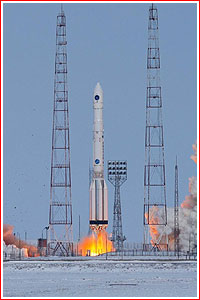
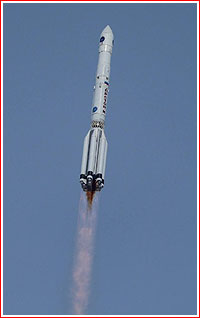
Proton launches fifth Elektro-L weather satellite After a nearly three-year break, a Proton rocket flew again with the Elektro-L No. 5 meteorological satellite from Baikonur in Kazakhstan on Feb. 12, 2026. The mission marked the last use of the Block DM-03 space tug on Proton, reserving its role solely as an upper stage for the Angara-5 rocket. 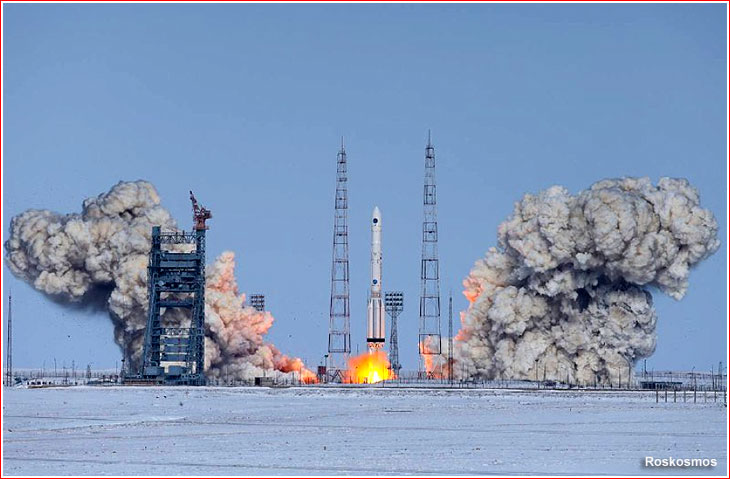
Elektro-L No. 5 mission at a glance:
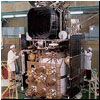
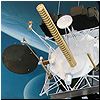
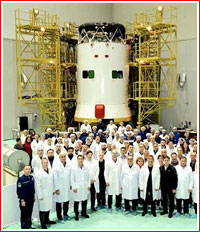
Elektro L5 satellite After the development of the first three Elektro-L weather satellites in the 2000s, NPO Lavochkin proceeded with the construction of two additional satellites — Elektro-L4 and L5, initially aimed for launch in the first half of the 2010s. However, various issues with the original batch, as well as financial problems and the lack of access to necessary electronic components significantly delayed the program. At the time of the Elektro-L2 launch in December 2015, the fourth and fifth Elektro-L satellites were promised to fly in 2019 and 2020 respectively. By 2017, the launch of Elektro No. 5 was postponed until 2022. In October 2018, NPO Lavochkin said that the fourth and fifth spacecraft would have to be "delivered" to the launch site in November 2021 and 2022, respectively, probably implying that their actual launches could shift to 2022 and 2023. In reality, the fourth satellite was ultimately launched in February 2023, while the fifth spacecraft slipped to the end of 2025. Elektro-L4 and L5 were described as largely identical, but the latter was reported carrying "more compact and modern angular velocity sensor, GIVUS," according to Deputy Chief Designer of the Elektro project Daniil Gruzdev quoted by Izvestiya. At the time of the Elektro-L5 launch, Roskosmos said that the latest satellite in the series would serve as the fourth within the Elektro constellation, while Gruzdev also elaborated that the Elektro-L2 satellite had gone out of warranty and with the arrival of the L5 bird, the decision would be made on the operation of the system. A hitchhiker payload After first two launches of Elektro-L on the Ukrainian-built Zenit rocket, the annexation of Crimea forced the switch of follow-on satellites to the Proton, which was significantly oversized for this particular payload. After first two solo launches on Proton, the Elektro-L5 mission became the first satellite in the series to use the available extra mass to deliver a hitchhiker payload. An official document surfaced during the launch campaign in February 2026 listing a satellite, designated OChR, accompanying Elektro-L5 during its ride on Proton to geostationary orbit. Elektro L5 launch campaign
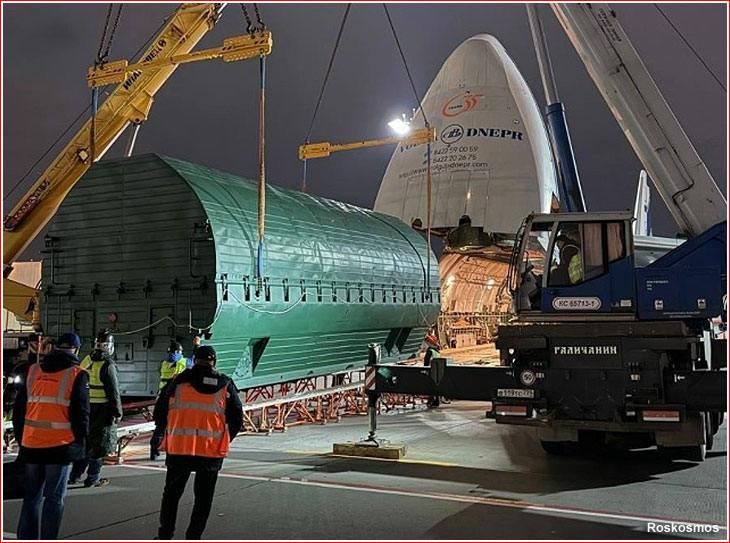
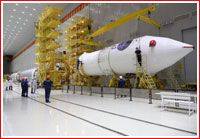
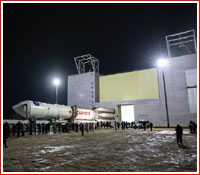
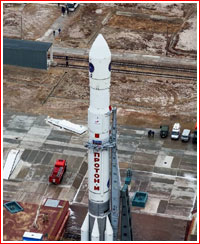
A container with the Elektro-L5 satellite is being loaded aboard a transport aircraft in Moscow for a trip to Baikonur in mid-November 2025. On Sept. 10, 2025, Roskosmos reported the arrival in Baikonur of a train with the components of a Proton vehicle for a federal mission, along with a Block-DM03 stage and a payload fairing manufactured at NPO Lavochkin. At the time, the launch was expected around Dec. 22, 2025, but the mission was later advanced to Dec. 15, 2025. The Elektro-M5 satellite, which was not initially announced as the payload for this Proton mission, was air-shipped from Moscow to Baikonur around Nov. 10, 2025. On Nov. 26, 2025, Roskosmos reported the completion of electric checks and the start of integrated tests on the Proton rocket that included checks of engines and the onboard cable network among other systems. On Dec. 11, 2025, the State Commission cleared the rocket for the rollout to the launch pad. The next morning, the vehicle left the assembly building at Site 92A-50 and traveled to the launch pad at Site 81. The liftoff was scheduled for Dec. 15, 2025, at 15:20:18 Moscow Time. 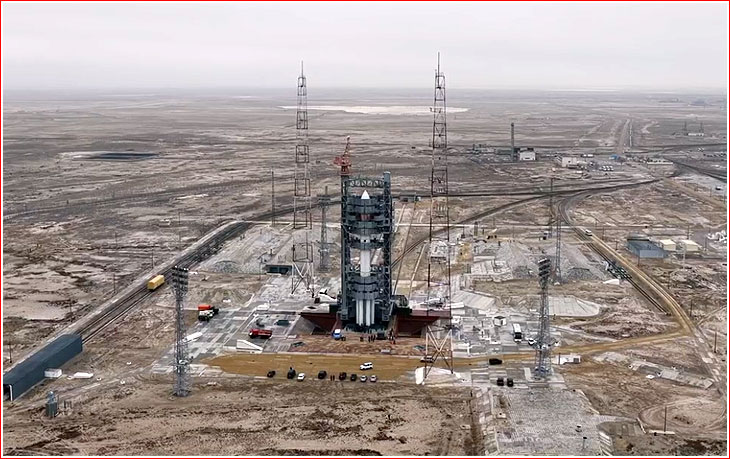
However, on Dec. 13, 2025, final checks revealed a problem in the Block DM-03 upper stage which forced the postponement of the launch, Roskosmos announced. According to the Zakryty Kosmos Telegram channel, a software issue required the return of the rocket back to the processing building and the disassembly of the payload section. The potential need to ship the onboard avionics back to the manufacturer would likely push the mission well into 2026. The launch vehicle was removed from the launch pad and returned to the processing building on Dec. 14, 2025. After the return of the computer back to the manufacturer, the machine showed normal operations during both autonomous and integrated tests, which pointed at the problem somewhere else in the systems of the upper stage. Following the successful resolution of the problem, the vehicle was rolled out back to the pad in the early hours of Feb. 9, 2025. Elektro-5L launch profile
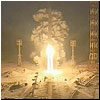
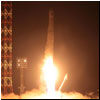
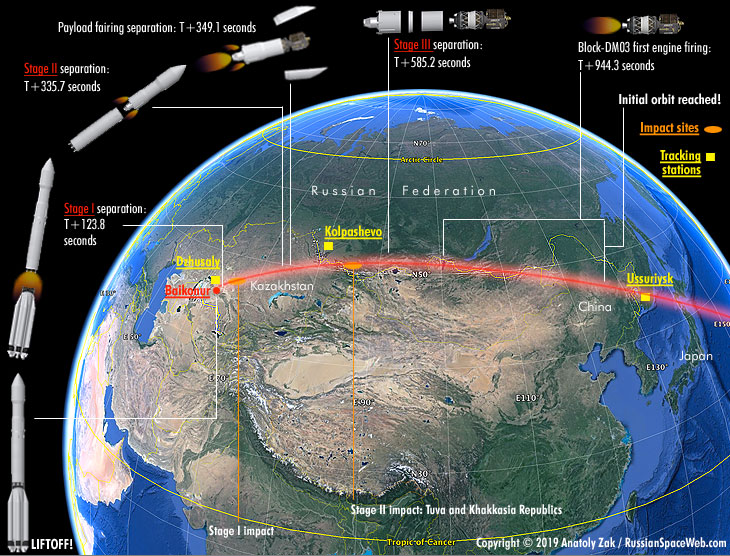
A Proton-M/Block DM-03 rocket carrying Elektro-L5 satellite lifted off from Pad No. 24 at Site 81 in Baikonur on Dec. 15, 2025, at 11:52:15 Moscow Time (3:52 a.m. EST). Propelled by six RD-276 engines, the first stage boosted the rocket off the pad and after a few seconds in vertical ascent, the vehicle started turning east (to an azimuth of 62 degrees 2 minutes and 33 seconds), firing for around two minutes. The separation of the first and second stages should took place at L (launch) +123.791 seconds into the flight. Moments before separation, the four-engine cluster of the second stage took over the powered flight, firing for the first few moments through a lattice structure connecting two stages. The first stage fell on the ground at drop zone 25/15 in the Ulytau Region of Kazakhstan. The second stage operated for three and half minutes and separated around five minutes 36 seconds after launch (L+335.767 seconds). Moments earlier, the four thrusters of the RD-0214 steering engine on the third stage fired through special openings in the ring adapter connecting the second and third stage and immediately after the second stage dropped off along with the adapter, the main RD-0213 engine on the third stage joined in. Seconds later, the payload fairing protecting the satellite from aerodynamic loads in the lower atmosphere split into two halves and dropped away 5 minutes and 49 seconds into the flight (L+349.145 seconds). The second stage and payload fairing were expected to impact the ground at Drop Zone No. 326 in the border area of Altai Republic, Tuva Republic and Republic of Khakasiya. The third stage fired its main engine until around 9.5 minutes into the flight. The four-nozzle steering engine of the stage continued operating for around 12 seconds longer to refine the speed of the vehicle to a precise parameter just short of orbital velocity. A fraction of a second after the third stage steering engine cutoff at L+585.04 seconds, the payload section, including the Block DM-03 upper stage and the Elektro-L5 satellite reported separating into a suborbital trajectory 9 minutes and 45 seconds after liftoff (L+585.205 seconds). The third stage was expected to reenter the atmosphere and any of its surviving debris to fall into the Pacific Ocean. Space tug operations
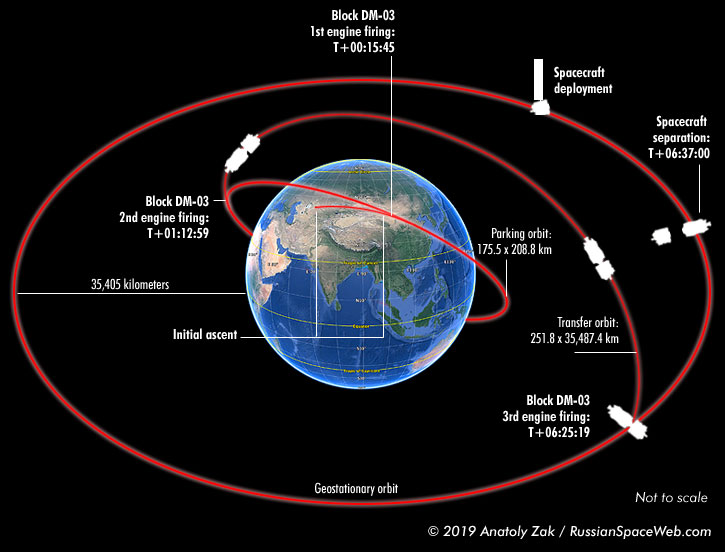
After nearly six minutes in a passive ballistic flight and 15 minutes 44.288 seconds after liftoff from Baikonur, while on a trajectory peaking at 199.67 kilometers above the Earth, the Block DM-03 upper stage was programmed to fire its main engine for the first time. The maneuver, lasting slightly more than a minute, was designed to insert the stage and its payload into an initial parking orbit around the Earth. Its planned perigee (lowest point) was to be around 175 kilometers and its apogee 208 kilometers from the Earth's surface. The stack was timed to fly passively around the planet for nearly one full orbit. The main engine of Block DM-03 then re-started 1 hour 12 minutes and 59.026 seconds after liftoff and fired for around eight minutes. The maneuver was designed to stretch the orbit into an ellipse with an apogee near the altitude of geostationary orbit at 35,487.4 kilometers above the Earth's surface. At the same time, the perigee increased to just 251.8 kilometers. The space tug and its cargo then climbed passively away from Earth for more than five hours. Upon reaching the apogee of the transfer orbit 6 hours 25 minutes and 19 seconds after liftoff, Block DM-03 fired its engine for the third time, for almost four minutes, to circularize the orbit at an altitude a few hundred kilometers lower than the 36,000-kilometer geostationary orbit. The maneuver was designed to cause the satellite to slowly drift in the easterly direction relative to the Earth's surface, before its own propulsion system was to be used to slightly boost its orbit so that its orbital period matched the 24-hour rotation of the Earth around its axis and, and, as a result, the satellite would appears "hanging" in the sky for an observer on Earth. The third maneuver of the upper stage was also intended to tilt the inclination of the orbit from the latitude of Baikonur to that of the Equator. The energy-hungry inclination change was intentionally conducted at the highest altitude to minimize the influence of the Earth's gravitational pull and thus to save propellant. Less than nine minutes after the completion of the third engine burn (at L+6 hours 37 minutes 49.874 seconds), Block DM-03 released Elektro-L5 into its planned orbit 6 hours 37 minutes and 50 seconds after liftoff from Baikonur. The satellite was expected to eventually operate in the geostationary orbit over the Equator above 76 degrees East longitude. In the next eight minutes after the separation of Elektro-L5, the OChR payload was expected to be ejected from Block DM-03 (at L+6 hours, 45 minutes 54.864 seconds), completing the Proton mission. According to orbital tracking data, for a week following its launch, Elektro-L5 moved eastward above the geostationary orbit reaching a point 117 degrees East longitude, but on Feb. 19, 2026, its drift reversed in westerly direction as a result of an apparent orbital maneuver. Shortly after the end of the mission, the Iranian media announced that Proton-M had delivered a communications satellite for Tehran's television and radio broadcaster IRIB. It obviously referred to a payload previously known from the Russian documentation as OChR, but identified in Iran as Jam-e Jam-1 or DBS. According to the Iranian statement, the satellite laid foundation for "mass interactive broadcasting services." According to Western tracking data, by March 4, 2026, Jam-e Jam-1 was positioned at 34.8 degrees East longitude over the Equator, but with an inclination 0.51 degrees toward the Equator. On March 25, 2026, Roskosmos released first image from Elektro-L5 and reported that the satellite had reached its planned location in the geostationary orbit. The spacecraft was declared operational on Aug. 6, 2026. 
Click for full resolution
|
|
|||||||||||||||||||

|